

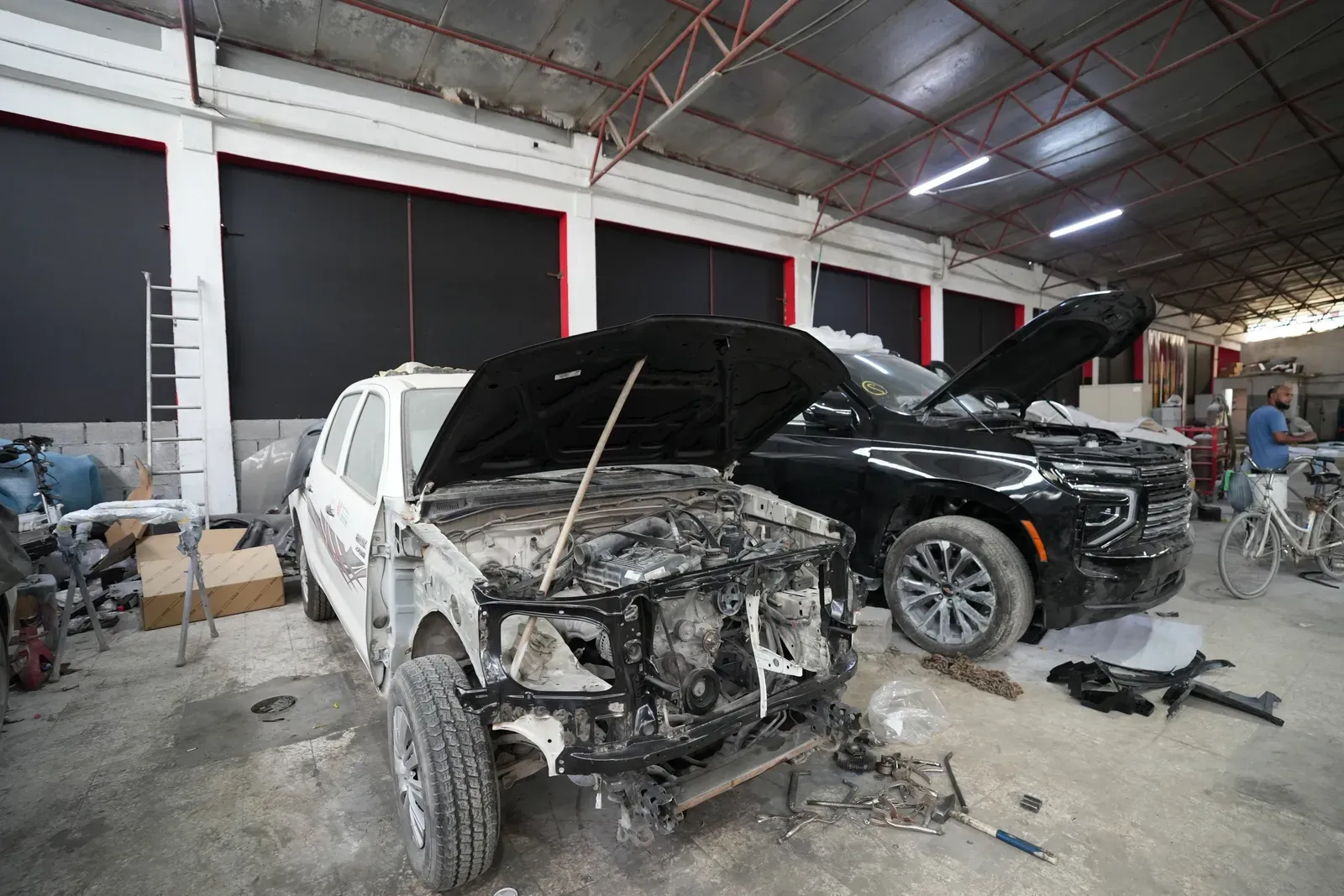
Most arguments about a workshop bill are not arguments about whether the work was done. They are arguments about a number that arrived without a shape. A bill with a shape is harder to argue with and much easier to check, and the shape is always the same four things: the parts that went on the car, the time somebody spent putting them there, the work of finding out what was wrong in the first place, and the tax on all of it.
Why are parts and labour priced separately?
They are two prices with nothing in common. A part has a cost that exists before your car arrived and will exist after it leaves; it can be looked up, compared and refused. Labour is a quantity of somebody’s day. Folded together they cannot be checked at all, which is why a bill that reads “front brakes — one figure” is the version that makes disputes possible. Here, they are priced on separate rows on every line, on the approval you receive before the work and on the invoice you receive after it.
That is not a house style. It is close to what the law here already requires of a tax invoice, and we will come back to it below.
On the parts line there is a second decision hiding, and it is the one with the widest price range on the whole bill: the same component can be bought in the carmaker’s box, in the box of the supplier who made it for the carmaker, or from an independent manufacturer. Those three routes can differ in price by a multiple, and not always in the direction people assume. the difference between genuine, OEM and aftermarket has a separate article, because it is a longer argument than this article has room for and it deserves its own.
Where does the labour time come from?
From one of two places, and it is a fair question to ask which. The American Federal Trade Commission sets the two out plainly in its consumer guidance: “Some shops charge a flat rate for labor on auto repairs. This published rate is based on an independent or manufacturer’s estimate of the time required to complete repairs. Others charge on the basis of the actual time the technician worked on the repair.”
Both are defensible and they fail in opposite directions. A published time is the same for everybody, quotable in advance, and indifferent to whether the bolt came out or snapped; if the job runs long you are not paying for it, and if it runs short you are. Actual time is exactly what happened, and it cannot be quoted before the job because nobody knows it yet. What matters for reading a bill is that the labour figure is hours multiplied by a rate — so the two questions that open it up are how many hours and at what rate, and both have answers.
It also explains something that looks like inconsistency and is not. The same named job costs different labour on two different cars, because the time is a property of the car and not of the part. A water pump reached from above with the bonnet open, and a water pump reached only after the front of the engine has come apart, are the same component and two different jobs. If a labour figure surprises you, the useful question is not “why is it so much” but “what has to come off first”.
What is a diagnostic charge for?
For the work of finding out, which is a different job from the work of fixing. California’s Bureau of Automotive Repair puts it in a sentence in its consumer guide: “A diagnosis uses procedures established by the auto manufacturer to determine the cause of the malfunction. The estimate may cover the cost of the diagnosis alone, or the cost of diagnosis and repair.” The FTC adds the practical warning: “Many repair shops charge for diagnostic time.”
It is charged because it is the part that cannot be skipped and cannot be guessed. A fault code names a circuit or a failed self-test; it does not name a part, and the distance between those two things is measured in live data, voltage drops, pressure readings and a road test with the fault happening. There is a separate article on why that is so, and the car diagnostics page describes what is actually done. A workshop that charges nothing for that time has still spent it, and the cost of it is somewhere in the bill. It is worth knowing where.
A price is not a fact about your car. It is a fact about how much of your car somebody has looked at before saying it.
Is VAT included in a car repair quote in the UAE?
The rate is in the law and it is one line. Federal Decree-Law No. 8 of 2017, Article 3, headed Tax Rate: “Without prejudice to the provisions of Title Six of this Decree-Law, a standard rate of 5% Tax shall be imposed on any supply or Import pursuant to Article 2 of this Decree-Law on the value of the supply or Import specified in accordance with the provisions of this Decree-Law.” Article 65 then requires that “A Registrant making a Taxable Supply shall issue an original Tax Invoice and deliver it to the Recipient of Goods or Recipient of Services.” A tax invoice is not a document you have to ask for.
The interesting part is what the Executive Regulation says must be on it. Cabinet Decision No. 52 of 2017, Article 59(1), lists the particulars, and clause (h) is the one worth knowing by heart: “For each Good or Service, the unit price, the quantity or volume supplied, the rate of Tax and the amount payable expressed in AED.” Per item. Not per job. Clause (k) then requires the tax amount charged, shown as its own figure. An invoice that gives you a single total is not showing you less out of tidiness.
One more line settles an argument people have at counters. Article 38, Tax-Inclusive Prices: “In the case of a Taxable Supply, the advertised price shall include the Tax.” An advertised price in this country is the price including VAT. A quotation is a different document from an advertisement, so ask whether a quoted figure is before or after tax — but nobody may advertise a figure and add five per cent to it at the till.
- Parts
- What was fitted, by name and part number. The line you can price yourself, and the only line where a cheaper choice usually exists.
- Labour
- Hours multiplied by a rate. Ask which hours — a published time for the operation, or the time actually worked.
- Diagnosis
- The work of establishing what is wrong, before anything is replaced. It has a result even when the answer is that nothing needs doing.
- Consumables and sundries
- Fluids, gaskets, clips, seals and the small parts destroyed by taking something apart. Small individually, and they should still be named rather than absorbed.
- VAT
- Five per cent, shown as its own figure and not folded into the others. It is collected on behalf of the state, not earned by the workshop.
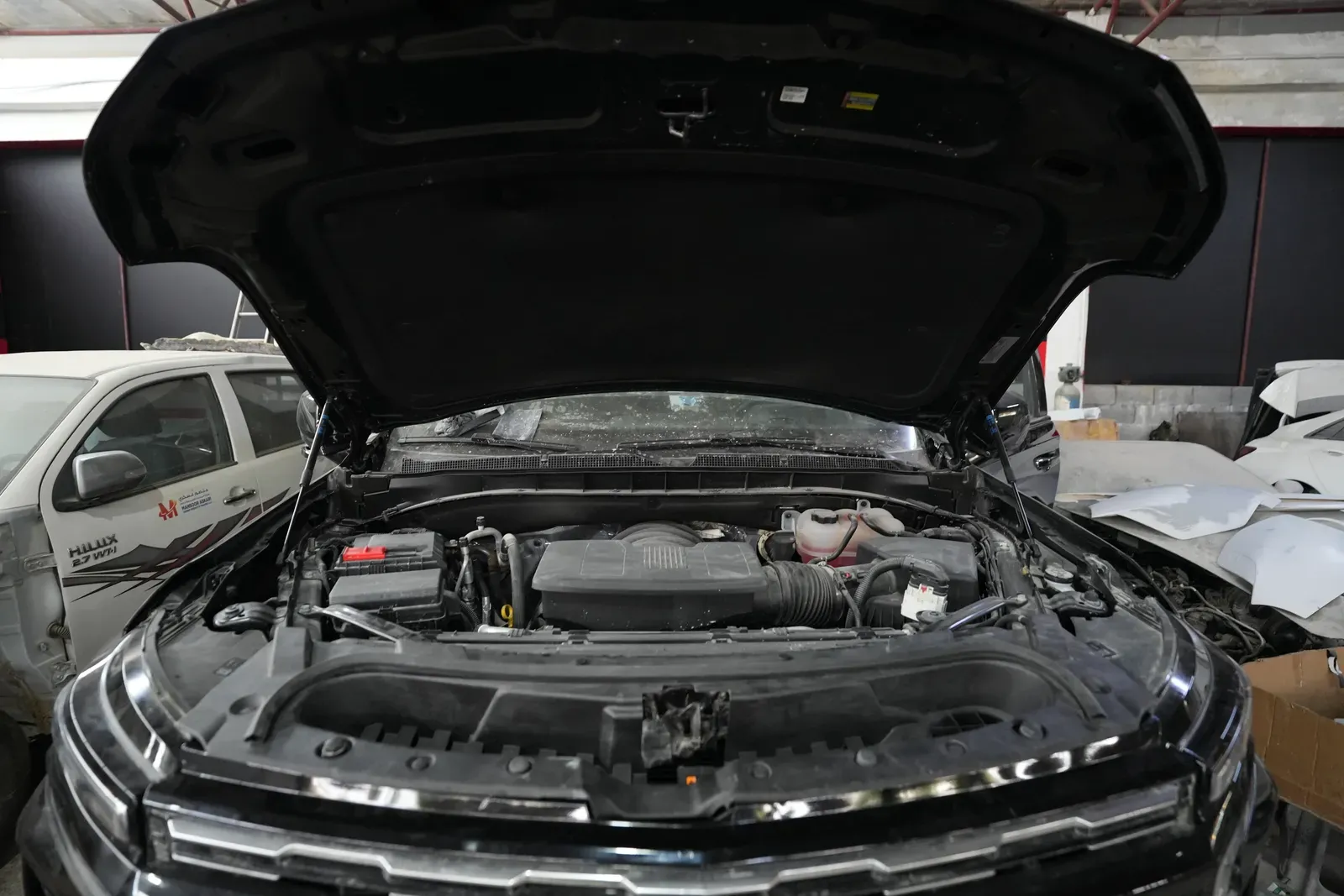
Why does a repair estimate change after the car is opened?
Because some conditions cannot be seen until something is off the car, and the estimate written before that is an estimate of the visible. The Californian regulator describes the honest version of this and gives it a name: “For some complex problems, such as a transmission failure or an auto body repair, the shop may have to take your vehicle apart to give you an accurate estimate. This is called a ‘teardown.’ Be aware that there may be a charge for a teardown, even if you don’t have the vehicle repaired.”
What should then happen is written down too, and in California it is a statutory duty rather than a courtesy. The Business and Professions Code, section 9884.9(a), requires a written estimated price for labour and parts, and then: “No charge shall be made for work done or parts supplied in excess of the estimated price … without the oral or written consent of the customer.” The regulator’s guide states the procedure: “If the technician later determines that it will take additional work and will cost more to fix your car than the original estimate, someone from the shop must contact you, describe the additional work and cost, and get your permission to proceed.”
That is Californian law and it does not govern anything in Sharjah; we quote it because it is the clearest published statement of a rule that ought to be universal, written by somebody with no interest in the size of your bill. The rule, stripped of its jurisdiction, is this: a revised price is a new offer, and a new offer is yours to accept or refuse. Approval line by line is how that runs here — each line separately, from your phone, with declining a line costing nothing and cancelling nothing else.
What to ask before you agree to anything
- Is this figure parts and labour together, or separately? If together, ask for it split before you decide anything.
- Which part, by manufacturer and part number? The same answer also tells you which of the three parts routes you are being quoted.
- Is the labour a published time for this operation on this car, or the hours actually worked?
- Is this before or after VAT? An advertised price must include it; a quotation is a different document.
- What happens to this price if something is found when it comes apart — and will you call me, or proceed?
- Can I have the old parts back? It costs the workshop nothing and it makes every other answer checkable.