
Car polishing
Your car’s paint has a clear layer on top of the colour, and almost every mark that makes a car look dull lives inside that clear layer: the fine circular scratches from washing, the haze under a street light, the dry white patches from sand. Polishing is a machine and a mild abrasive removing an extremely thin slice of that clear layer, so the bottom of those scratches becomes the new surface and they are gone rather than hidden. It is the only job on this list that removes a defect instead of cleaning one or covering one — and because it takes material away, it is not something to have done every month.
Start here
- 1Describe what the car is doing, in your words
- 2We investigate it and send you the findings and the price
- 3You approve each line before anything is done
1
Sounds like your car?
Find the line closest to what your car is doing. You do not need the name of the job — the symptom is carried into the booking form with it, and every line below starts at the same place: what we check, and how the work is done.
- 1 The paint looks dull
- 2 There are circular scratch marks all over it in the sun
- 3 The car looks fine wet and terrible when it dries
- 4 Someone keyed the car
- 5 There are white dry patches on the bonnet and roof
- 6 I washed it at a brush wash and it came out scratched
- 7 The colour looks faded compared to the door shuts
- 8 I want it looking its best before I sell it
- 9 My headlights have gone yellow
2
What is included
- 2.1The car washed and decontaminated first, because polishing a dirty panel grinds that dirt into the paint
- 2.2Each panel inspected under a focused light, which is the only way swirl marks and haze can actually be seen
- 2.3The fingernail test done in front of you on the marks you care about, so you know before we start which ones will go and which will only fade
- 2.4Panel edges, badge surrounds and body-line peaks taped, because clear coat is thinnest exactly there and that is where polishing burns through
- 2.5Machine polishing with the least aggressive pad and compound that will do the job, stepping up only where the paint needs it
- 2.6A refining pass to remove the haze that a cutting pad leaves behind, so the finish is clear rather than merely flat
- 2.7Paint residue cleaned out of shut lines, grilles and trim, which is the giveaway of a rushed job
- 2.8Headlight lenses polished where they have gone yellow and cloudy, on request
- 2.9Panels we will not polish identified and explained — thin, previously repainted or already flaking paint is told to you, not gambled with
- 2.10A plain statement of what the paint has left in it, so you know whether this is a job that can be repeated later or a one-time correction
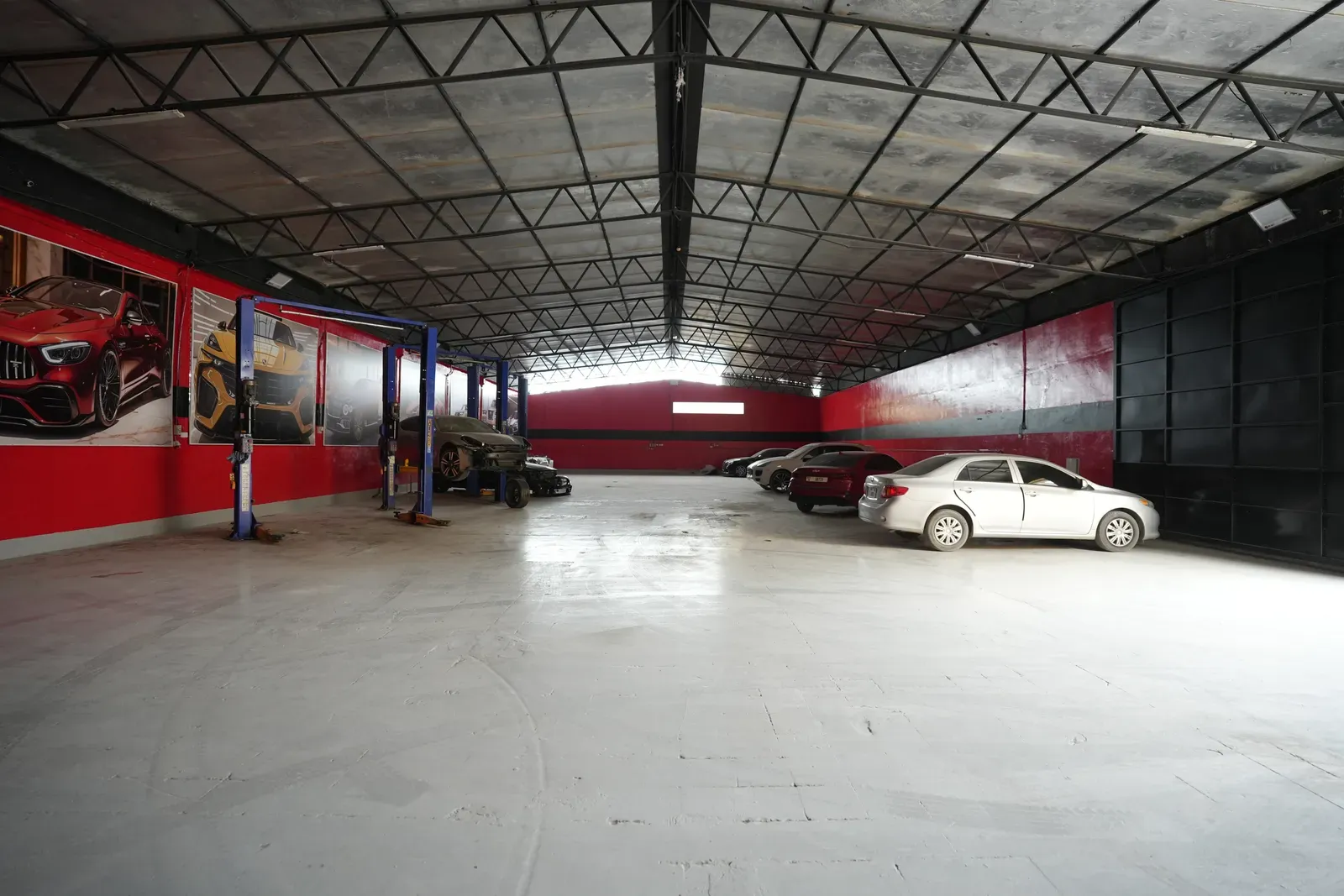
This work is done in this workshop, and nothing on your car is touched until you know what we found and what it costs.
3
What happens
-
3.1
We find out where the mark actually is
Paint is layers: primer, colour, then clear coat on top. A mark inside the clear coat can be polished out. A mark that has gone through the clear coat into the colour cannot — no amount of polishing brings colour back, and that is a paint job, not a polish. We test each mark you care about with a fingernail while you are standing there, and tell you which of the two it is before there is a price on anything.
-
3.2
Wash and decontaminate before the machine touches it
Polishing a panel that still has bonded grit on it turns that grit into an abrasive under the pad and puts in deeper scratches than the ones being taken out. So the paint is washed and clayed smooth first. This is why polishing is quoted after a clean rather than instead of one.
-
3.3
Least aggressive first, and edges protected
The clear coat is a finite thickness and every polish spends some of it. We start with the mildest pad and compound that might work and only step up where the paint demands it, and we tape the edges and raised body lines where the clear is thinnest. A shop that goes straight to a heavy cut gets a faster result today at the cost of the paint being unpolishable the next time somebody scratches it.
-
3.4
Then protection, if you want it, and not before
Freshly polished paint is bare and clean, which is exactly the condition a ceramic coating or a protection film wants. If you are planning either, this is the right moment and doing them in the other order would mean sealing the scratches in. If you are not, the car simply leaves polished, and we will say what the finish will and will not survive.
4
Common questions
Polishing, detailing, ceramic coating, film — which one do I actually need?
Answer it by what is wrong. If the car is dirty, you need detailing — it cleans and removes nothing from the paint. If the paint is clean but dull and scratched, you need polishing — it removes a sliver of the clear coat and takes the scratches with it. If you want the car to be easier to wash and better protected against chemicals and sun, that is a ceramic coating — a thin chemical layer on top, which wears with time and will not stop a stone. If you want the front of the car to survive stone chips and car-park scuffs, that is paint protection film — an actual clear plastic layer thick enough to take the hit. Clean, correct, protect, in that order. A coating over unpolished paint locks the scratches under it permanently.
Does polishing damage the paint?
It removes clear coat, and clear coat does not grow back. Done sparingly and with the mildest thing that works, a car can take polishing more than once in its life without trouble. Done aggressively, repeatedly, or on paint that is already thin or previously repainted, it goes through, and once you are through the clear coat the only fix is repainting the panel. That is precisely why we tape the edges, start mild, and tell you which panels we are not prepared to touch.
Will it remove this scratch?
Run your fingernail lightly across it. If it glides over, the scratch is in the clear coat and polishing will very likely remove it. If it catches, the scratch has reached the colour or the primer underneath, and polishing will soften the edges so it shows less but cannot put colour back. In that case we will tell you what touching in or repainting that panel involves instead, rather than polishing at it and charging you for a disappointment.
Why does my car look scratched again a month later?
Because of how it is being washed. Nearly all swirl marks are put into paint by cloth and brushes dragging dust across it, so an automatic brush wash or a dry wipe-down of a dusty parked car will undo a polish quickly, and in this climate there is always dust on the car. Rinse first, use two buckets and a clean mitt, and never wipe a dry panel. If you would rather the finish were harder to mark, that is a coating or a film, and we will explain what each one honestly changes.
Related services
Work that is often quoted alongside this, each with its own page.
- Car detailing Deep cleaning inside and out — it removes what is on the car, not what is in the paint.
- Ceramic coating A hard chemical layer on top of the paint — easier washing, not armour against stones.
- Paint protection film (PPF) A clear film stuck onto the panels — real thickness, so a stone hits the film and not your paint.
- Car painting and respray Panel paint and full respray, mixed to your paint code and baked, not air-dried in the sun.