
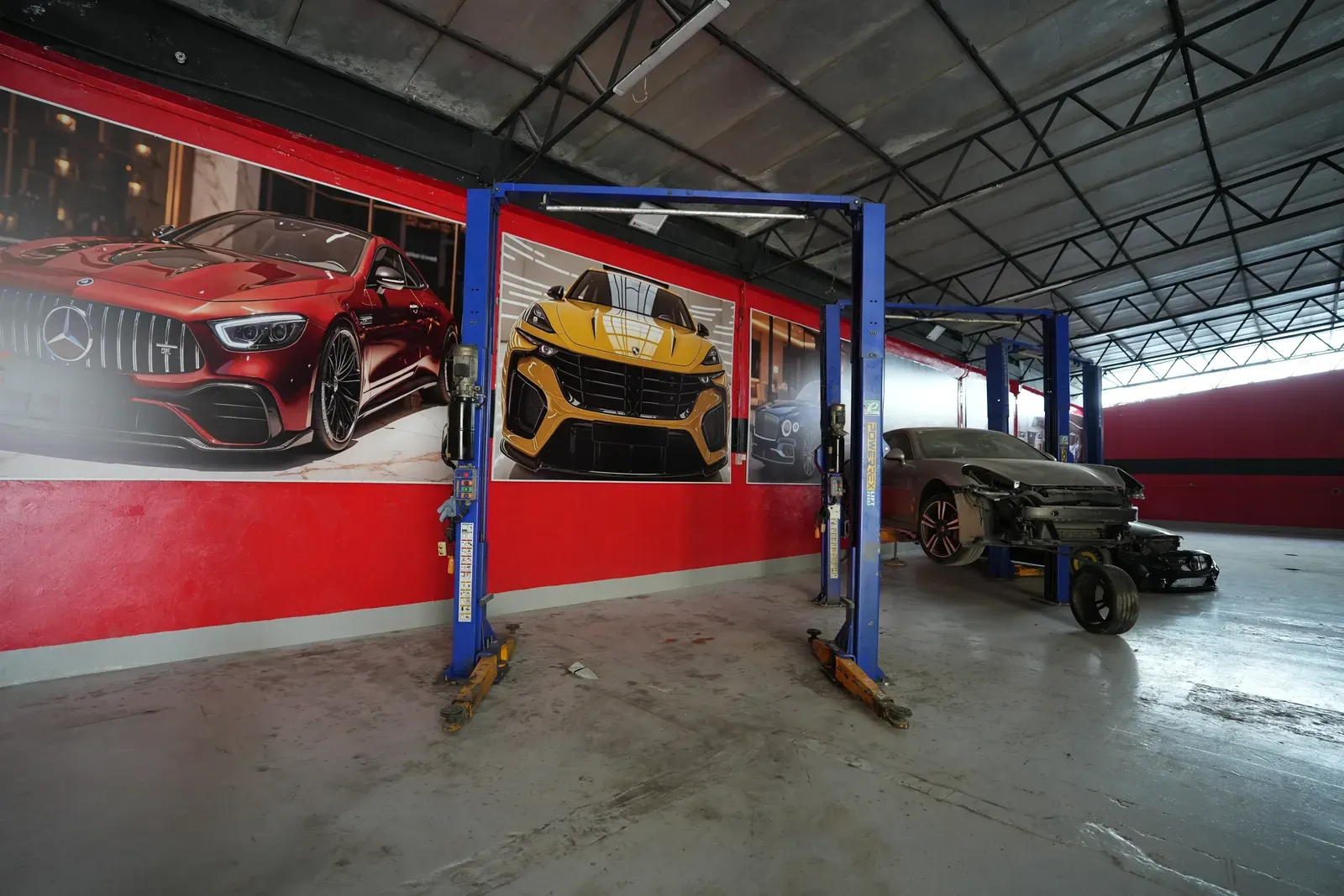
Brake repair
Brakes are the easiest job in a workshop to sell dishonestly, because the customer cannot see the part and will not argue about safety. So we take the wheels off and look at all four corners before quoting anything, instead of selling a full brake job from the doorway. Then you are told which parts are finished, which are still doing their job, and what each line costs. Nothing is replaced until you have said yes to it.
Start here
- 1Describe what the car is doing, in your words
- 2We investigate it and send you the findings and the price
- 3You approve each line before anything is done
1
Sounds like your car?
Find the line closest to what your car is doing. You do not need the name of the job — the symptom is carried into the booking form with it, and every line below starts at the same place: what we check, and how the work is done.
- 1 There is a grinding noise when I brake
- 2 It squeals in the morning and stops after a while
- 3 The steering wheel shakes when I brake from high speed
- 4 The pedal goes down further than it used to
- 5 The pedal feels spongy
- 6 The car pulls to one side when I brake
- 7 The brake warning light is on
- 8 There is a smell of burning after a long downhill
2
What is included
- 2.1Pad friction material checked on all four corners, inner and outer pad separately
- 2.2Discs checked for wear, cracking and scoring, and replaced only when they are genuinely finished
- 2.3Disc run-out checked on the car, so a warped disc is confirmed rather than assumed from the pedal feel alone
- 2.4Caliper slide pins and piston movement checked, cleaned and greased with the correct high-temperature grease
- 2.5Flexible hoses inspected for swelling, cracking and internal collapse
- 2.6Brake fluid tested for moisture content and boiling point, not just looked at
- 2.7Handbrake or electronic parking brake operation and adjustment
- 2.8ABS sensor readings checked on a road test, wheel by wheel
- 2.9Bedding-in procedure explained before you drive away on new pads
This work is done in this workshop, and nothing on your car is touched until you know what we found and what it costs.
3
What happens
-
3.1
Wheels off, every corner checked
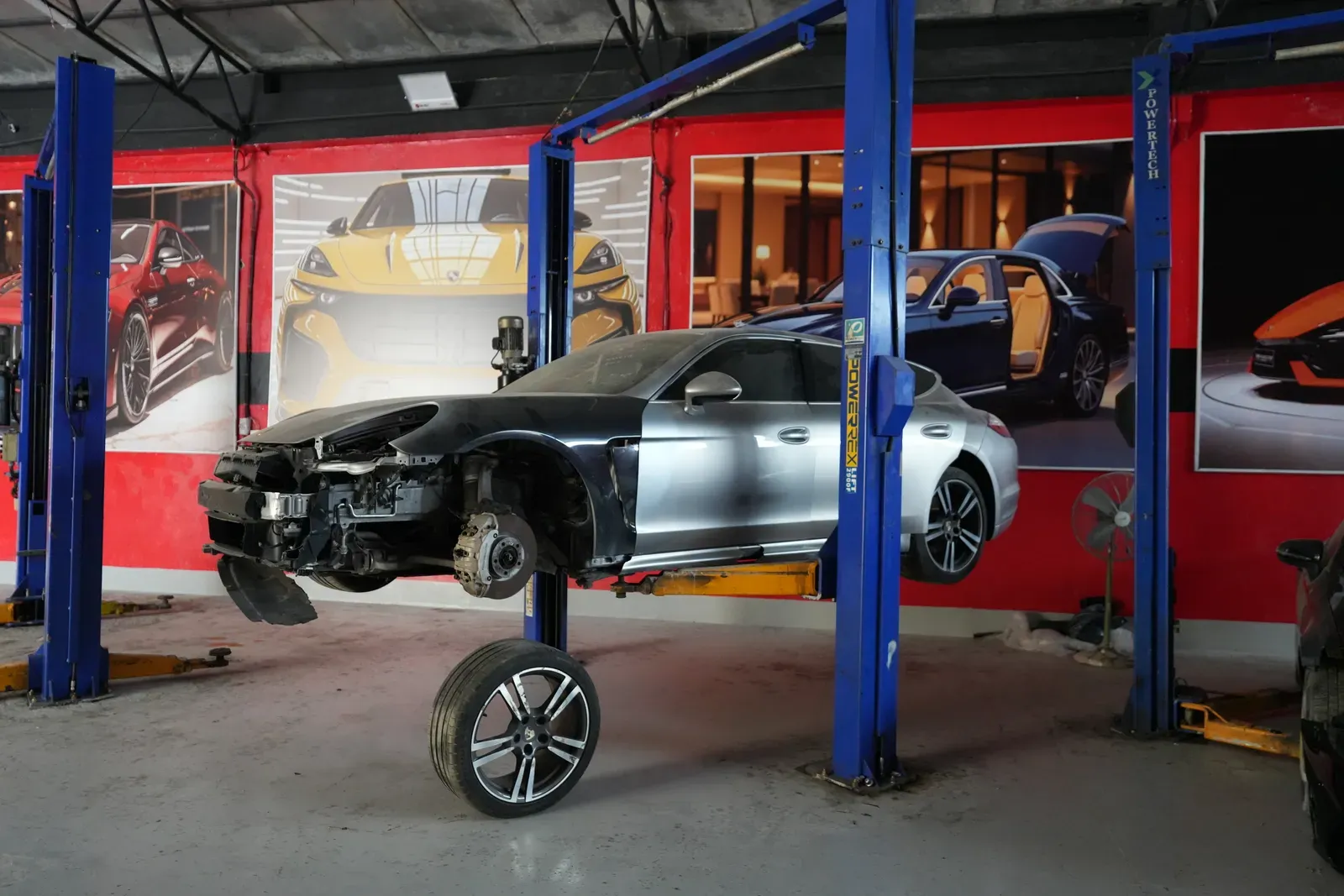
Brakes cannot be judged through a wheel gap. All four wheels come off, and the inner pad — which is the one that usually wears first and the one nobody can see — is checked separately from the outer.
-
3.2
Discs are not replaced by default
Plenty of workshops fit new discs with every set of pads, because selling the pair is easier than explaining the difference. A disc that is cracked, deeply scored or running out of true is replaced. A disc that is still doing its job stays on the car. You will be told which of the two yours is, and why, before that line goes on the estimate.
-
3.3
Fluid is tested, not eyeballed
Brake fluid absorbs water from the air, and water boils long before brake fluid does. A DOT 4 fluid leaves the factory boiling around 230 °C and is considered wet at 155 °C. That is why a pedal can feel fine in traffic and go soft after a long descent, and it is why the test matters more than the colour.
-
3.4
You approve corner by corner
Front and rear are separate lines on the estimate, and so are pads and discs. A car that needs front pads only leaves having had front pads only. We will also tell you how much life is left on the parts we are not replacing, so you know when to come back.
4
Common questions
Do the discs have to be changed every time the pads are?
No, and being told otherwise as a rule is a warning sign. A disc is replaced when it is worn past what the manufacturer allows, when it is cracked, or when run-out is out of tolerance. Otherwise it stays. Either way you will be told which it is and why before you approve anything.
Why do my brakes squeal when they are not worn out?
Squeal is vibration, not wear. Dust and glazing on the disc face, missing anti-rattle shims, dry caliper slide pins, or a hard low-dust pad on a car that was designed around a softer one all produce it. A morning squeal that clears after a few stops is usually overnight surface rust and is normal, particularly in humid coastal air.
Can I drive on grinding brakes until the weekend?
A grinding noise usually means the friction material has gone and metal is now cutting into the disc. Every stop you make is making the repair bigger and the braking distance longer. This is one of the few times we will tell you not to wait, and if you would rather not drive it we can collect the car.
Why are your pads more expensive than the shop down the road?
Sometimes they are not. Where they are, the difference is usually the brand of the pad and whether the caliper was serviced or just bolted back on. Ask any workshop which brand they are fitting and whether the slide pins are being cleaned and greased. A cheap pad on a seized caliper wears out on one side within months, and you pay twice.
Related services
Work that is often quoted alongside this, each with its own page.
- Suspension and steering Shock absorbers, arms, bushes, joints and steering — found by hand on a lift, not by guesswork.
- Car servicing Oil, filters and fluids, plus an inspection that tells you what is coming.
- Car repair General mechanical repair — cooling, belts, leaks, exhaust, the work that keeps a car usable.
- Car diagnostics Scan, live data and testing until the fault is proved — not a code read off a screen.