

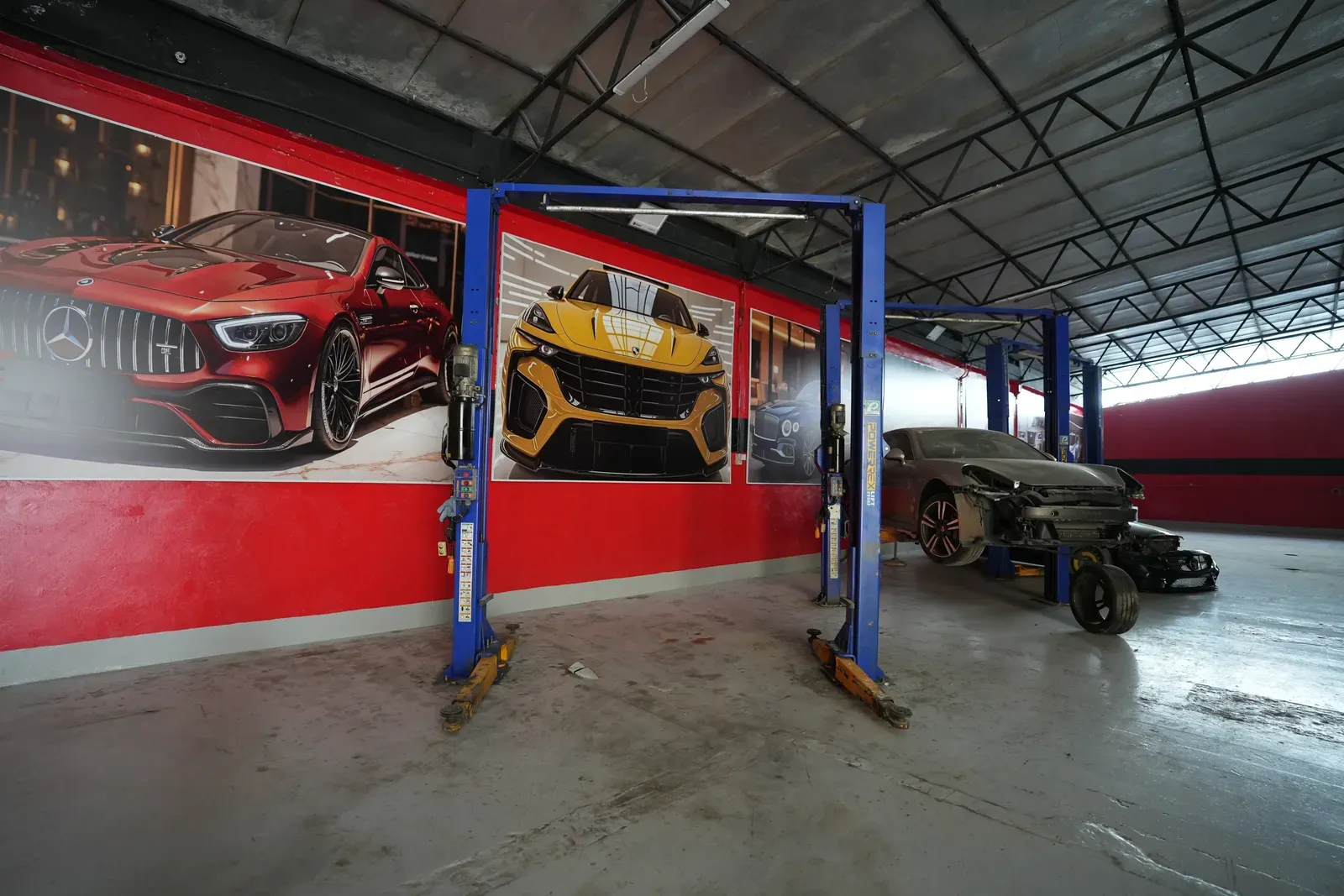
Tyre rotation, balancing and puncture repair
Tyre rotation, balancing, fitting and puncture repair at PetrolHeads in Industrial Area 5, Sharjah: tread measured at the inner, middle and outer edge of each tyre, the four-digit date code read off the sidewall, wheels balanced on the machine, rotation in the pattern your manufacturer specifies, and a straight answer on whether a puncture is repairable.
Tyres are the only part of a car that touches the road, and in this climate they age from heat and sunlight as much as from mileage. Balancing and rotation are the two cheap jobs that decide how long a set lasts: an out-of-balance wheel shakes the steering and wears the tyre in patches, and a set never rotated wears the front pair out while the rear pair still looks new. We read the age code and the wear pattern before anything is quoted, so what you are told is about your tyres, not about tyres in general.
Start here
- 1Describe what the car is doing, in your words
- 2We investigate it and send you the findings and the price
- 3You approve each line before anything is done
1
Sounds like your car?
Find the line closest to what your car is doing. You do not need the name of the job — the symptom is carried into the booking form with it, and every line below starts at the same place: what we check, and how the work is done.
- 1 There is a vibration in the wheel at high speed
- 2 The tyres are wearing on one edge
- 3 I keep having to put air in one tyre
- 4 I picked up a nail
- 5 The tyres look cracked but they still have tread
- 6 The front tyres are finished and the rear ones look new
- 7 I hit a pothole and something feels different
2
What is included
- 2.1Tread compared at the inner, middle and outer edge of each tyre, because uneven wear is what names the fault
- 2.2Tyre age read from the four-digit week and year code on the sidewall and written on the report
- 2.3Sidewall inspection for cracking, bulges and kerb damage, explained against the tyre it is on before a replacement is quoted
- 2.4Pressures set to the placard on the door pillar, checked cold
- 2.5Fitting, balancing and valve replacement
- 2.6Rotation front to rear in the pattern the manufacturer specifies, with a note of which tyre came from where
- 2.7Puncture inspection, and a straight answer on whether the damage is in the repairable area or not
- 2.8A wear pattern that points at alignment or a worn joint is said so, and the car is referred to the suspension and steering check rather than fitted with new tyres that will wear the same way
Dealer quality, at a lower price
- Dealer-level diagnostic and coding tools
- Genuine or original-quality parts as standard (cheaper parts only if you ask)
- The maker's own repair steps, service schedules and torque settings
We are an independent workshop, not the dealer: the same standard, at a lower price.
Every cost, clear and upfront
- Every cost upfront, before any work
- The fault found before it is priced
- You approve every line
- Collection and return
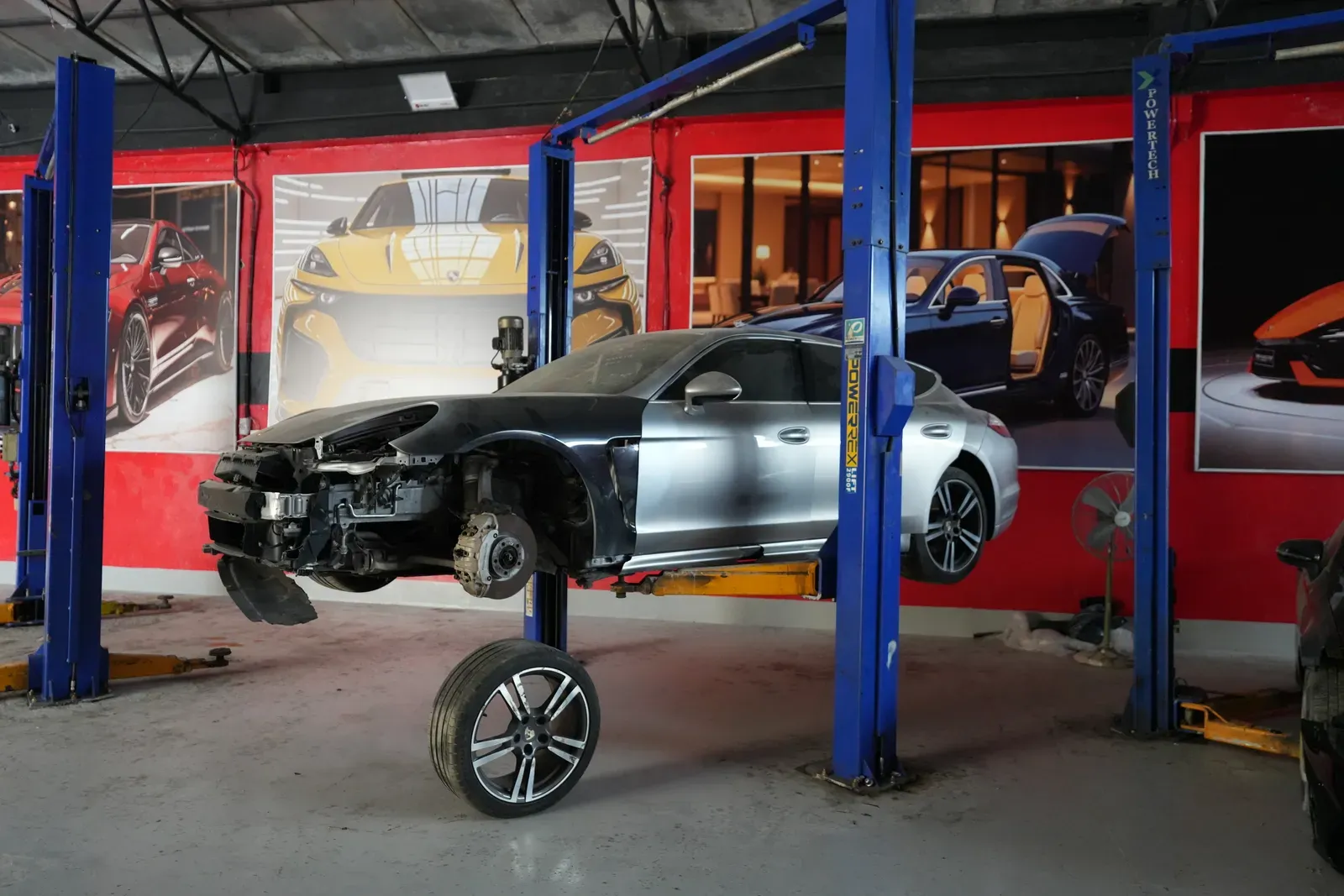
This work is done in this workshop, and nothing on your car is touched until you know what we found and what it costs.
3
What happens
-
3.1
The wear pattern is read before anything is sold
Wear on the inner edge only, on both edges, or in patches across the tread are three different faults with three different causes, and one of them is simply under-inflation. We measure at three points across each tyre and tell you what the pattern is saying — and if it is saying alignment or a worn joint, we say that rather than fit tyres that will wear the same way.
-
3.2
Age is checked as well as depth
Every tyre carries a four-digit code giving the week and year it was made. In Gulf heat and sunlight a tyre can be dangerous with plenty of tread left, because the rubber has hardened and the sidewall has begun to craze. We read that code and show it to you on the tyre.
-
3.3
Balanced on the machine, not by feel
Each wheel is spun on the balancer and weighted where the machine says, then checked again. A vibration that is still there afterwards is not a balance problem, and we say so instead of adding weights until it is masked.
-
3.4
Rotated in the right pattern, and written down
Front-to-rear, cross or same-side depends on the car and whether the tyres are directional. We follow the manufacturer’s pattern and note on the record which tyre went where, so the next rotation continues the sequence rather than undoing it.
4
Common questions
How do I know when a tyre is too old?
Read the four-digit code on the sidewall: the first two digits are the week, the second two the year. Then look at the rubber. Fine cracking in the sidewall grooves, hardness and a shiny surface all say the tyre has aged whatever the tread says. Bring the car and we will read the codes with you rather than telling you a number over the phone.
Can my puncture be repaired or do I need a new tyre?
It depends where the damage is. A clean puncture in the central tread area is generally repairable; damage in the shoulder or the sidewall is not, because that part of the tyre flexes constantly and a repair there does not hold. We will show you where the hole is before we tell you which of the two you have.
How often should tyres be rotated?
Most manufacturers say every 8,000 to 10,000 kilometres, which for many drivers here is every service. The honest test is the tread: if the fronts are visibly lower than the rears, it is overdue. Rotating a set on time is the cheapest way to make four tyres wear out together instead of two at a time.
Do I have to change all four tyres at once?
Not always. In pairs on the same axle, generally yes, so the two sides grip alike. All four together matters most on permanent four-wheel-drive vehicles, where a significant difference in rolling diameter between axles loads the transfer case. Tell us the model and we will tell you which of those you are driving.
My car pulls to one side. Is that the tyres?
Sometimes, and it is quick to rule in or out by swapping the front pair side to side. If the pull follows the tyre, it was the tyre. If it stays, it is alignment or a suspension joint, and that is checked on the suspension and steering page rather than here — we do not sell you new tyres for a fault that is not in them.
Is a vibration at high speed always a balance problem?
Often, and balancing is the cheap first step, but not always. A vibration that stays after the wheels are balanced on the machine is a bent rim, a tyre with a shifted belt, or a worn suspension joint — and we say which rather than adding weights until it is masked. A shake that comes only when braking is a brake disc, which is a different page.
Related services
Work that is often quoted alongside this, each with its own page.
- Suspension and steering repair Shock absorbers, arms, bushes, joints and steering — found by hand on a lift, not by guesswork.
- Brake repair Pads, discs, calipers and fluid — what is actually worn, priced before it is replaced.
- Car servicing Oil change, filters and fluids to the maker’s schedule, plus an inspection that tells you what is coming — minor and major service on their own pages.
- Minor service The short-interval service: oil, filter, fluids and a full check. The one you have most often.
- Pre-purchase inspection Before you hand over the money, have the car put on a lift and looked at properly by someone who is not selling it to you.
Further reading
What we have written about this subject, with the sources we read.
- What these roads wear out, and how a knock is told from a clunk Bushes, ball joints, drop links, shock absorbers, top mounts and wheel bearings all announce themselves as a noise, and several of them make the same noise. The separating is the work. A bounce test will not do it; a lift, a pry bar and a road test with the radio off will.
- Tyres in this climate: age, pressure, and the four digits nobody reads A tyre with plenty of tread can be finished. Tread measures wear; it does not measure age, and in this climate age is the one doing the damage. Here is how to read what your tyre is actually telling you.
- What the heat actually does to a car here, system by system Gulf heat ages engine oil roughly twice as fast for every extra 10°C, asks the cooling system to hold the pressure that keeps coolant from boiling, runs the battery above its 20°C optimum all summer, ages tyre rubber whether the car moves or not, and attacks paint and plastics with sun plus heat. The maker’s severe-conditions schedule allows for it.