
Supercars and performance cars
A low car is a different job before a spanner is picked up: getting it onto the lift, off the lift, and back out of the door without touching it anywhere it should not be touched.
We work on these cars. We hold no manufacturer approval, authorisation or appointment for any of them, and we will tell you plainly when a job needs something this building does not have.
What changes when the car is low and the parts are scarce
None of this is glamour. It is the short list of ways these cars get damaged in workshops, and the handling that stops each one.
- 01
Getting it onto the lift is part of the job
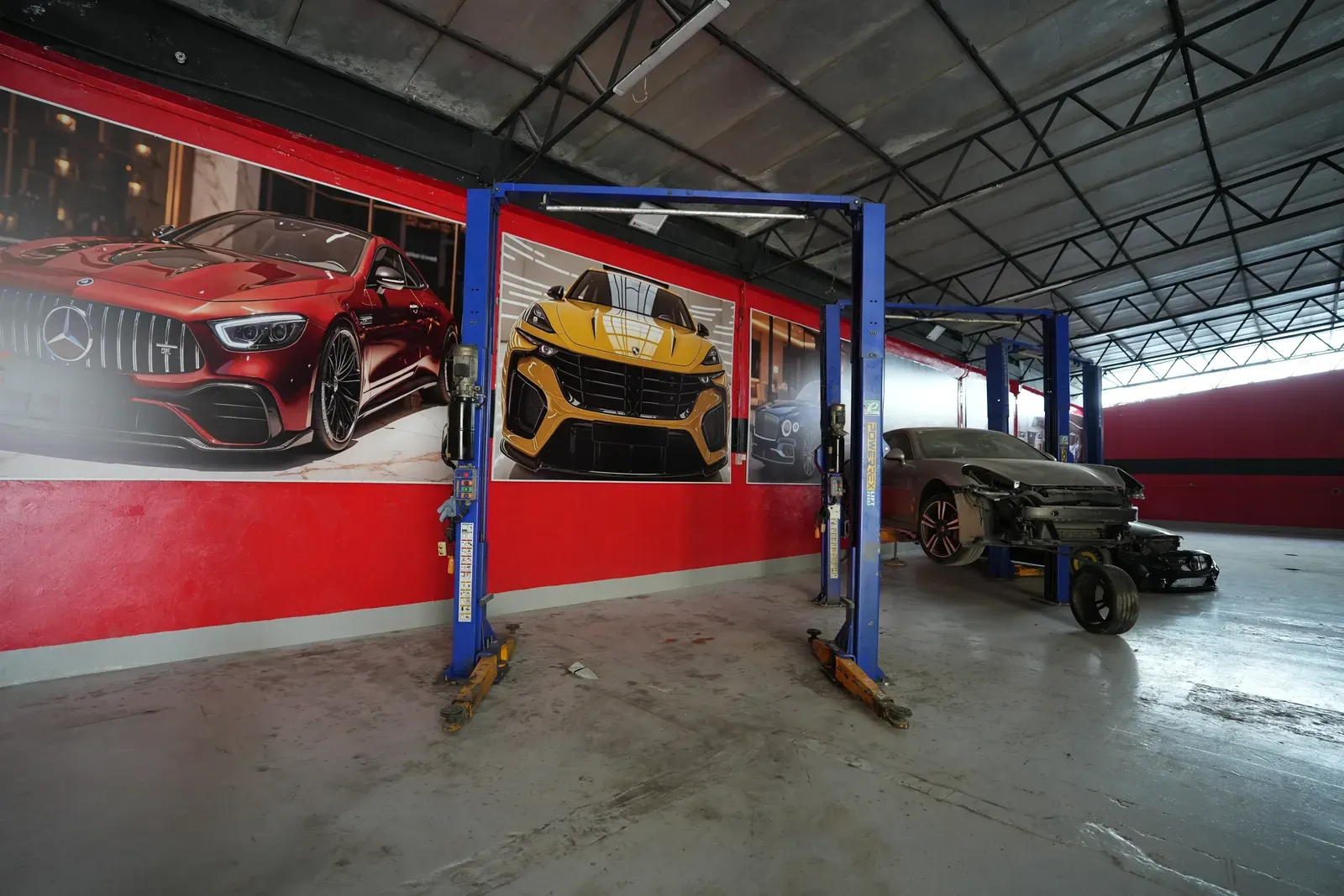
A two-post lift is built for a car with ordinary ground clearance. A car with a front splitter has to come up ramps before it can reach the arms at all, the arms take blocks so the pad meets the factory jacking point and not a sill, and a car with hydraulic nose lift has that raised before it moves, not after it has already found the threshold.
- 02
Torque is a number, and the number is written down
Aluminium, magnesium and composite have a torque figure and a tightening sequence, and neither survives a rattle gun in a hurry. Wheel fasteners go on with a calibrated torque wrench to the figure for that car, in sequence. Suspension fasteners are torqued at ride height where the manual says so, not in the air.
- 03
The most common fault on these cars is that they sit
A car used at the weekend and parked the rest of the time loses charge, and on a modern performance car a low battery does not read as a low battery. It reads as a screen of unrelated faults across systems that are simply browning out. Anything staying with us goes on a maintainer, and a car that arrived with a list of warnings gets its supply proved before anybody chases the list.
- 04
Some parts arrive on their own schedule
A part ordered against your VIN and flown in takes as long as it takes, and no workshop controls that. What we control is whether you are told before the car is stripped. You get the expected wait up front, and if a part turns out to be weeks out you decide whether to leave the car or take it home and come back.
- 05
You are told which building your car is in
A good deal of what is advertised as specialist work in this country is sent out — paint, trim, machining, gearbox internals — and the customer is usually not told. We will tell you which part of a job is done on this floor and which part goes out, before it goes, and you can say no.
The useful question is not whether a workshop calls itself a specialist. It is which parts of the job stay in the building, and whether anyone will tell you.
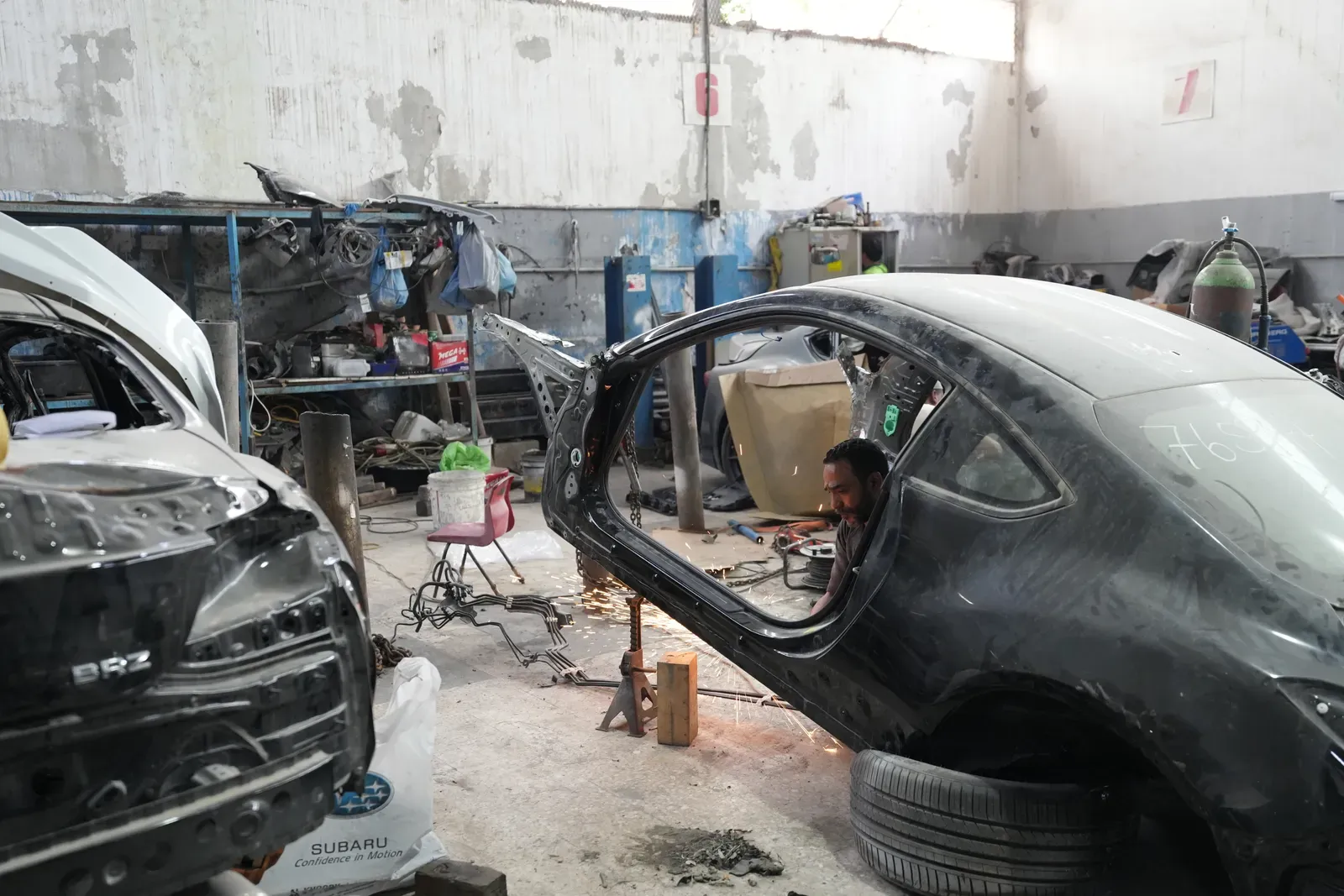
The body shop in Sharjah.
What we see in this group
- Lamborghini
- Ferrari
- McLaren
- Aston Martin
- Bentley
- Maserati
- Porsche 911 and GT models
- Mercedes-AMG
- BMW M
- Audi RS
- Nissan GT-R
These are marques we work on, and that is the whole of the claim. There is no approval, authorisation, franchise or appointment behind any name on this list, from anybody.
What a Gulf summer does to a car that is parked
Most of these cars do low kilometres and spend the year standing. Heat does not wait for the car to be driven, and almost everything on this list ages on a calendar rather than on an odometer.
- Tyres age out before they wear out. The date code on the sidewall matters more than the tread on a car that does not cover distance.
- A battery left to self-discharge in this heat does not recover; a maintainer costs less than the battery and far less than the faults a flat one invents.
- Brake fluid absorbs moisture with time, not with mileage, and moisture is what drops its boiling point. It is tested.
- Rubber and composite — seals, bushes, hoses, mounts — harden under sustained heat whether the car moves or not.
- Sun takes the clear coat and any unprotected trim. It is the one kind of damage on this page you can see from across a car park.
- Speed bumps and ramp thresholds do more damage to a splitter in this country than any road does.
What this kind of car looks like
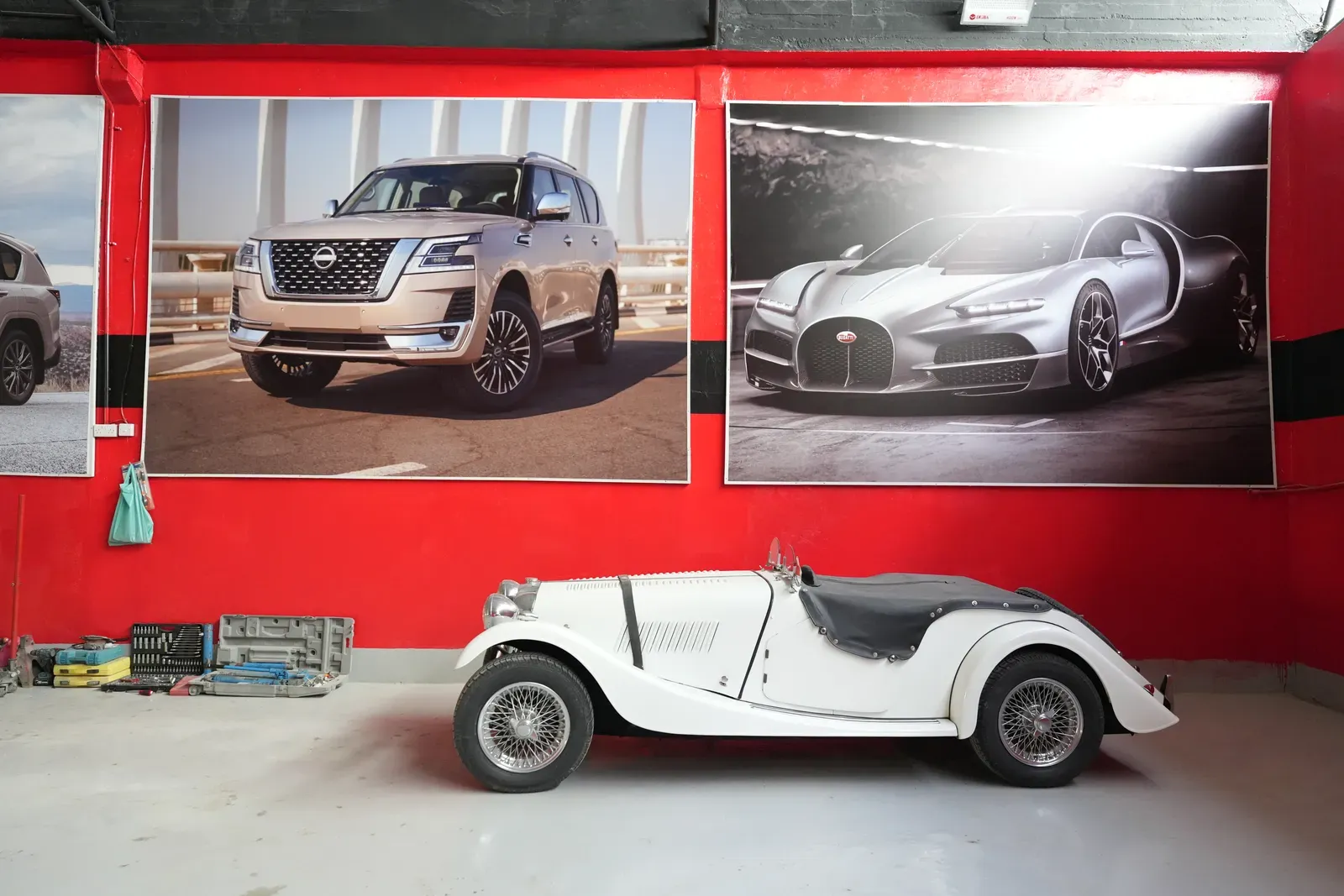
Three frames of the kind of car this page is about — the proportions, the ride height and the packaging that decide how it goes on a ramp and what it takes to work on.



Ask us this before you bring it
On a car of this value the useful conversation happens before it is on a truck. Four of these are the same on any car; the first one is not, and it is the one worth asking on this page.
- Whether the job stays in this building. Where it needs a machine or a trade we do not have, it goes out — and you are told which part, to whom, and before it moves, not afterwards.
- The make, the model year and which engine, if you know it — the same model often came with two, and they do not fail the same way.
- What the car is actually doing — the noise, the smell, the warning light — and when it does it: cold, hot, turning, braking, or all the time.
- Any recent work, and who did it. A fault that appeared straight after a job usually belongs to that job, and that is the quickest thing to check.
- Whether it still drives, or needs collecting. If it does not move, say so first — it changes what we arrange, not whether we take it.
Ask before you bring it
Send the model and the job. If it is something we should not take on, you will get that answer first, and it costs you a message rather than a recovery truck.
Related services
- Car diagnostics Scan, live data and testing until the fault is proved — not a code read off a screen.
- Brake repair Pads, discs, calipers and fluid — what is actually worn, priced before it is replaced.
- Suspension and steering Shock absorbers, arms, bushes, joints and steering — found by hand on a lift, not by guesswork.
- Engine repair Compression and leak-down testing first, then head, gasket, timing or overhaul work.
- Accident and body repair Dents, panels and accident repair — insurance claim or your own cost, explained in order.
- Car painting and respray Panel paint and full respray, mixed to your paint code and baked, not air-dried in the sun.
- Pre-purchase inspection Before you hand over the money, have the car put on a lift and looked at properly by someone who is not selling it to you.