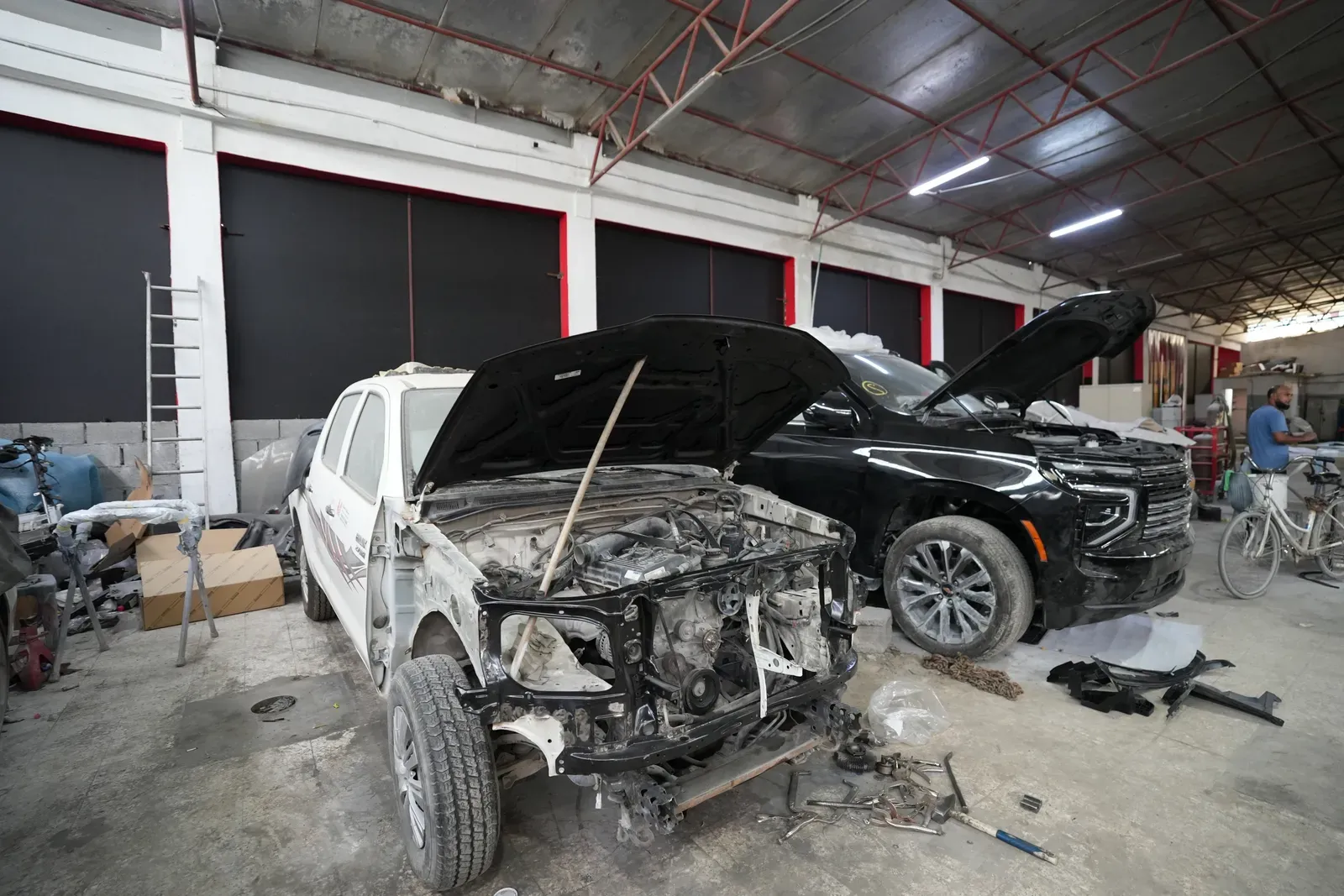
An engine bay open on the workshop floor, photographed close.

Infiniti repair in Sharjah

An Infiniti is a Nissan platform with a layer of its own on top, and almost everything that brings one in lives in that layer: the VVEL valve-lift mechanism on the VQ37VHR, steer-by-wire on a Q50, a camera network that has to be calibrated, a transmission working under seven seats. We establish which of those a car has before anything is priced, because the shared parts underneath are the cheap half of the job.

Why we see these

Infiniti is a used-car make in Sharjah more than a showroom one. The QX80 and the older QX56 arrive as family cars carrying seven people and a weekend in the sand, the Q50 and the coupes arrive with young owners who bought them for the engine, and the QX60 arrives as the school run. That mix matters because it splits the work in two. The big cars fail at the heavy end — levelling systems, arms, cooling under load — and the Q50 and QX70 fail at the clever end, in the systems Infiniti added that the Nissan underneath does not have. The other local factor is servicing history: these cars are cheap to buy second hand and are often maintained as though they were the base model they are related to, which is how a VVEL-equipped engine ends up being run on long oil intervals and how a transmission that lives on its fluid temperature ends up with fluid nobody has looked at.

What this make asks of a workshop

  • Diagnostic access that reaches the systems Infiniti added, not only the engine and the gearbox. Steering, camera and levelling modules each hold their own faults and their own live data, and a scanner that stops at the powertrain will read a Q50 steering complaint as no fault found.
  • Calibration treated as part of the repair rather than as an extra. A camera disturbed, a windscreen replaced, a steering rack or a suspension arm changed — each of those ends in a calibration or a steering angle reset, and a car handed back without it has a system that is quietly out by a few degrees.
  • Oil on time and to specification on the engines with variable valve lift. The VVEL mechanism is oil-fed and oil-actuated, so an extended interval in this climate is felt there first, and a ticking top end on one of these usually has a service history behind it.
  • Transmission fluid judged on temperature and condition rather than on a slogan. A continuously variable transmission working under a loaded seven-seat SUV in summer traffic runs at the top of its designed range, and the useful questions are what the fluid temperature actually reaches and whether the cooler circuit is flowing.
  • Parts identified by what the car has, not by the model name on the back. Two cars with the same badge and the same year can carry different engines, different transmissions and different suspension, and the only reliable way through that is to read the car.

What actually comes in

Named at component level, with what the driver notices first and what we do to establish it is that and not something else that feels identical from the driving seat.

VVEL variable valve lift actuator, its ladder assembly and the VVEL control module — VQ37VHR

A tick or a light knock from the top of the engine, worst on a cold start and from one bank, a rough idle, a hesitation off the line, or the car dropping into reduced power with an engine warning.

How we establish it

This is the mechanism that makes the engine an Infiniti item rather than a generic V6: instead of a throttle doing all the work, an electric actuator drives a linkage that changes how far the intake valves open, and it does that under oil. So a noise from the top of this engine is not automatically a lifter. We read the VVEL module for its own faults and watch the commanded lift position against the reported one, bank by bank, and we check oil condition and service history because the mechanism and the module both suffer when the oil has been left long in this heat. Actuator, linkage and module are three different repairs at three different prices, and they get separated before anything is quoted.

Primary and secondary timing chains, their guides and the oil-fed tensioners — VQ37VHR

A rattle from the front of the engine for the first seconds after a cold start, a whirring that rises with revs, or a camshaft timing code stored after the car has been standing for a week.

How we establish it

This engine runs more than one chain and the tensioners are pressurised by engine oil, which is why the noise is loudest in the seconds before pressure arrives and why a car that sits for days is worse than one driven daily. We read the camshaft correlation values against crank position hot and cold, listen at the front cover rather than the top of the engine, and look at what the oil is like. Naming the chain here is a serious thing to do, because access on a V6 in a transverse installation is not a short job, so we would rather establish it properly than sell a guess.

Direct Adaptive Steering — the steer-by-wire force feedback actuator, the backup clutch and the three control units behind them on the Q50

A steering message on the dash, the wheel suddenly feeling heavy and mechanical when it did not before, the steering wheel not centred while the car goes straight, or no self-centring at all coming out of a turn.

How we establish it

This car is not steered the way another car is steered, and that is the whole diagnosis. On a Q50 with this option the wheel is normally not mechanically connected to the rack — a clutch holds the column apart and motors do the steering — and when the system faults, that clutch closes and the column connects, which is exactly the sudden heavy, mechanical feel drivers describe. So a complaint of heavy steering here is read as the system telling you it has already dropped out, not as a power steering problem. We read all three control units, check their supply and earth and the state of the battery, and confirm the steering angle sensor and its calibration, because this system will not be happy after alignment or suspension work until that is reset.

Transmission fluid temperature and the torque-converter lock-up under a loaded three-row QX60

A shudder or a surge on a gentle climb with the car full, engine revs rising without the car gathering speed, a delay before drive engages when hot, or the car reducing power on a long summer run.

How we establish it

The transmission under a seven-seat Infiniti is not the unit under a small saloon and it does not fail for the same reason, so it is not diagnosed the same way. On the lighter cars in this family the story is wear inside the variable drive itself at light throttle. Here the variable is mass and heat: a loaded body, a third row and a summer climb push fluid temperature up until the module protects itself by cutting power, and the lock-up clutch chatters on a gentle climb while it tries to hold. So we log fluid temperature and the point at which the car derates, on a road test loaded the way you actually use it, and we watch engine speed against output speed at the moment of the shudder to see whether that is lock-up chatter or genuine slip. Those are two different repairs, and the cheaper one is only cheap if somebody looks early.

Rear levelling air struts, the levelling compressor and its relay on the QX56 (JA60)

The back of the car sitting down when it is loaded and staying down, a compressor that runs on and on after the car is started, or headlights pointing at the sky with passengers in the back.

How we establish it

This is a rear levelling system rather than a full four-corner air suspension, and it fails in a particular order: a rear strut leaks slowly, the compressor runs longer and longer to keep up, and then the compressor is the part that dies. We test it as a circuit — check the rear struts and their lines under pressure, listen for where air escapes with the system charged, and watch how long the compressor runs and whether its relay is doing its job. Fitting a compressor to a car with an untraced leak buys a few weeks. Finding the leak first is the difference between one repair and two.

Around View Monitor cameras, their tailgate and mirror wiring, and the camera control unit

One quadrant of the overhead view black or frozen, a camera unavailable message, the guide lines not lining up with the kerb, or the reversing image working sometimes and not others.

How we establish it

The overhead picture is stitched from four cameras, so one bad image is one camera, one wire or one calibration rather than a screen fault. We read the camera control unit for which input it has lost, then test that camera for supply and for its video signal at the connector — the tailgate and door hinge looms are where these break, because the wire flexes every time the car is opened. Where the picture is present but the guide lines do not match the world, that is a calibration matter: a camera, a mirror or a bumper that has been disturbed puts the stitched view out, and it has to be reset rather than lived with.

Front lower arm bushes, rear multi-link arms and the steering rack mounts on the FM-platform cars — FX35, FX37, QX70, Q50 and Q60

A knock from the front over joints in the road, a vagueness in the steering just off centre, a shimmy that appears at one particular speed, or front tyres feathering on their inner edges.

How we establish it

These are low-profile-tyred cars on a multi-link platform with a lot of separate arms and joints, and they are set up with more negative camber at the front than a family saloon — so inner-edge wear can be normal for the car and can also be the first evidence that a bush has gone soft. The car goes on a lift and each arm and joint is levered under load individually, front and rear, so the quote names the component and not the corner. Anything replaced ends with a four-wheel alignment and, on a Q50 with the electronic steering, a steering angle reset as well, because that system depends on knowing exactly where straight ahead is.

All-wheel-drive transfer clutch pack and its actuator on the FM-platform cars — FX, QX70 and all-wheel-drive Q50 and Q60

A binding, shuddering drag when turning tightly at low speed — in and out of a parking space or up a car park ramp — a four-wheel-drive warning on the dash, or a car that has started to feel as though it is driving on the rear wheels alone.

How we establish it

The drag on full lock at walking pace is the symptom that gets misread, because it feels like a brake or a differential and it is usually neither. The first thing we check is the tyres: four matched sizes with similar wear, and the pressures correct. One odd tyre, or a pair replaced on one axle alone, makes a healthy clutch fight itself on every tight turn, and that is the most common cause of this complaint here by a distance. Only once that is excluded do we read the drive module for its faults and watch the torque split it is commanding in live data, check the transfer case fluid for condition and level, and test the actuator circuit for supply and signal. A clutch pack is the last item on that list rather than the first.

Turbocharger oil return and the after-run coolant pump on the VR30DDTT twin-turbo in Q50 and Q60

Blue smoke on start-up after the car has been sitting, a whistle or a siren note that was not there before, oil consumption between services, or boost that falls away on a hot afternoon.

How we establish it

These turbochargers are water-cooled and the car continues to circulate coolant through them after the engine is switched off, which is what protects them when a hot car is parked. So we check that the after-run pump actually runs, and we take an owner who parks straight after a hard drive seriously as part of the picture. On the mechanical side we watch requested boost against actual on a road test, check the oil return path rather than only the turbo itself, and inspect the oil and the service interval. Fitting a turbocharger to a car with a restricted oil return or a pump that no longer runs kills the new one as well, so we test the circuit before anyone prices a part.

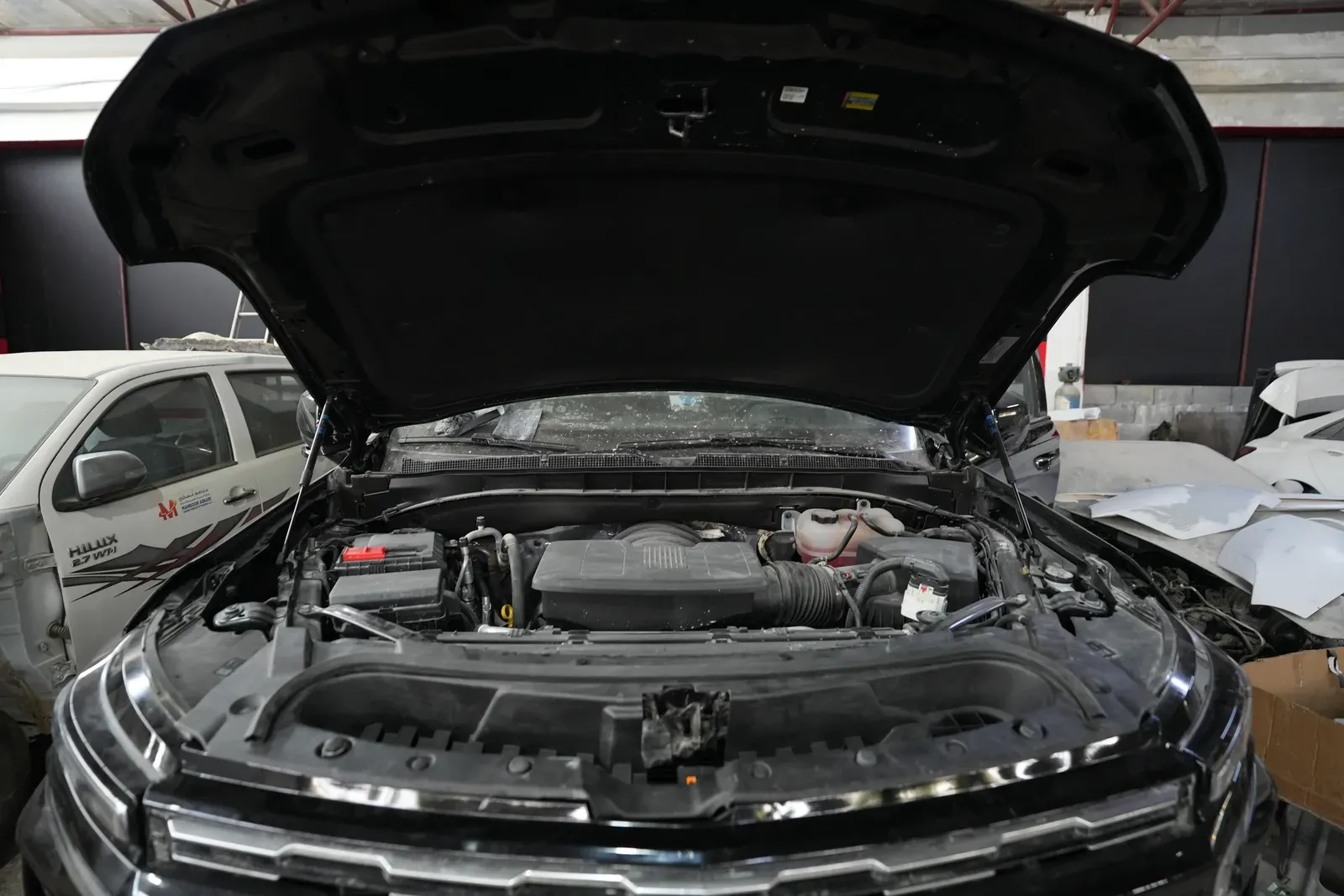
A row of cars with bonnets open in the workshop bay.

Every one of these is found on a lift in this building, and priced before it is touched.

The work this usually turns into

And everything else, on the same car

The list above is what this make usually arrives needing. This is the rest of what the workshop does, and it applies to your car as much as to any other — worth knowing while it is already here.

Questions we get asked about these

There is a tick from the top of my engine. Is that the VVEL?

It might be, and that is why it is worth checking properly rather than being told it is a lifter. On the VQ37VHR the intake valves are worked through an actuator and a linkage that changes how far they open, and that mechanism is fed and moved by oil. A noise from the top of the engine can be that linkage, or the actuator, or the control side of it, or something ordinary and much cheaper. We read the VVEL module for its own faults, compare the lift position it is asking for with the one it reports, bank by bank, and look at the oil and the service history, because a long interval in this climate is felt here before anywhere else.

My Q50 steering suddenly went heavy and there was a warning. What happened?

If your car has the steer-by-wire option, that heavy feeling is the system telling you it has stepped out. In normal running the wheel is not mechanically connected to the rack: a clutch holds the column apart and the steering is done by motors. When the system faults, that clutch closes and you get a direct mechanical connection with no assistance, which is safe to drive on but feels exactly as you described. So the fault is not in a pump or a belt. We read the control units involved, check their supply and earth and the battery, and confirm the steering angle sensor and its calibration. It is also why alignment or suspension work on one of these ends with a steering angle reset rather than a road test and a handshake.

People tell me the CVT in my QX60 is a time bomb. Is it?

What we can tell you is what actually decides how one of these lives, and in a seven-seat car in this climate that is heat. A loaded body, a third row and a summer climb put the fluid near the top of its working range, and the cooler circuit is then doing the work that keeps everything else inside its limits. So rather than repeating a reputation, we road test the car loaded the way you use it, log the fluid temperature, watch engine speed against output speed to see whether there is real slip, and check the flow through the cooler and the condition of the fluid. If it is caught as a heat and fluid problem it is a service. Left until the shudder is constant it is not. We will tell you which of those two we are looking at.

Is an Infiniti just a Nissan? Can I use ordinary Nissan parts and service?

Underneath, a lot is shared, and that is genuinely good news for the ordinary items — brakes, filters, arms and bushes are often straightforward and sensibly priced. What is not shared is the layer Infiniti added on top, and that is where most of the faults on this page live: the valve lift mechanism on the engine, the steering on a Q50, the camera system, the levelling system on the big cars. Those are not on the related Nissan and they are not diagnosed by the same route. The practical answer is that your car has to be read rather than assumed from the badge, because two Infinitis of the same model year can be quite different cars underneath.

It drags and shudders when I turn sharply at low speed. Is the four-wheel drive broken?

Possibly, but the first thing to rule out costs nothing. On an all-wheel-drive car of this family the drive is shared through a clutch pack, and that pack decides what to send forward from how fast each wheel is turning. Fit one tyre of a different size or a noticeably different wear, or replace a pair on one axle only, and the car sees a permanent speed difference and the clutch fights itself every time you turn tightly — which feels exactly like the fault you are describing. So we measure and compare all four tyres before anything else. If they are matched, we read the drive module, watch the torque split it is commanding, check the transfer case fluid, and test the actuator circuit, in that order.

Bring it in and we will find out

Nothing happens to the car until the fault has a name and you have approved the work against it.

Book WhatsApp us Call