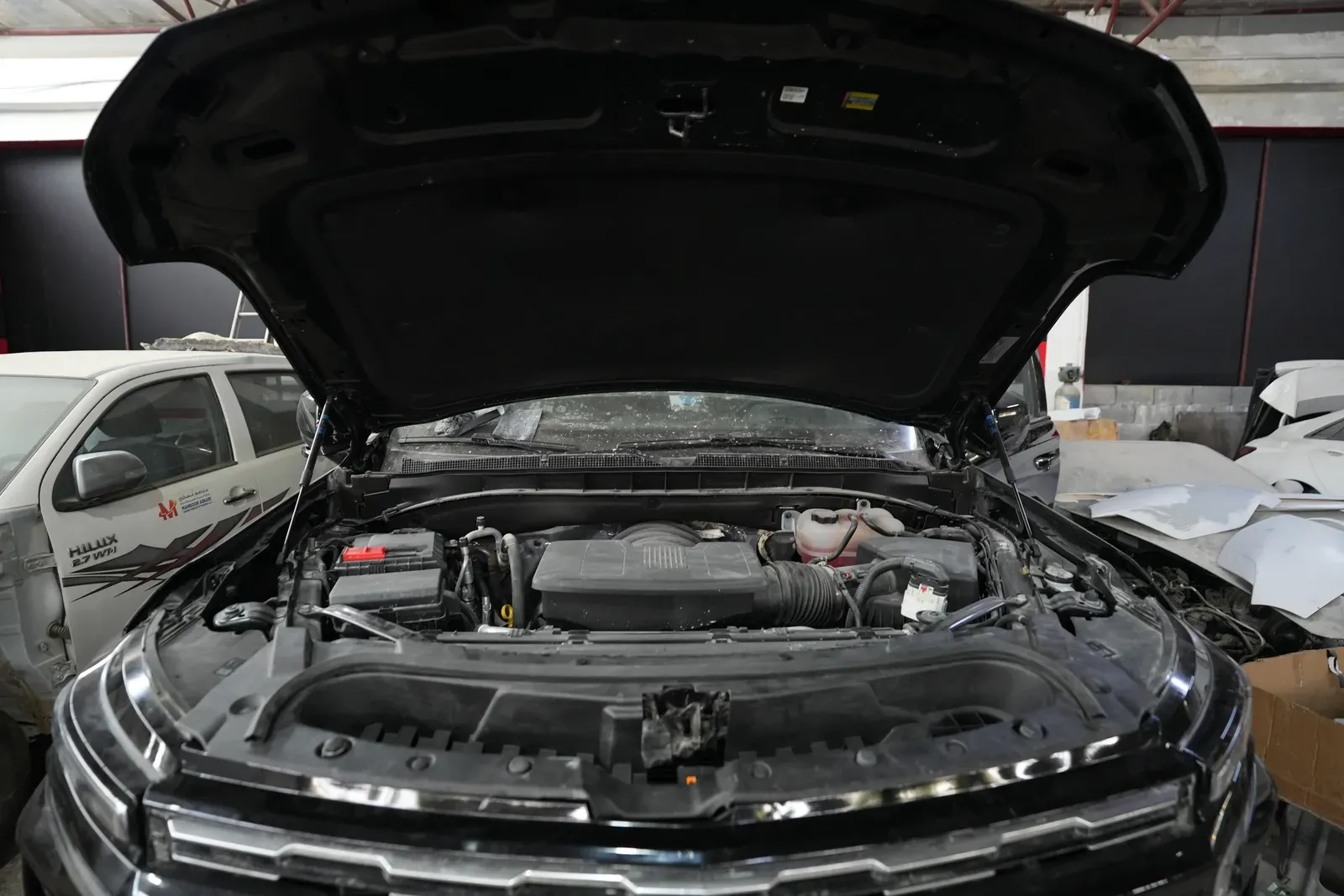
An engine bay open on the workshop floor, photographed close.

Nissan repair and servicing in Sharjah

On an Altima, an X-Trail, a Sunny, a Kicks or a Pathfinder, the component that decides the conversation is usually the CVT. It is a steel belt squeezed between two cone pulleys by hydraulic pressure, it is governed by the temperature of its own fluid, and it behaves differently in August than it does in January. So the first thing we settle is whether the complaint belongs to the gearbox, to the engine, or to neither — because those three answers are priced nothing like each other.

Why we see these

These are the cars Sharjah actually moves on: the family saloon, the small hatchback bought new by one owner and sold on twice, the seven-seater doing school runs, and whole rental and company fleets of the same three models. They are cheap to buy used and that is exactly why they reach a workshop tired. Almost all of them are automatic, almost all of the recent ones are CVT, and a very large share have never had the CVT fluid changed, because somebody was told it was sealed for life. Add a duty cycle that is mostly short trips, stop-start traffic and a cooling system asked to work at 45 degrees ambient, and the pattern is predictable: the engine is generally fine and the transmission, the air conditioning and the electrics are where the money goes. Parts are the easy part here — the hard part is being honest about which of those three is actually failing.

What this make asks of a workshop

  • The transmission identified by type before anything is touched. A CVT is not an automatic with more ratios in it, it does not share fluid with one, and Nissan specifies NS-2 or NS-3 by name depending on the unit. A CVT that has been topped up with a generic ATF has already been damaged by the time it arrives.
  • Diagnostic access that shows CVT live data and not only stored codes — fluid temperature, input and output shaft speed, the actual pulley ratio and line pressure. The fault on these units is a behaviour under heat and load, and a behaviour does not always leave a code behind.
  • The CVT cooling path treated as part of the transmission. The fluid gives its heat up through a heat exchanger and a cooler in the front of the car, and a restricted or scaled cooler will cook a unit that is otherwise healthy.
  • Oil to the grade the engine was built around, on an interval shortened for short urban trips. The timing chain guides on the QR25DE and the oil gallery gaskets on the VQ35DE both depend on oil that is still oil.
  • Key, immobiliser and body control module work done with the car in front of us. On these cars the key is registered to NATS through the BCM, so a key, a BCM or a steering lock is not a part you post to somebody.
  • The market the car came from established from the VIN, not from the badge. Nissan sells the same names with different engines and different equipment in different markets, and an Altima 2.5 and an Altima 3.5 are two different repairs sharing one boot lid.

What actually comes in

Named at component level, with what the driver notices first and what we do to establish it is that and not something else that feels identical from the driving seat.

CVT steel belt and cone pulleys — judder on light throttle, whine, and high-temperature derate

A shudder like driving over rumble strips when pulling away gently, a whine that rises and falls with speed, or the car going soft and refusing to pick up after half an hour in traffic and then behaving normally again once it has cooled.

How we establish it

This is diagnosed hot and moving, not cold on a ramp. We read CVT fluid temperature, input and output shaft speed and the commanded against actual pulley ratio on live data while the car is driven, so we can see whether the unit is slipping, whether it is entering its own high-temperature protection, or whether the shudder is a misfire being blamed on the gearbox. We also look at the fluid itself and at the cooler circuit, because a burnt smell and a restricted cooler change what is worth spending on a unit and what is not.

CVT fluid condition, the heat exchanger and the cooler circuit in front of the radiator

A transmission temperature warning on a long run or on an incline, power cut back without any warning light at all, or a car that has simply never had this fluid touched in its life.

How we establish it

The phrase filled for life is the single most expensive sentence attached to these cars. We draw a sample and judge the fluid on colour and smell, check the cooler circuit for flow and for the scale and debris that collect in it, and read the temperature the unit actually reaches on a normal Sharjah drive rather than the one it reaches on a cool morning. Where the unit is already damaged we say so instead of selling a fluid service that will not save it.

Timing chain guides and tensioner on the QR25DE 2.5 four-cylinder

Two or three seconds of rattle from the front of the engine on the first start of the day, later a rough idle, and eventually a cam timing code and a light on the dash.

How we establish it

The plastic guides go brittle long before the chain itself is finished, and the tensioner is hydraulic so it needs oil pressure to hold anything at all. We listen at the front cover with the engine genuinely cold, read the cam and crank correlation codes and watch the timing values in live data as pressure builds, and look at the oil and the service history, because on this engine a rattle and a starved tensioner are usually the same story told twice.

Oil consumption on a high-mileage QR25DE — piston rings and the crankcase ventilation path

The dipstick is low well before the next service, the engine gets through a litre between changes, and there may be a faint haze behind the car when it is pushed after idling.

How we establish it

We separate burning from leaking first, because on a car this age both are on the table and only one of them shows on the floor of the car park. The ventilation path and the valve in it get checked before anything is dismantled, since a blocked one pushes oil past rings that are still serviceable. Compression and a leak-down test then tell us whether the loss is rings or valve seals, and we confirm the rate over a known distance rather than acting on a single dipstick reading.

Oil gallery gaskets behind the rear timing cover and the primary chain tensioner — VQ35DE V6

Low oil pressure at idle, a noisy valve train, oil going down with no visible leak on the ground, or a cam timing code that keeps coming back after a sensor has already been changed.

How we establish it

These gaskets sit inside the engine, so when they let go the oil does not reach the floor — it goes back into the sump having never done its job, and the pressure drop starves the chain tensioner and the cam phasers that depend on it. We measure actual oil pressure rather than trusting the warning lamp, read the cam and crank correlation codes, and check the pressure at idle hot, which is where this fault shows itself. Naming it correctly matters because it is routinely sold as a worn engine.

Ignition coils, spark plugs and cam and crank position sensors on the MR20DE, HR16DE and MRA8DE fours

A shake at idle that gets worse with the air conditioning on, a stumble when pulling away, a flashing engine light on a hot afternoon, or the car cutting out at a junction and restarting immediately.

How we establish it

A misfire code names a cylinder, not a part. We move the coil and the plug to another cylinder and see whether the misfire moves with them, check the coil under load rather than at rest, and read fuel trims and the position sensor signals while the engine is at the temperature it fails at. On these engines heat-soak failures are common and a coil that tests fine cold will fail in the afternoon, which is why the test has to happen hot.

Air conditioning compressor clutch, the condenser and the radiator fan module

Air that is cool rather than cold, a clunk and then nothing when the air conditioning is switched on, cooling that fades as the afternoon goes on, or a compressor that cuts in and out every few seconds.

How we establish it

At this ambient the system has almost no margin, so we measure rather than guess: high and low side pressures with the engine at temperature, a vent temperature taken in the cabin, the clutch gap and its engagement, and whether the fans are actually commanded on and turning at the speed the module is asking for. Where the charge is low we find the leak before the system is filled, because a system gassed without finding the leak is the same gas sold twice.

Intelligent Key, the NATS immobiliser antenna, the electronic steering column lock and the BCM

The dash lights up but the starter never turns, a key not detected message with a key that is definitely in the car, a steering wheel that stays locked, or a push button that does nothing some mornings and works the next.

How we establish it

This is an intermittent no-crank with several possible owners, so we work it in order rather than replacing the expensive thing first: battery voltage under a cranking load, the fob battery and its transponder, communication between the antenna and the BCM, the codes stored in the body side rather than the engine side, and the steering lock circuit, which on these cars can hold the start request without ever illuminating a fault. Getting the order right is what keeps this from becoming three parts bought to fix one fault.

Front lower arm bushes, wheel bearings and steering rack play on Altima, Sentra and Pathfinder

A hum from one corner that changes when the car is swung left or right, a knock from the front over the speed bumps, vague steering that needs constant correction on the motorway, or one front tyre wearing on its inner edge.

How we establish it

These are front-drive cars carrying their weight on the same corner that steers and drives, and the rubber in them lives at Sharjah road temperature, so the bushes go long before anything metal does. The car goes in the air and each joint is levered under load until the noise belongs to one component, the bearings are checked for play and for noise that changes with cornering load, and the rack is checked at the pinion and for a leaking boot. Then the geometry is set after the work, not before it.

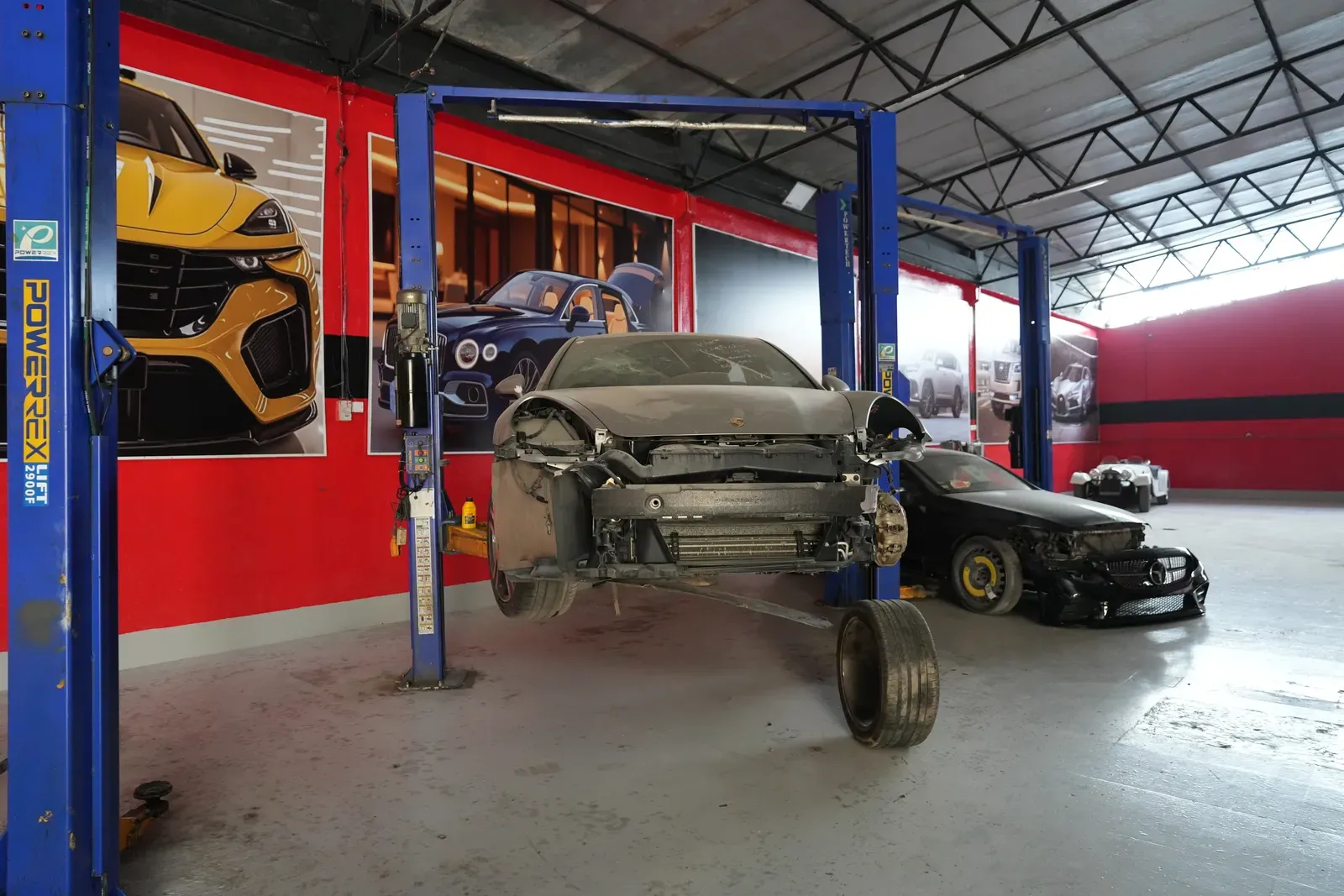
A car on a two-post lift with its front end stripped.

Every one of these is found on a lift in this building, and priced before it is touched.

The work this usually turns into

And everything else, on the same car

The list above is what this make usually arrives needing. This is the rest of what the workshop does, and it applies to your car as much as to any other — worth knowing while it is already here.

Questions we get asked about these

I was told the CVT fluid is sealed for life. Is that right?

Nissan specifies a fluid for these units by name — NS-2 or NS-3 depending on which unit is in the car — and specifying a fluid by name is not the same as saying it never needs changing. What actually ends a CVT here is heat, and heat is what degrades the fluid. A unit run in Sharjah traffic in summer has a harder life than the same unit anywhere the service schedule was written. If the fluid is still in reasonable condition, changing it is worth doing. If it has already gone dark and smells burnt, we will tell you that a fluid change is unlikely to rescue it rather than take the money for one.

It judders when I accelerate gently. Does that mean the gearbox is finished?

Not automatically, and this is worth diagnosing before anybody quotes a transmission. A judder at light throttle can be the belt slipping on the pulleys, but it can equally be a misfire from one coil that only shows under low load, and from the driving seat the two feel similar. We drive the car with a scanner recording, watching the pulley ratio, the fluid temperature and the misfire counters at the same time. One of those two readings will be moving, and that tells us which repair you are actually facing.

My Altima rattles for a couple of seconds on a cold start. Is that urgent?

It is worth looking at now rather than later, because on the QR25DE that noise is usually the chain guides and the tensioner and it does not get better on its own. The tensioner is hydraulic, so the rattle is the few seconds before oil pressure reaches it, and the worse the guides get the longer that window becomes. Caught while it is still a noise, it is a defined job. Left until a guide breaks up, it becomes an engine. We listen to it cold and read the timing values before saying which of those two you are looking at.

The dash lights up but it will not crank, and it was fine yesterday. What is that?

On a push-button Nissan that is a specific family of faults and it is worth working through in order. The immobiliser has to recognise the key through an antenna and agree with the body control module before the starter is allowed to turn, and the electronic steering column lock sits in that chain as well. Any one of them can hold the start without giving you an obvious warning. It can also simply be a battery that is fine on a voltmeter and collapses under a cranking load, which is common here because heat kills batteries without notice. We check the cheap and likely causes first, in front of you.

The air conditioning is weaker than last year. Does it just need gas?

A sealed system does not use refrigerant up, so if it is low then it is leaving somewhere, and putting gas in without finding where is a repair you pay for twice. It is also not always the charge. At this ambient a condenser blocked with dust, a fan not being commanded to its high speed, or a compressor clutch with too much gap will all give you cool air instead of cold air with a perfectly normal charge. We take the pressures on both sides and a vent temperature in the cabin first, then name the component rather than reaching for the gas bottle.

Bring it in and we will find out

Nothing happens to the car until the fault has a name and you have approved the work against it.

Book WhatsApp us Call