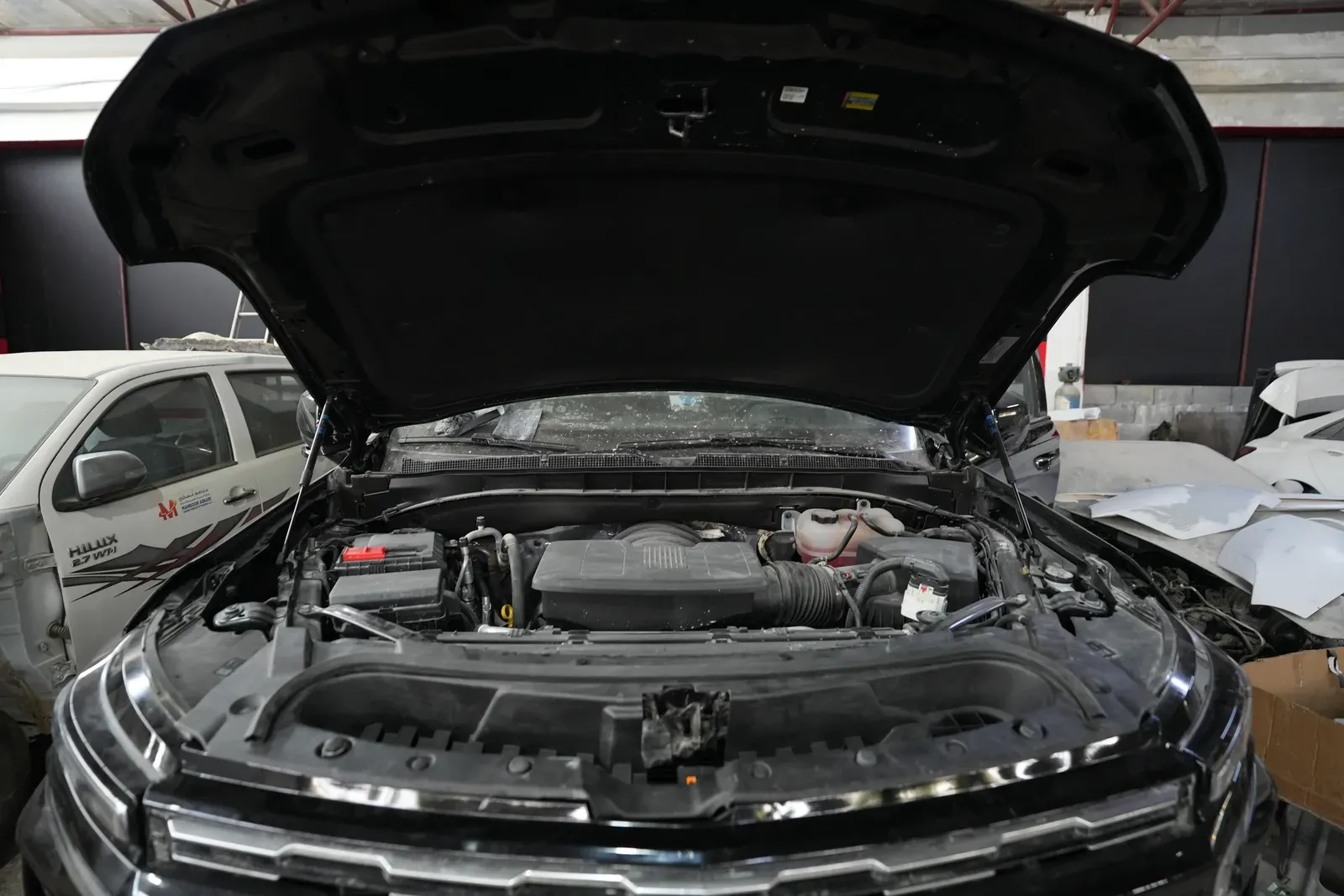
An engine bay open on the workshop floor, photographed close.

Nissan GT-R servicing and repair in Sharjah

Nothing under an R35 is shared with another Nissan. The gearbox is not behind the engine at all — it is a dual-clutch transaxle at the back of the car, with its own oil, its own clutch packs and its own adaptation, and the front wheels are driven by a shaft running forward from it. The VR38DETT has no cylinder liners; its bores are a sprayed coating. There are two fuel pumps in the tank. It takes three separate oils to three separate specifications. A workshop that services this car the way it services a Patrol has not serviced it.

Why we see these

This car exists in this country in numbers that have nothing to do with how many were built, and it arrived by two routes that produce two very different cars. Some are original, standard and serviced properly. A great many have been modified — and around this region that has often meant real power rather than a badge and an exhaust, because the engine will take it and the community here knows how to ask it to. Neither is a problem to work on. What is a problem is not knowing which one is on the ramp, because every reading that matters is judged against what the car is supposed to be doing, and a workshop diagnosing a modified car against standard values will spend a day chasing something that was never wrong. The second thing worth saying is about the driving. A car used for short, very hard runs and then parked in heat — which is most of them here — puts more into its clutch packs, its oils and its cooling in twenty minutes than an ordinary car does in a month, and the service intervals that matter are the ones counted in how the car was used rather than in distance.

What this make asks of a workshop

  • Three oils to three specifications, and none of them interchangeable. The engine, the transaxle and the front differential each take their own fill, the transaxle oil is working inside clutch packs rather than only lubricating gears, and putting a general gear oil into any of them will change how the car behaves before it damages anything.
  • The car’s actual state of tune established before any reading is judged. Whether it is standard, remapped, or running larger turbochargers changes what correct looks like on every parameter that matters, and diagnosing a modified car against factory values wastes a day and reaches the wrong answer.
  • Transaxle clutch adaptation read rather than inferred. The clutch packs have learned positions that can be looked at directly, and that reading is the difference between a car that needs a fluid service and a car that needs clutches — a distinction that should never be made by feel.
  • A road drive with data logged, because this car hides its faults at part throttle. Boost control, clutch behaviour and fuel delivery all look perfect at the speeds a workshop can reach on its own forecourt.
  • Cooling capacity treated as the limiting factor it is here. Engine oil, transaxle oil and charge air are all being asked to shed heat into air that is already at 45°C, and the car will protect itself long before it damages itself — which owners experience as the car going slow and report as a fault.
  • Wheel and tyre fitment taken seriously. These are staggered, directional, and specified for the car, and a set chosen on price will change how a four-wheel-drive system with a clutch-based front drive behaves, not merely how it grips.

What actually comes in

Named at component level, with what the driver notices first and what we do to establish it is that and not something else that feels identical from the driving seat.

The clutch packs of the GR6 rear transaxle, their learned engagement points and the condition of the transaxle oil

A shunt or a bang taking up drive from rest, a change that has gone slow or clumsy in traffic, or a gearbox warning after a series of hard launches.

How we establish it

This is where the money is on an R35 and it is also where the most guessing happens. The gearbox is not behind the engine — it is a dual-clutch transaxle at the rear of the car, and its oil is doing work inside the clutch packs rather than merely lubricating gears, which is why its condition and its specification matter far more than they would in a conventional automatic. The clutch packs have learned engagement points that the transmission controller stores, and those values can be read: a car whose learned points have moved towards the end of their range is telling you how much clutch is left, in a number, before anybody opens anything. So the order here is fixed and it is not negotiable. Read the adaptation and the stored faults first, assess the oil second, drive the car third, and only then discuss clutches. A large proportion of the cars brought to us as needing a gearbox need an oil service and a relearn, and the ones that genuinely need clutches will have said so in the figures.

The transaxle bellhousing and its mounting on the earlier R35 cars

A knock or a heavy clunk from under the back of the car on take-up, a gearbox that has developed a leak at the join, or an oil weep appearing where the housing meets the casing.

How we establish it

On the earlier cars the housing that carries the clutch assembly at the front of the transaxle is a known item, particularly on cars that have been launched hard and repeatedly — which describes a meaningful share of them in this country. It is worth an owner knowing that this is not a sign of a neglected car and not a consequence of anything they did wrong; it is a known characteristic of the early build, and the later cars were changed. It matters because the symptom is easy to attribute elsewhere: a clunk from under the back of the car gets blamed on mounts, on the driveshafts or on the differential, and a workshop that has not met the car before will look at those first. So the housing is inspected directly with the car lifted, the join is looked at for the oil weep that usually precedes anything else, and the transaxle mounts are checked at the same time so the two are told apart rather than confused. Found early this is a repair with a known scope. Found late it takes the unit with it.

The plasma-sprayed cylinder bores of the VR38DETT — a coating, not a liner

Oil consumption that has climbed with no leak underneath the car, a compression or leak-down figure that has fallen on one cylinder, or an owner holding a quote for a rebuild that treats this engine like any other.

How we establish it

This engine does not have cast iron liners pressed into the block. The bores are a coating sprayed onto the aluminium, which is how the engine stays as compact and as light as it is and how it sheds heat as well as it does — and it is the single most important fact about repairing it. A conventional engine that has worn or scored a bore can be bored oversize and fitted with larger pistons. This one cannot be treated that way casually: the coating has a thickness, and machining through it is not a repair. So the assessment is done before any decision, not after the engine is apart — a leak-down test on every cylinder, the pattern of where the air is escaping, a borescope down the plug holes to look at the bore surface directly, and oil consumption established by measurement rather than by impression. An owner is then told what the realistic options actually are for this engine specifically, which is a very different list from the one a general engine shop would offer, and they are told it before anything is dismantled rather than after.

The ATTESA E-TS transfer case, the propshaft running forward from it and its own separate oil

A binding or shudder at low speed on full steering lock, a hum from under the car that changes with power rather than with road speed, or a four-wheel-drive warning after a hard run.

How we establish it

The drive layout on this car runs the wrong way round compared with almost anything else. The engine is at the front, the gearbox is at the back, and the front wheels are driven by a shaft that runs forward again from the transaxle through a transfer case with its own clutch and its own oil. That unit decides how much torque goes forward and when, which is most of why the car puts its power down the way it does. Two things follow. Its oil is a genuine service item with a specification of its own, and it is the one most often skipped because a workshop servicing the car has already done the engine and the transaxle and reasonably believes it is finished. And a shudder on full lock — the classic symptom here — is very often oil condition rather than hardware, which is a cheap answer to an alarming feeling. So we check the unit for stored faults, establish when its oil was last done and with what, and drive the car at low speed on full lock before anybody prices a clutch.

The twin in-tank fuel pumps and fuel delivery at sustained full load

A stumble or a cut only at full throttle high in the rev range, worse with a low tank, with the car completely normal in every other kind of driving.

How we establish it

This engine needs a great deal of fuel at full load and it is supplied by two pumps working together in the tank, which is a robust arrangement and also one that can lose half its capacity without anything obvious happening. A car with one pump failing drives perfectly everywhere except at the top of the range at full throttle — the one place an owner goes occasionally and a workshop never goes at all — so it stores nothing useful and scans clean. The pattern is the diagnosis: a fault that only appears at full load, gets worse with a low tank, and has no presence in normal driving is a fuelling fault until proven otherwise. It is established on the road with fuel pressure and the fuel trims logged under load, not at idle, and it must be interpreted against the car’s actual state of tune, because a modified car asking for more fuel than standard will reach the limit of healthy standard pumps and present identically. Telling those two apart is the whole job, and it is worth doing before anything is bought.

Crankcase ventilation and oil carried into the intake tract on the VR38DETT

Oil found in the intake pipework or pooled in the intercooler, oil consumption with no leak and no smoke, or knock correction appearing on a car that is otherwise healthy.

How we establish it

An engine under boost has pressure in places a naturally aspirated one does not, and the path that vents the crankcase can end up carrying oil mist into the inlet rather than only vapour — more so on a car driven hard, and more so again on a car making more than standard power. The consequence is not dramatic and that is why it is worth naming: oil in the intake charge lowers the effective resistance to knock, so the engine detects knock and retards its timing to protect itself. The driver feels a car that has gone slightly soft, and the engine is doing exactly what it should. Left long enough it also collects in the intercooler and coats the intake tract. We look for it directly by opening the intake pipework and the intercooler outlet to see whether there is oil there, and we read knock correction on the road under load. Where there is oil we say so and explain what the options are, and where an owner has a modified car we are explicit that this is a consequence of the extra power rather than a failure of a part.

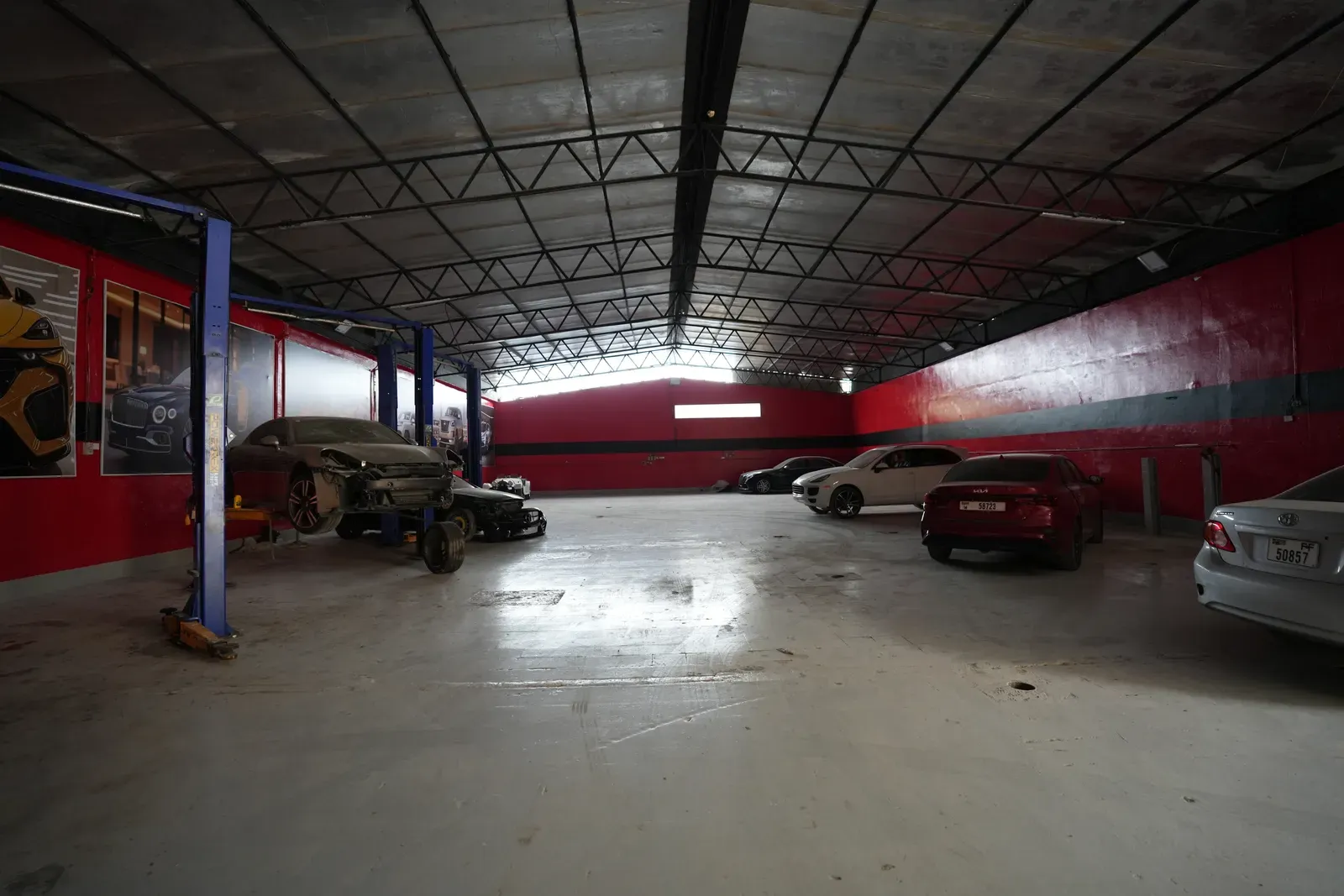
The workshop floor in Sharjah, cars waiting between the lifts.

Every one of these is found on a lift in this building, and priced before it is touched.

The work this usually turns into

And everything else, on the same car

The list above is what this make usually arrives needing. This is the rest of what the workshop does, and it applies to your car as much as to any other — worth knowing while it is already here.

Questions we get asked about these

My GT-R bangs when it pulls away. Does it need clutches?

Possibly, but that should never be decided by feel, because the car will tell you in a number. The transaxle stores the engagement points its clutch packs have learned, and where those values sit within their range is a direct statement about how much clutch is left. That reading takes minutes and it separates the two cases cleanly: a car that needs an oil service and a relearn, and a car that genuinely needs clutches. A good proportion of what is brought to us as a failing gearbox is the first. Ask anybody quoting you for clutches what the adaptation values were, and expect actual figures rather than a description of the noise.

How many oils does this car actually need?

Three, to three different specifications, and none of them is a substitute for another. The engine takes its own. The transaxle at the back takes its own, and that one is not merely lubricating gears — it is working inside clutch packs, which is why its specification matters and why the wrong oil changes how the car drives before it damages anything. And the transfer case that sends drive forward to the front wheels takes a third. That last one is the most commonly skipped item on the whole car, because a workshop that has done the engine and the gearbox reasonably believes it has finished. If you are having the car serviced, ask specifically whether the transfer case oil was included and what went into it.

It only misbehaves at full throttle. Everything scans clean.

That combination is informative rather than mysterious. A fault that appears only at full load, high in the rev range, and is worse with a low tank is a fuelling fault until something proves otherwise. This engine is supplied by two pumps working together, and it can lose half of that capacity while behaving perfectly everywhere except the one place you occasionally use and a workshop never does — which is precisely why a stationary scan finds nothing. The answer is a road drive with fuel pressure and fuel trims logged under load. One further point matters if the car has been modified: an engine asking for more fuel than standard can reach the limit of two entirely healthy standard pumps and present exactly the same way, so tell us what the car actually is before we start and we will judge the readings against that rather than against a factory figure.

My car is modified. Will you still work on it?

Yes, and we would rather know exactly what has been done before we start than discover it halfway through. This is not a formality. Every reading that matters on this car — boost, fuel pressure, fuel trims, knock correction, clutch behaviour — is judged against what the car is supposed to be doing, and a modified car diagnosed against factory values will send a workshop after something that was never wrong. It also changes the honest answer to some questions: an engine making significantly more power will carry more oil into the intake and will ask more of standard fuel pumps, and saying that plainly is more useful to you than presenting it as a failure. Tell us the tune, the turbochargers, the fuelling and anything else that has changed, and you will get a diagnosis against the car you own.

Can this engine be rebuilt the way any other engine can?

Not in the same way, and this is worth knowing before rather than after. The VR38DETT has no cast iron cylinder liners — the bores are a coating sprayed onto the aluminium block, which is part of how the engine stays compact and sheds heat. A conventional engine with a worn or scored bore can be machined oversize and fitted with larger pistons. This coating has a thickness, and cutting through it is not a repair. So the assessment has to come first, while the engine is still together: a leak-down test on every cylinder, and a borescope through the plug holes to look at the bore surface itself. Then the real options for this specific engine can be put to you, with prices, before anything is dismantled. Anybody quoting a rebuild on this engine without having looked down the bores is quoting a different engine.

Bring it in and we will find out

Nothing happens to the car until the fault has a name and you have approved the work against it.

Book WhatsApp us Call