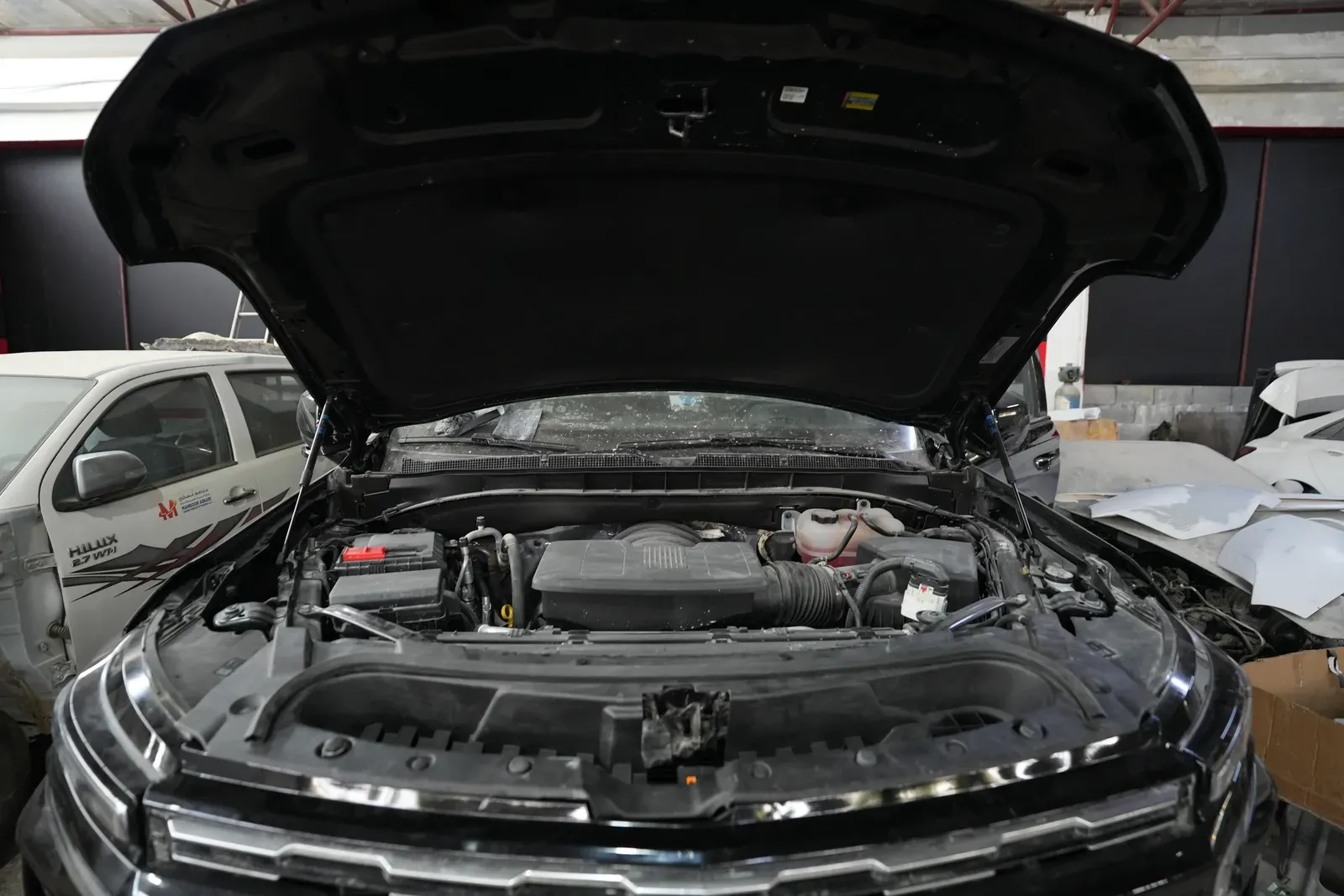
An engine bay open on the workshop floor, photographed close.

Bentley repair and servicing in Sharjah

Two things shape almost every Bentley job: what the car weighs, and where the 6.0 W12 put the part that has failed. Two and a half tonnes wears brakes, bushes and air struts on its own schedule. And twelve cylinders in a very short block means several known faults sit behind the engine rather than in front of it, so the difference between a cheap repair and an expensive one is often nothing but access. We establish which before a figure is given, not during.

Why we see these

Bentley in the northern Emirates is not one population but two, and they arrive for different reasons. Continental GT, Flying Spur and Bentayga bought new in the Gulf and kept by one family tend to come in for the things heat and short journeys do: air struts, brakes, cooling. The other half are cars now on their second or third owner, bought at a fraction of what they cost, and those arrive with a fault the previous owner had already been quoted for and decided to live with. Both meet the same local conditions. A car that stands in a covered parking bay for weeks at a time and then does forty minutes on the Emirates Road in August is asking the rubber in an air spring, the diaphragm in a wastegate actuator and the O-rings in a coolant joint to do something the maintenance schedule never really contemplated. The result is that our first job on a Bentley is almost never the job the owner rang about — it is establishing what the car is already carrying.

What this make asks of a workshop

  • Lifting points and a plan for getting the car in the air. A Bentley is heavy, it sits low, and on air suspension it has to be told what is about to happen to it before the ramp moves — raised to its service height, and in several cases put into a transport or jacking state so the levelling system does not fight the lift or record a fault it never had.
  • An honest statement of access before the work starts. Some of the most common W12 failures are behind the engine, and reaching them means the engine and gearbox come out as a unit. That is a days-long job on a ramp, and the number of days belongs in the estimate at the start rather than in a phone call once the car is in pieces.
  • Ride-height reference values recorded before the suspension is touched and written back afterwards. A corner that is mechanically perfect will still sit wrong and still drive wrong if the car was never given its reference figures after a strut came off.
  • Oil to the specification the engine was built around and the full capacity it takes. A twelve-cylinder sump is not filled from a small can, and on a turbocharged engine a level that is merely adequate shows up first in the oil feed to the turbochargers rather than on the dipstick.
  • A parts decision made before the car is stripped. Several items on these cars come down a single supply route with a wait attached, and a Bentley standing in a bay waiting for one O-ring set is a worse outcome than a Bentley told to come back on a date. We find out what is available and when, then book the work.
  • Brake material identified before a brake job is quoted. Iron discs and carbon silicon carbide discs are not interchangeable, they do not take the same pads, and a quote written without establishing which the car has is a quote that will change.

What actually comes in

Named at component level, with what the driver notices first and what we do to establish it is that and not something else that feels identical from the driving seat.

Ignition coil packs and their plug connectors on the 6.0 W12 — twelve of them, and the one the misfire counter names

A lumpy idle that clears above a certain speed, a flat spot on part throttle, a warning lamp that comes and goes, and in the worst version the car dropping into reduced power on a slip road.

How we establish it

A W12 has twelve coils and a misfire counter for each cylinder, so the honest job is to read the counters and find out which cylinders are actually missing rather than sell a set of twelve on the strength of one code. We swap a suspect coil to a different cylinder and watch whether the misfire follows it. We also look at the connector and the loom behind it, because on this engine the coil often fails where it plugs in rather than inside the coil itself, and a new coil pushed onto a tired connector is a repeat visit.

Coolant feed pipes and their O-rings at the rear of the 6.0 W12, in the gap between the block and the gearbox

Coolant level falling with nothing on the floor, a sweet smell after a long drive, steam from the back of the engine bay on shutdown, and sometimes a charging fault or a dead alternator arriving at the same time for no obvious reason.

How we establish it

This is the fault that decides what a Bentley costs to own, so we prove it before anybody agrees to anything. The system is pressure-tested cold and left under pressure while we watch the level and look for where it is going, and we inspect the alternator and the loom below the rear of the block, because coolant leaving those joints runs downward and finishes the alternator on its way past. If it is confirmed, we say plainly what reaching it involves — the engine and gearbox come out together — and we price the whole thing, including the parts that are only sensible to change while it is out, before the car is booked in.

Wastegate actuator diaphragm and the turbocharger oil supply and drain lines on the twin-turbocharged W12

Boost that is there one day and not the next, a warning on the dash with the car suddenly unwilling to pull, or blue smoke behind the car on a hard pull after it has been idling.

How we establish it

We compare requested boost against actual in live data while the car is driven, because a boost-control fault stored as a code tells you a target was missed and nothing about why. A swollen or split actuator diaphragm and a sticking wastegate look identical from the driving seat and are told apart by watching the control duty cycle respond. The oil lines matter separately: they coke in heat, and a restricted feed or a blocked drain is what kills a turbocharger that was fine, and then kills its replacement. We check both before anybody buys a turbo, and we say in advance where the actuator is not a separate part, because that changes what the repair actually is.

Air strut pressure reservoir, the rapid-raise circuit it feeds, and the ride-height reference values the car holds after a strut is changed

The car takes noticeably longer to come up to height than it used to, it will not lift for a ramp or a kerb the way it did, one corner is down in the morning, or the suspension reports a fault after a repair that was otherwise finished.

How we establish it

On these cars the reservoir is the part that makes a slow system feel broken and a broken system feel slow. It stores pressure so the car can lift without waiting for the compressor, so when it is not holding, the compressor runs on every raise and everybody blames the compressor. We watch pressure in live data through a full raise and a full lower, and time it, rather than listening to the pump and guessing. The second half is the part most repairs skip: after a strut, a sensor or a link comes off, the car has to be given its height reference again. Without that it will hold a level it believes is correct and is not, and the owner is told the new strut is faulty.

Bentley Dynamic Ride — the 48-volt anti-roll actuators and the separate 48-volt supply and converter that drive them

The car rolling more in a corner than the owner remembers, a chassis or suspension message on start-up, or the driving modes no longer making the difference they used to.

How we establish it

This is worth separating from the air suspension, because it is not air and it does not fail like air. Dynamic Ride works the anti-roll bars with electric actuators fed from a 48-volt system that is its own circuit, with its own converter and its own protection, and a fault in the supply side presents to the driver as a suspension complaint. So we establish which system is actually reporting before anything is quoted. That distinction is most of the value here: an owner told the roll bars have failed, when the real fault is the converter feeding them, is being sold the most expensive version of the problem.

Gearbox oil and the pan-integrated filter on the ZF 6HP in the earlier cars, and the adaptation values on the ZF 8HP in the later ones

A thump into drive or reverse, a shift that arrives late and then arrives hard, a shudder at a light throttle around sixty or seventy, or the gearbox holding a gear it should have left.

How we establish it

The first question is which unit is in the car, because the earlier six-speed and the later eight-speed are serviced differently and fail differently, and a shudder means different things on the two. We road-test with gearbox temperature, torque converter slip and the commanded versus actual gear on screen, so a shudder is identified as converter lock-up, as a clutch element, or as fluid that is finished. We are also straight about what a fluid service can and cannot fix: on a unit that has already been driven hard on burnt fluid, new oil does not undo the wear, and we will say so rather than take the money and let you find out in a month.

Transfer box behind the gearbox, the propshaft flexible couplings and the centre support bearing on all-wheel-drive Continental and Flying Spur

A vibration through the floor that builds in a narrow band of speed and then disappears again, a clunk taking up drive, or a shunt felt through the car when the throttle is lifted and reapplied.

How we establish it

A vibration in a band of speed is a driveline balance question, and on these cars the answer is usually a perished flexible coupling or a tired centre bearing rather than the propshaft itself. The car goes up and the shaft is checked for runout and for play at each joint and at the bearing, with the couplings inspected for cracking and for the witness marks that show one is already moving. We also check the transfer box for a leak at its output seals, because oil leaving there drips onto the shaft and gets read as a propshaft problem by everybody who sees it.

Brake discs and pads on a car of two and a half tonnes, and the carbon silicon carbide discs where the car was ordered with them

A pulse through the pedal from higher speeds, a squeal that will not go away, a pedal that has gone long, or a brake warning appearing for the first time.

How we establish it

Mass is the whole story here. This car converts a great deal more energy into heat at every stop than the saloon beside it, and the heat is what warps a disc and glazes a pad. We drive it and establish whether the pulse is under braking only, whether the car pulls, and whether it is worse cold or hot, then check the discs for runout and thickness variation on the car and check each caliper is releasing rather than dragging. Before any of that is priced we establish what material the discs are. Carbon silicon carbide discs are a different part with different matched pads and a different decision attached to them, and quoting them as iron is how an estimate doubles after the wheels come off.

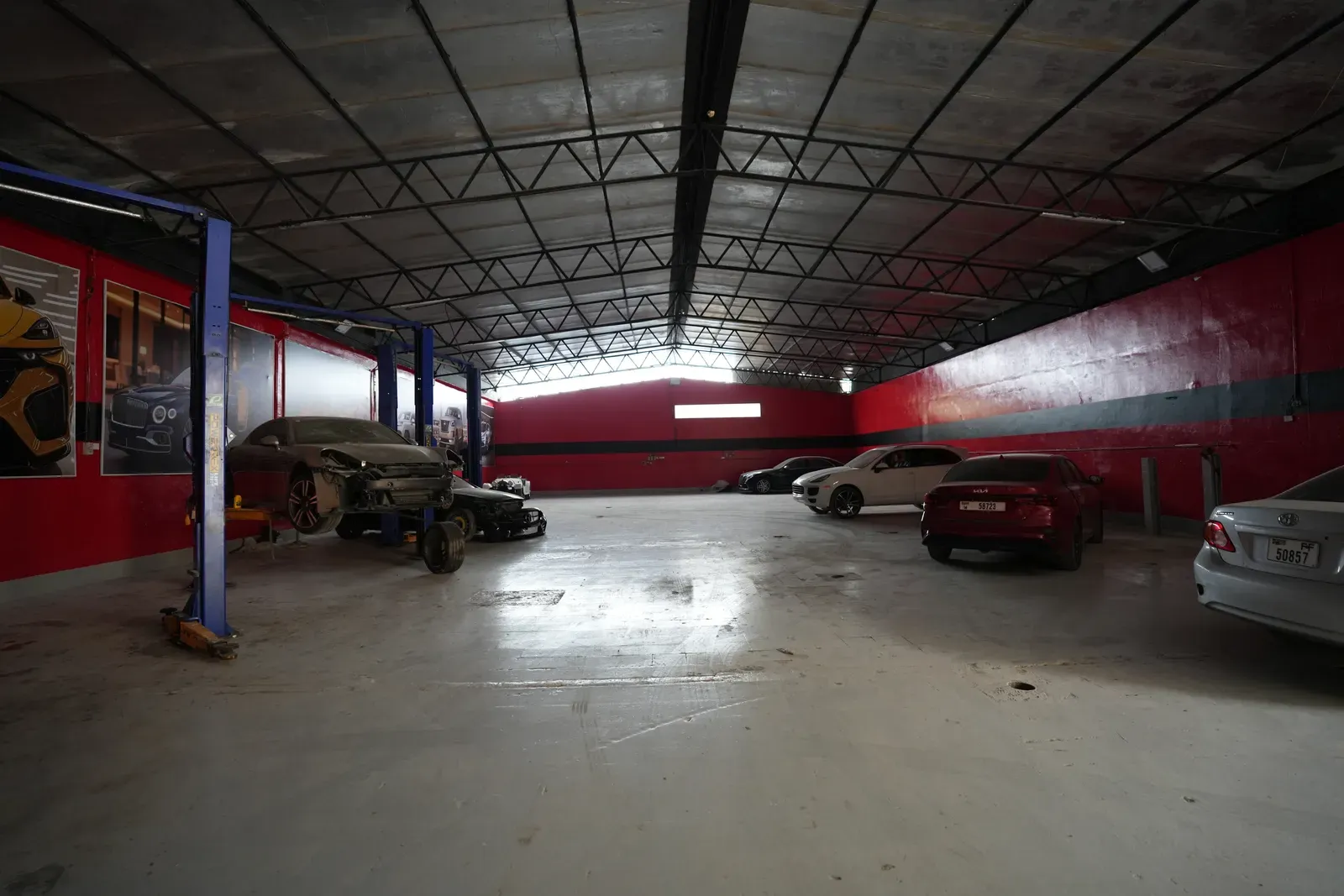
The workshop floor in Sharjah, cars waiting between the lifts.

Every one of these is found on a lift in this building, and priced before it is touched.

The work this usually turns into

And everything else, on the same car

The list above is what this make usually arrives needing. This is the rest of what the workshop does, and it applies to your car as much as to any other — worth knowing while it is already here.

Questions we get asked about these

The coolant is disappearing and I have been told the engine has to come out. Is that real?

It can be, and it is the one Bentley job worth being careful about. On the W12 there is coolant pipework at the back of the engine, in the gap between the block and the gearbox, and the joints there are sealed with O-rings that harden with age and heat. There is no way to reach them from above or below with the drivetrain in the car. What we will not do is assume that is the leak because it is the famous one. We pressure-test the system cold, hold it under pressure and find out where it is actually going first — a hose, an expansion tank seam, a pump seal and a water-cooled component all leak too, and all of them are a fraction of the job. If it does turn out to be the rear pipework, you get the whole price, including the labour days, before the car is booked.

The car is slow to lift and the compressor runs a lot. Do I need a compressor?

Not necessarily, and this is where money gets spent on the wrong part. These cars carry a pressure reservoir so the suspension can raise itself without waiting for the compressor. When the reservoir is no longer holding, or a valve is letting it bleed back, the compressor has to do every lift from scratch — so it runs long and often, and looks guilty. A leaking air strut does exactly the same thing to it. We read system pressure through a full raise and a full lower, time it, and find whether air is being lost, stored badly, or simply never stored. A compressor that has been overworked for a year may well need replacing too, but it is a symptom at least as often as it is the cause.

Do I have to replace all twelve coils?

Not automatically. The engine keeps a misfire counter for every cylinder, so we read which ones are actually missing and how often. Where a single cylinder is at fault we move that coil to another cylinder and see whether the misfire moves with it, which settles the question in minutes. There is a sensible argument for doing a full set when most of them are original and several are already counting, because the labour is largely shared and you are otherwise back here twice — but that is a conversation with the numbers in front of you, not a default. We also check the connectors, since the failure on this engine is often at the plug rather than inside the coil.

Are you a Bentley specialist?

We work on them, and the line at the bottom of this page says what that does and does not mean: nobody appointed us, and we will not describe ourselves as anything Bentley authorised. What is worth asking instead is whether the specific job on your car is one we can finish properly — with the ride-height references written back, the adaptations done, the correct brake material identified, and the access priced honestly. Ask about the job in front of you and you will get a straight answer, including where the answer is that it has to go to the franchise. A module that can only be programmed against a closed system is a real limit, and we would rather name it before your car is apart.

The car has stood for months. What should be looked at before I drive it properly?

Standing is harder on this car than driving it. Air springs sit folded in one position and take a set, so the first check is whether the car holds its height overnight and how long a full raise takes. Brake discs on a heavy car left in one spot surface-rust and then the pads pick up an imprint of it, which is felt as a pulse for the first few stops and sometimes permanently. Coolant and oil joints that were merely weeping while it was warm tend to announce themselves once it is hot again. And tyres flat-spot and age by date as much as by distance in this climate. We road-test, pressure-test the cooling system and check the suspension holds, and tell you what to expect rather than handing you a service invoice for a car that has not turned a wheel.

Bring it in and we will find out

Nothing happens to the car until the fault has a name and you have approved the work against it.

Book WhatsApp us Call