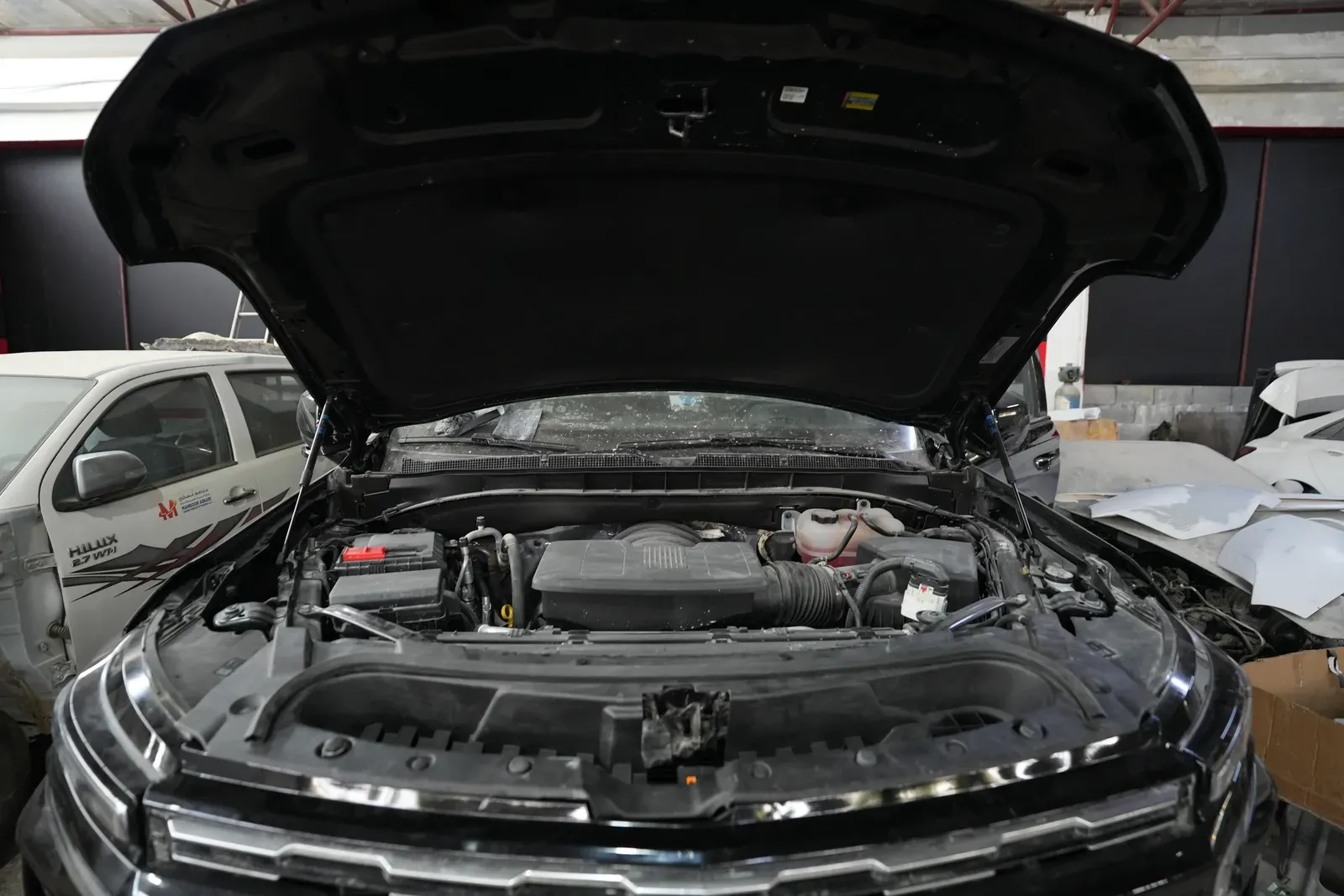
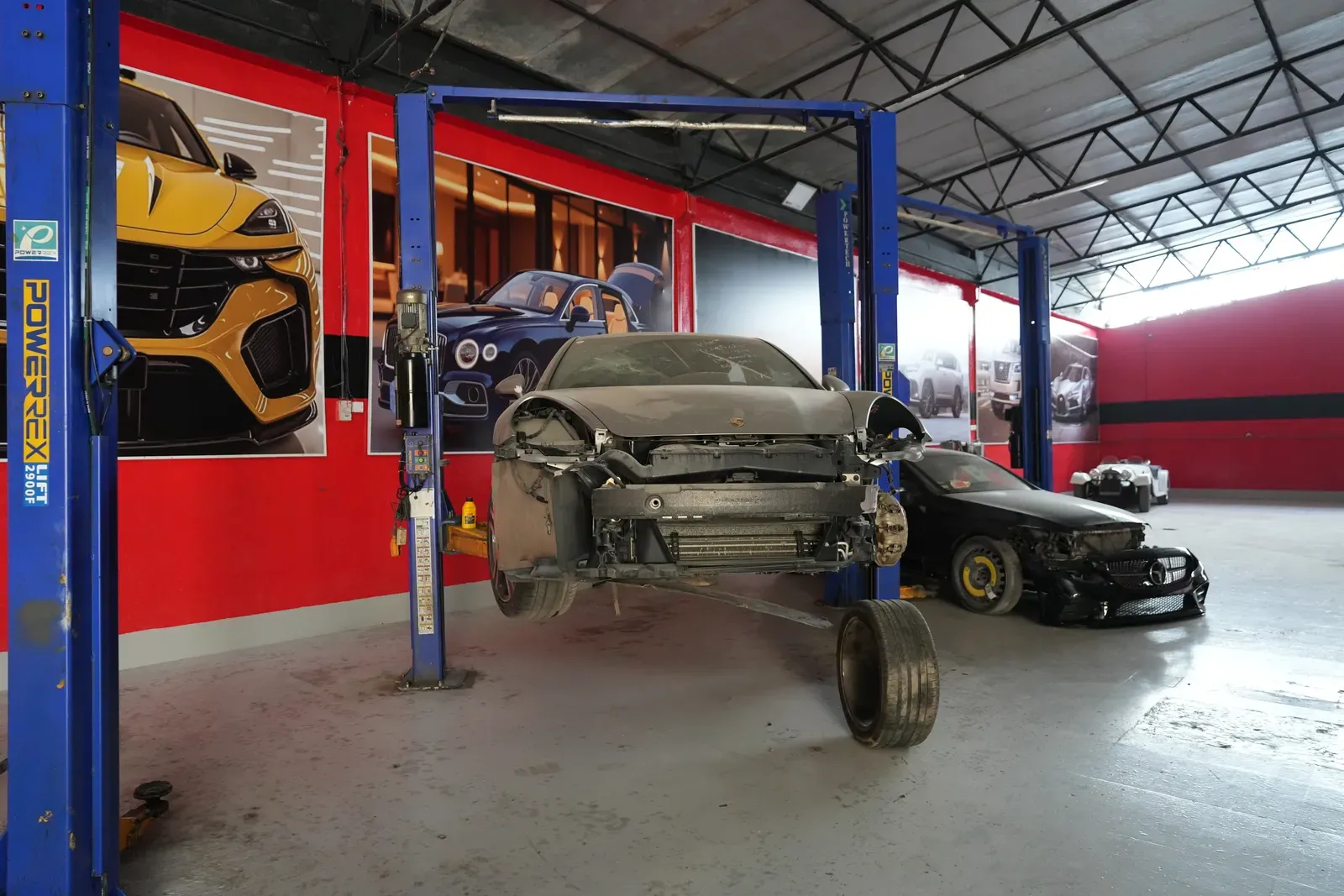
The Navigator sits down at the back overnight. Is that the air springs?
Sometimes, but a bag is only one of several places air leaves from, and the others are cheaper. We hold pressure in the system and look for it at the fittings, the lines and the valve block as well as at the springs, and we read the target and measured height at each corner from the module, because a corner that reads wrong makes the compressor chase a height it will never reach. The other part worth checking in this city is the dryer: it takes moisture out of the air the compressor pumps, it wears out faster in fine dust, and once it is finished the moisture it should have caught goes on to damage the parts downstream of it. We also need to know whether the car is the rear-levelling or the four-corner version before anything is ordered, because the systems are not interchangeable.
A door will not open when I pull the handle. Is the handle broken?
On these cars the handle is a switch. There is no rod or cable behind it — a motor inside the latch withdraws the catch when a module tells it to — so a door that will not open can be the switch, the wiring through the door pillar that flexes every time you use the door, the motor in the latch, or the module that decides. It can also simply be a flat battery, because with no power there is nothing to pull against. We test along that chain in order rather than fitting a latch, and we locate and test the mechanical back-up release first so the door can be opened safely while we work on it.
One running board stays out and the other works. Does it need a new motor?
Often not. The arms and pivots those boards swing on sit at road level and spend their life in dust, and when they stiffen the motor feels the extra resistance, reads it as an obstruction, and stops itself so it does not trap anyone. That is the system working correctly and telling you about the pivots. We disconnect the motor and move the board by hand to feel what it is fighting, free and clean the pivots, then test the motor circuit through a full cycle. If the gear inside the motor has already stripped from months of that fight we will say so — but we will deal with the pivots at the same time, because a new motor asked to do the same work will go the same way.
The third row never gets cold but the front is fine. Does the air conditioning need gas?
Not if the front is genuinely cold. Refrigerant serves the whole system, so a low charge shows up everywhere rather than in one zone. A cabin this size positions air with several small motors behind the dash and along the ducting, and the car only knows where each flap sits because it learned its end stops — so a failed motor, or a car that lost its learned positions after a battery disconnection, produces exactly this complaint. We command each actuator individually and watch it move through its travel before anyone opens the refrigerant circuit. Only once the airflow side is proven do we start measuring vent temperatures and pressures.
Do you get Lincoln parts here, or is everything ordered from abroad?
It depends entirely on the part, and we would rather give you the honest split. Anything a Lincoln shares with the vehicle it is related to underneath is generally available without much waiting. The parts that belong only to Lincoln — an air spring for a specific drive configuration, a door release motor, a running board assembly, a seat control module — are the ones that take time, partly because there are fewer of these cars here than there are of their relatives. So we identify the exact part from the chassis number before quoting, and we tell you the wait when you book. A realistic date at the start is worth more than an optimistic one that moves twice.