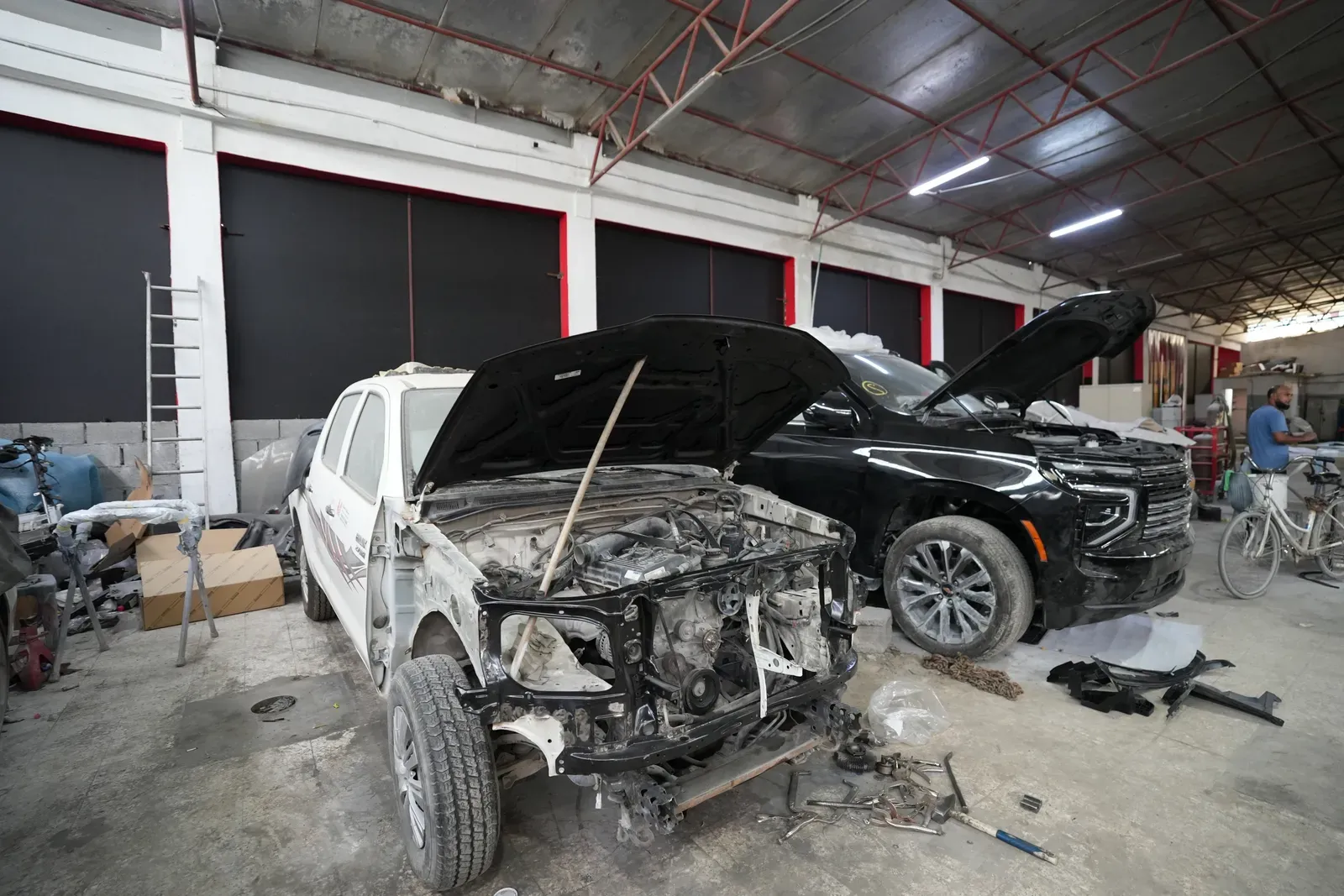
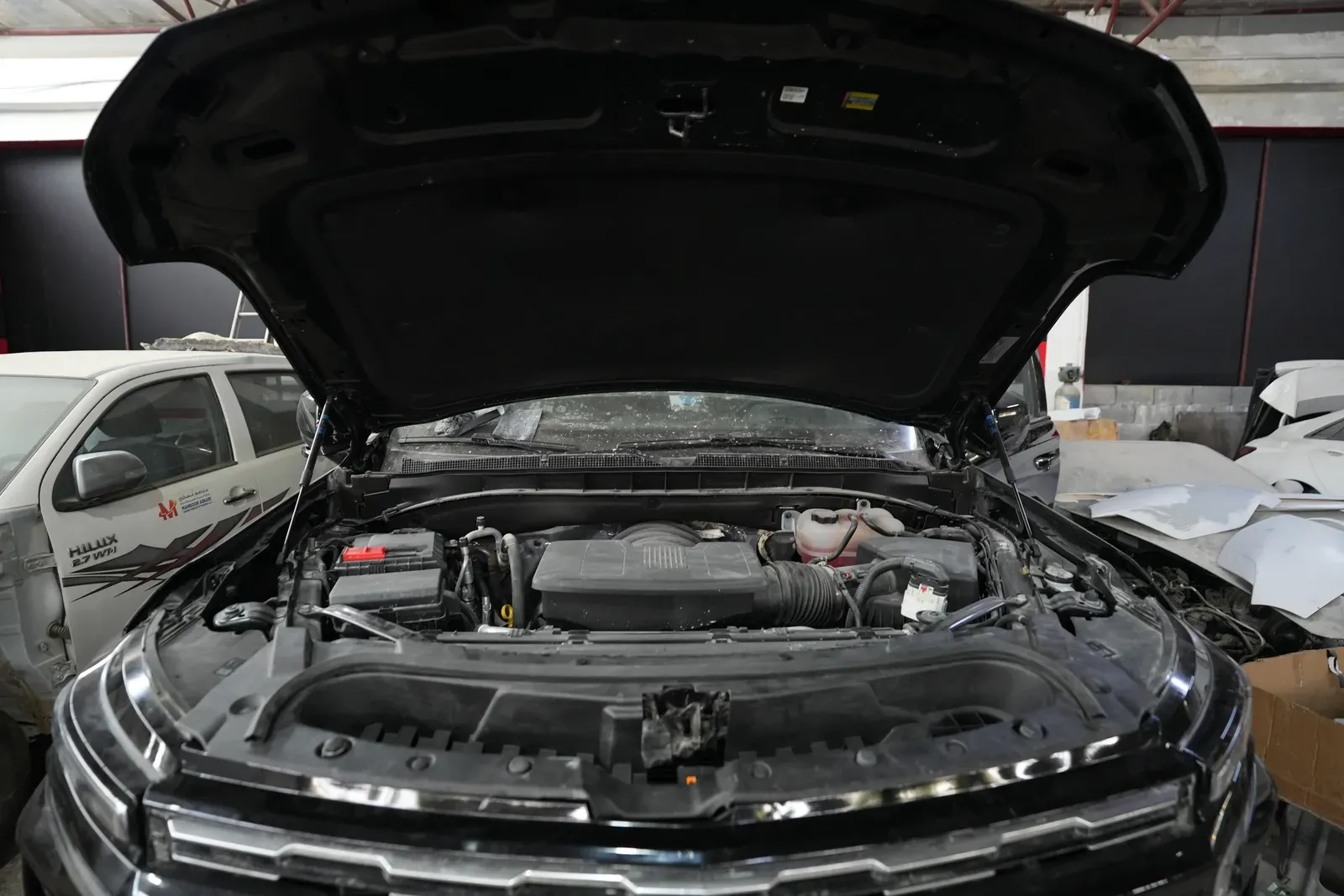
An engine bay open on the workshop floor, photographed close.

Suzuki repair and servicing in Sharjah

Two very different cars share this badge here. One is a ladder-frame Jimny on solid axles with a transfer case you shift with your hand, which fails in the places an old-fashioned four-wheel drive fails. The other is a small, light, cheap-to-run hatchback or seven-seater covering an enormous distance every week on hot roads, where the wear is in the bearings, the bushes and a cooling system that was never sized for standing still at noon.

Why we see these

We will be straight about the numbers: we see fewer of these than we see Toyotas or Nissans, and that is a fact worth knowing before you book rather than after. The practical consequence is not the repair, which is usually simpler than the equivalent job on a bigger car; it is the parts. Several of the models delivered in this region are built in India rather than Japan, and a component that looks identical across the two can be a different part number, so a Suzuki job here begins with the VIN and sometimes ends with a wait. We say the wait out loud when you book. What we do see arrives for two reasons. The Jimny is bought by people who take it into sand and then find that a small, light vehicle with proper low range asks for the maintenance a proper four-wheel drive asks for — axle oils, breathers, transfer case oil — on a schedule nobody wrote on the windscreen. And the Swift, Baleno, Dzire and Ertiga are bought to be driven very hard for very little money, often as somebody’s working vehicle, which puts a year of ordinary wear into a few months.

What this make asks of a workshop

  • The VIN before the part is ordered, every time. Japanese-built and Indian-built versions of the same model carry different numbers on parts that look the same across a counter, and a box that fits and is not the right revision is how a job comes back. We check the number, and where the part has to come in we tell you the wait at the point of booking.
  • Gear oils and breathers treated as a service, not as an emergency. A Jimny has a transfer case and two axles with their own oils and their own breather hoses, and a vehicle that actually goes into sand and water needs those on a schedule. Nobody writes that on a service sticker, so we write it on the job card.
  • The right fluid for a continuously variable gearbox and a level set properly. These take the specific CVT fluid Suzuki specified for them and nothing else, and a level that is checked warm rather than guessed cold. Ordinary automatic fluid in one of these does damage that is not reversible by draining it back out.
  • Air conditioning diagnosed by measurement rather than by topping up. These are small systems with a small condenser and one fan, and in this climate they run close to their limit even when healthy. We take vent temperature and both pressures with the car at idle and again with it moving, because a system that is cold on the road and warm at the lights is an airflow problem and gas will not fix it.
  • A road test on the surface the owner actually drives. A car used all day as working transport develops noises that only show up loaded, warm and at speed, and a suspension check done on a lift in a cool workshop misses them.

What actually comes in

Named at component level, with what the driver notices first and what we do to establish it is that and not something else that feels identical from the driving seat.

Transfer case, its shift linkage and the front axle engagement on the Jimny (JB43 and JB74)

The four-wheel-drive light flashes and will not go steady, the lever moves but nothing engages, it will not come back out of four-wheel drive on tarmac, or there is a clonk from underneath when you take up drive.

How we establish it

This is a part-time system: the transfer case is shifted mechanically and the front axle then has to be engaged for the drive to actually reach the wheels, and a flashing indicator usually means those two halves disagree. On the older cars the front engagement is worked by vacuum, and the small hoses behind the bumper go brittle in this heat and split, so the lever moves and nothing happens. We check the linkage adjustment and the shift fork travel first, then test the engagement side — vacuum where it is vacuum, the actuator and its switch where it is electric — and read the indicator circuit rather than believing the lamp. Suzuki low range is a proper mechanical reduction and it is worth the ten minutes to prove which half is at fault before anything is opened.

Solid front and rear axles on the Jimny — swivel bearings, axle seals, breathers and the propshaft joints

Oil weeping from behind a front wheel, a vibration through the floor that comes in at a particular speed, a groan on full lock, or water and sand in the axle oil after a weekend out.

How we establish it

A Jimny keeps its wheels on beam axles and turns the front wheels on swivel housings, which is why the failures here are old-fashioned ones: bearings in the swivel, seals that let oil out and sand in, and universal joints in the propshafts that wear where a modern independent front end has nothing at all. We look for where the oil left rather than where it landed, check the breather hoses are still open and still routed up high — a blocked or drowned breather is what pulls water into an axle after a wadi crossing — and check each propshaft joint by hand for the play that produces a speed-specific vibration. Everything on this vehicle is reachable, which means an honest inspection takes time rather than tooling.

Timing chain and its tensioner on the Suzuki K-series fours — K12, K14C and K15B

A rattle from the front of the engine for a second or two after it has stood overnight, a rough idle when hot, or a timing-related code on a car that has never had anything else wrong with it.

How we establish it

These are small, light, low-stressed engines and the chain is normally the last thing to give trouble, which is why we test rather than assume. The pattern we do see is in cars that were serviced late and often: a short-journey car in this heat cooks its oil, the hydraulic tensioner loses its ability to take up slack on tired oil, and the noise follows. We read cam and crank correlation in live data with the engine warm, check the oil condition and the oil level before anything else, and listen at the cover on a cold start. On the turbocharged K14C we also look at the oil feed and the way the car has been run after a hard drive, because a small turbo engine that is switched off hot and left is asking a lot of the same oil.

Continuously variable gearbox with the auxiliary two-speed gearset behind the pulleys — Swift

A distinct step or clunk partway through acceleration that a CVT is not supposed to make, a shudder taking up from rest, a whine that rises with road speed, or the car going flat and refusing to pull after a long climb in traffic.

How we establish it

This gearbox is not the simple belt-and-pulley arrangement the letters suggest, and that matters to the diagnosis. Behind the variable pulleys sits a small two-speed planetary set with clutches, which is how a light car gets both a low crawl ratio and a relaxed cruise out of a short pulley range — and it also means that a genuine shift event exists in a gearbox that is supposed to have none. So a step or a clunk partway up the road speed is not automatically a failed belt: it can be the clutch and the planetary set behind it. We take live data on the road, watching input and output speed together with fluid temperature at the moment the customer says it does it, and we judge the fluid by colour and smell out of the pan rather than off the odometer. Not every Suzuki here has this gearbox — a good number of the models sold in this region use a conventional four-speed automatic instead — so the first thing we establish is which one is actually in the car.

A small-capacity air conditioning system asked to hold a cabin at 45 degrees — Swift, Baleno, Dzire and Ertiga

Cold on the move and warm the moment the car stops, the third row never cooling on a seven-seater, the compressor cutting in and out, or a smell from the vents when the fan first comes on.

How we establish it

Small cars get small condensers and one fan, so there is very little margin in this climate and a fault that would be invisible in a cooler place is the difference between cold and warm here. We measure vent temperature and both system pressures at idle with the bonnet shut and again on the move, which is what separates a refrigerant charge problem from an airflow problem: a system that is cold on the road and warm at a junction almost always has a fan, a condenser packed with dust, or a cabin filter issue rather than a gas issue. On the seven-seat cars we check the rear ducting and the blower before anyone opens the circuit, because a third row that never cools is frequently a duct or a flap and not a compressor. We do not add gas to a system without finding out where the last charge went.

ALLGRIP rear coupling on the Vitara, and the transfer case on the older body-on-frame Grand Vitara

A four-wheel-drive warning on the dash, drive that comes and goes on loose ground, a binding feel manoeuvring on tarmac at full lock, or a drive mode selector that will not hold what you chose.

How we establish it

These are two entirely different machines with the same nameplate history, and the first job is to establish which one is on the ramp. The newer Vitara drives its rear axle through an electronically controlled coupling with its own control unit, so the diagnosis is codes, the fluid inside the coupling, and whether each wheel speed signal reaching the module is believable. The older body-on-frame Grand Vitara has a genuine transfer case with a low range, and there the diagnosis is mechanical: linkage or actuator travel, the oil level in the case, and the condition of the shift fork. Fitting the second answer to the first car is a very expensive mistake and it starts with a VIN that nobody read.

Wheel bearings, front lower arm bushes and the rear axle beam on high-distance Ertiga, Dzire and Ciaz

A hum that gets louder with speed and changes as you change lanes, a knock from the front over every joint in the road, the car pulling to one side, or tyres wearing on one edge only.

How we establish it

A light car carrying a full load every day for years wears these parts on hours and on load rather than on the distance the dashboard shows, and cars used as working transport get there far sooner than the schedule expects. The car goes in the air and every joint is loaded by hand and by pry bar, one at a time, until the knock belongs to a named component rather than to the front of the car generally. A bearing is confirmed on the road by loading the car left and right at speed: a hum that does not change through a lane change is usually the tyres, and after years on a hot road with one edge worn away, tyres are a very common answer. We tell you when that is the answer instead of quoting a hub.

A row of cars with bonnets open in the workshop bay.

Every one of these is found on a lift in this building, and priced before it is touched.

The work this usually turns into

And everything else, on the same car

The list above is what this make usually arrives needing. This is the rest of what the workshop does, and it applies to your car as much as to any other — worth knowing while it is already here.

Questions we get asked about these

Do you see many Suzukis, and does it matter if you do not?

We see fewer of these than we see Toyotas or Nissans, and we would rather you heard that from us. It matters in one specific way and not in the others. The work itself is usually straightforward — a Jimny is mechanically old-fashioned in the best sense and the small cars are simple — so the repair is rarely the hard part. Parts are the hard part. Several models sold in this region are built in India rather than Japan, and a component that looks identical across the two can carry a different number, so we start with the VIN and, where something has to be brought in, we tell you the wait when you book rather than after the car is apart.

The four-wheel-drive light on my Jimny flashes and nothing engages. Is the transfer case finished?

Usually not. This is a part-time system in two halves: you shift the transfer case yourself with the lever, and then the front axle has to engage before drive actually reaches the front wheels. A flashing light normally means those two halves disagree, and on the older cars the front engagement is worked by vacuum through small hoses that go hard and split in this heat. That is a cheap fix and it is the first thing we check, along with the linkage adjustment and the indicator circuit itself. Only when the mechanical shift and the engagement both test correctly does the case itself come into the conversation.

Is a Suzuki CVT the same thing as a Nissan or Honda one?

No, and it is worth knowing why before somebody prices a gearbox. Behind the variable pulleys these carry a small two-speed planetary set with clutches, so the unit has a real shift in it — which means a distinct step or clunk partway up the road speed is not automatically the belt, and can be the clutch and gearset behind it. It also takes the specific fluid Suzuki called for and nothing else. The first thing we settle, though, is whether your car even has one: a good number of the models sold in this region use a conventional four-speed automatic, and that is a different unit with different symptoms and a different price.

The air conditioning is cold while I am driving and warm when I stop. Does it need gas?

Almost certainly not. That exact pattern — cold moving, warm standing — is the signature of an airflow problem rather than a refrigerant one, because on the move the car is getting air through the condenser for free and at a standstill it depends entirely on the fan. On a small system with one fan and a small condenser there is very little margin here, so a fan that has slowed, a condenser packed with dust, or a blocked cabin filter shows up as warm air at the lights. We measure vent temperature and both pressures standing and moving before opening anything. If the gas really is low, then something is leaking and the leak gets found — refilling a system without that is selling you the same job twice a year.

Bring it in and we will find out

Nothing happens to the car until the fault has a name and you have approved the work against it.

Book WhatsApp us Call