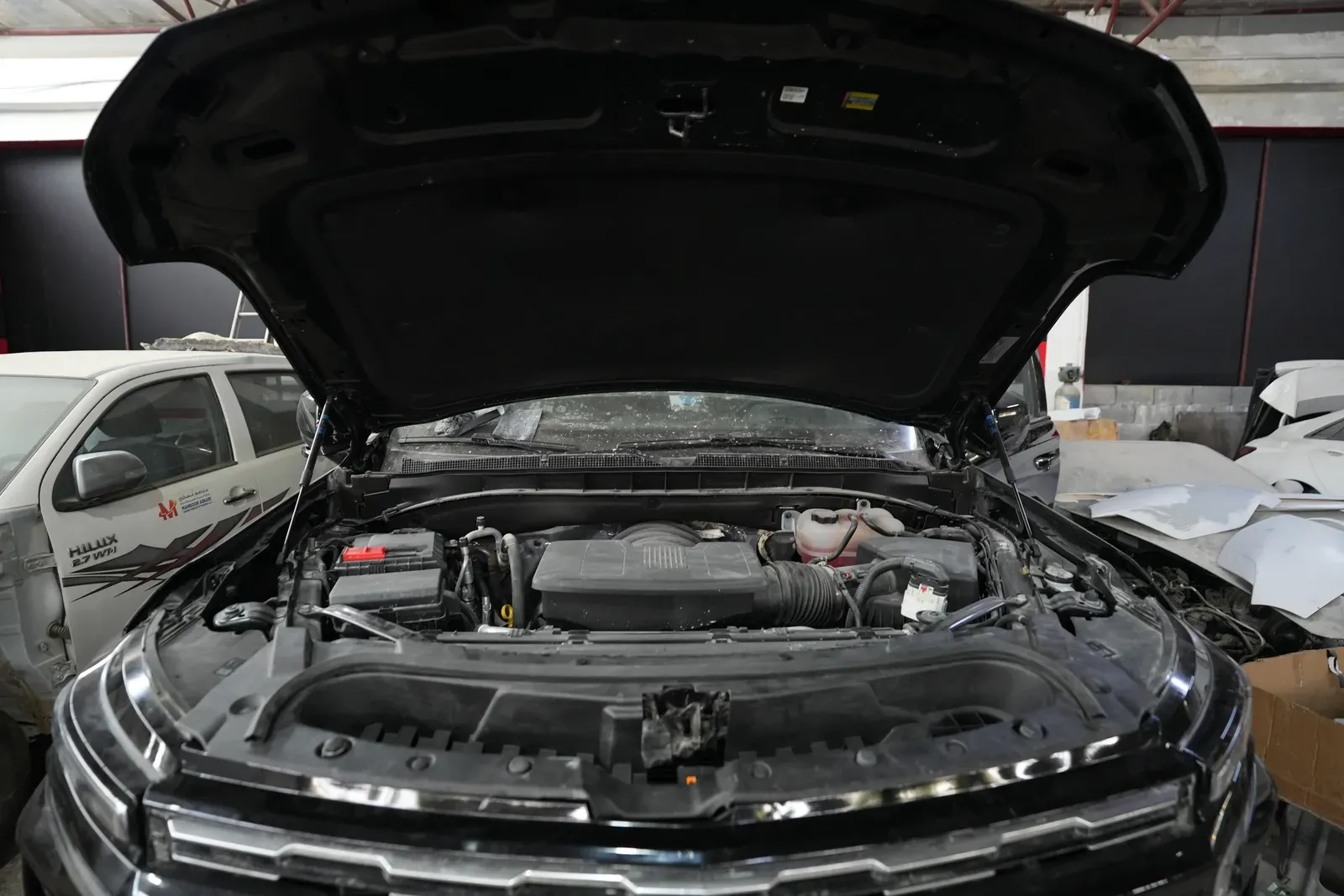
An engine bay open on the workshop floor, photographed close.

Jeep repair and servicing in Sharjah

Two very different cars arrive wearing the same badge. A Wrangler keeps a solid axle under its nose, and when its steering shakes after a bump the answer is a joint, a bar or a bolt — never a new damper on its own. A Grand Cherokee sits on Quadra-Lift air and tells you about it on the screen. We separate the two before we touch anything, because almost nothing that is true of one is true of the other.

Why we see these

A Wrangler in this country divides cleanly into two populations, and they need opposite things. One of them genuinely goes into the dunes at the weekend, and everything that follows from that is about what sand does to a sealed unit: breathers, axle seals, a filter that has done a season of fine dust, and a gearbox that got hot pulling itself out of soft ground. The other never leaves tarmac and instead ages by heat. There is no rust here to destroy a bush or a body mount, so people assume the underside is fine, and it is not: the rubber goes hard and splits from standing at surface temperatures the car was never designed around, and the failure looks like nothing from three feet away. The other habit worth naming is height. Lifted Wranglers with bigger tyres are ordinary traffic in Sharjah, and a lift changes castor, changes the angle the track bar works at, and moves the point at which the front end starts to shake.

What this make asks of a workshop

  • A road test that reproduces the wobble, not a ramp inspection instead of one. The solid-axle shake appears at a particular speed after a particular kind of bump, and a front end that feels tight with the wheels hanging can still shake at seventy. We drive it on the surface you described first, then lift it knowing what we are looking for.
  • Torque and geometry treated as parts of the repair. On the Wrangler the track bar bracket bolt, the castor angle and the tyre balance are all part of the same fault, and on a lifted car they have all moved. Fitting joints without checking the angles they now work at is how the shake comes back in a month.
  • Diagnostic access that reaches the suspension and the drivetrain modules, not just the engine. Reading the four corner heights live on a Quadra-Lift car, commanding a corner, and seeing what the transfer case actuator reports about its own position are most of the work on a Grand Cherokee complaint.
  • A fluid specification and a temperature-controlled fill for the ZF eight-speed. It has no dipstick, it is levelled through a plug with the fluid inside a specified temperature window, and it takes a specific fluid rather than a general automatic transmission oil.
  • A parts channel that will say which Pentastar casting is in the box. The cylinder head on the 3.6 was revised after the early production run, and a head bought on displacement alone is a head bought blind.
  • Sand treated as a service item on a car that actually goes into it. Axle and gearbox breathers, differential seals, air filtration and the state of the fluid in each sealed unit are checked on a Wrangler used in dunes and are a different conversation from a Wrangler that does the school run.

What actually comes in

Named at component level, with what the driver notices first and what we do to establish it is that and not something else that feels identical from the driving seat.

Front track bar, its frame bracket, the drag link and the front axle ball joints — the solid-axle Wrangler shake known as death wobble

The steering wheel starts shaking violently at around seventy after hitting a joint in the road, and will not settle until the car is slowed right down.

How we establish it

The honest answer first: this is not one part. It is a solid front axle that has developed play somewhere in the steering triangle, and the shake is that play turning into a self-feeding oscillation. A steering damper hides it, which is why a new damper is what most Wrangler owners are sold, and why the shake returns. We reproduce it on the road, then lift the car and load each element under pressure in turn: the track bar at both ends and the bolt through its frame bracket, which elongates its own hole, the drag link and tie rod ends, the upper and lower ball joints, and the wheel bearings. Tyre balance, castor and the ride height are checked as part of the same fault rather than as an afterthought, because on a lifted car they are half of it.

Quadra-Lift air suspension — the compressor, its dryer and the air springs on the WK2 Grand Cherokee

Service Air Suspension on the screen, a car that is down at one corner in the morning, or one that will not come up out of its lowest setting.

How we establish it

The system decides its own height from ride height sensors and reports what it thinks it is doing, so we start by reading the corner heights and the system state live and commanding the car up and down rather than watching it from the pavement. A compressor that runs and runs is nearly always working against a leak somewhere else, so the springs, their unions and the lines are found first — a compressor fitted to a system that still leaks is a compressor bought twice. Where the height sensors or their links have been disturbed by previous suspension work the calibration is checked, because a car that reads its own height wrongly will fight itself all day.

Transfer case range actuator motor and its position sensor — WK2 Grand Cherokee

A Service 4WD message, a clunk from under the middle of the car, or the car refusing to leave four-wheel drive low once it has been used.

How we establish it

The range change here is an electric motor on the side of the transfer case with a position sensor telling the module where it is. When the sensor contacts wear or moisture gets into the connector the module sees a position it does not believe and stops, and the message on the screen names the system rather than the fault. We read what position the module thinks the actuator is in, command a range change and watch the value move, and check the connector and its pins before condemning the motor. Transfer case oil condition gets looked at in the same visit, particularly on a car that has been in sand.

Cylinder head on the early-production 3.6 Pentastar V6 — the left bank exhaust valve seat

A misfire that is always on the same cylinder, a check engine light that comes back after plugs and coils were changed, and a hesitation when pulling away.

How we establish it

A Pentastar misfire that keeps its cylinder number through a plug change, a coil change and an injector swap is not an ignition fault. We record misfire counters per cylinder rather than reading a single stored code, then move the coil and the injector to a different cylinder and see whether the misfire follows them — if it stays put, it is mechanical. A compression test and a leak-down on that cylinder tell us where the pressure is going, and a leak heard at the exhaust rather than at the intake or the oil filler points at the valve or its seat. The casting is identified before any head is ordered, because this was revised after the early builds and the box has to match.

Rocker arms and the hydraulic lash adjusters under them — top-end tick on the 3.6 Pentastar

A tick from the top of the engine that rises and falls with engine speed, present at idle when warm and sometimes loudest on one side.

How we establish it

A tick that follows engine speed is valve train; a tick that follows road speed or appears only on load is not, and that distinction is made before a cover is lifted. We listen bank by bank with a stethoscope, hot and cold, check oil pressure and the oil control valve feeding that bank, and judge the oil itself, because a lash adjuster is a hydraulic part and it lives or dies on oil condition and level. If a rocker has come off its perch the noise changes character and the engine will usually be down on that cylinder as well, which the misfire counters show. We say which of those two it is before opening anything, because they are very different repairs.

ZF eight-speed automatic — fluid condition, the pan-integrated filter and the mechatronic connector sleeve

Shifts that have become hesitant or jerky at town speed, an oily film on the gearbox pan, and sometimes a gear the car refuses to select.

How we establish it

This gearbox is levelled through a plug with the fluid inside a specified temperature window, so the first thing we do about a shift complaint is read the fluid temperature live and establish whether the level is right at all — a great many of these arrive overfilled or underfilled from a previous service done cold. The pan and filter are one unit on this design and the connector sleeve that carries the wiring through the case is a known route for fluid to leave and for a wiring fault to arrive, so both get inspected while the pan is off. Adaptation values are read before and after, because a gearbox that has been learning around a wrong level needs telling that the level changed.

Body mounts and the control arm bushes on a rust-free but heat-aged underside

A clunk from under the floor over speed bumps, a body that feels as though it moves a beat after the chassis, and doors or panel gaps that no longer line up.

How we establish it

Because nothing rusts here people assume nothing underneath has aged, and on this make that assumption costs money. The body sits on the frame through rubber pucks, and rubber that has spent years at Gulf surface temperatures crushes and splits without ever looking corroded. We lift the car and load the body against the frame at each mount in turn, check the bolt is still tight in a bracket that has not been eaten away but may have been over-torqued, and separate a mount that has gone from an arm bush that has gone, because both produce the same clunk and only one of them moves the body. A knock is quoted as one named component, not as a list of everything under the car.

Axle breathers, differential seals and the sealed-unit fluids on a Wrangler actually used in sand

A milky or gritty look to the differential oil, a seal weeping at the axle end, or a gearbox that went into a protection mode during a long pull through soft sand.

How we establish it

A Wrangler that goes into the dunes and one that does not are two different service jobs, and the difference is almost entirely about what gets into sealed units. A hot axle cooling suddenly draws through its breather, so we check that the breather and its hose are clear, routed high and not packed with fine dust, and we look at the oil in each unit for water and for grit rather than just at its level. Any seal that is weeping is treated as a route in as much as a route out. On a car that has been worked hard in soft sand we also read the transmission temperature history and the cooling airflow, because the pull out of a dune is the hardest minute of that gearbox’s year.

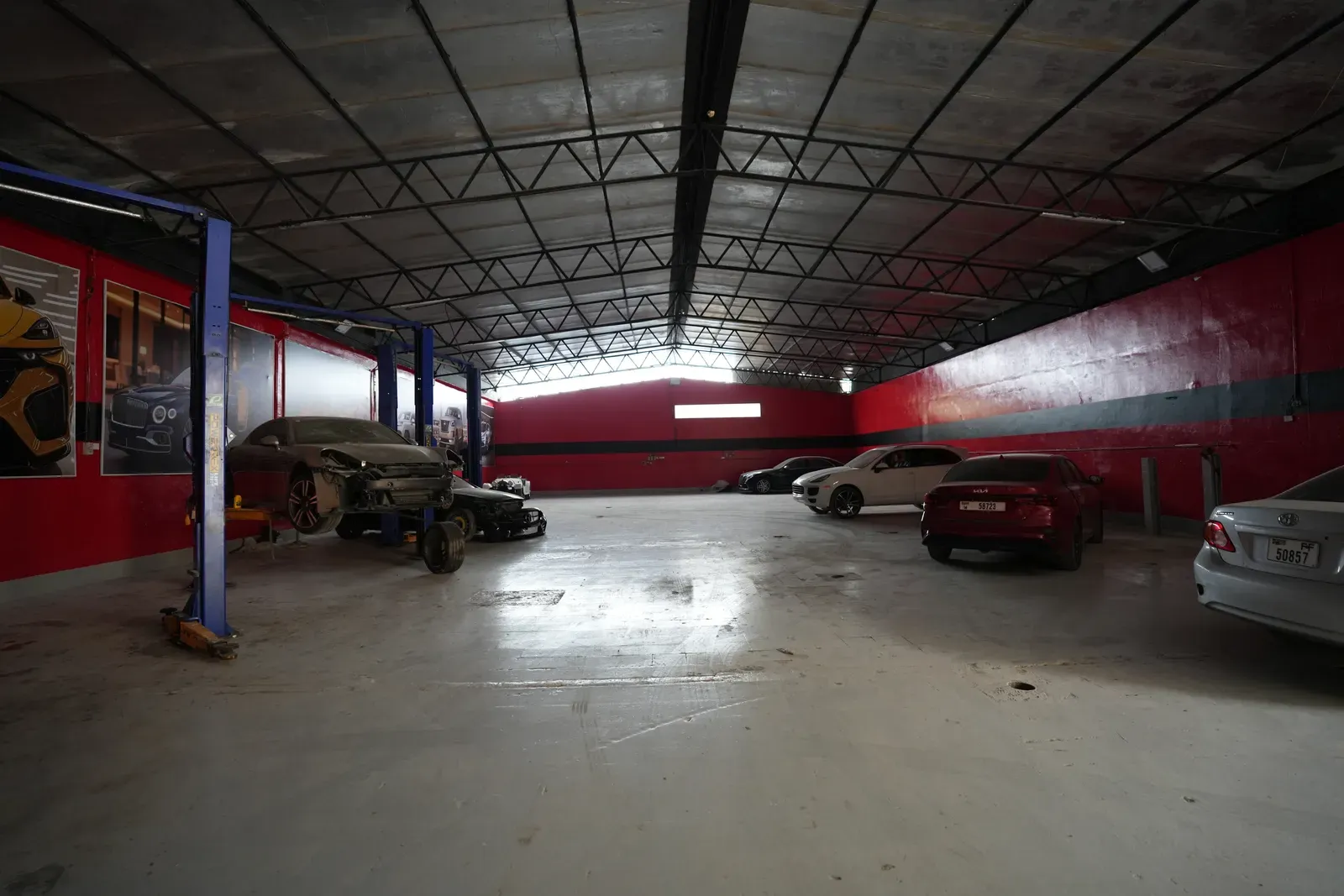
The workshop floor in Sharjah, cars waiting between the lifts.

Every one of these is found on a lift in this building, and priced before it is touched.

The work this usually turns into

And everything else, on the same car

The list above is what this make usually arrives needing. This is the rest of what the workshop does, and it applies to your car as much as to any other — worth knowing while it is already here.

Questions we get asked about these

Will a new steering damper cure the death wobble on my Wrangler?

It will usually quieten it for a while, and that is the problem. The shake is not caused by a damper. It is a solid front axle with play somewhere in the steering triangle — most often the track bar or the bolt through its frame bracket, sometimes a ball joint, a drag link end or a wheel bearing — and the damper only absorbs the oscillation that play creates. Fit one on its own and you have masked a worn joint on a car that does a hundred and twenty on the motorway. We reproduce the shake on the road, then load each element in turn under pressure and name the one that has play. Tyre balance, castor and ride height are checked with it, because on a lifted car those are frequently part of the answer.

My Grand Cherokee was on the floor this morning. Is that the compressor?

Sometimes, but a compressor on a Quadra-Lift car mostly dies of overwork, so the first question is what it has been working against. A car that goes down overnight and lifts itself when started is leaking somewhere and the compressor is doing its job. We read the corner heights and the system state live, command the car up and down, and find the leak at the springs, the unions and the lines before deciding anything about the pump. Fitting a compressor to a system that still leaks is how the same fault arrives twice with two bills.

The Pentastar ticks at idle. Does that mean the cylinder head is going?

Not by itself. A tick that rises and falls with engine speed is valve train noise, and on this engine that points first at the rocker arms and the hydraulic lash adjusters underneath them, which are oil-fed parts and suffer on tired or low oil. The cylinder head question is a different one and it is asked by a misfire that stays on the same cylinder through new plugs, coils and a swapped injector. We check both properly: misfire counters per cylinder, oil pressure and the oil control valve for the noise, and a compression and leak-down test on the suspect cylinder for the head. They are different repairs and we would rather tell you which one you have.

Does the eight-speed automatic ever need a fluid service?

Fluid ages with heat, and this climate supplies plenty of it. The thing worth insisting on is how it is done rather than how often. This gearbox has no dipstick: it is levelled through a plug with the fluid held inside a specified temperature window, which means the temperature has to be read live while the car is on the ramp. Fill it cold or fill it after a long run and the level is wrong even though the correct quantity went in. The pan and the filter are one unit on this design, so they are changed together, and the fluid specification is not interchangeable with a general automatic transmission oil.

My Wrangler goes into the sand every weekend. What actually changes about servicing it?

The sealed units and the air path change; the oil change interval is the least of it. A hot axle that cools suddenly draws air through its breather, so the breather and its hose need to be clear, routed high and free of packed dust, or the axle draws in whatever is around it. The oil in each differential and in the transfer case is looked at for water and for grit rather than just for level, and any weeping seal is treated as a way in as well as a way out. Air filtration matters more than it does on a road car, and after a hard pull through soft sand the transmission temperature and the airflow through the front of the car are worth a look. A Wrangler that never leaves tarmac needs none of that and should not be sold it.

Bring it in and we will find out

Nothing happens to the car until the fault has a name and you have approved the work against it.

Book WhatsApp us Call