The car judders every time I move off. Is that the gearbox?
It depends entirely which gearbox you have, which is why we ask before answering. On the automated-manual cars there is a real clutch being slipped by a computer at every start from rest, and a judder there is usually clutch wear — but not always, because the same feeling comes from adaptation values that have drifted and can simply be re-learned. We read both out of the module before quoting anything. On the eight-speed automatic cars the same complaint is a torque converter and fluid question, diagnosed on the road with temperature and slip on screen. The two cars are not diagnosed with the same test and are nowhere near each other in cost, so getting this right first is most of the job.
How long does a DuoSelect clutch last?
We will not give you a number, because a number would be a guess dressed up as a fact. What decides it is how the car is used, and that is very local. This clutch is slipped every single time the car moves off, so a car that spends its life crawling between junctions, reversing up parking ramps and inching through a queue wears it far faster than a car doing the same distance on an open road. The useful answer is not a figure, it is a reading: the transmission module holds what it has learned about the clutch, and that tells you where yours actually is. Get it read before it starts juddering and you get to plan the job instead of being caught by it.
There is a rattle for a second on a cold start. Is the timing chain going?
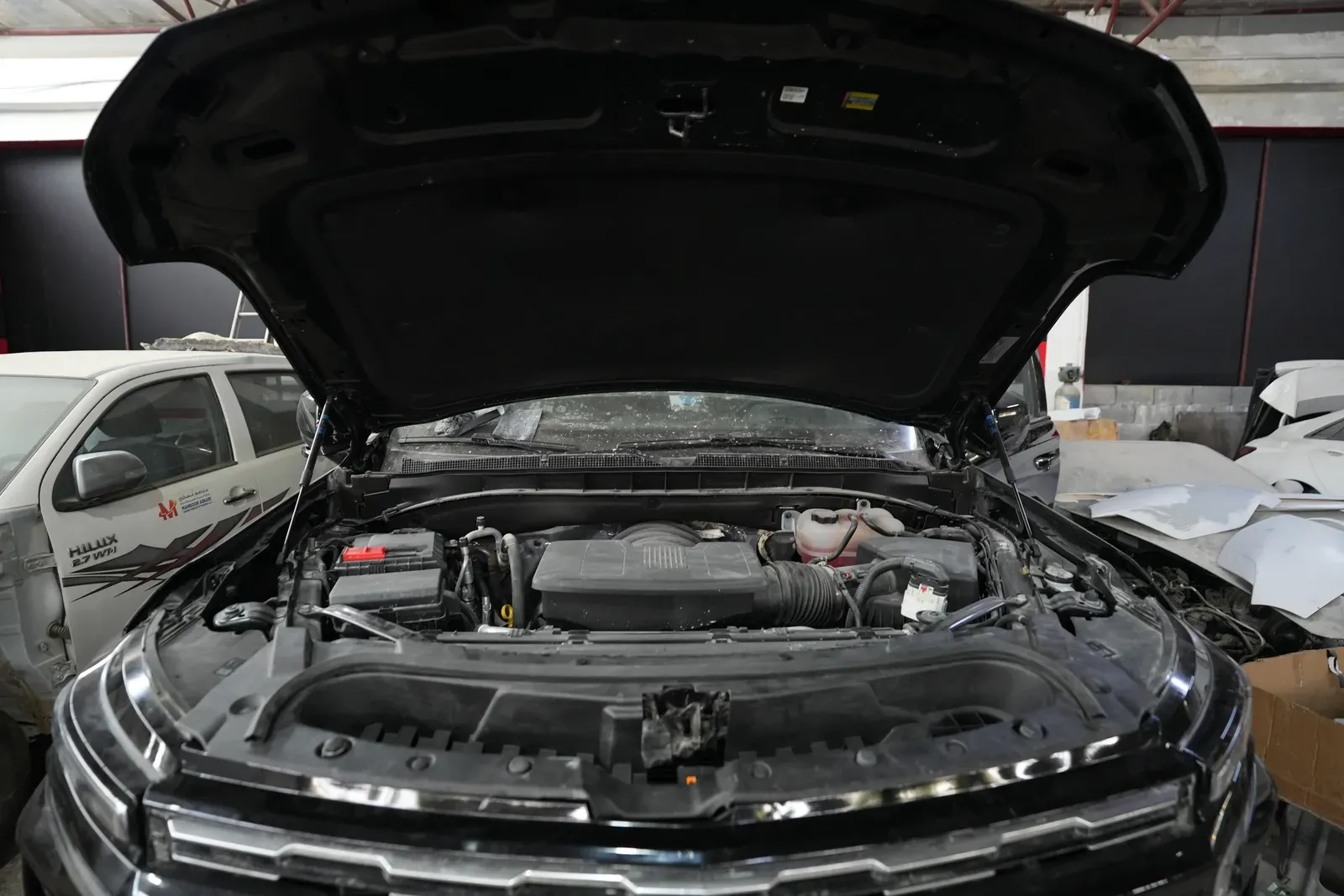
On the 3.0 V6 it is worth looking at rather than waiting out. What wears on these is the guides and the tensioners, not usually the chain itself, and what they wear on is oil condition as much as distance — so a car with long intervals behind it, or with oil we cannot account for, is the one to check. We read the correlation between the camshafts and the crankshaft in live data, which shows whether the timing has already drifted and by how much, and we look at what is in the sump. If it has drifted, catching it now and catching it in a year are two very different jobs, and that is the whole reason to look.
The ride is hard all the time now. Do I need four new dampers?
Probably not, and that is worth establishing before anybody orders parts. The adaptive system reads the body through accelerometers and adjusts a valve inside each damper constantly. If it loses a signal it cannot trust, it defaults to a fixed setting, and that fixed setting is what you are feeling — the dampers themselves may be perfectly good. So we read the codes, test each damper circuit, and watch whether the control unit is commanding any change at all on the road. Sometimes the answer is a single accelerometer or a chafed wire. Sometimes it genuinely is a damper that has leaked, and then we say which corner and why, rather than quoting a set of four because a set of four is easier to sell.
Are parts for these hard to get here?
Some are ordinary and some are not, and the useful thing is to find out which before your car is in pieces. A number of items on the newer cars are shared group components with several sourcing routes behind them. Others — particularly on the V8 era and on the automated-manual gearbox — are marque-specific and come down a narrower channel. We check availability and lead time as part of the diagnosis, not after it, and where something has a wait attached we will tell you and let you decide whether to book the car in now or later. A car standing in a workshop bay waiting for a part is a cost to you even when nobody is charging you for it.