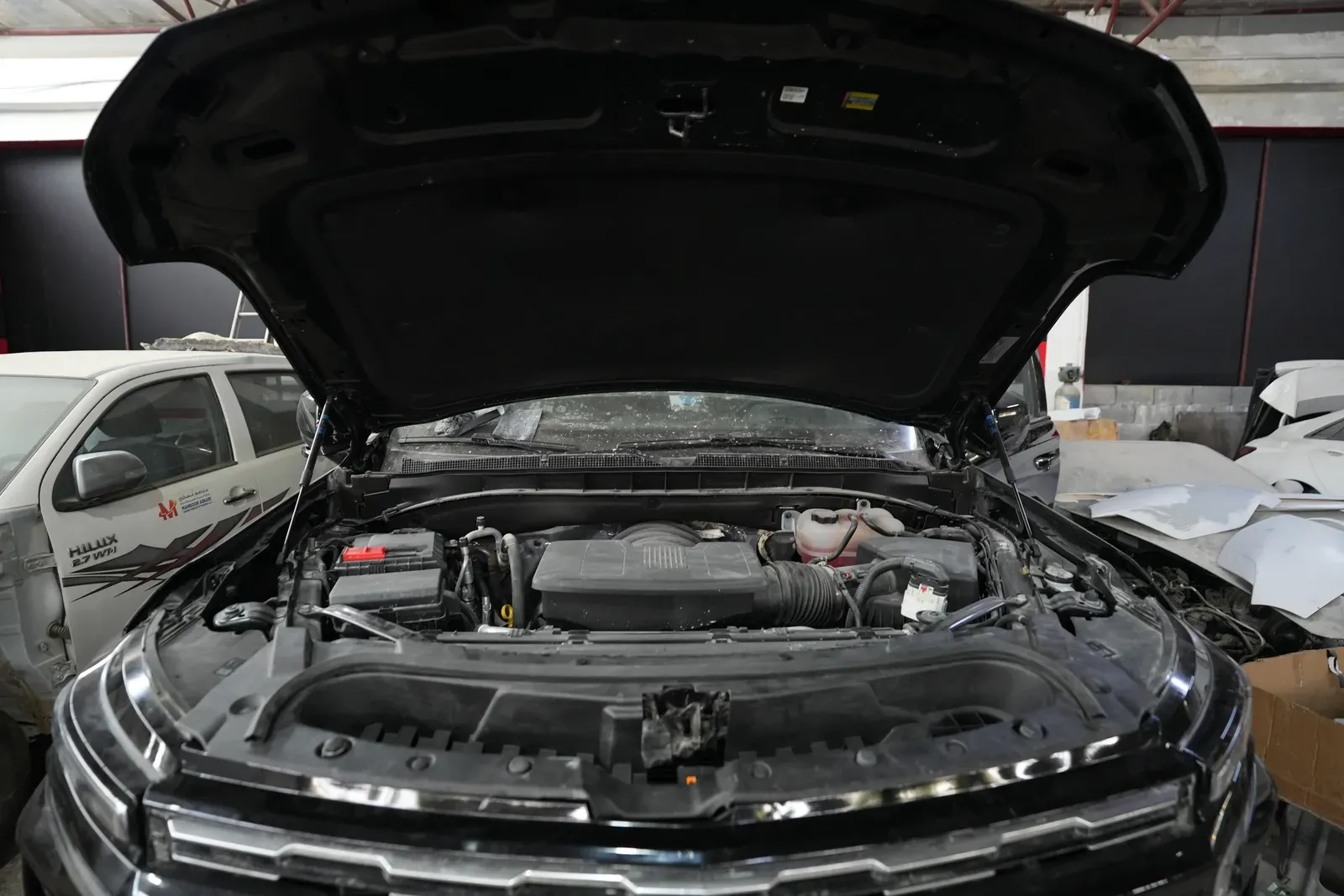
An engine bay open on the workshop floor, photographed close.

Volkswagen repair and servicing in Sharjah

Two answers decide most Volkswagen work: which engine, and which gearbox. A 1.4 TSI turning a toothed belt and a 2.0 TSI turning a chain do not wear in the same place, and a dry-clutch DQ200 seven-speed shares almost nothing with a wet-clutch DSG beyond the name. We settle both before a price is put on anything, because a gearbox judder is a fluid service on one of them and a mechatronic diagnosis on the other.

Why we see these

Volkswagen sits in Sharjah as a family car rather than as a statement, which changes who brings one in and why. Golf, Jetta, Passat, Polo and Tiguan arrive as second and third-hand daily cars doing school runs and the Dubai commute, and Teramont arrives loaded with seven people and a boot. The split that matters is how the car got here. Gulf-market cars are overwhelmingly petrol, and a good many of them left the showroom with a conventional torque-converter automatic rather than a DSG. The DSG cars — and almost every diesel we see — have usually come in used from Europe or the Far East, which means a dual-clutch unit and a 2.0 TDI after-treatment system spending their lives in ambient heat the service schedule behind them never imagined. A dry clutch that is cooled by air alone is a very different component in July here than in the country it was calibrated for.

What this make asks of a workshop

  • Diagnostic access that writes back as well as reads. These cars expect a basic setting, an adaptation or a throttle alignment after a part is fitted, and several jobs end with a service regime and an interval being set in the instrument cluster rather than a sticker on the screen. A reader that only lists codes leaves that undone and the car carries the wrong record from that day.
  • Oil to the Volkswagen specification the engine was built around — the 504 00 and 507 00 long-life specifications on the engines that call for them, the older 502 00 and 505 01 where that is what the block wants — not a viscosity chosen off a shelf. On a diesel with a particulate filter the specification is not a preference, because the wrong ash content shortens the filter.
  • An honest decision about the service regime. A car set to a variable long-life interval is calculating from how it is driven, and short trips in this climate are the hardest version of that calculation. Where a fixed time-and-distance interval is the sensible setting for a car living here, that is a conversation to have rather than a default to leave alone.
  • The right fluid in the right part of a DSG, which is where these gearboxes get ruined. On a dry-clutch DQ200 the mechatronic unit carries its own small charge of fluid and the gear set is separately lubricated; on a wet-clutch DSG the clutches share the fluid and take a filter with it. Putting the wrong one in the wrong half is not a shortcut, it is a rebuild.
  • Timing-belt work quoted as the whole job on the belt-driven engines. On the 1.4 TSI the cam belt is not the only belt in there, the tensioner goes with it, and stretch bolts are not reused. A belt changed alone on an engine that also drives its water pump from a second belt is a job that comes back.

What actually comes in

Named at component level, with what the driver notices first and what we do to establish it is that and not something else that feels identical from the driving seat.

Dry-clutch pack and mechatronic unit on the DQ200 seven-speed DSG

A judder pulling away from a standstill, a jerk between the lower gears in traffic, a delay before the car takes up drive, or the gear display flashing and the car refusing to move at all.

How we establish it

This is the gearbox that gets guessed at, so we separate the two halves before anybody quotes. We read the clutch adaptation values and the modelled clutch temperature in live data, then log a slow pull-away and watch engine speed against gearbox input speed to see whether the clutch is actually slipping. Mechatronic faults on this unit show as pressure or actuator complaints from the hydraulic side rather than as slip. The distinction matters in money: the dry clutch is cooled by air alone here, which is a far harder life than the wet-clutch DSG where the clutches sit in fluid and a fluid and filter service is the first thing to try.

Camshaft toothed belt, its tensioner and the second belt that drives the water pump module — EA211 1.4 TSI

Nothing at all until it matters, or a light rattle from the belt end of the engine, coolant disappearing slowly with a stain behind the belt cover, and on a bad day an engine that stops and will not turn over properly.

How we establish it

This engine is a belt engine, not a chain engine, and that single fact changes the whole conversation about mileage. We check the belt for glazing, cracking between the teeth and any oil or coolant contamination, and we check the tensioner rather than only the belt, because a tired tensioner is what lets a healthy belt jump. The water pump on the EA211 is turned by its own separate belt inside the same cover, so a weep from the pump lands on the cam belt and destroys it — which is why finding coolant in there means the pump module is part of the job and not a separate visit later.

Water pump and thermostat housing module on the EA888 2.0 TSI as fitted to Tiguan, Passat and Golf

Coolant level dropping with no puddle anywhere, a sweet smell at the front of the car after a run, the temperature needle sitting lower than it used to, or a heater that blows warm instead of hot.

How we establish it

On this engine the pump and the thermostat are one plastic module with an electrically controlled coolant valve in it, so it can fail as a leak or as a temperature-control fault with no leak at all. We pressure-test the system cold and look specifically at the seam of the module and the joint where it meets the block, and we read the coolant temperature live against the thermostat position the engine is asking for. A car running cold is not a harmless fault: it changes fuelling and it is the version of this failure that does not drip on the floor and so goes unnoticed for months.

Intake manifold swirl-flap motor and the EGR cooler on the 2.0 TDI (EA189 and EA288)

The car drops into reduced power on the motorway and clears when you restart it, a puff of black smoke on acceleration, the glow plug light blinking, and fuel consumption creeping up.

How we establish it

A code here names a plausibility check that failed, not a part that broke. We command the swirl flaps through their travel and watch the actual position the motor reports against the demanded one, because the arm inside a soot-packed plastic manifold shears and the motor then reports a position it cannot reach. Separately we watch EGR flow and the intake temperature after the cooler, since a cooler that is blocked or cracked produces the same limp mode from the other direction. Cleaning soot out of a manifold whose linkage has already broken is money spent on the wrong half of the fault.

Electronic parking brake — the motor on each rear caliper and the module that drives them

A parking brake warning that will not clear, a whirring from one rear wheel and not the other, the brake releasing on one side only, or a rear pad change that has left the car with the handbrake light on.

How we establish it

The rear caliper on these has a motor bolted to it and the pistons are wound back electronically, not pushed. That means the calipers have to be put into service position from the diagnostic side before a pad goes anywhere near them, and put back afterwards — a rear pad job done by hand on this car is how the motor and the spindle get damaged. We read the current each motor draws while it clamps and releases, which separates a seized caliper or a corroded motor from a supply, earth or module fault, and we check the loom where it flexes with the suspension.

ABS and stability control hydraulic unit, its pump motor and the wheel speed sensors

ABS, stability control, tyre pressure and parking brake lights all appearing together, the speedometer dropping to zero while the car is moving, or a buzzing from under the bonnet when the ignition is switched on.

How we establish it

Four warnings together is usually one fault with four names. The wheel speed signal feeds the instrument cluster, the stability system and the electronic parking brake, so a single failed sensor or a chafed sensor wire lights all of them and looks like a catastrophe. We read each wheel speed live while the car rolls and find the one that drops out, before anyone talks about the hydraulic unit. Where it genuinely is the unit — a pump motor that does not run, or an internal valve fault — we say so plainly, including the fact that a replacement has to be coded and bled with the diagnostic tool rather than bled by pedal.

Window regulator cable, its plastic clip and the door module behind the panel

A bang inside the door and the glass dropping into it, a window that goes down and will not come up, a grinding from inside the door, or a window that comes up and immediately runs back down.

How we establish it

This is a cable-and-pulley regulator, and it is the plastic clip that carries the glass and the cable itself that give, not usually the motor — which is why replacing a motor here often changes nothing. We take the trim off and look at the carrier and the cable before quoting a part. The window that rises and immediately drops again is a different fault entirely: that is the anti-trap function doing exactly what it was designed to do, and after a battery disconnection or a regulator repair the window has to be re-initialised, which takes a minute and is routinely missed.

Rear multi-link arms, their bushes and the rear wheel bearings on Teramont and Atlas

A knock from the back over speed bumps with the third row occupied, a hum from the rear that rises with speed and changes when the car is swerved gently, or rear tyres wearing on their inner edges.

How we establish it

A seven-seat SUV carrying its full load over Sharjah speed bumps works the rear of this car far harder than the front, and the rear axle here is a multi-link with several separate arms rather than one big component. The car goes on a lift and each arm is levered under load, bush by bush, so what you are quoted is the one that has gone rather than the whole axle. A rear bearing is confirmed by the noise changing under light cornering load at speed, not by guessing from the direction of the hum. Anything replaced back there is followed by a four-wheel alignment, because the rear toe on this axle is adjustable and a new arm without it will eat a tyre.

Torque converter lock-up clutch and fluid condition in the six-speed automatic (09G) on Gulf-market cars

A shudder at a steady light throttle around 60 to 80, like driving over rumble strips, a flare between gears, or a firm knock going into drive when the car is cold.

How we establish it

This is not a DSG and it is not diagnosed like one. The shudder at light throttle is the lock-up clutch chattering as it tries to hold, and we confirm it by logging engine speed against turbine speed at the moment it happens and by watching the fluid temperature. Then we look at the fluid itself — colour and smell tell you what a scanner will not. This gearbox was sold as sealed, which has been read for years as never needing anything; in this climate it works at a temperature where the fluid ages and we would rather say so before the shudder becomes a slip.

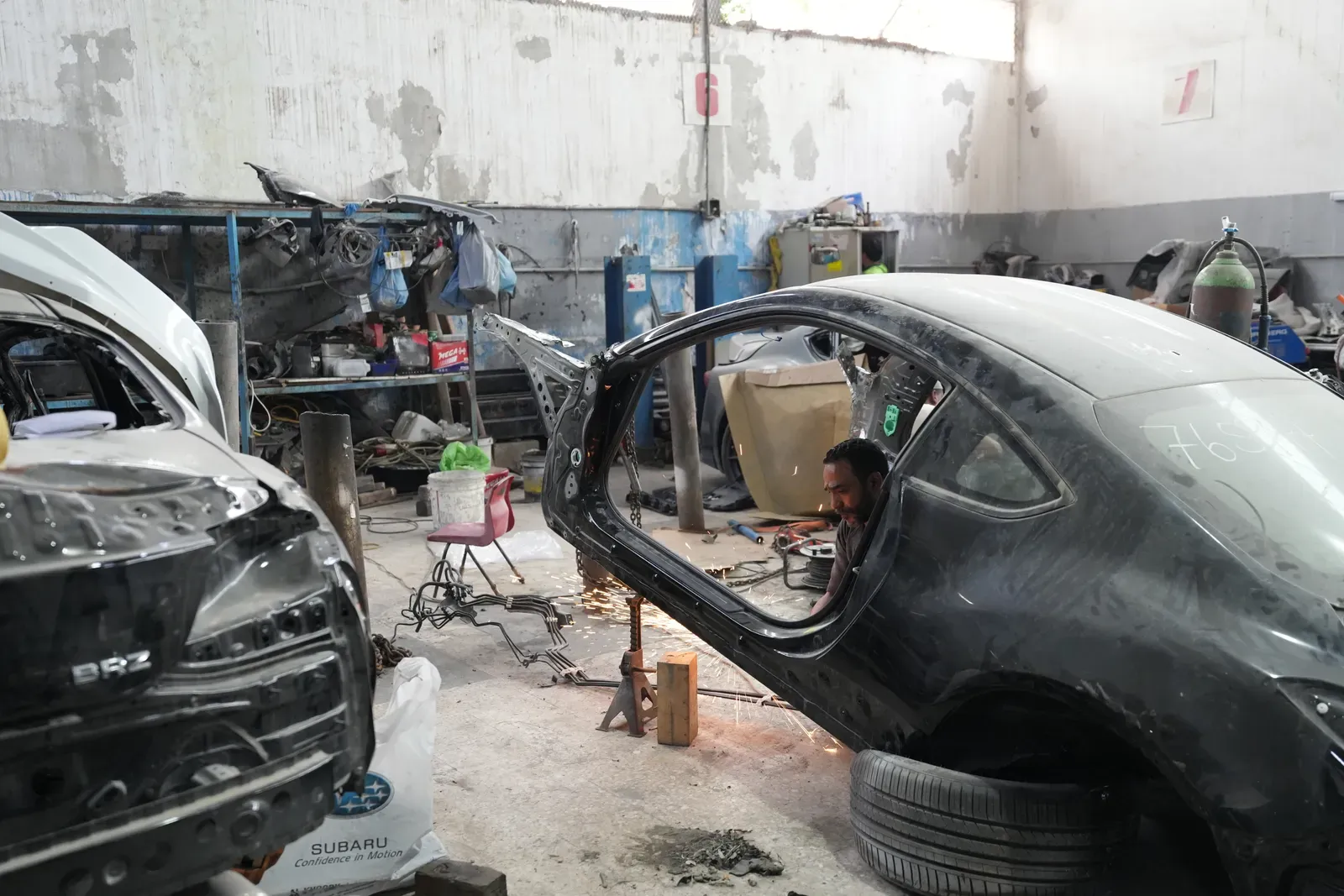
A body shell on axle stands with a technician working inside it.

Every one of these is found on a lift in this building, and priced before it is touched.

The work this usually turns into

And everything else, on the same car

The list above is what this make usually arrives needing. This is the rest of what the workshop does, and it applies to your car as much as to any other — worth knowing while it is already here.

Questions we get asked about these

The DSG judders when I pull away. Does it need a new gearbox?

Not on the evidence of a judder alone, and which DSG you have decides most of the answer. On a wet-clutch DSG the clutches run in fluid, and a fluid and filter service with the adaptations reset afterwards is the first thing to try, because it genuinely fixes some of these. On the dry-clutch DQ200 seven-speed there is no such service for the clutch — it is cooled by air — so the question becomes whether the clutch pack is worn or the mechatronic unit is at fault, and those are two very different prices. We log a pull-away, compare engine speed with gearbox input speed, and read the clutch adaptation values before anybody says the word gearbox.

My 1.4 TSI has a belt, not a chain. When does it have to be changed here?

The interval belongs to the manufacturer and to that specific engine, and we will read it off the car rather than quote a number from memory — a belt interval given casually is exactly the kind of invented fact this site refuses to print. What we will say is that a belt ages by time and heat as well as by distance, that a car standing in the sun here is doing the time part faster than the same car in a cooler place, and that the tensioner and the separate water pump belt inside the same cover are part of the job rather than optional extras. We also check the belt for oil and coolant contamination, because a weeping pump behind the cover will finish a new belt as quickly as it finished the old one.

Why can the rear brake pads not just be changed by hand?

Because on a car with an electronic parking brake the rear caliper piston is driven by a motor and a spindle rather than pushed back by hand. The calipers have to be commanded into service position with a diagnostic tool first and commanded back afterwards, and the brake has to be re-calibrated so the module knows where the pads now are. Forcing the piston back mechanically damages the spindle and the motor, and the repair costs several times what the pads did. If a rear pad change has left your car with a parking brake warning that will not clear, that is usually what happened.

Four warning lights came on at once. Is that four faults?

Usually it is one. The wheel speed signals are shared between the instrument cluster, the anti-lock brakes, the stability system and the electronic parking brake, so one failed sensor or one chafed wire makes four systems complain at the same moment and the dashboard looks far worse than the fault is. The way to settle it is to watch all four wheel speeds live while the car rolls and see which one drops out. That is a short job and it is the difference between replacing a sensor and being quoted for a hydraulic unit.

Do you have Volkswagen dealer software?

We will not describe ourselves as a Volkswagen centre, because nobody appointed us and the line at the bottom of this page says so. What matters to your car is whether the work includes the basic settings, adaptations and re-initialisations it expects after a part changes — the throttle alignment, the parking brake calibration, the window re-initialisation, the service regime written back into the cluster — and whether a circuit gets tested rather than a code read off it. Ask about the specific job on your car and you will get a straight answer, including that some module work has to go to the franchise because it is programmed against a system we cannot reach. We would rather name that limit in advance than meet it with your car in pieces.

Bring it in and we will find out

Nothing happens to the car until the fault has a name and you have approved the work against it.

Book WhatsApp us Call