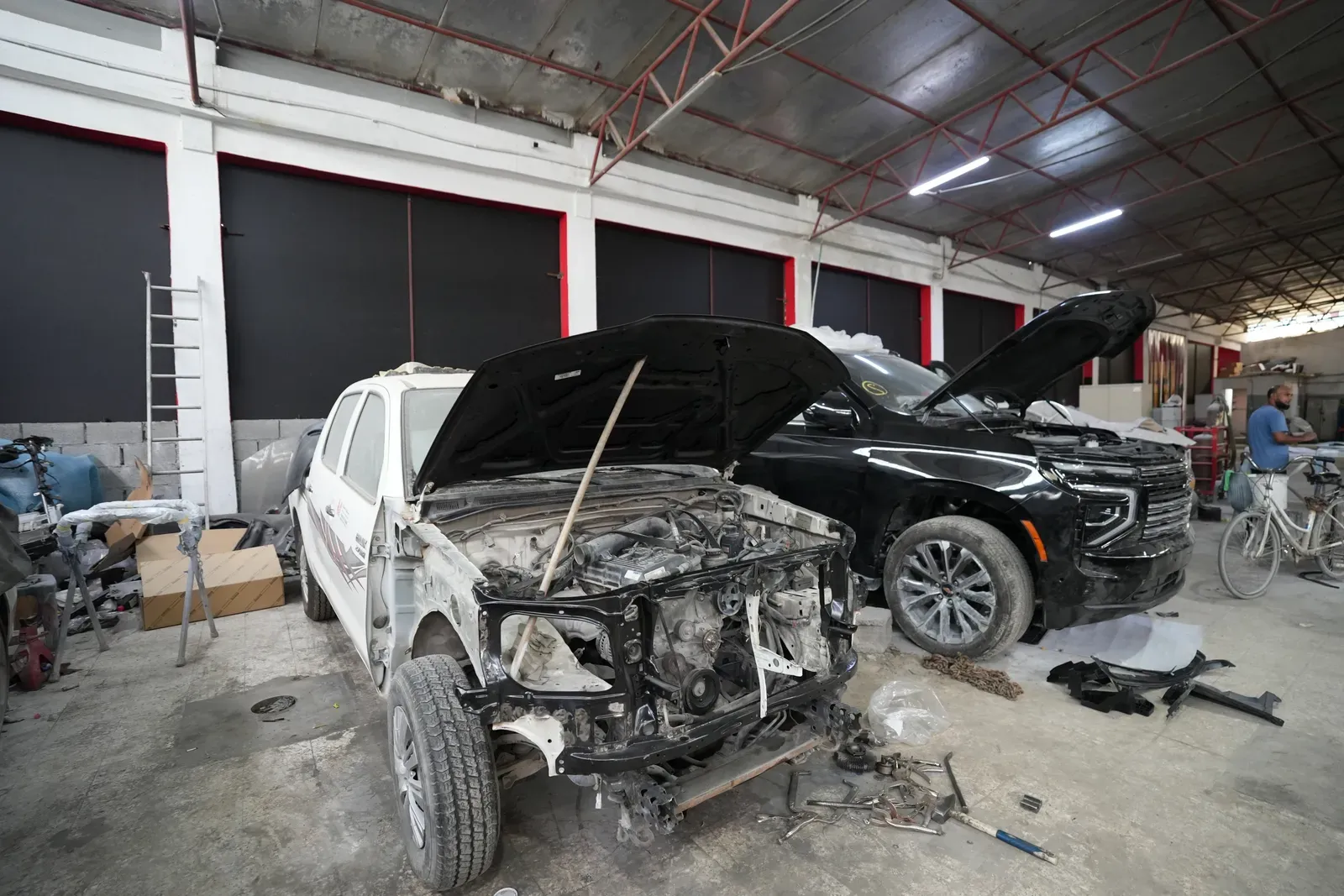
A row of cars with their bonnets open in the workshop bay.

Land Cruiser and Prado servicing and repair in Sharjah

This is a durable vehicle. We are not going to pretend otherwise in order to sell you a repair, because you already know it and so does everybody who owns one. What actually finishes Land Cruisers and Prados in this country is not a design fault — it is servicing that slipped, heat, and sand in the places sand gets into. That is a maintenance page, not a horror story, and it is the honest one.

Why we see these

In the northern Emirates this is the default vehicle: the company fleet, the family car, the thing that goes out to the dunes at the weekend and is back in traffic on Sunday morning. It is also kept far longer than most makes and changes hands several times rather than being scrapped, which means a large share of the ones on this floor arrive with a history somebody else wrote and nobody can produce. That changes the first job on the car. On most makes the first question is what is broken. On these it is usually what was skipped, and for how long, because a Land Cruiser will carry a deferred service quietly for a long time and then present the bill all at once.

What this make asks of a workshop

  • Generation and engine established before a single part is ordered. A 1GR-FE Prado, a 2UZ-FE V8, a 1UR or 3UR, the 300 with the V35A twin-turbo V6 and the 250 Prado with its 2.4 turbo four share a badge and very little else underneath.
  • A lift that takes a two-and-a-half-tonne body-on-frame vehicle and still leaves room to work under the middle of it, because the propshaft, the transfer case and both differentials are all jobs done from below with the wheels hanging.
  • The front of a belt-driven V8 treated as a strip and not as an afternoon — timing marks, crank bolt, fan bracket and the water pump that sits behind the belt, done together or done twice.
  • Hydraulic height control handled on its own terms where it is fitted: its own fluid, its own bleed sequence at each corner, and height read as live data rather than judged by eye.
  • A severe-use service schedule used as the default rather than the long one, because short trips in traffic at 45°C with the air conditioning loaded is the definition of severe use in the manufacturer’s own book.
  • A parts conversation that is real, because for these two the genuine part and a good aftermarket one are both on a shelf in Sharjah the same day, and the difference between them can be explained rather than implied.

What actually comes in

Named at component level, with what the driver notices first and what we do to establish it is that and not something else that feels identical from the driving seat.

Exhaust manifold flange on the 4.7 V8 (2UZ-FE)

It ticks for the first minute after a cold start, then goes quiet once the engine warms up.

How we establish it

We listen to it cold, which is the only time it speaks, and trace the leak at the flange rather than assume the top end. The same ticking can be a valvetrain noise or a heat shield, and those are three different bills, so the noise gets located before anything is quoted.

Timing belt and the water pump behind it, on the belt-driven 4.7 V8

Nothing at all, usually — and then a coolant smell, or a damp patch at the front of the engine.

How we establish it

This one is found by reading the car, not by listening to it. The belt is a date item as well as a distance item and heat ages rubber whether the car moves or not, so we ask what is documented, look at the belt and the pump weep point, and pressure test the cooling system if there is any sign of loss. The pump lives behind the belt, which is why the two are one job rather than two.

Propshaft universal joints and the centre support bearing

A clunk from under the middle of the car when I pull away, and a vibration through the floor at speed.

How we establish it

The shaft is taken in hand at each joint with the wheels off the ground, the centre bearing and its mounting bolts are checked, and the slip spline is checked for a dry or seized condition. A clunk on take-up and a vibration at road speed often have two different causes on the same shaft, so both ends are checked rather than the nearer one.

Front differential, rear differential and transfer case oil

A whine or a growl from underneath that changes when I lift off the throttle.

How we establish it

We drain and look at what comes out. Oil that has been through standing water or deep sand comes out milky or gritty, and that tells you more about the state of the bearings than any distance reading does. Pinion and output seals are checked for weeping at the same time, because a diff that has been quietly losing oil is the usual reason one starts to make noise in the first place.

Steering rack play on the Prado 120 and 150; relay rod and idler arm on the older 80 and 100 series

There is a dead spot in the middle of the steering before the car starts to turn, and a knock over bumps.

How we establish it

Which component we are looking for depends on which generation is on the lift, and they do not share a steering layout. The later cars steer through a rack, where the play is at the pinion or in the inner joints under the boots. The 80 and 100 steer through a box with a relay rod and an idler arm, and the idler is the part that usually goes first. Every joint is loaded by hand before a name is put on the quote.

Hydraulic height control and its accumulators, where fitted (Lexus LX and the Land Cruiser variants that carry it)

It sits low in the morning, takes a long time to come up, or the height warning is on the dash.

How we establish it

Codes and live height-sensor data first, then the condition of the system fluid, which is a specific fluid and not a general hydraulic oil. A system that has gone slow is usually either accumulators that have lost their gas charge or fluid that was never changed, and those two feel identical from the driving seat. We separate them before anything is replaced, because the parts are not the same price.

Radiator, air conditioning condenser and the rest of the cooling stack, packed with sand and dust

It is cold on the motorway and warm in traffic, and the temperature gauge creeps up when I am crawling.

How we establish it

Vent temperature read in the cabin, pressures read on both sides of the system, and then the stack looked at from the front with a light, because on a car that goes off road the sand sits between the condenser and the radiator where nobody sees it. Cold on the move and warm at a standstill is an airflow story before it is a gas story, and topping up a system nobody has looked behind is selling the same gas twice.

Automatic transmission fluid condition after towing or a season in the dunes

It shudders on a light throttle, or it holds a gear longer than it used to.

How we establish it

Scan for stored codes, watch line pressure and fluid temperature on live data on the road, and look at the fluid itself. Sand driving and towing are the two duties that cook this fluid, and neither of them appears on the odometer. We will also say plainly when a gearbox is past the point where fresh fluid is the answer, rather than selling a service that will not fix it.

Battery and alternator output at 45°C ambient

It cranks slowly on the hottest morning of the year and is perfectly fine by the evening.

How we establish it

The battery is load tested rather than judged by the fact that the car started, and charging voltage is read at idle and with the air conditioning and lights loaded. Heat, not age, is what ends a battery in this country, and a vehicle with a second battery or aftermarket wiring for camping gear gets the charging side checked too, since that is where a lot of these faults actually live.

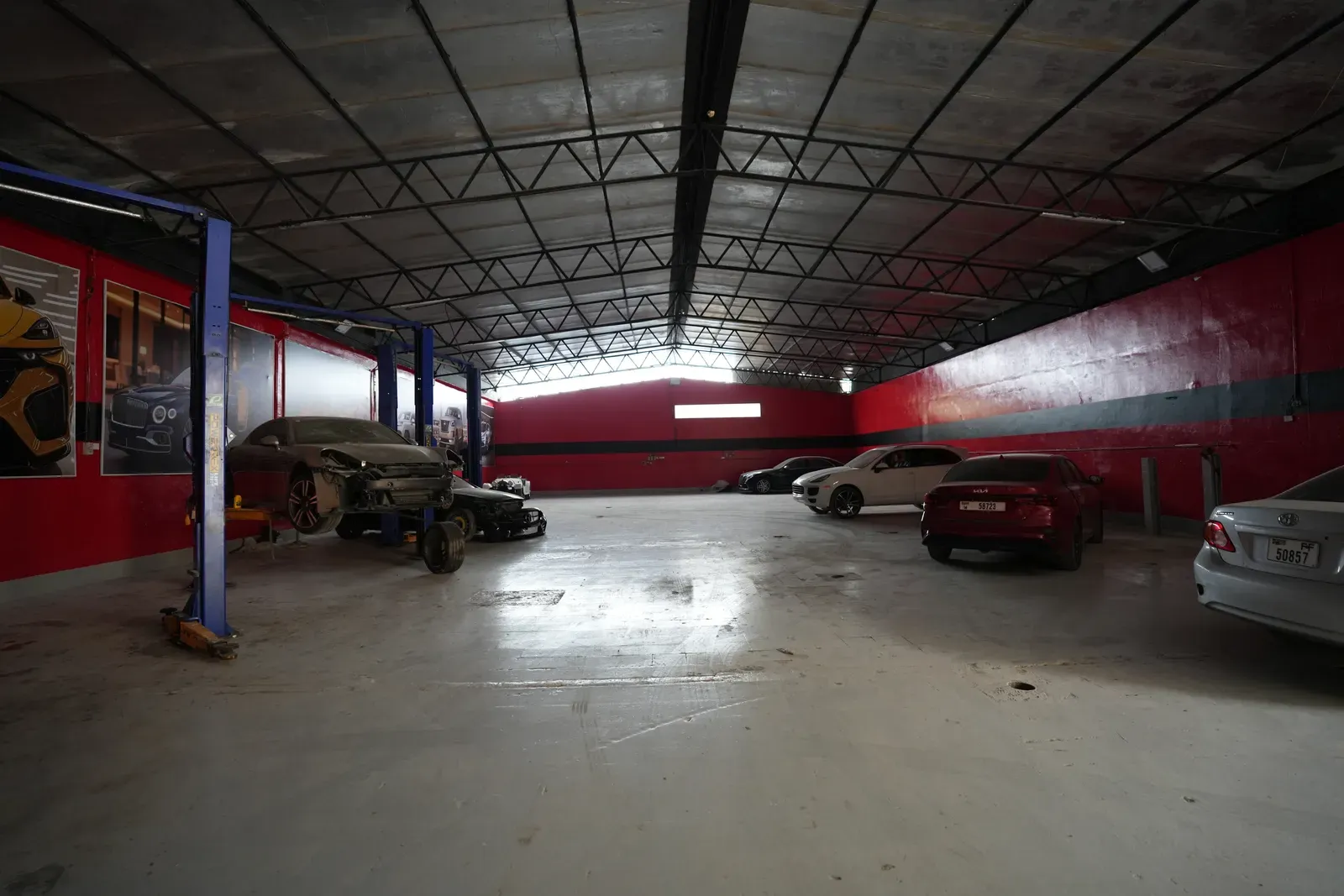
The workshop floor in Sharjah, cars waiting between the lifts.

Every one of these is found on a lift in this building, and priced before it is touched.

The work this usually turns into

And everything else, on the same car

The list above is what this make usually arrives needing. This is the rest of what the workshop does, and it applies to your car as much as to any other — worth knowing while it is already here.

Questions we get asked about these

Mine has never given me trouble. Is there anything for you to do?

Servicing, mostly, and that is not a disappointing answer — it is the answer. These cars earn their reputation by tolerating neglect, which is exactly what makes them easy to neglect. Oil on the severe-use interval, differential and transfer case oil looked at rather than assumed, the cooling stack cleaned, the filters changed early because of dust, and the belt-driven engines given their belt and pump on time. Done on that footing, most Land Cruisers never need the repair pages of this website at all.

My car is still inside its factory warranty. Should it come here?

Talk to the agency first, and we will tell you that rather than take the work. A car still covered by the manufacturer is the manufacturer’s business, and anything that might be a warranty claim should be presented there. We are not approved, authorised or appointed by Toyota or Lexus, and we are not going to be vague about that in order to book a service.

The V8 ticks when it is cold. How urgent is that?

Usually not urgent, but it does need to be identified rather than lived with. A crack at the manifold flange on the 4.7 V8 is a known item and it behaves exactly like that — loud cold, quiet warm, because the metal expands and closes the gap. What matters is confirming it is that and not a valvetrain noise, because one of those can be watched and the other cannot. That is a listening job with the engine cold, and it costs you the time it takes.

How often should the differential and transfer case oil be changed if I go to the dunes?

We are not going to invent a number. The handbook has a severe-use column and that is the one that applies to dune and sabkha driving, but the real trigger is condition, not distance. Oil that has been through standing water or a soft sabkha crossing can be wrecked in one afternoon, and it comes out looking like it. Bring it in after a trip like that and it takes a few minutes to see, which is a great deal cheaper than a differential rebuild.

Is the 300 with the twin-turbo V6 a different proposition to an older one?

Yes, and anyone who tells you a Land Cruiser is a Land Cruiser is not looking under the bonnet. The 300 with the V35A twin-turbo V6 and the 250 Prado with its 2.4 turbo four are forced-induction engines with cooling, oil specification and heat-soak behaviour of their own, and none of that is shared with a naturally aspirated 1GR Prado or a 4.7 V8. The 300 is also offered here with the 4.0 V6, so even the same model year needs establishing before advice is given. We ask which engine before we say anything about intervals.

Bring it in and we will find out

Nothing happens to the car until the fault has a name and you have approved the work against it.

Book WhatsApp us Call