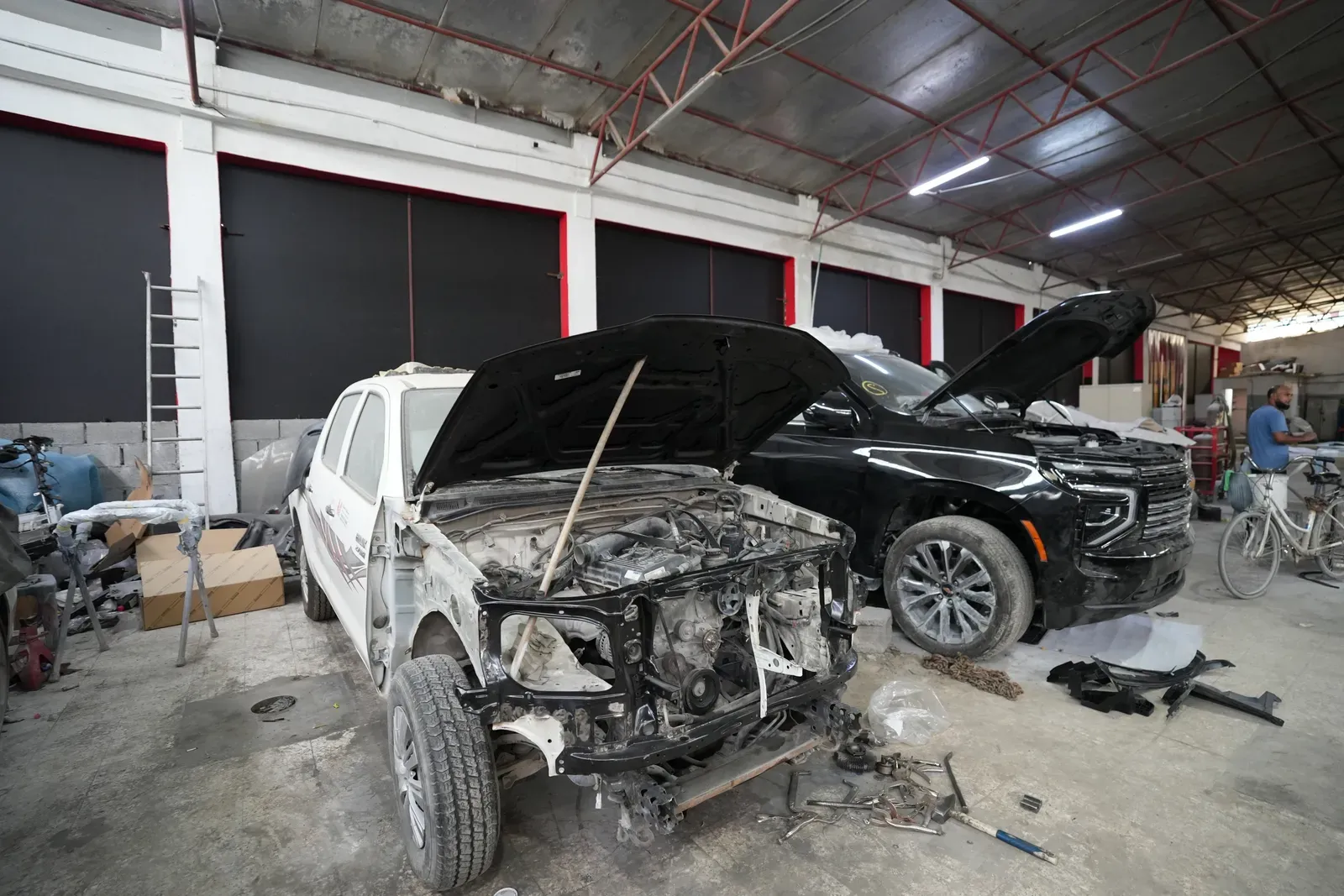
An engine bay open on the workshop floor, photographed close.

Cadillac repair and servicing in Sharjah

Very little of what brings a Cadillac through the door is the engine. It is the equipment that was fitted above the mechanicals and then went out of warranty: magnetically controlled dampers, the CUE touch panel in the centre console, the driver assistance sensors behind the windscreen and the grille, the electric parking brake. Those are electrical diagnoses with mechanical consequences, and they are diagnosed in that order.

Why we see these

There are far fewer Cadillacs in the northern Emirates than there are of the trucks they are related to, and almost every one that reaches an independent workshop is on its second or third owner and well outside any dealer relationship. That combination produces a particular kind of car: heavily optioned, with systems that were expensive when new and are still expensive now, on a body that has spent years parked outside in the sun. Two consequences follow directly. The first is the CUE panel, where the bonded touch layer separates from the glass after long exposure to heat, and a screen parked in direct sun in this country reaches surface temperatures nothing in a European test cycle prepares it for. The second is that an Escalade here does the same short urban duty as any other large family vehicle, and the damper and levelling hardware that makes it ride the way it does is rubber, fluid and a solenoid coil, all of which age on a local clock rather than a catalogue one.

What this make asks of a workshop

  • A magnetically controlled damper diagnosed as an electrical component first. Inside it is a solenoid coil and a fluid whose viscosity the coil changes, so the circuit is measured for resistance and current draw and the module is read for a damper-specific code before anybody bounces a corner by hand.
  • Ride height and suspension calibration carried out after a corner is disturbed. These cars hold a reference the module compares everything against, and a strut fitted without that reference being re-established leaves the system controlling toward a number that is no longer true.
  • Driver assistance sensors re-aimed after a windscreen, a bumper or a grille job. The car requires the forward camera and the radar to be calibrated to a fixed target at a measured distance on a level floor; it will not learn it by being driven home, and adaptive cruise that has not been calibrated is a system reporting distances it has not actually measured.
  • The electric parking brake put into service mode before the rear callipers are touched, and taken out of it afterwards. On these it is a motor driving the calliper piston, not a cable, and winding it back by force is how an actuator is destroyed during a routine brake job.
  • The full chain kit for the 3.6 V6 — chains, tensioners, guides, the cam phasers and the seals — rather than a chain on its own, plus the coolant specification the engine was designed around.
  • An interior parts channel that understands a CUE fault is a screen assembly rather than a software problem, so the diagnosis and the availability conversation happen at the same time instead of a week apart.

What actually comes in

Named at component level, with what the driver notices first and what we do to establish it is that and not something else that feels identical from the driving seat.

Magnetic Ride Control struts and dampers — the fluid leak and the damper solenoid circuit on Escalade, CTS and ATS

The ride has gone hard and unsettled, or the car floats and keeps moving after a bump, often with a suspension warning message and oil wet down the body of one strut.

How we establish it

This is the Cadillac fault that costs the most and gets guessed at the most, so it is worth being exact. The damper is filled with a fluid whose thickness changes when a coil inside it is energised, and the module varies that current continuously as the car moves. That means there are two separate ways for it to fail. Electrically, the coil or its wiring goes open or short, the module logs a code naming that corner, and the damper defaults to one fixed setting — which the driver feels as a ride that has gone hard. Mechanically, the seal lets go and the fluid escapes, which is visible on the strut body. We read the module for a corner-specific code, measure resistance and current at the damper connector, and look at each strut for wet before quoting, because those two findings have very different answers and only one of them is a part.

CUE centre screen delamination and the capacitive touch layer behind the glass

Fine cracks spreading from one edge of the screen like a web, the touch working in some places and not others, buttons pressing themselves, or the panel becoming completely unresponsive while the display behind it still lights up.

How we establish it

This one is genuinely characteristic of the make and it is not a software fault, however much it looks like one. The touch layer is bonded to the glass, that bond releases with long heat exposure, and once it has released the panel reads pressure that is not there. The display continuing to work behind an unresponsive surface is the tell. We separate it from a genuine module or software problem by checking whether the head unit still responds to its physical controls and to the steering wheel switches, and whether the system is otherwise present on the bus. If the module answers normally and only the touch surface is wrong, no amount of reprogramming will change it and we will say so rather than selling a software attempt first. On a car that lives outside, shading or covering the panel when parked is the only thing that slows it down.

Timing chains, cam phasers and the water pump on the 3.6 V6 — LFX and LGX in CTS, ATS and XT5

A rattle from the front of the engine for a few seconds on a cold start, a rough idle that clears once it is warm, a check engine light, and separately a sweet smell or a drip of coolant after parking.

How we establish it

This engine drives four camshafts through more than one chain, and the phasers that advance and retard those camshafts are hydraulic units fed by engine oil, so a chain fault and an oil condition problem present almost identically. We read the camshaft position correlation values for each bank separately against crank position, because a code on one bank and not the other narrows the job considerably, and we look at the oil and its history before anything is dismantled. The water pump is part of the same conversation rather than a separate visit: on this engine it sits where the front of the engine has to be opened anyway, so finding a weeping pump after a chain job is finished is an avoidable second bill and we check it while we are quoting the first.

Escalade air springs at the rear, the levelling compressor dryer and the exhaust solenoid

The vehicle is down on one corner in the morning and lifts after a minute of running, the compressor never seems to stop, or a suspension message appears and the vehicle will not raise at all.

How we establish it

A vehicle that sags overnight and recovers on start-up is describing a slow leak, and a leak is a component, not a system. We raise and lower the vehicle on command from the module, listen and test around each bag, its top and bottom seats and the line unions, and watch how long the compressor runs to achieve a given change in height. The dryer inside the compressor matters as much as the bag: it takes moisture out of the air being pumped in, and once it is saturated the moisture goes into the system instead. That is a real risk in humid coastal air, and it is why a compressor that has been run for months filling a leaking bag is often not reusable even after the bag is replaced. We say that before the work rather than after it.

Electric parking brake actuator on the rear calliper and its release procedure

A grinding or straining noise from a rear wheel when the parking brake is applied or released, a warning that the parking brake is unavailable, or the brake staying partly on so one rear wheel gets hot on a short drive.

How we establish it

This fault is created in the workshop more often than it is created by the car, which is why it belongs on this page. The actuator is a small motor and gearbox on the back of the calliper that drives the piston out mechanically, and it has to be commanded into a service position before the pads are changed. Forced back with a wind-back tool while still engaged, it strips. We read the module for actuator current and position codes, command each side in and out individually and watch the current draw, and check whether the calliper itself is seized, because an actuator working against a stuck piston reads as a failed actuator and is not one. Where a previous brake job caused it we will tell you that is what we think happened.

Forward camera and radar calibration after a windscreen, grille or bumper repair

Adaptive cruise says it is unavailable, lane keeping and collision warning switch themselves off, or the car brakes for something that is not there — all of it starting after a piece of glass or bodywork was replaced.

How we establish it

The camera looks through the windscreen and the radar looks through or past the grille, so both are aimed relative to the body, and replacing what they look through moves the aim. A fraction of a degree at the sensor is metres of error at the distance the system is judging, which is why the car asks for a calibration to a fixed target at a measured distance on a level floor rather than accepting a drive down the road. We read the modules for calibration status and stored aiming faults first, because a system that knows it is out of calibration disables itself and says so, while one that has been forced back on is the dangerous version. If a car needs a calibration we cannot complete, we say that plainly and tell you where it has to go instead of handing back a car with assistance systems that are on but wrong.

Climate control blend and mode door actuators behind the dashboard

A repeated clicking or ticking from behind the dash that keeps time with nothing in particular, one side of the car blowing warm while the other is cold, or air coming from the screen vents whatever is selected.

How we establish it

A clicking dashboard is an actuator whose motor is driving against a door it can no longer move, or whose position feedback has failed so the module keeps commanding it further. Because the climate control on these cars is a set of touch surfaces with no mechanical link to anything, there is nothing for the driver to feel and the whole fault presents as a noise and a temperature. We command each actuator individually from the diagnostic side and watch the commanded and actual positions respond, which identifies the specific motor rather than the general area — that distinction is what keeps a dashboard from coming out for the wrong one. Left alone, the noise is an irritation but the real cost is a system that cannot direct or blend air in a climate where that matters for most of the year.

Parasitic draw from a module that will not sleep — the head unit and the telematics module holding the data bus awake

The car is flat after standing three or four days, a new battery has already gone the same way, and sometimes the interior lights or the screen come on by themselves at night.

How we establish it

On a car with this many modules the question is not how much current is being drawn but which module is drawing it, and the two are answered differently. We let the vehicle go properly to sleep, which takes longer than most people allow for, then measure the standing draw and pull it apart circuit by circuit until one module owns it. On these the head unit and the telematics module are the usual suspects because both have reasons to stay awake, and a module that never lets the bus go to sleep will empty a healthy battery in days without ever being faulty enough to log a code. Battery and charging output get tested alongside, because a tired battery and a draw produce the same complaint and replacing one without finding the other is how somebody buys two batteries in a year.

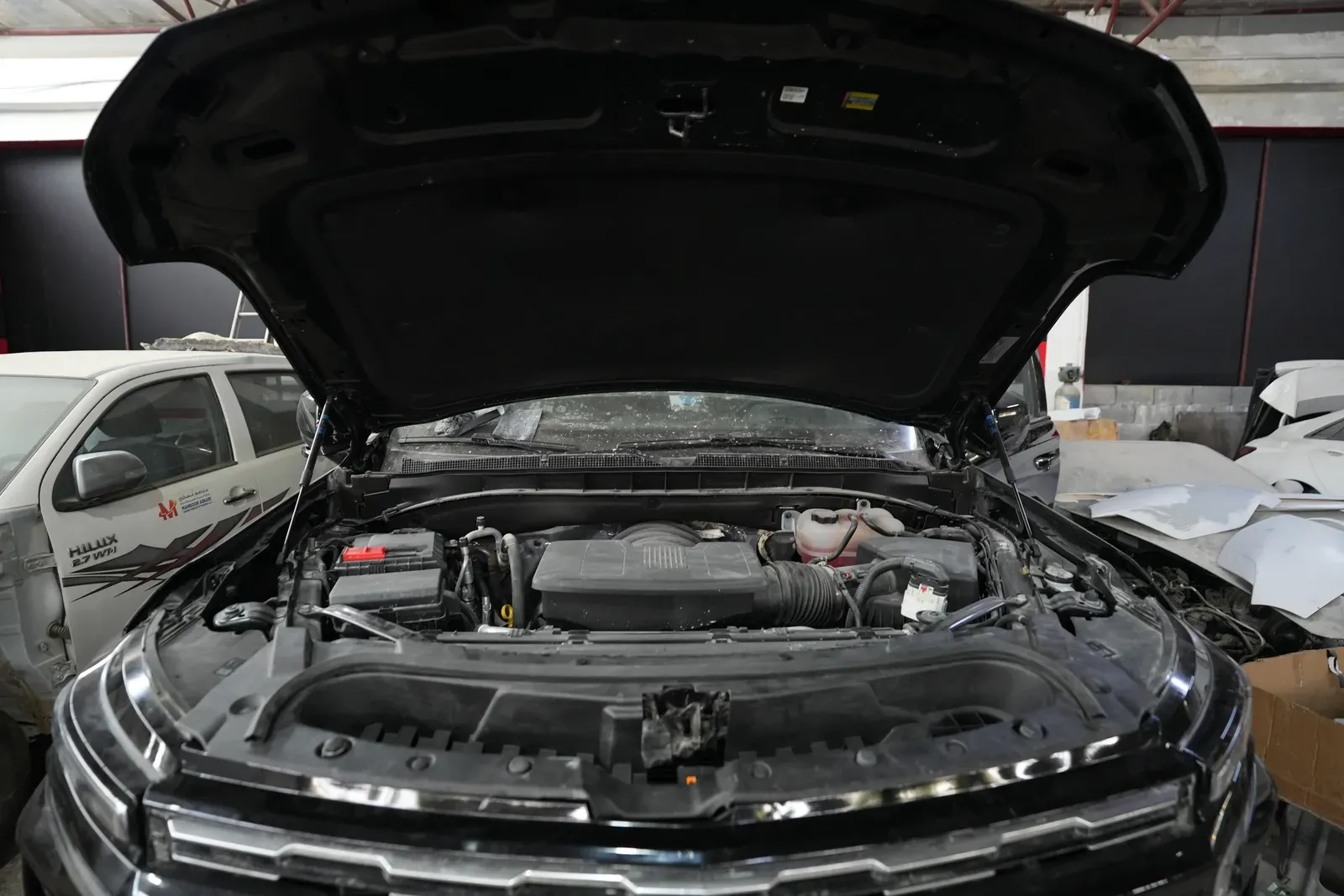
A row of cars with bonnets open in the workshop bay.

Every one of these is found on a lift in this building, and priced before it is touched.

The work this usually turns into

And everything else, on the same car

The list above is what this make usually arrives needing. This is the rest of what the workshop does, and it applies to your car as much as to any other — worth knowing while it is already here.

Questions we get asked about these

The CUE screen is cracking and the touch has stopped working. Can it be repaired or reprogrammed?

Reprogramming will not touch it, and we would rather tell you that than charge you to find out. The touch surface is a layer bonded to the glass; heat releases that bond over years, and once it has released the panel is reading pressure that is not there. The display behind it usually keeps working perfectly, which is exactly why it gets mistaken for software. What we do first is confirm the head unit itself is healthy — that it answers on the bus and still responds to its physical and steering wheel controls — so that we are replacing a touch panel and not covering for a module fault behind it. After that it is a parts and availability conversation, and we will have it with you honestly rather than starting the job and discovering it.

Is an Escalade just a Tahoe with a better interior?

Underneath they are closely related and we are not going to pretend otherwise, because that relationship is useful to you: the platform, the engine family and much of the running gear are shared, which means those parts are neither rare nor mysterious and the mechanical diagnosis is the same work. What is genuinely different is the layer on top, and it is the expensive layer. The magnetically controlled dampers, the levelling hardware, the interior electronics and the driver assistance sensors are Cadillac equipment with Cadillac faults and Cadillac test procedures. Those are what this page covers. The shared truck mechanicals — the V8 lifter question, the transfer case, the gearbox behaviour — are written up on the Chevrolet and GMC pages rather than repeated here.

The ride has gone hard and there is a warning about the suspension. Is that a whole set of struts?

Not necessarily, and this is the point at which it is worth slowing down. A magnetically controlled damper contains a coil, and when the module cannot drive that coil properly it stops varying the damping and leaves the corner at one fixed setting. The driver feels a hard ride; the module has logged which corner. That can be an open circuit, a chafed wire or a connector as easily as it can be the damper. Separately, a damper can leak its fluid, and that one is visible on the strut body. We read the code, measure the circuit at the connector, and inspect each corner before anything is priced, because the honest answer is sometimes one damper, sometimes a wire, and only sometimes a set.

I had the windscreen replaced and now the cruise control will not switch on. Is that a coincidence?

It is almost certainly not. The forward camera sits behind the glass and is aimed relative to the body; take the glass out and put another one in and the aim is no longer where the car thinks it is. The car asks for a calibration to a fixed target at a measured distance on a level floor, and it will not acquire that by being driven. A system that knows it is out of calibration turning itself off is the car behaving correctly. What we do is read the calibration status and any aiming faults from the camera and radar modules, so you know exactly what the car is asking for. If the calibration is one we cannot complete, we say so and tell you where it needs to go, because the alternative — handing back a car whose assistance systems are switched on and mis-aimed — is not something we will do.

Do you have the manufacturer software, and can you program modules on these cars?

We will answer this the same way every time, because it is where workshops say more than they can stand behind. We are not a Cadillac centre, nobody appointed us, and the line at the foot of this page says exactly that. The question that actually matters to your car is a narrower one: does the specific job you need include the relearn, calibration or service-mode procedure the car expects afterwards, and can that be completed. For a great deal of the work on these cars the answer is yes and we will tell you what the procedure is. For some of it — a module that has to be programmed against a manufacturer system that is closed to anybody outside the network — the answer is no, and we would far rather name that limit before we start than run into it with your car apart.

Bring it in and we will find out

Nothing happens to the car until the fault has a name and you have approved the work against it.

Book WhatsApp us Call