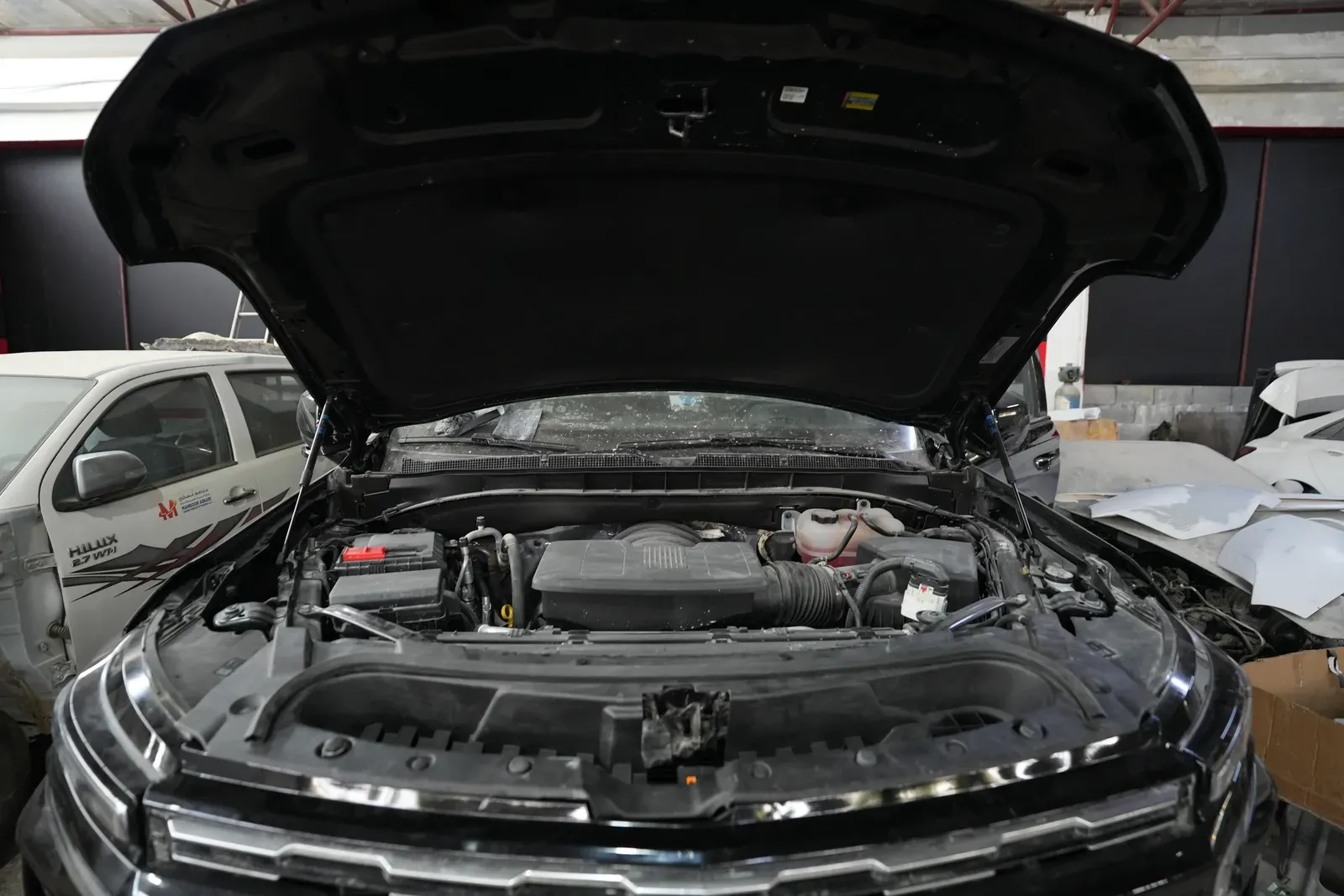
A workshop quoted me for a carbon clean on my Tiggo. Do I need it?
Establish which engine you have first, because on one of them the job is not possible. Carbon builds on the back of the intake valves when fuel is injected straight into the cylinder, so that the valves never get washed by it. The 1.5 turbo in these cars does not do that — it injects into the manifold, which means fuel passes over the intake valves every cycle and the deposit the job addresses does not form. Only the 1.6 and the 2.0 are direct injection and therefore candidates. So the question to ask whoever quoted you is a simple one: which engine is in the car, and is it port or direct injected? If they cannot answer that, they have not looked. We will tell you which you have and we will tell you when the answer is that you do not need the work.
My gearbox is slipping and I have been told it needs replacing. Is that right?
It might be, but there is one thing that must be checked before anybody says so, and it takes minutes. A continuously variable gearbox that has lost its fluid through an external cooler line behaves exactly like one that has failed internally — the same warning, the same jerking, the same rising revs with no speed. On this marque that is not a theoretical possibility: two separate recalls exist overseas on cooler hoses in this family, one for a hose that could crack and one for clamp tightness, and there is a documented case of a car that lost all its fluid through corroded cooler tubes. So before the unit is condemned, the fluid level and the external cooler lines and their unions should be looked at. If somebody has quoted you a gearbox without doing that, ask them what the fluid level was.
How often should the gearbox oil be changed in this climate?
More often than the printed figure, and we would rather give you the reason than the number. The published interval was set for temperate markets. An owner of one of these logged his own car with a scan tool and measured 113°C on a motorway run in 17°C ambient — against a warning threshold of 128°C, a fault at 135°C, and fluid that begins to degrade above 105°C. That is a narrow margin in a mild climate, and a Sharjah summer is around thirty degrees hotter than that test. We are not going to invent a figure for your car. What we will do is read its actual gearbox temperature on a normal drive, and then the interval becomes a decision based on what your car does rather than on what a schedule assumed. Also make sure the fluid that goes in is the one the unit specifies — the cheaper relative from the same family is commonly substituted and it is not an equivalent.
How do I know which engine and gearbox my car actually has?
From the car, and it matters more here than on most makes. Within this range a 1.5 turbo, a 1.6 and a 2.0 have been sold under model names that look similar from outside, the 1.5 is port injected while the other two are direct injected, and behind them sits either a continuously variable gearbox or one of two wet dual clutches that take substantially different fluid volumes. There is genuine disagreement between sources about which gearbox went behind which engine in which year, and the local listing sites are not reliable on it — we have seen one describe the same car as both naturally aspirated and turbocharged. So we identify it from the vehicle rather than from a table: the build data and the control unit identification. It is worth doing once, because the same answer then settles the oil, its quantity, the gearbox fluid, the plug interval and the parts list for as long as you own the car.
Are parts hard to get here?
Less than people assume, and it is one of the genuine advantages of owning one of these in this particular emirate. There is an agency network with a distribution centre near Jebel Ali holding a very large number of part lines, and there is a substantial independent trade in Chinese parts in the industrial areas around it. In some other markets a timing chain for one of these means a three or four week wait for a shipment from China; here it frequently does not. That matters for a decision rather than just for convenience — whether a repair is worth doing often depends on how long the car is off the road. What we will always do before work starts is tell you which channel a part is coming from and what the realistic wait is, so that the decision to repair the car stays yours and gets made before it is in pieces.