
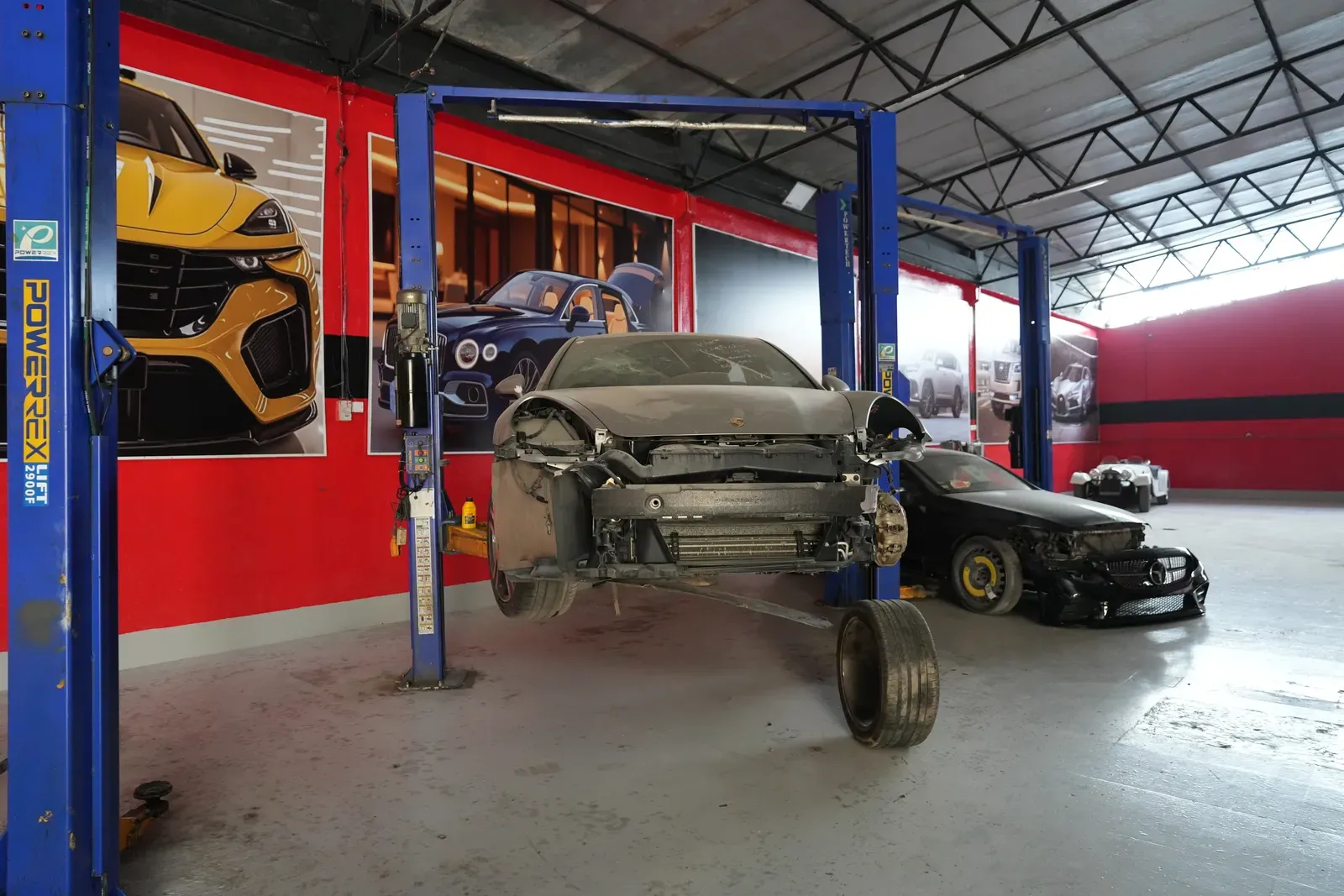
German cars
BMW, Mercedes-Benz, Audi, Porsche and Volkswagen. On these cars the part is half the job — the other half is telling the car what changed, and servicing it to the schedule this climate actually calls for.
We work on these makes. We are not approved, authorised or appointed by any of them.
What is different about working on them
Nothing here is exotic. It is the ordinary consequence of a car that runs a dozen networked modules and computes its own service interval — and of a climate that is harder on the parts these cars make out of plastic.
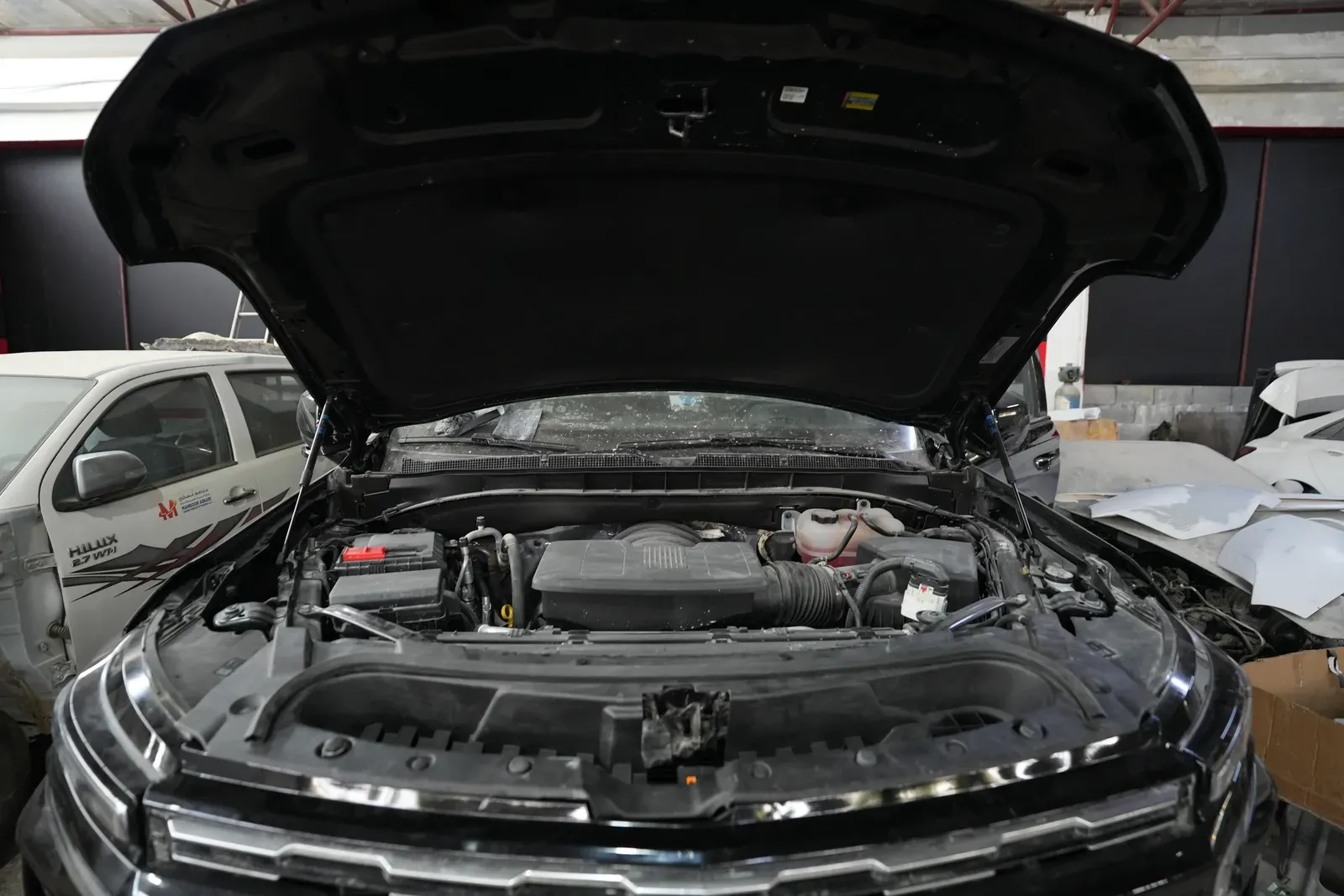
- 01
A part is not finished until the car has been told about it
A new battery is registered to the energy management, or the car keeps charging it on the old battery’s profile and the new one is worn out early. A steering angle sensor is reset after an alignment. A camera behind the windscreen is calibrated after the glass is changed. A rear caliper is put into service mode before the pads come out and retracted after. Fit the part and skip this, and the fault comes back with a different name.
- 02
The dashboard decides the service, not the odometer
BMW’s condition-based servicing, Mercedes ASSYST and the VW and Audi LongLife schedules work out the interval from how the car has actually been driven. Short trips with the air conditioning at full load, in dust, above 45°C — that is the case every one of those manufacturers describes in its own severe-use table. We will tell you which schedule we serviced your car to, and why.
- 03
The oil is a specification, not a grade
“5W-30” is not an answer on these engines. VW 504 00 and 507 00, BMW Longlife-04, Mercedes-Benz 229.51 — these are approvals the engine and its exhaust after-treatment are built around, and the wrong one shortens the life of both. We fit oil carrying the approval your engine asks for, and what went in is written on the invoice.
- 04
The plastic in the cooling system is a consumable here
Thermostat housings, expansion tanks, coolant pipes and the gaskets between them are moulded plastic, and plastic goes brittle in an engine bay that spends its summer above 45°C on the road. A seep at a housing seam is an ordinary finding on a German car in this country. It is a great deal cheaper to be shown it on a lift than to find it on Sheikh Mohammed Bin Zayed Road in August.
- 05
A fault code is where the work starts
Pulling a code takes a minute and proves nothing. The code names a circuit or a plausibility check that failed; it does not name the part. We test the circuit — supply, ground, signal, the connector everybody forgets — and you are told what the test showed before a part is ordered against it.
The dealer has the software. So does an independent workshop that bothered to buy it — and it is the same car underneath.
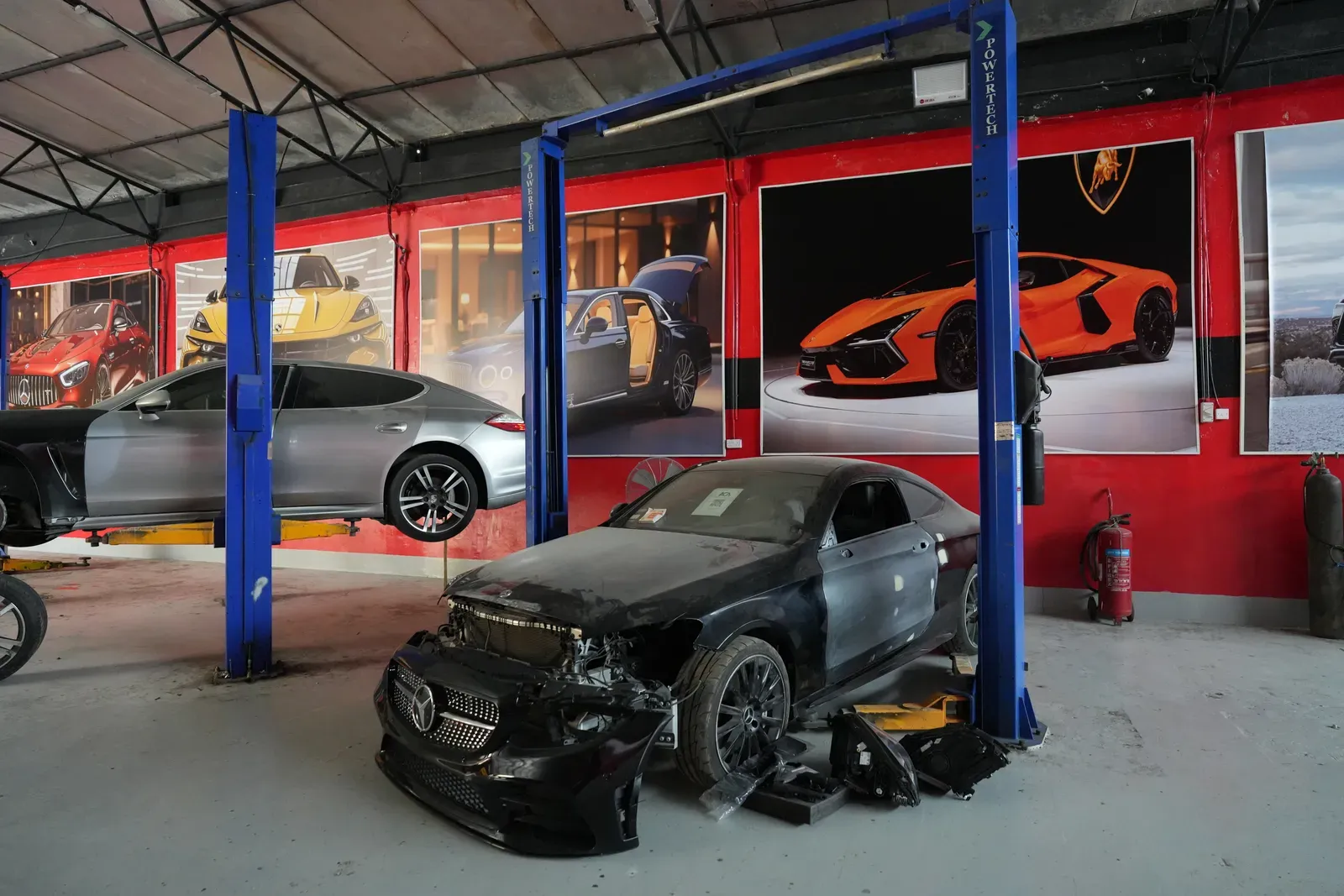
The workshop floor in Sharjah.
The makes that come through the door
- BMW
- Mercedes-Benz
- Audi
- Porsche
- Volkswagen
- MINI
A make is listed because we work on it. Nothing on this page is a claim of approval, authorisation or any other relationship with the company that builds it.
What this country does to a German car
A car engineered for a European service interval is being asked to keep it in a place that spends months above 45°C, with the air conditioning under load almost every day of the year. That does not break it. It does move several things forward in the schedule, and these are the ones it moves first.
- Heat, not cold, is what ends a battery — and on these cars a tired battery shows up first as unrelated electrical faults, not as a slow crank.
- Coolant housings, hoses and gaskets harden and seep years before they would in a temperate climate.
- The air-conditioning condenser sits in front of the radiator: pack it with dust and the engine runs hotter for the same reason the cabin stops cooling.
- Brake fluid absorbs moisture and moisture lowers its boiling point. It is tested rather than guessed at, and the reading decides.
- Air and cabin filters reach the end of their life on dust, not on kilometres.
- Sun takes the clear coat, the top of the dashboard, the wiper blades and the door seals — all of it visible, all of it cheaper caught early.
The shapes that come through
The marques above are not a list of badges — they are cars with different service intervals, different coding requirements and different parts channels. These are the shapes they arrive in.






What to have ready when you get in touch
Coding, service intervals and oil approvals make these cars unforgiving of a guess. Five things in your first message save a day of finding them out.
- The make, the model year and which engine, if you know it — the same model often came with two, and they do not fail the same way.
- What the car is actually doing — the noise, the smell, the warning light — and when it does it: cold, hot, turning, braking, or all the time.
- Whether anyone has looked at it already, and what you were told. We would rather know what has been ruled out than rule it out twice.
- Any recent work, and who did it. A fault that appeared straight after a job usually belongs to that job, and that is the quickest thing to check.
- Whether it still drives, or needs collecting. If it does not move, say so first — it changes what we arrange, not whether we take it.
Bring it in and we will look at it first
Tell us the make, the model year and what the car is doing. Nothing is touched, and nothing is ordered, until you have the finding and the price in writing.
Related services
- Car diagnostics Scan, live data and testing until the fault is proved — not a code read off a screen.
- Car electrical repair Alternator, starter, wiring, earths and battery drain — traced with a meter.
- Car servicing Oil, filters and fluids, plus an inspection that tells you what is coming.
- Car AC repair Leak testing, regas, compressor and evaporator work.
- Engine repair Compression and leak-down testing first, then head, gasket, timing or overhaul work.
- Car battery Tested before it is replaced, and registered to the car when the car requires it.
- Pre-purchase inspection Before you hand over the money, have the car put on a lift and looked at properly by someone who is not selling it to you.