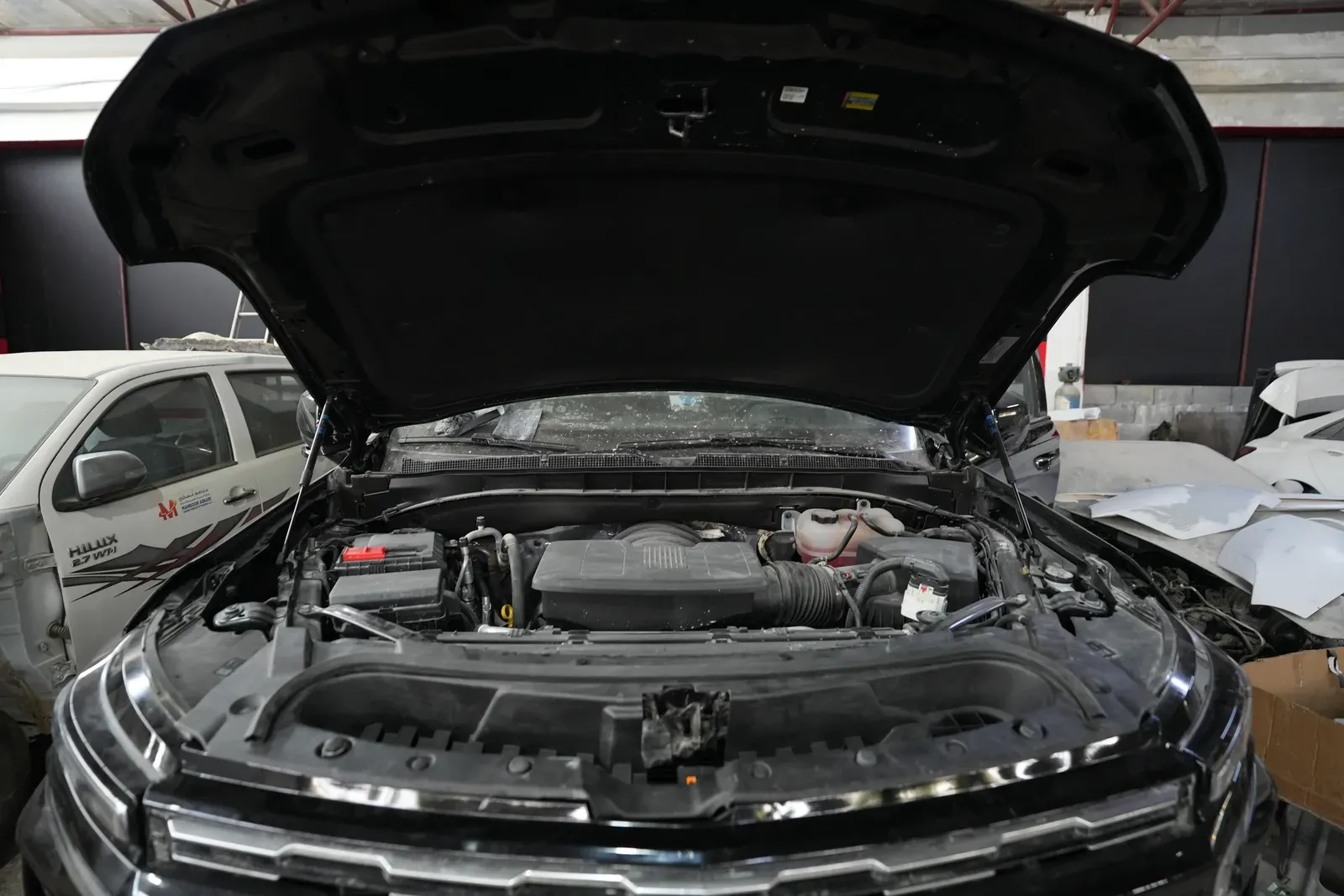
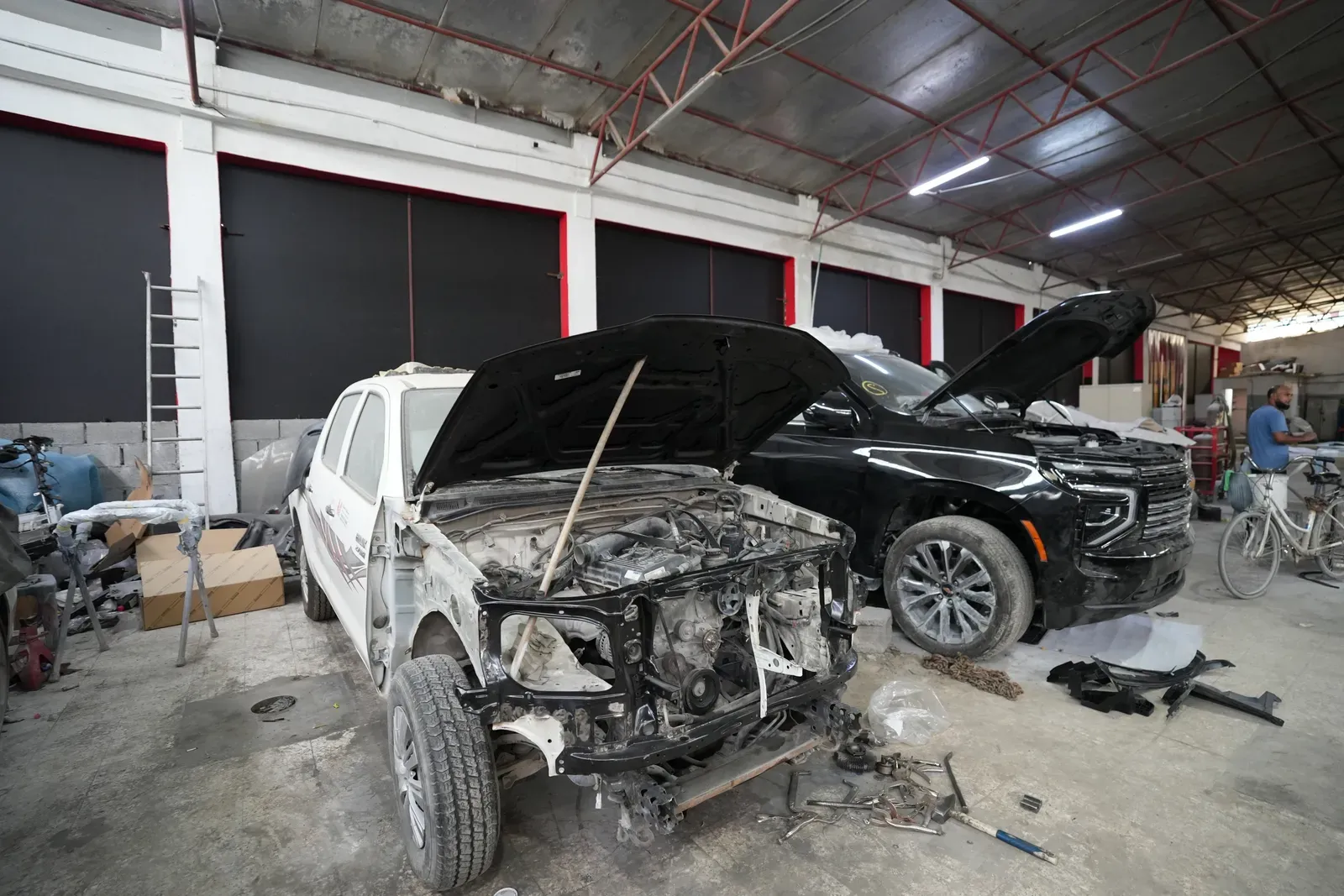
The car has been hit at the front. What actually needs checking?
The structure, in a particular order, and not the bumper. These cars are built so that an impact is absorbed by parts designed to be destroyed: the extruded aluminium energy absorber, the subframe ahead of the tub, and the panels. A moderate frontal hit is expected to consume those and leave the carbon MonoCell alone. So the questions are whether the aluminium structure has taken a set, whether the subframe has moved relative to its mountings, and whether anything has been loaded at the points where those bolt to the tub. That is what we establish, with the panels off. If the tub itself turns out to be involved, we do not repair it and we do not put it on a jig — the car goes to a facility qualified for structural composite work, and you will get that answer from us straight rather than as a revised invoice.
Why has the ride gone hard and why is a pump running all the time?
Because on these cars they are usually the same fault. There are no anti-roll bars; the dampers are joined into a hydraulic circuit and gas-charged accumulators give the system its compliance. When an accumulator loses its charge the car rides hard, the pump works constantly trying to keep pressure up, and the nose lift slows down, so an owner arrives describing three problems that have one cause. It is separated from a leaking valve or hose by watching system pressure while the car is raised and lowered and then timing how long pressure holds with the car switched off. It is also worth knowing that standing through a long summer is harder on this system than driving it, which is the opposite of what most owners expect.
Can an ordinary bodyshop repair the panels on this car?
It depends entirely on what the panel is, and that is the part that gets missed. There is no steel shell here. The panels are composite and aluminium, located on mountings and bonded or bolted rather than welded, so a damaged one is repaired or replaced as a composite part rather than beaten out and filled. Paint on composite needs different preparation and different cure temperatures from paint on steel, which is why work done as though it were an ordinary car comes back later with lifted edges and gaps that no longer line up. Before any colour is mixed the panel, its fixings and the gaps either side of the damage should have been checked, because a gap that has moved is telling you something behind the panel has moved too.
The car sat all summer and now the screen and half the systems are confused. Is it serious?
Often it is far less serious than it looks, and the mistake is to start replacing modules. A car left standing runs its battery down slowly, and modules that have been operating at low voltage store faults and behave strangely — the IRIS unit freezing or looping is a common way that shows itself. So the supply and the state the car was left in come first, then the fault memory is read across the whole network rather than at the screen, and only after that does anything get condemned. If the unit is genuinely faulty we will say so. If the honest answer is that it needs software work released through the franchised channel, we will say that too rather than experiment with your car.
Can you do everything a franchised dealer can?
No, and being specific about that is more use to you than a claim we cannot stand behind. Two areas are closed to us. Anything that needs a manufacturer security release — keys, immobiliser modules, pairing a replacement control unit to the car — is released through the franchised channel and belongs there. And structural repair of a carbon MonoCell tub is not work we take on at all. We also make no claim to own or licence any manufacturer’s dealer diagnostic software. What we will do is tell you before you book which parts of your job can be finished here, including the calibrations and resets it needs, and which part has to go elsewhere. We are not approved, authorised or appointed by McLaren.