
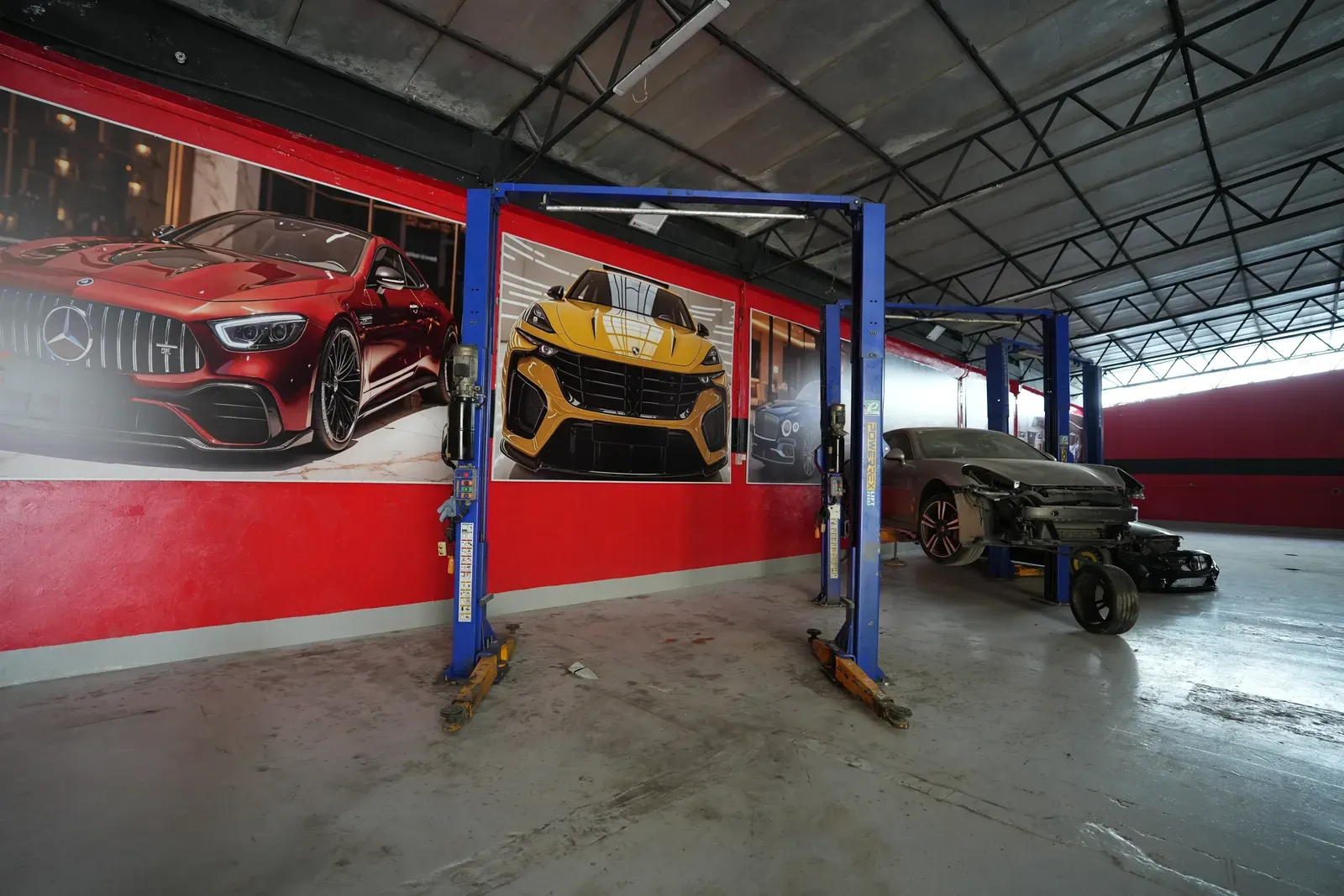
Flooded car repair
Water damage to a car is slow, and that is what makes it dangerous. The day after the flood the car may well start and drive, and three months later the electrics begin behaving strangely, a seat motor stops, a warning light appears that nobody can explain, and the carpet smells. The reason is that water sits in places you cannot see — under the carpet, inside connectors, in the boot well, in the seat foam — and it corrodes from the inside out while the car looks fine. This work is the opposite of a quick dry: the car is stripped so the water can be found and removed, and every circuit that got wet is checked rather than assumed to be fine because it worked yesterday.
Start here
- 1Describe what the car is doing, in your words
- 2We investigate it and send you the findings and the price
- 3You approve each line before anything is done
1
Sounds like your car?
Find the line closest to what your car is doing. You do not need the name of the job — the symptom is carried into the booking form with it, and every line below starts at the same place: what we check, and how the work is done.
- 1 It went through the floods
- 2 The carpet is wet on the passenger side
- 3 The car smells damp and I cannot get rid of it
- 4 The windows go up and down on their own
- 5 Warning lights keep appearing and disappearing
- 6 The car drove through water and cut out
- 7 The boot has water sitting under the spare wheel
- 8 The windows fog up and will not clear
- 9 I am buying a car and I want to know if it has been flooded
2
What is included
- 2.1The water line established first — how high the water actually reached — because that single fact decides how far the job goes
- 2.2Battery disconnected and the car left unpowered until the extent is known, since a wet circuit under power is how a small problem becomes a burnt loom
- 2.3Carpets, underlay, seats and boot lining removed so the floor is exposed and the water taken out rather than sealed under trim
- 2.4Seat foam and sound deadening checked and replaced where they are saturated, because foam holds water for months
- 2.5Floor pans, seat mounts, sill drains and the spare wheel well checked for standing water and for rust that has already started
- 2.6Body and door drain holes cleared, as a blocked drain is what turns rain into a flooded footwell in the first place
- 2.7Electrical connectors in the footwells, under the seats and in the boot opened, inspected for corrosion, cleaned and protected
- 2.8Control modules that sit low in the car located and inspected, since these are commonly mounted under a front seat or behind a kick panel
- 2.9Engine oil, gearbox oil and the air filter checked for water, and the engine not cranked until it is known whether water reached the intake
- 2.10A written account of what was wet, what was replaced, what was dried and what we cannot guarantee, so you have it for your own records
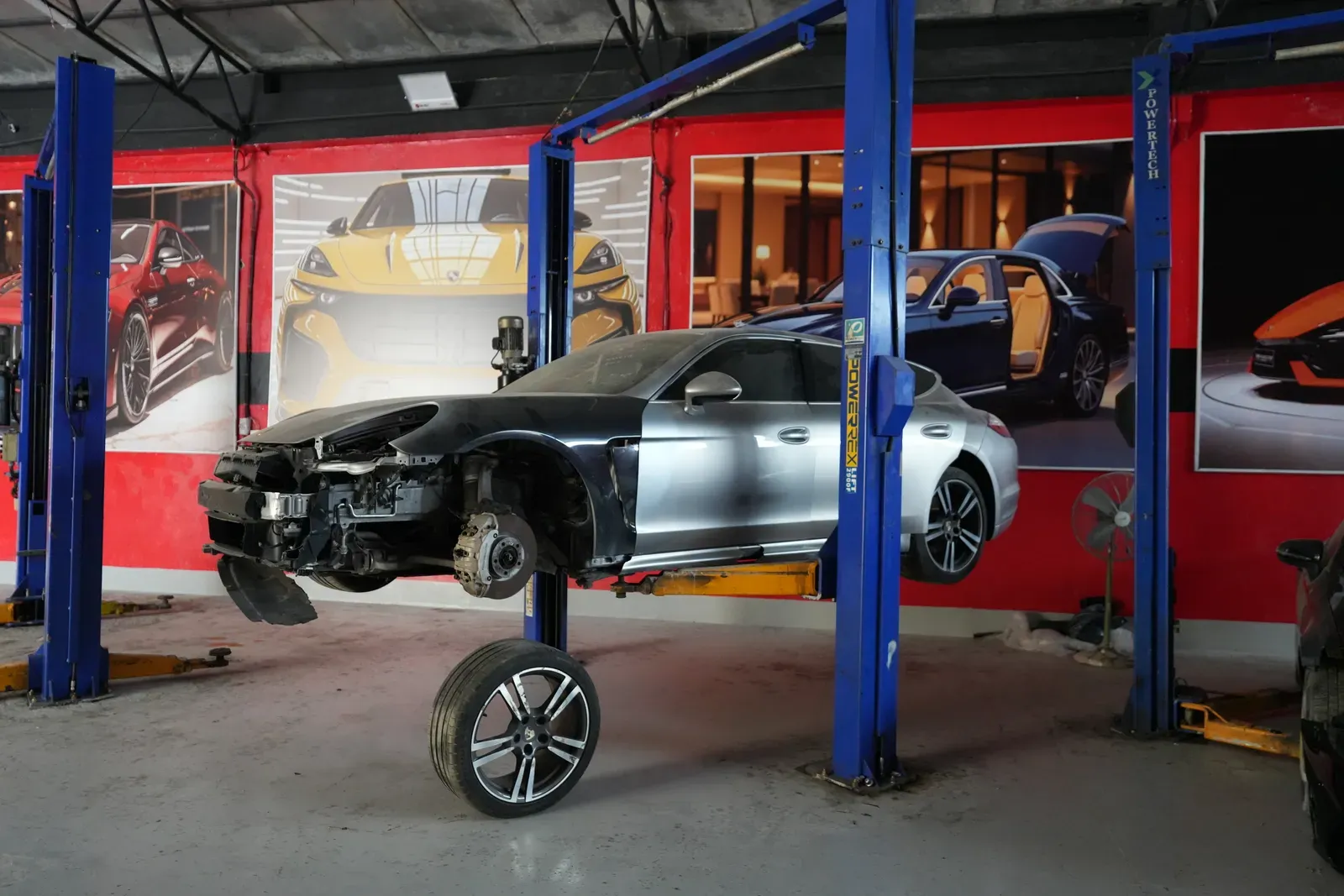
This work is done in this workshop, and nothing on your car is touched until you know what we found and what it costs.
3
What happens
-
3.1
Do not start it, and tell us how deep it was
If water may have been drawn into the engine, turning it over can bend a connecting rod, because water does not compress. That turns a wet car into an engine rebuild in one crank of the starter. So if your car went through standing water and stopped, leave it, and call us to collect it rather than trying it again. The first thing we establish is how high the water reached, because that fact decides everything else about the job.
-
3.2
Power off before anything else
The battery is disconnected and the car is left unpowered until we know what got wet. Most of the lasting damage in a flooded car is not done by the water itself but by current running through circuits while they are still damp, which corrodes contacts and can burn a wiring loom that would otherwise have dried out and been fine. This is also why trying to dry a car by running the air conditioning with the engine on is the wrong instinct.
-
3.3
Stripped out, because a dryer does not reach the water
Carpet, underlay, seats and boot lining come out. The water is not in the carpet you can feel; it is in the foam underlay beneath it, in the seat base, in the sound deadening and in the spare wheel well, and none of those dry from above. With the floor bare we can see standing water, look for rust that has already started, and clear the body and door drains — which, in a car that flooded from rain rather than a road, are very often the reason it happened at all.
-
3.4
Every wet circuit checked, and what we cannot promise
Connectors that were under water are opened, checked for corrosion, cleaned and protected, and modules that sit low in the car — often under a front seat or behind a kick panel — are found and inspected rather than left to fail later. Then the honest part: water damage can appear months afterwards in a circuit that tested perfectly today, and nobody who tells you otherwise is being straight with you. You get a written account of what was wet, what was replaced, what was dried and what we cannot stand behind, so you can make your own decisions about the car.
4
Common questions
The car still drives. Do I really need this?
A car that went through water almost always still drives afterwards; that is the trap. Corrosion in a connector takes weeks or months to become a fault, and wet foam under a carpet takes just as long to become a smell and a rusting floor. The cheapest moment to deal with a flooded car is immediately, while the water is still water rather than rust. If you leave it and something electrical starts misbehaving in three months, the wiring will be harder to save and the bill will be larger.
Can a flooded car ever be properly fixed?
It depends entirely on how deep the water got, and we will give you a straight answer rather than a comforting one. Water in the footwells is a big job but an ordinary one. Water up to the dashboard, into the seats and the wiring behind them, is a different matter, and there comes a level at which the honest advice is that the cost of doing it properly is more than the car is worth. If your car is on the wrong side of that line we will tell you so, even though that means we do not get the work.
Will insurance cover it?
That is between you and your insurer and depends on your policy, which is a contract we will not interpret for you — read it, or ask them in writing. What we can do is document the damage properly: what was wet, to what height, what was replaced and what was cleaned, itemised, which is the kind of record a claim is normally assessed on. Ask your insurer what they want before the car is stripped, because once the trim is out, the state it was in is a matter of our record rather than their inspection.
How do I tell if a car I am buying has been flooded?
Lift the carpet in a footwell and feel the underlay rather than the carpet. Pull the boot lining up and look in the spare wheel well, which is the lowest point in most cars and the last place anyone cleans. Look for a tide line or fine silt in the seat rails and under the seats, and for rust on bright metal such as seat mounts and bolt heads that should not have any. Then smell the car with the doors shut after it has stood in the sun. If you would rather someone did that for you, it is part of a pre-purchase inspection.
Related services
Work that is often quoted alongside this, each with its own page.
- Car electrical repair Alternator, starter, wiring, earths and battery drain — traced with a meter.
- Car diagnostics Scan, live data and testing until the fault is proved — not a code read off a screen.
- Upholstery and interior trim Seats, door panels, headliner and carpets — repaired, recovered or replaced.
- Pre-purchase inspection Before you hand over the money, have the car put on a lift and looked at properly by someone who is not selling it to you.