
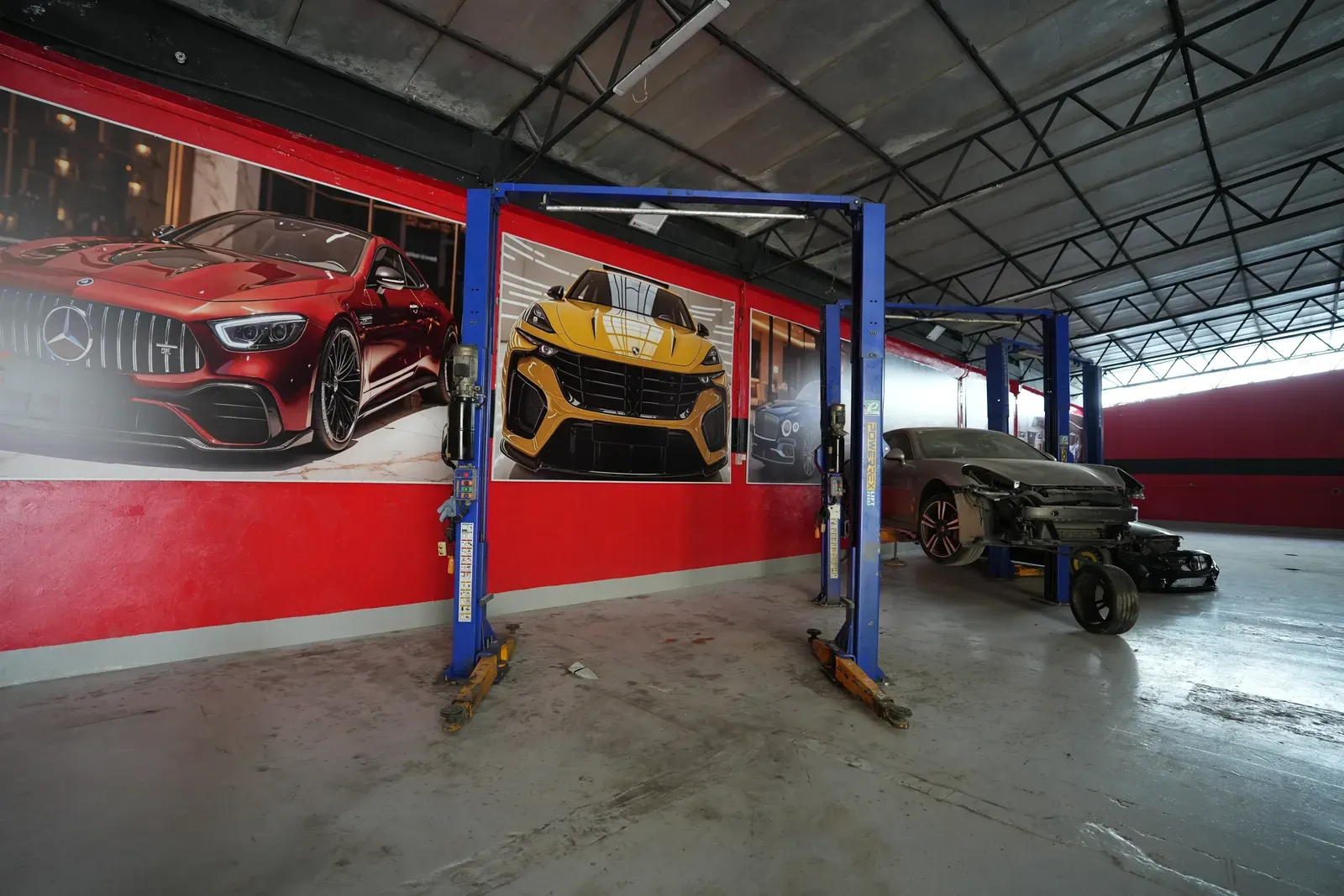
Automatic gearbox repair
A gearbox is the job where customers get held to ransom, because the price changes after the box is open and by then the car cannot leave. We break that by diagnosing from outside first — scan, live data, line pressure and a road test — and by putting the three real options in front of you with a price against each: rebuild what you have, fit a used unit, or fit a new one. If the price has to change once the box is apart, the work stops there: you are told exactly what was found inside and what it adds, and nothing goes further until you approve the new figure.
Start here
- 1Describe what the car is doing, in your words
- 2We investigate it and send you the findings and the price
- 3You approve each line before anything is done
1
Sounds like your car?
Find the line closest to what your car is doing. You do not need the name of the job — the symptom is carried into the booking form with it, and every line below starts at the same place: what we check, and how the work is done.
- 1 The gear jerks when it changes
- 2 It bangs into gear when I put it in drive
- 3 The revs go up but the car does not go faster
- 4 It does not move at all when I select drive
- 5 It will not change up until the engine is screaming
- 6 There is a whine that changes with speed
- 7 It shudders at a steady speed on the motorway
- 8 A red or dark fluid patch under the middle of the car
2
What is included
- 2.1Transmission module scan with the codes and freeze-frame data given to you
- 2.2Live data on a road test: input and output shaft speeds, slip, fluid temperature, lock-up state
- 2.3Line pressure measured with a gauge on the test port where the box has one
- 2.4Fluid condition judged against fresh fluid in the same light, because colour and smell mean nothing without something to compare them to
- 2.5Pan and filter inspection, with anything found in the pan kept aside rather than washed away before you hear about it
- 2.6External causes ruled out first: engine misfire, mounts, driveshafts, wiring, wrong fluid level
- 2.7Valve body cleaning, solenoid testing and replacement
- 2.8Full rebuild with clutch packs and steels checked and renewed to the maker specification, and the torque converter replaced or reconditioned
- 2.9Fluid refilled by weight or by the level procedure the maker specifies, at the fluid temperature it specifies
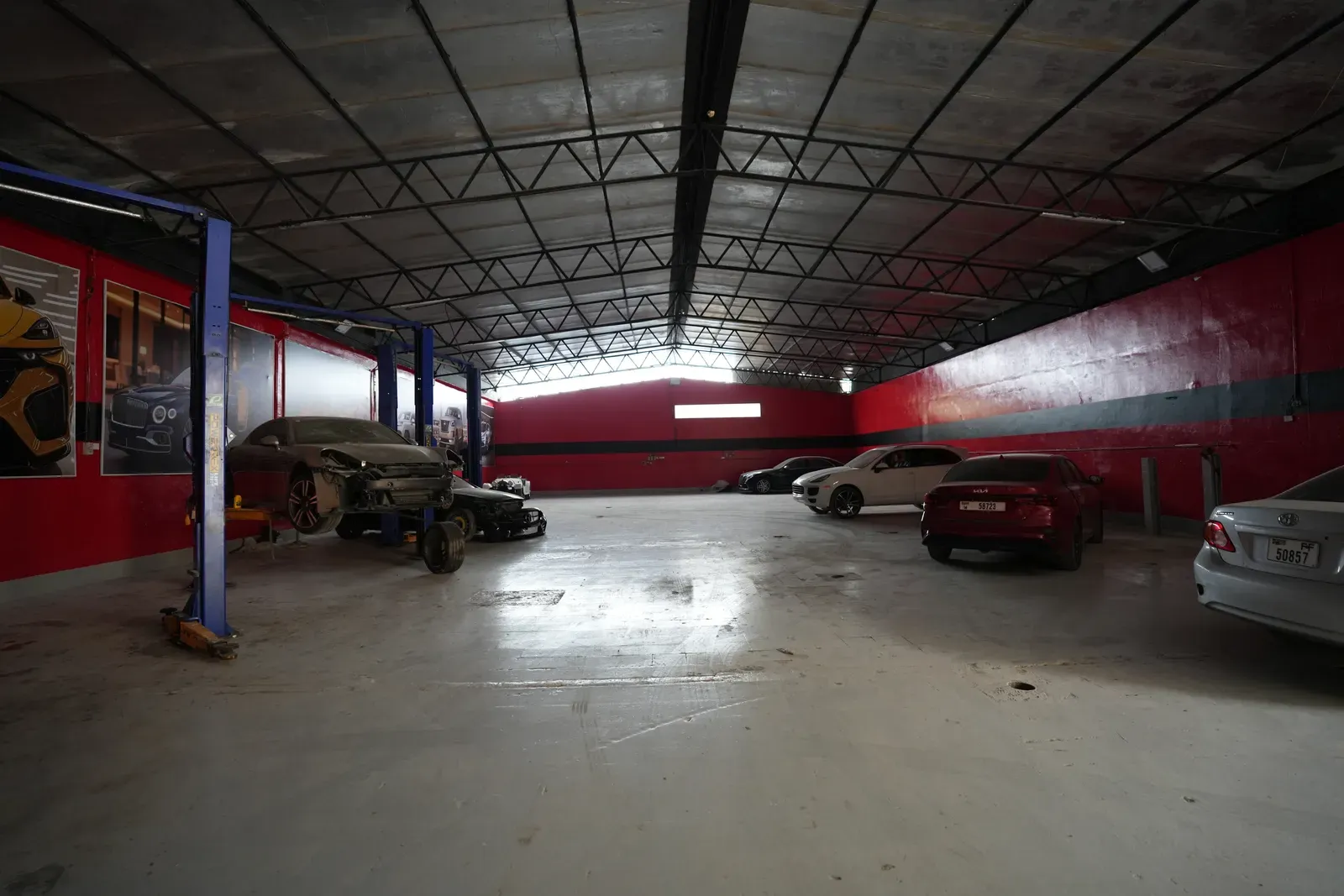
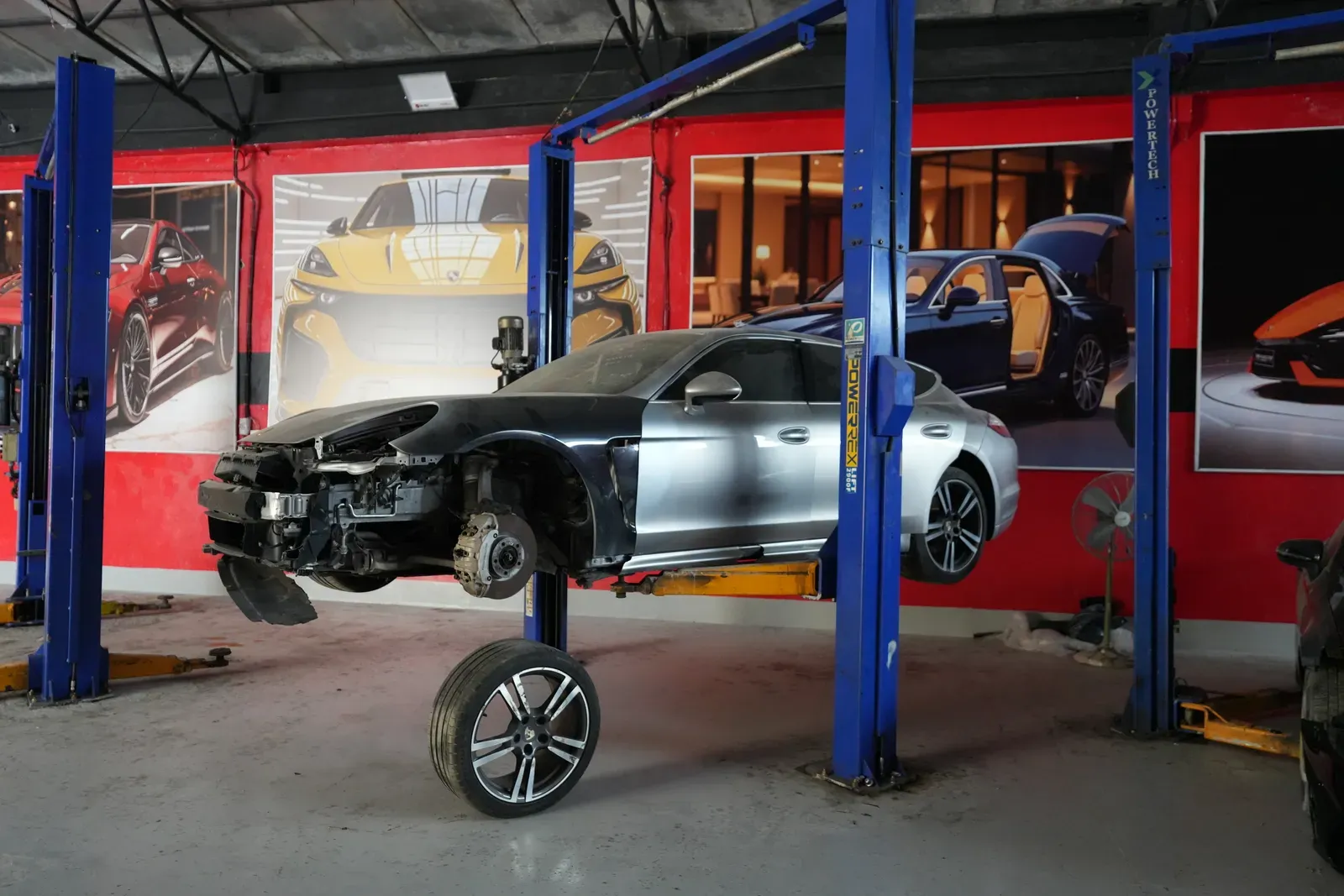
This work is done in this workshop, and nothing on your car is touched until you know what we found and what it costs.
3
What happens
-
3.1
We rule out everything that is not the gearbox
An engine misfire, a collapsed mount, a worn driveshaft joint or a wiring fault can all feel exactly like a gearbox from the driving seat. Those are cheap to find and cheap to fix, and they get checked before the word rebuild is used. This is also where the formal term ناقل الحركة belongs, on a diagnosis sheet rather than in a conversation.
-
3.2
The box is judged from outside first
Slip is measured, not felt: the input and output shaft speeds are compared against the ratio the box should be holding. Line pressure is read on a gauge. The fluid is looked at and smelled. Those readings tell us whether the box is worn, whether a solenoid or valve body is at fault, or whether it is something outside the box entirely.
-
3.3
Three options, three prices, side by side
Rebuilding your own box, fitting a used unit and fitting a new one differ in price, in how long the car is off the road, and in what is known about the part. You get all three written down together, including what we do not know about a used unit, so you are choosing rather than being steered.
-
3.4
Once the box is open, nothing is decided without you
On a rebuild the clutch packs come out onto the bench and the drums, bushes and valve body are gone through. If the strip reveals damage the estimate did not cover — a scored drum, a burnt pack, debris that has been through the pump — the job stops exactly there. You are told what was found, what it adds and what the alternative now costs, and the box goes no further until you answer.
4
Common questions
Should I just change the gearbox oil first and see?
Sometimes yes and sometimes it is the worst thing you could do. On a box that has been serviced and has a solenoid or a dirty valve body, fresh fluid and a filter can genuinely fix it. On a high-mileage box that is already slipping, the worn friction material suspended in old fluid is part of what is still giving it grip, and a flush can finish it. We look at the fluid and the slip readings before recommending it, and we will tell you which of those two cars you have.
Do you work on CVT and DCT gearboxes?
They are different machines from a conventional automatic. A CVT runs a steel belt on variable pulleys and a scored pulley surface is not repairable by cleaning; a dual-clutch box needs its clutch adaptation relearned with the maker software after work. Tell us the exact model before you book. If yours is one we do not take on, we will say so at the phone stage rather than after your car is on a ramp.
Can you tell me if it is the gearbox before I bring it in?
Not with any honesty. Every one of the symptoms on this page has a non-gearbox cause that is far cheaper, and that is exactly why the diagnosis exists. What we can tell you on the phone is whether to drive it in or have it collected, because continuing to drive a slipping box does make the repair more expensive.
If I take a used gearbox, what do I actually know about it?
Less than you would like, and we will say so rather than dress it up. We will tell you the source, whether the unit can be turned and inspected before fitting, what the fluid in it looks like, and what we were not able to check. A used unit is a reasonable choice made with open eyes and a bad one made on a promise nobody can keep.
Related services
Work that is often quoted alongside this, each with its own page.
- Car diagnostics Scan, live data and testing until the fault is proved — not a code read off a screen.
- Engine repair Compression and leak-down testing first, then head, gasket, timing or overhaul work.
- Car repair General mechanical repair — cooling, belts, leaks, exhaust, the work that keeps a car usable.
- Pre-purchase inspection Before you hand over the money, have the car put on a lift and looked at properly by someone who is not selling it to you.