
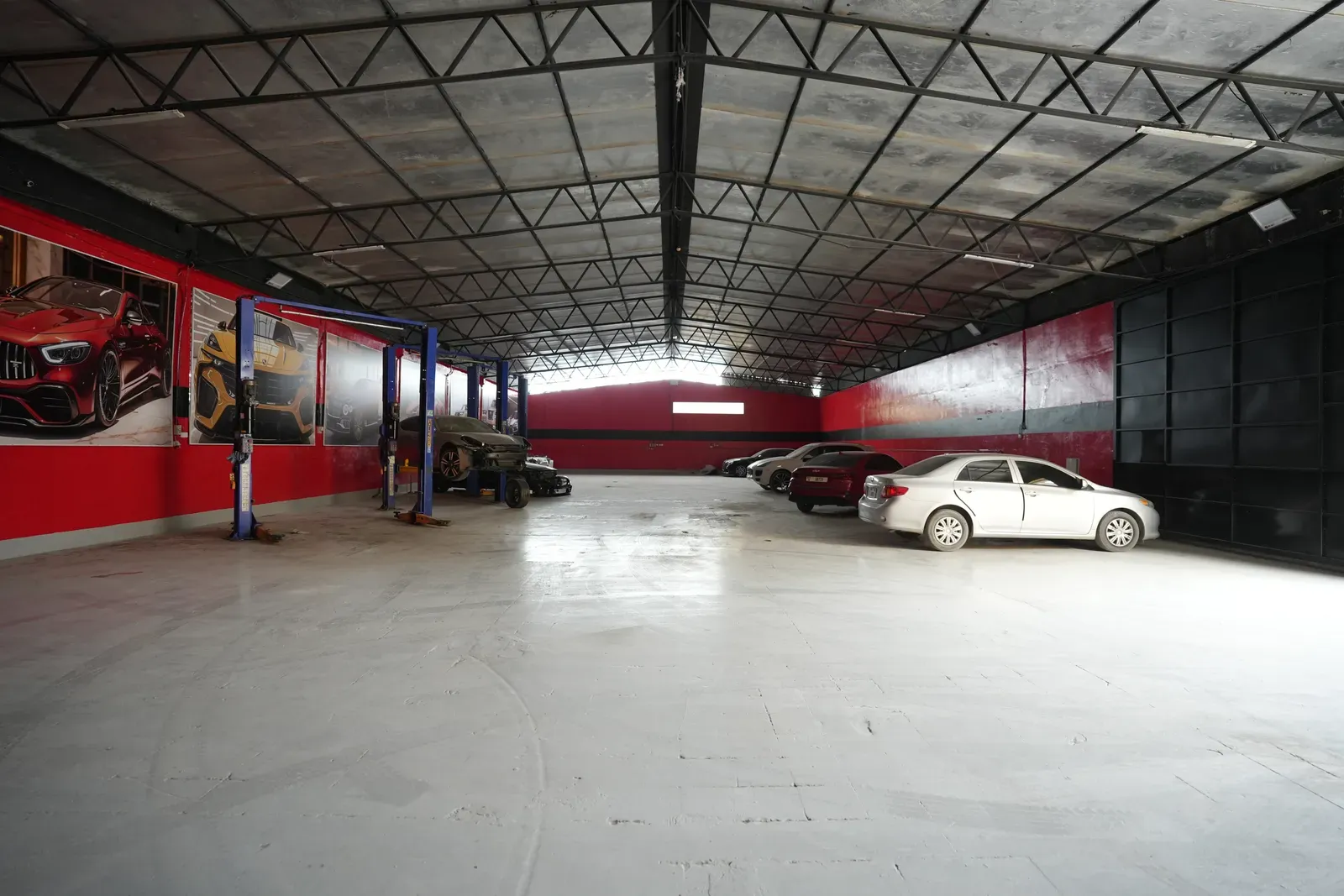
How a job runs here, in full
Six steps, the same for an oil change and an accident repair. This page sets out exactly what happens at each one, what you receive, and what you can refuse. It is written so you can hold us to it.
The six steps
- 01
Book, or send a message
Describe the symptom in your own words. We translate it into what needs checking; you do not have to.
- We confirm a slot and tell you how long the car is likely to be with us.
- If we cannot say how long, we say that instead of guessing.
- You choose whether to reply in English or Arabic, and we stay in that language.
- 02
Check-in, on the record
The condition of the car when it arrived stops being a matter of opinion.
- Any damage already on the car is written down before we start, so it is never argued about later.
- Odometer and fuel level recorded on arrival.
- Keys and any belongings left in the car logged in and logged out.
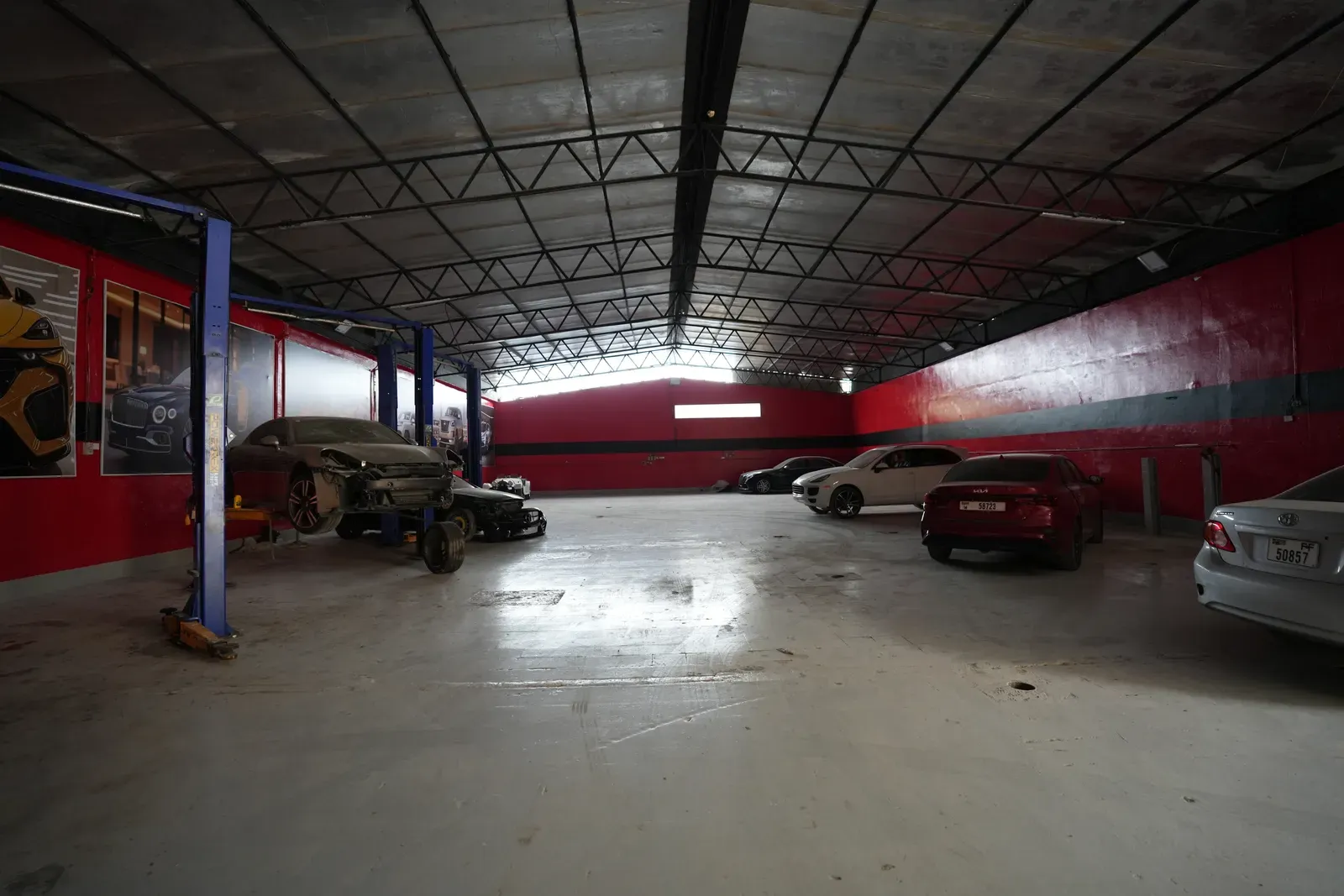
The floor a car stands on while it is booked in and its condition recorded. - 03
We find out what is actually wrong
The fault is traced and proved before anyone puts a price on it.
- The same checklist runs on every car, so nothing is skipped because it was not complained about.
- Where a part has a manufacturer limit, the reading and the limit are both shown.
- A part we could not assess is marked "Not inspected" and why — it is never quietly marked OK.
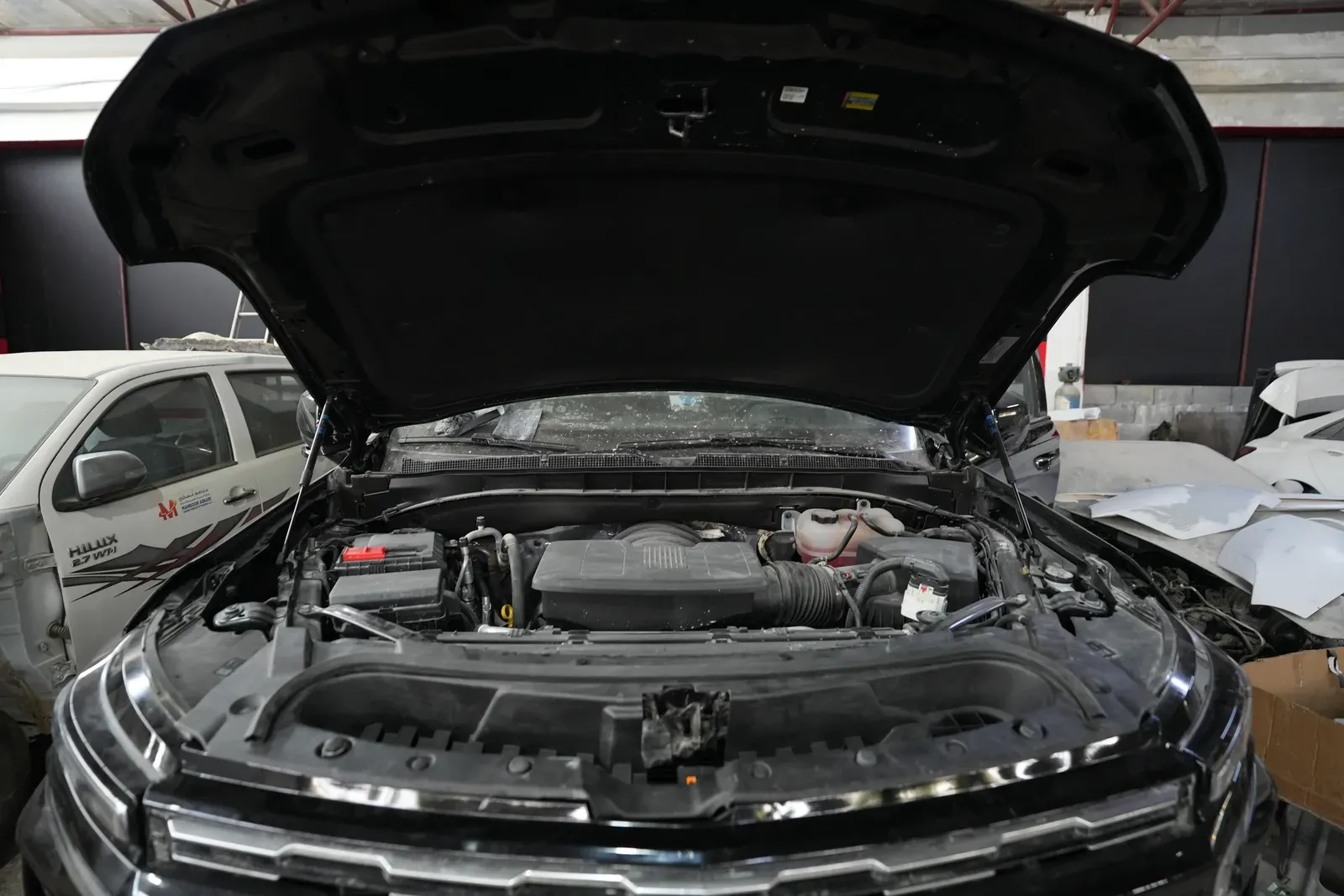
An engine bay open, as it is looked at during an inspection.
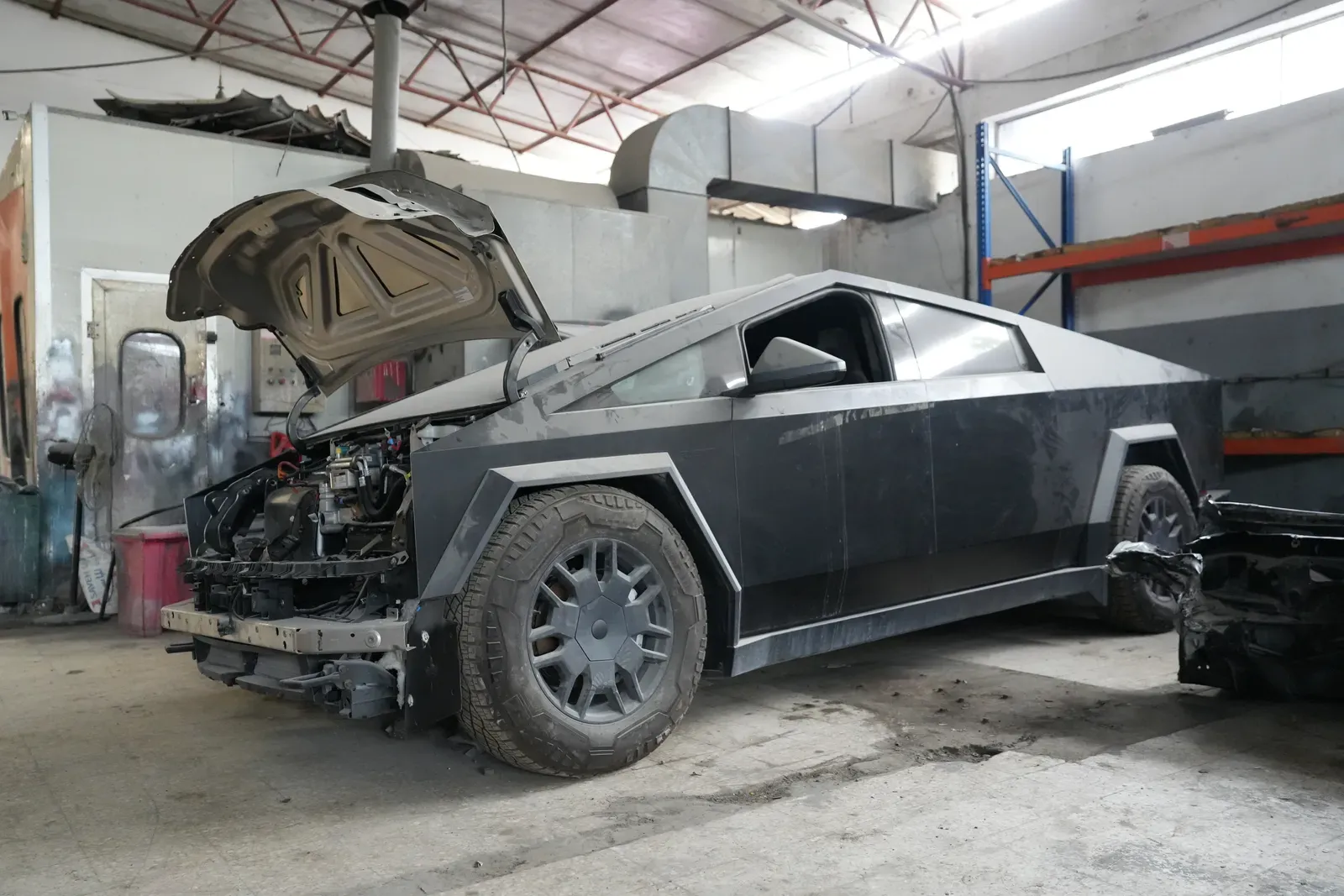
Nothing proceeds without you.
The six steps, continued
- 04
You approve, line by line
Parts and labour priced separately. Decline anything. Nothing proceeds without you.
- Each line is a single job with its own price, not a lump sum you accept or reject whole.
- Decline a line and the rest of the work continues unaffected.
- If something is found once the car is open, it comes back to you as a new line — it is not absorbed into the bill.
- 05
The work, then a check
The job is done and then checked by someone who did not do it.
- Torque-critical work is re-checked against the figure, not by feel.
- The complaint you arrived with is tested again before the car is signed off.
- If the check fails, the job goes back — and you are told it did, not told it was late.
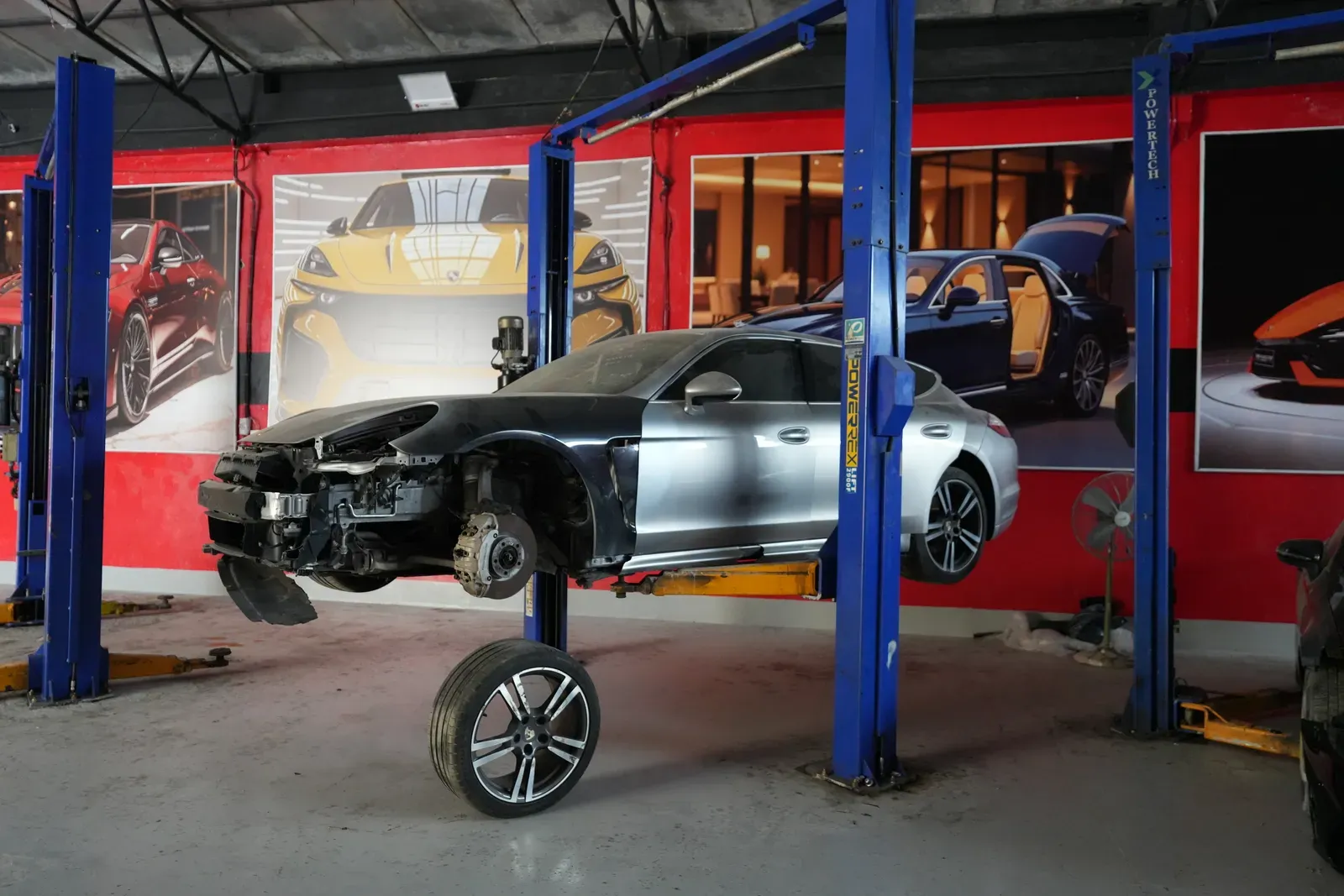
A wheel off on the lift, with the work still open to be checked. - 06
Collection, with the record
You leave with an itemised invoice and the inspection kept on your vehicle history.
- The invoice lines match the lines you approved, one for one.
- Old parts are available for you to see or take, if you ask when you approve.
- The inspection stays on the vehicle record for the next visit and for the next owner.
What we write down before we start
The same things are recorded on every car, in the same order, so the condition your car arrived in is a matter of record and not of memory. It is read back to you at the counter when you are there, and sent to you when you are not.
- Every scratch, dent or chip already on the car
- The condition of the wheels and tyres at each corner
- Warning lights showing with the ignition on
- Odometer reading and fuel level
- Anything left in the cabin, and the keys handed over
- What you told us the car is doing, in your words
- Whether we could reproduce it, and when
What a finding record contains
A finding is one thing we looked at, on one part of the car. It is not a paragraph of advice — it is a record with a fixed shape, so that two findings can be compared, and so that the same part inspected six months later can be compared with itself.
- Zone
- Where on the car it is — front brakes, nearside rear, under-bonnet. So a finding can be located, not just read.
- Item
- The specific part or check, named the same way every time, so it can be compared across visits.
- How we know
- The test that proved it — the pressure reading, the live data, the part off the car and in front of you. Not "it looks worn".
- Measurement and limit
- On an inspection, where a number exists — pad thickness, tread depth, battery voltage, paint depth — both the reading and the limit it is judged against.
- Status
- OK, Attention soon, Action required, or Not inspected. Never colour alone.
- The technician’s note
- One or two plain sentences saying what it means for you. Including, often, that nothing needs doing.
A finding, as you receive it
- Zone
- Front brakes
- Item
- Brake pad thickness
- Measured
- 2.1 mm
- Minimum
- 3.0 mm
- Status
- Action required
- Technician
- Front pads below minimum. Discs measured within limits and do not need replacing.
Example report — not a real vehicle
Three statuses, and one that is not a status
Colour is not the message. Every status carries a word and a shape as well, because roughly one man in twelve cannot reliably separate red from green, and most of our customers are men.
- OK
- Checked, within limits, nothing to do. Most findings on most cars are this, and they are shown to you rather than left out.
- Attention soon
- Serviceable today, but wearing. You are told roughly how long, so you can plan it rather than be surprised by it.
- Action required
- Past a limit, or unsafe. We say which limit and by how much.
- Not inspected
- Not a verdict. It means we could not see it — seized, obstructed, or needing a strip-down you have not approved. It is listed so it cannot be mistaken for good.
Approval, line by line
You do not approve "the repair". You approve each line of it, from your phone, at your own pace. Parts and labour are priced separately on every line so you can see which is which. Declining a line does not cancel the rest of the job and does not cost you anything.
What one approval line shows you
- The job, in one sentence, in the language you chose
- The finding it came from, and how we proved it
- The part, by name and part number
- Parts and labour priced on separate rows
- VAT shown, not folded into the figure
- How much longer the car will be with us if you say yes
- Two buttons: allow it, or not now
Why it works this way
The finding a line is raised from
- Zone
- Tyres
- Item
- Tread depth — front right
- Measured
- 3.4 mm
- Minimum
- 1.6 mm
- Status
- Attention soon
- Technician
- Legal now, but noticeably shallower than the opposite corner. Worth watching; nothing to do today.
Example report — not a real vehicle
What quality control means here
The person who checks the work is not the person who did it. That is the whole of it, and it is the part most workshops skip, because it costs a second pair of hands on every job.
- The finding that triggered the work is re-tested
- Torque figures confirmed on safety-critical fasteners
- Fluid levels and leaks checked after the car has stood
- Road test where the complaint only appears while driving
- Interior left as it was found — no grease, no moved seat
- A second signature before the car is released
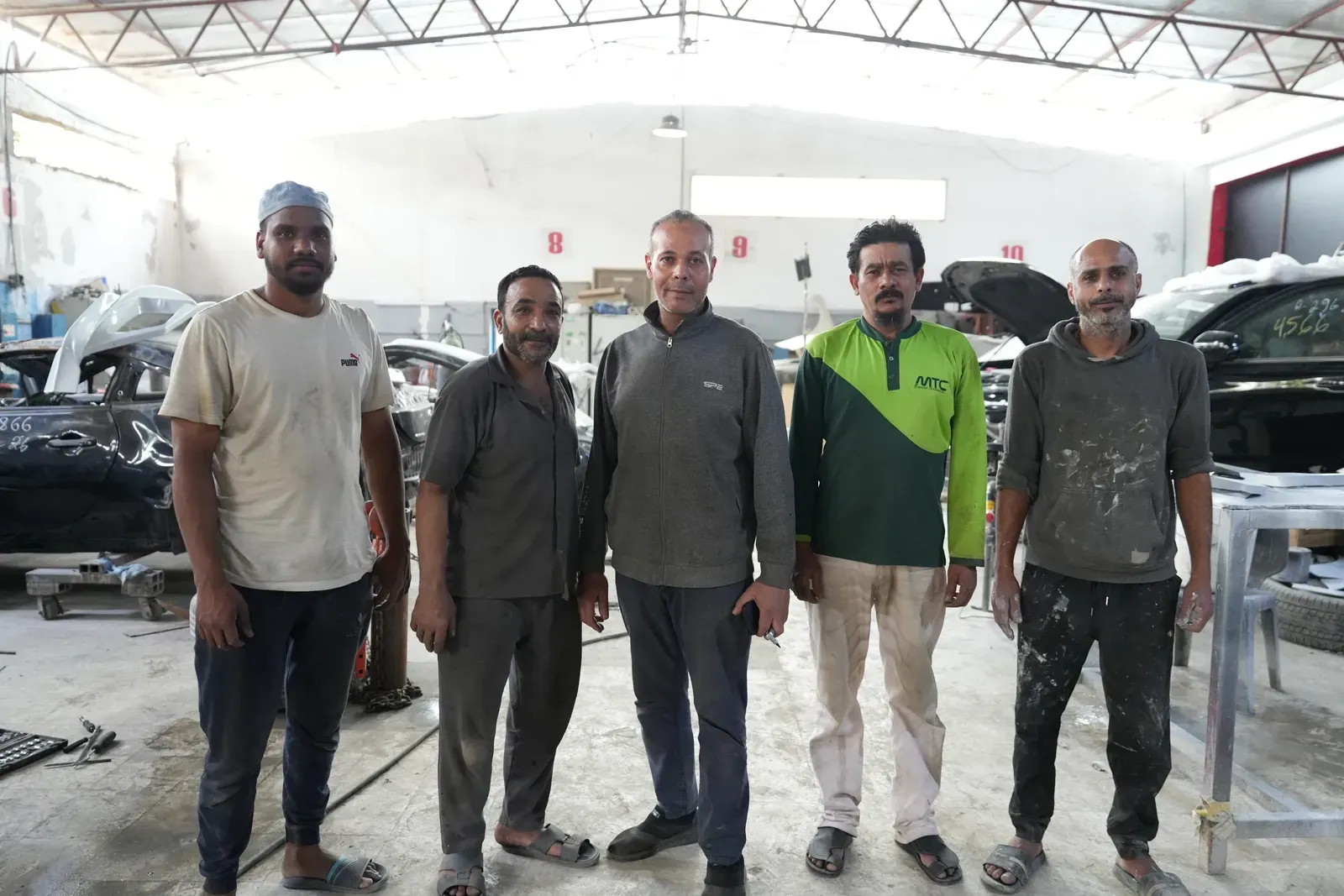
What you keep afterwards
The job ends; the record does not. Everything below stays attached to your vehicle, not to a technician’s memory, and is there the next time the car comes in — or the day you sell it.
- Everything we found, whether or not you had it done
- The list of lines you approved and the lines you declined
- An itemised invoice whose lines match that list
- Part numbers for what was fitted
- Anything we marked “Attention soon”, so next time it is compared rather than re-guessed
Where this process has limits
Two honest caveats, because a process page that admits nothing is marketing.
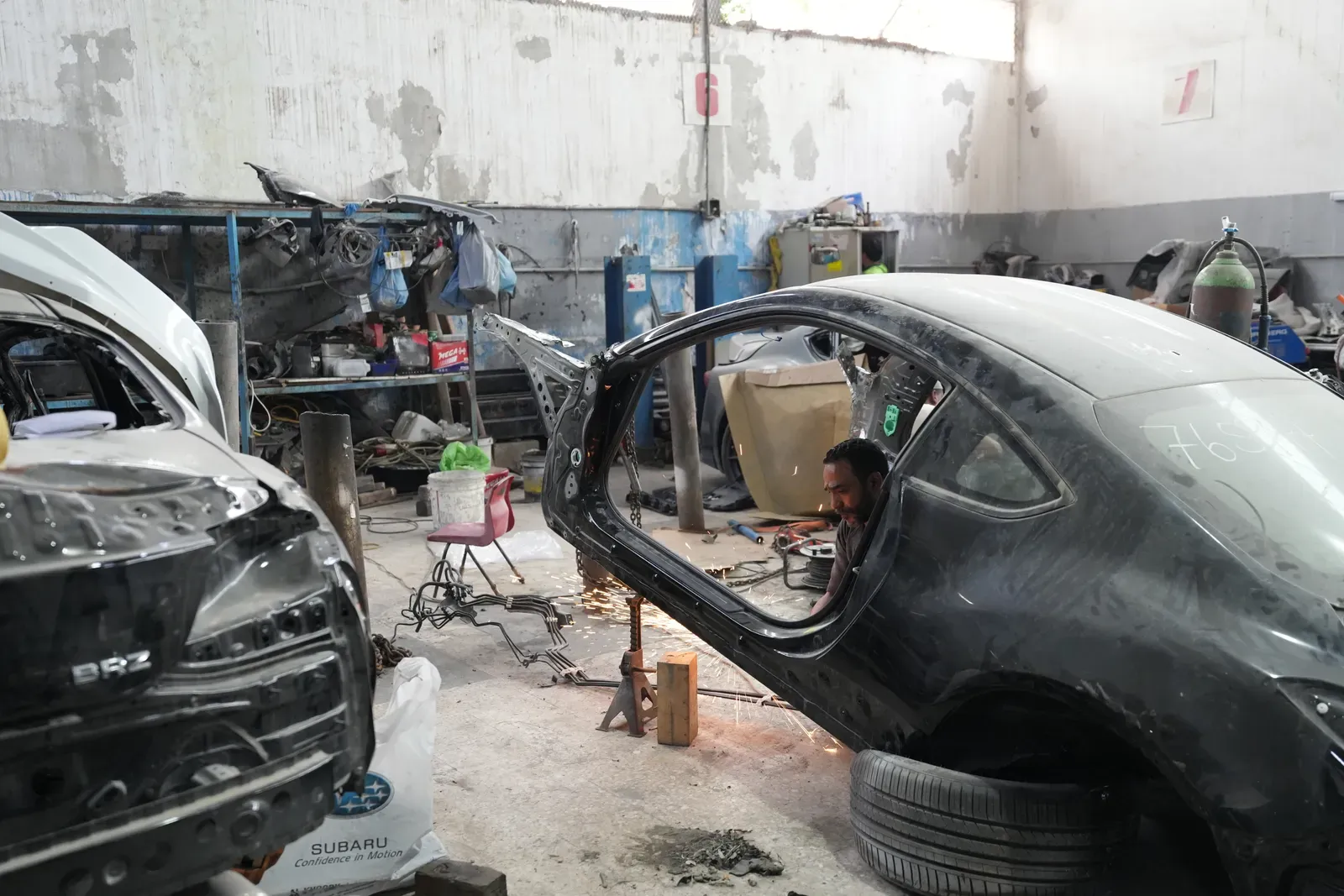
Start with the symptom, not the diagnosis
You do not need to know what is wrong before you come in. Describing the noise is enough — working out what it is is our job, and step three is where it gets answered in writing.