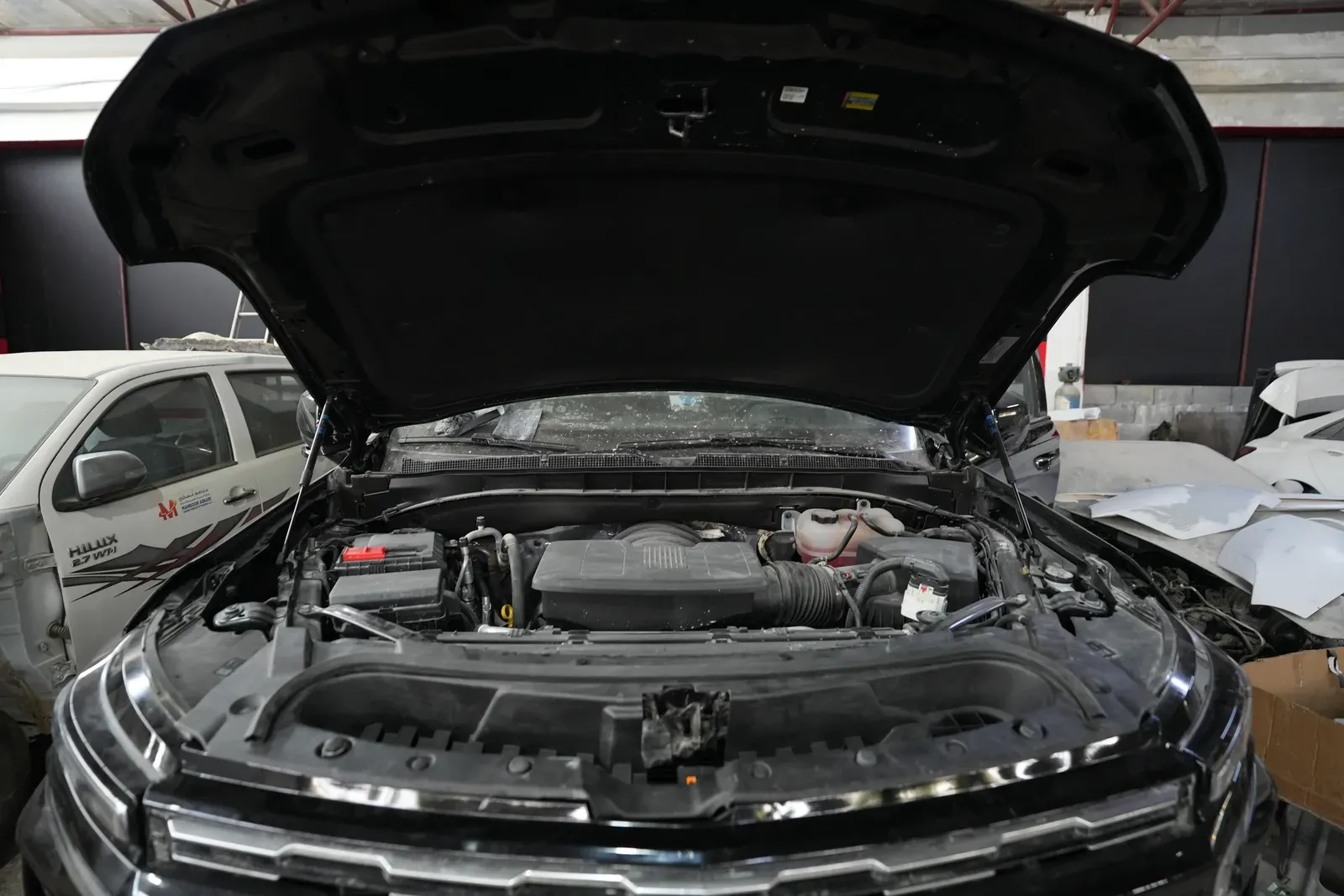
An engine bay open on the workshop floor, photographed close.

Changan servicing and repair in Sharjah

The gearbox tells you most of what you need to know about one of these. An Alsvin drives through a five-speed dual clutch, a CS35 Plus and an Eado Plus through a seven-speed dual clutch, a CS75 Plus through an Aisin eight-speed automatic bought in from Japan. Those three do not fail in the same place, are not serviced the same way, and do not have the same parts answer behind them — so the complaint “it does not feel right when it moves off” means three different things depending on which one is yours.

Why we see these

What brings these through the door is the same thing that put them on the road: the price of entry. A large share are somebody’s first car in this country, a second vehicle for a household that needed one quickly, or a small-business vehicle covering serious distance every week for a driver whose repair decisions are genuinely about money. That changes the job rather than just the invoice. An owner in that position does not need a list of everything at the front of the car, they need to know which single item is actually causing the complaint, whether it can wait, and what it will cost — and if the answer is that the car is behaving as designed, that is worth more to them than a repair. The other honest point is that the marque is newer here than some on this hub, so the question of whether a given part sits on a shelf in this emirate or has to be ordered is a real question with a real answer, and it should be asked before the car is dismantled.

What this make asks of a workshop

  • The powertrain read off the car rather than off the tailgate. Changan has kept model names steady while what sits under them changed — a CS35 Plus, an Eado Plus and a CS75 Plus have each been sold with more than one engine and more than one gearbox — so the build data decides the service, the fluid and the parts list, not the badge.
  • Whether a dual clutch runs its clutches wet or dry established before it is serviced or advised on. The two are different machines with different fluids, different service items and different heat behaviour, and a shop that services one as though it were the other will do harm confidently.
  • The Aisin eight-speed in the CS75 Plus filled with the fluid it specifies and nothing else. A bought-in automatic from a large supplier is good news for an owner, because the unit is widely used and the service side is obtainable — but only if the person filling it reads the specification instead of reaching for a general automatic transmission fluid.
  • A named single component behind a complaint, with a price for that component. These are cars bought on price and run to a budget, and a quote that lists every item at one corner of the car is not a diagnosis, it is a workshop passing its uncertainty to the customer.
  • Service intervals taken from the severe-use column, because a small turbocharged engine doing short urban journeys with the air conditioning at full load is the exact duty cycle that column was written for, and it is ordinary driving here rather than an extreme.
  • The parts channel and the lead time stated up front — agency, the specialist Chinese-parts trade in the industrial areas of this emirate, or an order with a wait — so the decision about whether to repair the car belongs to the owner and is made before it is in pieces.

What actually comes in

Named at component level, with what the driver notices first and what we do to establish it is that and not something else that feels identical from the driving seat.

Clutch actuator and the take-up behaviour of the five-speed dual clutch (Alsvin)

A pause between pressing the accelerator and the car actually moving, a small lurch as it takes up, and a habit of rolling back a fraction on a ramp before it pulls.

How we establish it

A large part of the work here is telling an owner what their gearbox is. This is not a torque-converter automatic, it is a manual gearbox that works its own clutch, so a pause at take-up and a small roll-back on a slope are characteristics of the design rather than defects — and an owner who has been told the car is faulty has usually been told it by somebody who never established what was fitted. What is genuinely worth reading is the clutch adaptation and where the actuator believes the clutch bites, because a value drifting towards the end of its range turns that normal pause into a real hesitation. We run the learning routine and drive the car before anybody talks about a clutch, and we say plainly when the answer is that the car is behaving as built.

The seven-speed dual clutch in the CS35 Plus and Eado Plus, and whether it runs wet or dry

A shudder pulling away in slow traffic, a gearbox message after a long crawl, or an owner holding a quote for a service nobody has explained.

How we establish it

This is the fault where establishing the hardware matters more than any measurement. A dual clutch whose clutches run in oil is cooled by that oil and has an oil and filter service; one that runs dry is cooled by air and does not, and it loses that fight far sooner in crawling traffic. The two ask for different fluids, different intervals and a different conversation about whether a shudder is heat or wear. So the specification is established from the car’s own build data before a service is quoted or a diagnosis offered. After that the routine is the same as any dual clutch: read the adaptation values, run the learning procedure, drive it, and only then talk about parts.

Fluid specification in the Aisin eight-speed automatic (CS75 Plus)

Harsh or late changes that arrived some time after a gearbox service somewhere else, or a shudder on a light throttle that was not there before the oil was touched.

How we establish it

The good news about this gearbox is that it is not a Changan part — it is a widely used unit from a large supplier, which means the service side can genuinely be done outside an agency. The bad news is that it makes it easy for somebody to treat it as a generic automatic and fill it with a general transmission fluid, and this class of gearbox is unforgiving about that: the friction behaviour of the wrong oil shows up as harshness and shudder weeks later, long after anybody connects it to the service. So we read the specification for the car before anything goes in, and where a gearbox arrives already behaving badly after somebody else’s service, that is the first question asked rather than the last.

Which engine family is actually fitted — the older port-injected turbo engines against the newer high-pressure direct-injection ones

A rough cold start, a hesitation under load, or an owner holding a quote for a fuel-system clean on an engine that may have no reason to need one.

How we establish it

Changan has run more than one generation of small turbocharged petrol engine under names that look similar from the outside, and the newer direct-injection engines work at fuel pressures that the older port-injected ones never approach. That single difference changes the fuel filter, the pump, the injectors, the plugs and what a fuel-system service even means, and it changes whether a cleaning job has any point at all. We identify the engine from the car’s build data, then read fuel rail pressure against what is being requested on live data before anything is cleaned or replaced. Where the job is not needed on the engine that is actually in the car, we say it is not needed.

Spark plugs and ignition coils on the small turbocharged petrol engines

A stumble or a shake when accelerating hard that disappears when the car is driven gently, sometimes with a flashing engine light and sometimes with none.

How we establish it

A turbocharged engine puts far more pressure in the cylinder at the moment the plug has to fire than a naturally aspirated one does, which is why a plug that is still perfectly capable at light throttle misfires under boost and then behaves itself again. That is the pattern to look for, and it is looked for with per-cylinder misfire counters read as live data on the road rather than from a code printed at idle, because the counters name the cylinder and a stationary scan often shows nothing at all. The plug interval on these engines is shorter than the one owners expect from a naturally aspirated car, and dust and short journeys here do not help it. We name the cylinder before anything is replaced.

Electronic parking brake motors in the rear calipers (CS75 Plus, Eado Plus)

A parking brake warning on the dash, a brake that will not release or will not set, or rear pads that wore out again far too soon after the last change.

How we establish it

On a rear caliper with a parking brake motor built into it, the piston cannot be wound or pushed back by hand — the module has to drive it back, and the system has to be put into service mode before the caliper is opened and taken out of it afterwards. A workshop without that function will force the piston, and the damage from that shows up later as a caliper that drags, rear pads gone early, or a warning that will not clear. So this is a case of saying what the car requires: if rear pads are being quoted to you anywhere, ask how the piston is being retracted. We read the system for stored faults, retract and reset it through the module, and check the caliper slides and the guide pins at the same time, because a dragging rear brake in this heat is a real cost in fuel as well as in pads.

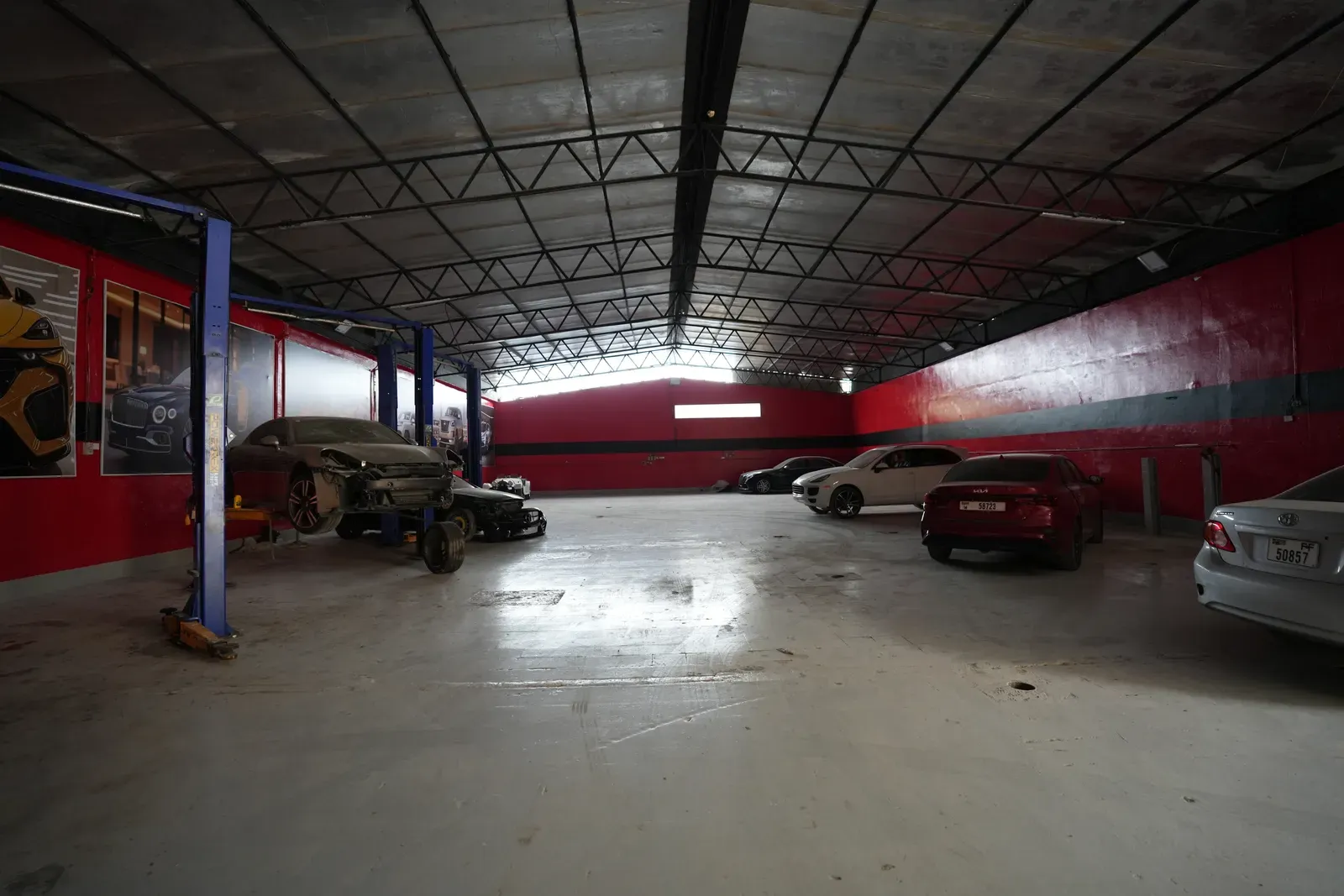
The workshop floor in Sharjah, cars waiting between the lifts.

Every one of these is found on a lift in this building, and priced before it is touched.

The work this usually turns into

And everything else, on the same car

The list above is what this make usually arrives needing. This is the rest of what the workshop does, and it applies to your car as much as to any other — worth knowing while it is already here.

Questions we get asked about these

My Alsvin pauses before it moves and rolls back on a slope. Is the gearbox failing?

Probably not, and this is the single most common thing an owner of one is wrongly charged for. That car does not have a torque-converter automatic, it has a manual gearbox that operates its own clutch, and such a gearbox genuinely does take a moment to engage and genuinely will let the car creep backwards on a slope before it takes drive. That is how it is built. What is worth doing is reading the clutch adaptation values, because a drifting value turns a normal pause into a real hesitation and the learning routine costs a fraction of a clutch. If the values are healthy, the honest answer is that nothing is wrong, and you should not be paying for a repair to prove it.

Can the CS75 Plus gearbox be serviced outside the agency?

Yes, and it is one of the more straightforward jobs on this page, provided the fluid is the one the car specifies. That eight-speed is a bought-in unit from a major supplier rather than something built in-house, so the unit itself is well understood and the service side is not locked away. The risk is not the gearbox, it is the shortcut: filling it with a general automatic transmission fluid because the drum was to hand. That does not announce itself on the day, it announces itself weeks later as harshness. Ask anybody quoting you which specification they are putting in, and expect a specific answer.

How do I know which engine and gearbox my car actually has?

From the car, not from the model name. Changan has kept names like CS35 Plus, Eado Plus and CS75 Plus in the range while changing what sits underneath them between model years, which is entirely normal and entirely capable of producing a wrong parts order. Bring the car and its registration and we will identify it from its own build data before quoting anything — and it is worth doing that once, because the same answer then decides the oil, the filters, the gearbox fluid, the plug interval and the parts list for as long as you own it.

A workshop quoted me for everything at the front of the car. Is that normal?

It is common and it is not a diagnosis. A list of every arm, joint, link and bush at one corner is what a workshop produces when it has not isolated the noise, and it puts the cost of that uncertainty on you. A knock over a bump comes from one component far more often than from six, and finding out which one is a matter of loading each joint by hand on a lift until the noise belongs to a name. You should be given that name and a price for it. If you are given a list instead, ask which single item they are prepared to say is causing the noise.

Are these cars expensive to keep running here?

On the ordinary items, no — service parts, filters, brakes and common wear items are obtainable through the agency and through the specialist parts trade established in the industrial areas of this emirate, and they price like the segment the cars sit in. What is not yet knowable is the long run, because the marque has not been here long enough for anybody to have honest evidence about how they wear at high distance in this heat. Any workshop telling you a figure for that is inventing it. What an owner can control is the servicing, which on a small turbocharged engine in Sharjah traffic means the short interval rather than the long one.

Bring it in and we will find out

Nothing happens to the car until the fault has a name and you have approved the work against it.

Book WhatsApp us Call