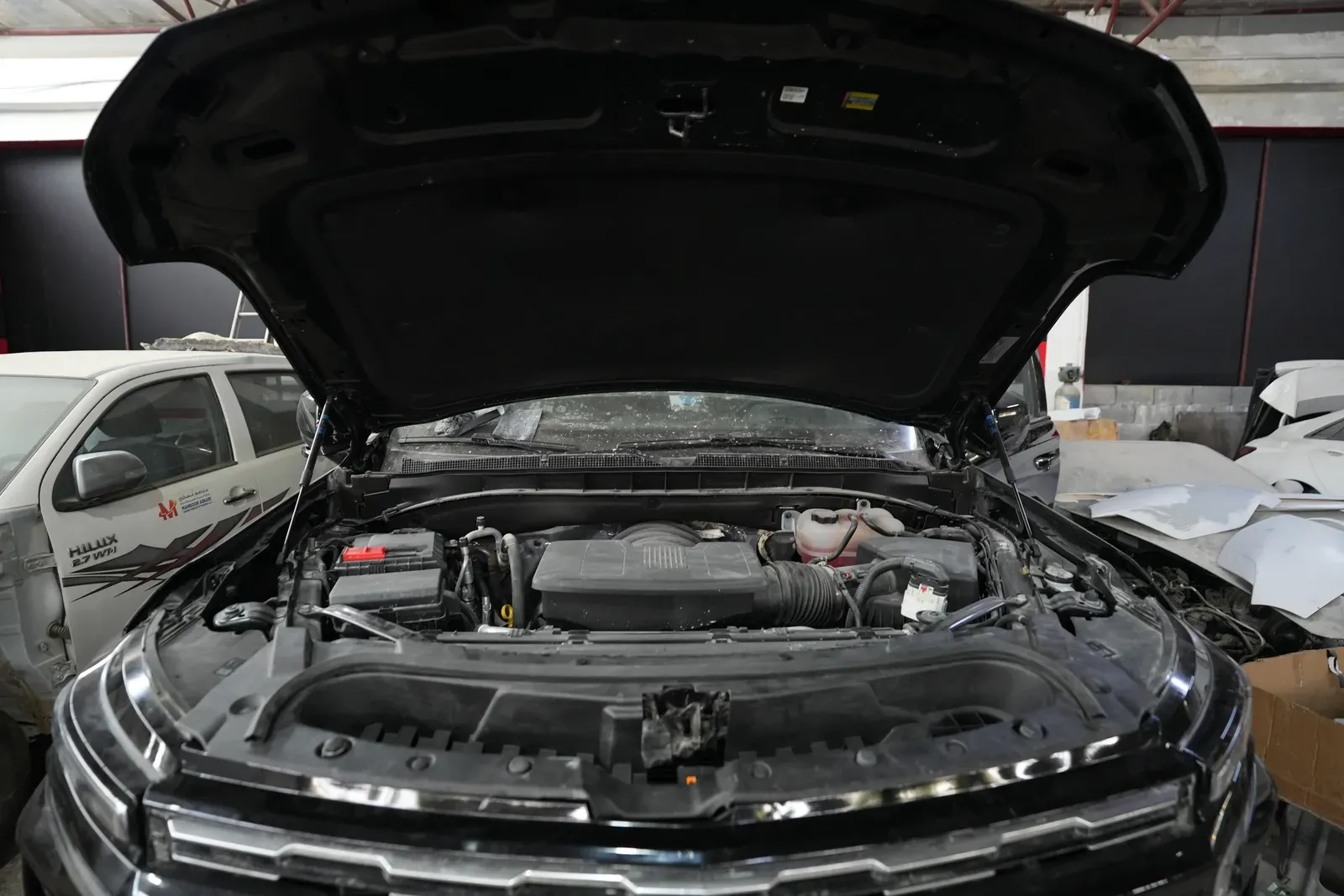
An engine bay open on the workshop floor, photographed close.

Dodge repair and servicing in Sharjah

Most of these cars come in for a noise, and most of the time the argument is about one question: is that tick a lifter or a manifold bolt. One of those answers is an engine out and the other is an afternoon, so it is worth settling with a stethoscope and a cold start rather than with a guess. The rest of the work is what a heavy rear-drive car does to its gearbox, its differential and its brakes in this heat.

Why we see these

These are bought here to be enjoyed, and that is a technical fact about them rather than an opinion. A Charger or a Challenger in Sharjah spends its life in short, hard bursts on hot tarmac and then sits, which is the worst combination for oil and for brakes: the oil never gets a long steady run to shed what it has picked up, and the brakes go from very hot to standing still with the pads pressed against the discs. A Durango carries a family through the same weather with more weight on the same platform. Then there is the electrical side. A car that stands for days in this heat exposes the module that distributes power to everything else, and when that module starts behaving oddly the complaints arrive as a scattered list — a fuel pump that will not prime, wipers that run on their own, a horn that sounds at nothing — rather than as one fault with one name. Chasing those one at a time is how owners spend a lot of money on a car that has nothing individually wrong with it.

What this make asks of a workshop

  • A tick told apart before anything is opened. On the HEMI a collapsing lifter and a snapped exhaust manifold bolt sound close enough from the driving seat to be confused, and they are at opposite ends of the price list. Establishing which one it is with a cold start, a stethoscope and a look at how the noise behaves as the engine warms is the first hour of the job, not an optional extra.
  • Oil judged as a mechanical component, not as a service line. Cylinder deactivation works by feeding oil pressure to special lifters, so the valve train on this engine depends directly on oil condition and level. A short-journey car that goes long between changes is running its deactivation hardware on the worst oil it will ever see.
  • Live transmission data on a road test rather than a stall test in the yard. A light-throttle shudder on the eight-speed is settled by watching torque converter slip and fluid temperature at the moment the car does it, on the road where it does it.
  • Electrical faults traced at circuit level. A power distribution module is diagnosed by testing the circuit it feeds — supply, ground, voltage under load — not by swapping the module because several unrelated things stopped working in the same week.
  • Brake work sized for a heavy fast car in heat, including the slides and the bedding-in. Discs and pads on this platform are a system: a caliper whose slide pins have dried out cooks one pad and leaves the other, and the judder that follows gets blamed on the discs that were just fitted.
  • A parts channel that separates the 5.7 from the 6.4 and the 3.6 from everything else. These cars share a showroom and very little else under the bonnet, and a box labelled by model rather than by engine is a box we check before it is opened.

What actually comes in

Named at component level, with what the driver notices first and what we do to establish it is that and not something else that feels identical from the driving seat.

MDS cylinder deactivation lifters and the camshaft lobes underneath them — 5.7 HEMI V8

A tick at idle that does not fade as the engine warms up, a misfire on one cylinder, a flat spot on light throttle, and in a bad case glitter in the oil at the next change.

How we establish it

Cylinder deactivation on this engine works by collapsing a special lifter with oil pressure, and when one of those lifters fails it wears the lobe it sits on. That makes the noise and the misfire the same fault. We record misfire counters per cylinder rather than trusting one stored code, move the coil and the injector to another cylinder to prove the fault does not follow them, listen bank by bank hot and cold, and take a compression reading on the suspect cylinder to see whether the valve is opening as far as it should. Oil condition and level are part of the diagnosis, not a side note, because the deactivation hardware runs on oil pressure. If the lobe has gone the camshaft and the lifters are one job and we say so before anything is opened, because that is not a repair to discover halfway.

Exhaust manifold bolts and the manifold-to-head seal — 5.7 and 6.4 HEMI

A tapping from one side of the engine that is loudest in the first minutes of a cold start and quietens or disappears once everything is hot.

How we establish it

This is the noise that gets a HEMI condemned as a lifter engine when nothing inside it is wrong. A manifold bolt that has snapped lets exhaust gas escape at the flange, and the gap closes as the metal expands, which is why the tap is a cold-start noise that fades. A lifter tick does the opposite: it stays, and it usually brings a misfire with it. We listen at the manifold flange with the engine cold, look for the soot trace that a leaking flange leaves on the head and the manifold, count the studs that are still there, and check whether the misfire counters show anything at all. That last check is what keeps an engine from being opened for a bolt.

Torque converter lock-up clutch on the 8HP70 eight-speed automatic

A shudder at light throttle around seventy to ninety, like driving briefly over a rumble strip, which goes away if you lift off or press harder.

How we establish it

That narrow band of speed and throttle is where the converter clutch is asked to hold with the least help, so a clutch that is slipping shows itself there and nowhere else. We road test with converter slip, commanded lock-up state and fluid temperature on the screen at the moment it happens, because a shudder felt at that speed is also produced by a misfire and by a wheel out of balance, and all three feel identical from the seat. Misfire counters are read in the same test so an engine fault is not sold as a gearbox. If the slip is real we say whether it is the converter or the control that is asking it to slip, in advance of any strip.

Rear axle differential and the two-piece driveshaft with its centre bearing — rear-drive Charger, Challenger and Durango

A hum from the back that changes with road speed, a vibration through the floor that starts above a certain speed, or a clunk when picking up drive from a standstill.

How we establish it

A rear-drive car driven hard on hot tarmac puts more into its axle than the fluid interval assumes, and the hum from a pinion bearing that has been running hot arrives long before anything breaks. We road test to establish whether the noise follows road speed or engine speed and whether it changes on and off the throttle, which separates a differential from a wheel bearing and from a tyre. Then the car goes on a lift and the driveshaft is checked at its joints and at the centre bearing with the shaft loaded by hand, and the axle oil is judged by colour and smell as well as level. A clunk taking up drive is looked for at the shaft couplers before the differential is blamed for it.

Totally Integrated Power Module (TIPM) and the circuits it feeds

A list of unrelated complaints at once: the fuel pump does not prime and the car will not start, the wipers run on their own, the horn sounds at nothing, the lights do odd things and the battery is flat after two days.

How we establish it

When several unconnected systems misbehave in the same week the thing they have in common is usually where their power comes from, and on these cars that is one module. It is still diagnosed as a circuit rather than assumed. We test for supply and ground at the load itself, measure voltage drop with the circuit under load rather than with a test lamp, and check what the module commands against what actually arrives at the pump, the motor or the lamp. A fuel pump relay circuit that switches on the bench and fails hot is exactly the kind of fault a quick check misses. Parasitic draw is measured overnight where a car is going flat. Only when the circuit has been proved do we talk about the module, because it is an expensive part to buy on a theory.

Oil filter housing and its integrated oil cooler on the 3.6 Pentastar — Charger, Challenger and Durango

Oil on the ground under the middle of the engine, a burning smell after parking, coolant disappearing at the same time, and sometimes an oil pressure warning at idle.

How we establish it

The housing on this engine sits in the valley between the banks and carries the oil cooler inside it, which means one plastic component holds pressurised oil next to coolant in the hottest part of the engine. When it distorts, oil runs down the back of the block and lands somewhere that blames a different gasket, and coolant can go the other way. We clean the area, run the engine and find where the oil is actually leaving rather than replacing the nearest seal to the stain, pressure-test the cooling system to see whether coolant is disappearing into the same part, and check the oil for coolant. It is worth being precise about this one, because from underneath it is easy to sell it as a rear main seal.

Front brake discs, pads and the caliper slide pins on a heavy car stopped hard from speed

A pulsing through the pedal when braking from high speed, a steering wheel that shakes only under braking, a smell of hot brakes after a fast run, or one wheel that is much hotter than the other.

How we establish it

A heavy car braked hard on hot tarmac and then parked is the classic way to get uneven pad deposits on a disc, which feels exactly like a warped disc and is not the same thing. We check the disc for run-out with a dial gauge on the hub rather than deciding by feel, compare the temperature of the two sides after a road test, and free off and inspect the caliper slide pins, because a seized slide cooks one pad, leaves the other and produces both the judder and the smell. The wheel bolts and the hub face are checked for rust scale and correct torque, since an unevenly clamped disc gives the same complaint. New discs get bedded in properly or they will be back.

Front lower control arm bushes, tie rod ends and the steering rack mounting on the rear-drive LX platform

A knock from the front over a speed bump, vague steering that needs constant small corrections on the motorway, and a front tyre wearing on one edge.

How we establish it

A wide car with a lot of weight over its front wheels and a driver who uses the throttle works these bushes hard, and here they harden and split from heat rather than corrode. The car goes on a lift with the wheels hanging and each joint is levered under load in turn — lower arm bushes front and rear, tie rod ends, the drop links and the rack mountings — until the knock belongs to one named component rather than to the front of the car. Vague steering is checked at the rack itself for play at the pinion and for a mounting that has gone soft, because a rack that moves on its mounts feels like worn joints and is neither. Geometry is reset after the work, since a new arm changes the angles that ate the tyre.

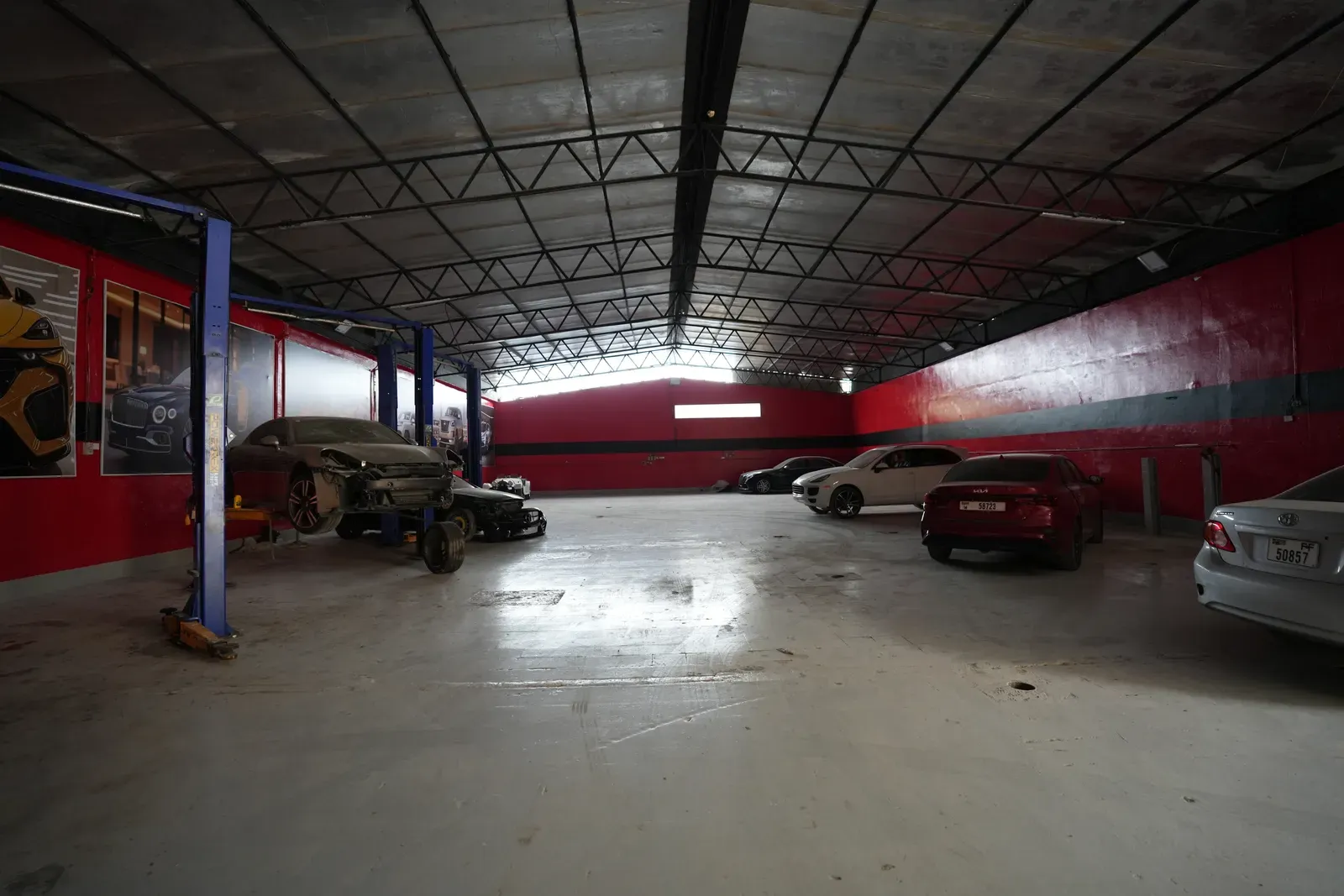
The workshop floor in Sharjah, cars waiting between the lifts.

Every one of these is found on a lift in this building, and priced before it is touched.

The work this usually turns into

And everything else, on the same car

The list above is what this make usually arrives needing. This is the rest of what the workshop does, and it applies to your car as much as to any other — worth knowing while it is already here.

Questions we get asked about these

Everyone says the HEMI tick is normal. Is mine normal?

Two different noises get called the HEMI tick and only one of them is cheap. A tap that is loudest in the first minutes of a cold start and then fades as everything expands is usually an exhaust manifold bolt that has snapped at the flange, and the engine is fine. A tick that stays once the engine is hot, especially with a misfire on one cylinder, is a valve train noise and on this engine that means a deactivation lifter and the camshaft lobe it has been wearing. We settle it before anything comes apart: listen at the manifold flange cold, look for the soot trace a leaking flange leaves, and read the misfire counters per cylinder. That test costs a fraction of what guessing wrongly costs in either direction.

If cylinder deactivation is the problem, can it just be switched off?

It is worth being clear about what that would and would not do. Once a lifter has collapsed and worn the lobe under it, the wear is mechanical and already there, and changing how the engine is controlled does not restore a lobe. The repair for that is the camshaft and the lifters. Whether to change an engine calibration afterwards is a separate decision and it is yours, with consequences for how the car runs and for anything that depends on the car being standard, so we will tell you what we know and we will not present it as a repair for damage that has already happened.

There is a shudder at a light throttle around eighty. Gearbox or engine?

It is one of three things and they feel identical from the seat: a torque converter lock-up clutch that is slipping, a misfire that only shows under that particular load, or a wheel out of balance. The eight-speed asks its converter clutch to hold with the least help at exactly that speed and throttle, which is why a slipping clutch appears there and nowhere else. We road test with converter slip, the commanded lock-up state, fluid temperature and the misfire counters all on the screen at the moment it happens. That one drive decides whether you are looking at a gearbox, a set of plugs and coils, or a wheel balance.

The fuel pump does not prime, the wipers came on by themselves, and the battery goes flat. Is that one fault?

Often yes, and the thing those complaints have in common is where their power comes from. On these cars one module distributes power and its control to a great many circuits, so when it starts misbehaving the symptoms arrive as a scattered list rather than as one named fault. That said, we do not assume it. It is diagnosed as a circuit: supply and ground tested at the load itself, voltage drop measured with the circuit under load, what the module commands compared with what actually arrives, and parasitic draw measured overnight on a car that goes flat. A relay circuit that works on a cold bench and fails hot is exactly what a quick check misses. The module is an expensive part and it should be proved rather than assumed.

My discs were replaced and the judder came back within months. Why?

Usually because the reason the first set went was never addressed. A heavy car braked hard from speed and then parked leaves uneven pad material deposited on the disc, and that feels exactly like a warped disc without being one. The common causes are a caliper whose slide pins have seized, so one pad does the work and cooks, rust scale or uneven torque at the hub face, and new discs that were never bedded in. We measure run-out on the hub with a gauge rather than deciding by feel, compare the two sides for temperature after a road test, free off and inspect the slides, and clean the hub face before anything new goes on. Otherwise you buy the same discs again.

Bring it in and we will find out

Nothing happens to the car until the fault has a name and you have approved the work against it.

Book WhatsApp us Call