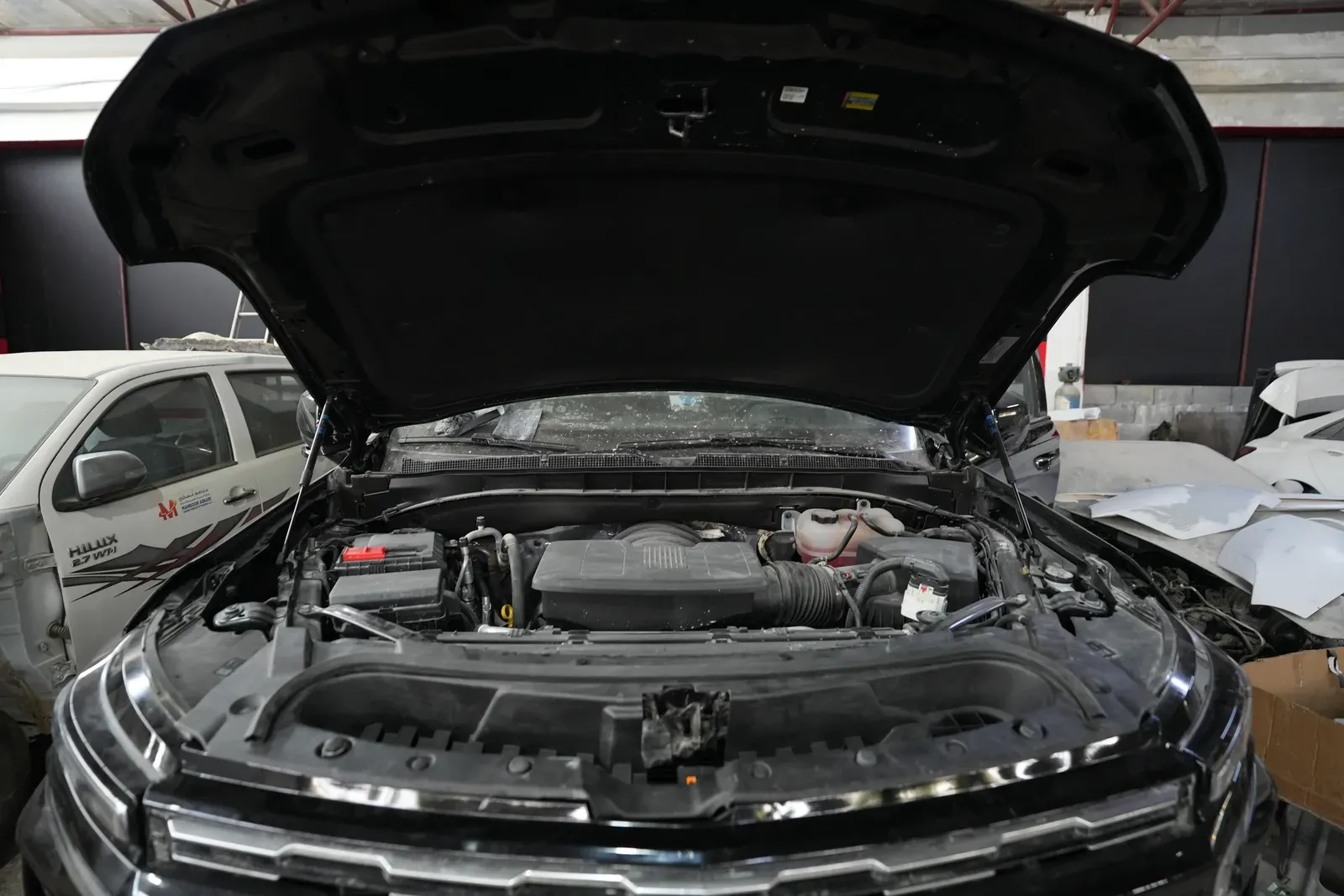
An engine bay open on the workshop floor, photographed close.

Jaguar repair in Sharjah

Most Jaguars reach us with one of three complaints: a noise or an oil pressure warning from an Ingenium four-cylinder, a screen and a set of modules arguing with each other, or a car that was fine on Thursday and flat on Saturday. Each has a test that settles it. We do the test first, because on this make the obvious part is frequently the innocent one.

Why we see these

A Jaguar in Sharjah is almost always a second or third owner car, bought used at a price that makes it look like a bargain against what it cost new, and that is precisely the car that needs a workshop willing to test before it sells parts. Two things about this place shape the list. The first is standing time: these cars sit in the sun between short trips, and a saloon with an air system loses its height overnight through pipework and fittings long before anything dramatic happens, while a car whose modules do not settle down after lock will be flat by the weekend. The second is the four-cylinder Ingenium, which is what most of the XE, XF and F-Pace cars here are running, and which asks to be serviced on oil quality and on time rather than on how good the car still feels to drive.

What this make asks of a workshop

  • Oil changed on the specification and on time, not on how the car feels. The Ingenium four-cylinder drives ancillaries from the oil and uses a chain, and it is the engine on this make least tolerant of a long interval taken in this climate. An extended interval that was reasonable in a cool country is not the same interval in a car doing short runs at 45 degrees.
  • Diagnostic access across the whole network, not only the engine. A Jaguar complaint arrives as several modules reporting each other, and the useful information is in which module stopped answering and when — not in the first code that appears on the engine side.
  • Stable voltage on the car through any long session with the modules awake, and the discipline to check what the car draws after it has been locked and left. A drain is measured after the network has actually gone to sleep, which takes patience rather than equipment.
  • A leak test that treats the air system as pipework as well as struts. On a saloon that sinks overnight the fittings, the nylon lines and the seals are as likely as the obvious component, and a corner replaced without the leak being found is a car that sinks again on a new part.
  • An alignment rack at the end of any suspension job at the back of the car, because rear geometry here is adjustable and a car put back together without it eats a set of tyres from the inner edge before the owner notices.
  • Plain limits stated in advance. Some module work on this make is programmed against a system a private workshop cannot reach, and that belongs in the first conversation rather than in a phone call with the car in pieces.

What actually comes in

Named at component level, with what the driver notices first and what we do to establish it is that and not something else that feels identical from the driving seat.

Timing chain, its guides and the tensioner on the 2.0 Ingenium petrol (AJ200P) in XE, XF and F-Pace

A rattle for a second or two on a cold start that goes away once oil pressure builds, later a rough idle, a misfire warning or a message about engine performance.

How we establish it

The tensioner on this engine is fed by oil pressure, so the noise happens in the seconds before pressure arrives and tells you as much about the oil and the service history as about the chain. We read the camshaft correlation values against crank position with the engine hot and again from cold, listen at the belt end of the block, and look at when the car was last serviced and with what. A chain complaint on a car that has been run long on an extended interval in this heat is a different conversation from the same noise on a car serviced on time, and we say which one we are looking at before anything is opened.

Oil pump drive belt running inside the engine, and the oil pick-up strainer — 2.0 Ingenium diesel (AJ200D)

An oil pressure warning that appears at idle or on a roundabout and clears when the revs come up, a ticking from the top of the engine, or an engine that has simply stopped and will not restart.

How we establish it

This one deserves to be named plainly because it is not intuitive: on this diesel the oil pump is driven by a rubber belt that runs inside the engine, in the oil. As that belt ages it sheds material, and the material ends up in the sump and then across the pick-up strainer, so the first symptom is low oil pressure rather than a noise from a belt. We treat an oil pressure warning on this engine as urgent rather than as a sensor to be replaced: pressure is measured against the sensor reading, the oil is inspected for debris, and the car is not handed back running on the assumption that a warning light was wrong.

Crankshaft pulley and its torsional damper on the 3.0 V6 (AJ126)

A squeal or a rhythmic wobble from the front of the engine, a belt that keeps coming off or shredding, the battery light coming on, and the temperature climbing shortly afterwards.

How we establish it

The pulley on this V6 is two pieces bonded through a rubber ring, and when that bond starts to go the outer ring runs out of true rather than breaking cleanly. We watch it turning with a light on it at idle and look for the outer ring wandering relative to the hub, and we check the belt, the tensioner and every pulley it wraps before condemning a part, because a misaligned idler produces a similar noise. This matters more than it sounds: the same belt drives the water pump and the alternator, so a pulley that throws it takes the cooling and the charging with it in the same minute, on a road, not in a workshop.

Nylon air lines, their push-fit fittings and the strut top on the XJ air system (X350 and X351)

The car sitting low on one corner or at one end after standing overnight, then levelling itself and driving normally, and a compressor that runs longer and more often than it used to.

How we establish it

A car that sinks overnight and recovers when started is losing air slowly, and the leak is as often in the pipework as in the obvious component. We take the height figures the suspension module records for each corner, then leave the car standing and read them again rather than judging by eye, and we soap the fittings, the line runs and the strut top under system pressure. Finding the actual leak is the whole job. The reason it is worth the time is that the compressor is the part that dies of a leak somebody did not find, so a corner replaced without the pipework being tested is a car that comes back lower and with a burnt compressor.

InControl Touch head unit and the network it talks to the other modules over

A screen that restarts itself while driving, a blank display with the car otherwise fine, the reversing camera or the radio missing, or the climate control refusing to respond through the screen.

How we establish it

A screen fault on this make is frequently not a screen fault. The display is one node among many, so we scan every module and look at the communication entries — which module stopped answering, which one reported it missing, and whether the whole cluster of faults shares a timestamp. Then we check supply and earth at the unit and the state of the battery and the charging system, because a voltage dip puts this network into exactly this behaviour and makes a healthy head unit look faulty. Software state is checked before hardware is discussed, and where a replacement would have to be programmed against a system we cannot reach, we say so instead of taking the dashboard apart to find out.

Electric park brake actuator and its cables on XF (X250) and XJ

A park brake fault message, a grinding or straining noise from under the back of the car when the brake is applied or released, the brake not holding on a slope, or a car that will not release the handbrake at all.

How we establish it

These cars use a single motor unit that pulls two cables to the rear brakes rather than a motor built into each caliper, which changes both the fault and the fix. We put the system into its service mode from the diagnostic side, watch the motor current while it winds in and out, and check the cables and their runs for corrosion and binding, because a stiff cable burns out a healthy actuator. Rear brake work on this car starts and ends with that service mode. And a brake that will not release is checked for whether the fault is mechanical or a module that has lost its calibration, since only one of those needs a part.

Rear subframe mounting bushes and the rear lower arm bushes on XF and XE (X250 and X260)

A dull clunk from the back when moving off or coming to a stop, the rear of the car feeling vague on a lane change, and inner-edge wear appearing on both rear tyres.

How we establish it

The clunk and the tyre wear are the same fault seen from two directions: as the bushes soften, the rear geometry moves under load and the tyre is scrubbed sideways on every corner. The car goes on a lift and the subframe and each arm are levered under load individually, so the quote names the bushes that have gone and not the whole axle. Whatever is replaced is followed by a four-wheel alignment, because rear toe and camber on this car are adjustable and an arm fitted without setting them will destroy a new tyre quietly over a few months.

A module that will not go to sleep — the body control module, the gateway and the keyless entry aerials

The car starts fine on Thursday and is dead on Saturday, the interior lights are dim when you open it after two days, or a new battery has already gone flat once.

How we establish it

A drain on this make is a patience job, not a parts job. The car is locked and left until the network has actually gone to sleep, and only then is the current the car is drawing measured and compared with what it should settle to. From there we pull fuses in order and watch the figure fall, which names the circuit and then the module that is keeping itself awake. A keyless system with an aerial or a door handle that keeps waking the car looks identical from the driving seat to a failing battery, and replacing the battery is the expensive way to find that out. We check the battery and the charging system too, because they are part of the same picture rather than a different question.

JaguarDrive rotary gear selector, its lift motor and the position sensing inside the shifter module

The selector not rising out of the console when the engine starts, or rising and then refusing to leave Park, a gearbox message on the dash, or the car ending up in neutral with the dial showing something else.

How we establish it

This is the fault most often mistaken for a failed gearbox, and it is usually nothing of the sort. The dial is not a lever connected to anything — it is a module that reads a position and asks the gearbox over the network for a gear. So the first question is whether the request ever left the console: we watch the selector position and the gear the transmission was actually asked for in live data, and check the brake switch and the shift interlock that have to be satisfied before Park will release. Then supply, earth and the module itself, which sits where drinks get spilled and where a low battery shows up as strange behaviour. Only if the request arrived and was refused does the gearbox become the subject.

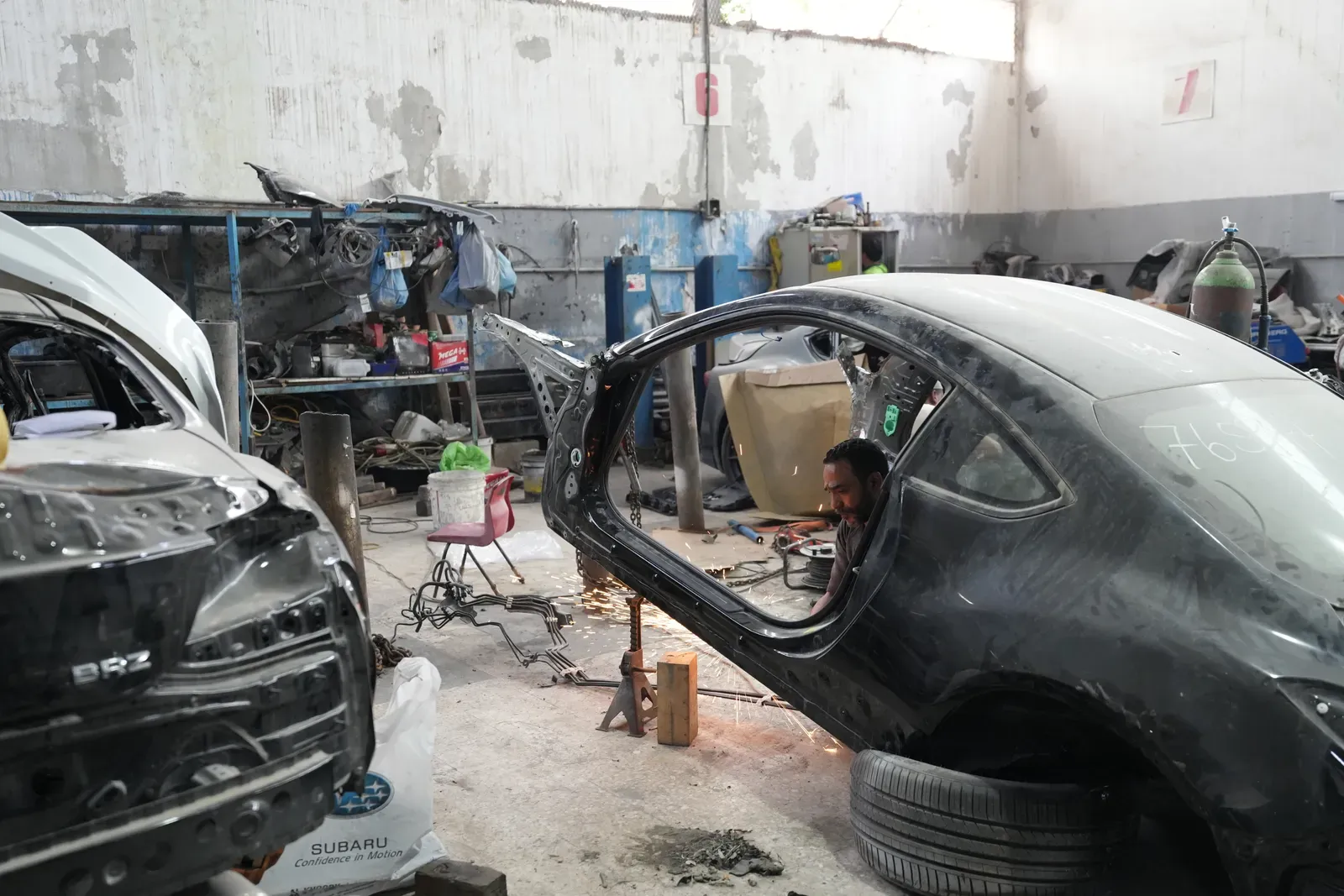
A body shell on axle stands with a technician working inside it.

Every one of these is found on a lift in this building, and priced before it is touched.

The work this usually turns into

And everything else, on the same car

The list above is what this make usually arrives needing. This is the rest of what the workshop does, and it applies to your car as much as to any other — worth knowing while it is already here.

Questions we get asked about these

The oil pressure light came on for a moment and then went out. Can I keep driving it?

On the Ingenium diesel we would rather you did not, and that is not a sales line. The oil pump on that engine is driven by a belt that runs inside the engine in the oil, and as it ages it sheds material that collects on the oil pick-up. The first sign of that is exactly what you describe: pressure that drops at idle and recovers with revs. It is cheap to check pressure directly against what the sensor is reporting and to look at the oil for debris, and it is very expensive to find out by carrying on. If your car is the petrol version the same warning still gets checked properly rather than treated as a faulty sensor.

My XJ sits low on one side in the morning and comes up when I start it. Does it need new struts?

Maybe, and maybe it needs a fitting and a length of pipe. A car that sinks overnight and levels itself when started is leaking air slowly, and on these saloons the leak is often at a push-fit connector, along a nylon line, or at the top of the strut rather than in the strut body itself. We read what the suspension module recorded for each corner, leave the car standing and read it again, then pressurise the system and find the leak physically. The reason for doing it in that order is that the compressor is the part that eventually dies of a leak nobody found, so replacing a corner without testing the pipework can leave you with a new part and the same car, and a burnt compressor later.

The screen keeps rebooting. Is the infotainment unit finished?

Not necessarily, and it is the assumption that costs the most on this make. The screen is one module on a network, and it behaves like this when the supply sags, when an earth is poor, or when another module on the same bus stops answering and drags the conversation down with it. So we scan every module, read the communication entries and look at whether the faults all carry the same timestamp, then check voltage at the unit and the state of the battery and charging system. If it does turn out to be the unit, we will also tell you honestly whether a replacement can be programmed outside the franchise, because on some of these it cannot.

The battery keeps going flat when the car stands for a couple of days. What do you actually do about that?

We lock the car and leave it until the network has genuinely gone to sleep, then measure what the car is still drawing and compare that with what it should settle to. If it is high, fuses come out in order and the figure is watched until the circuit and then the module responsible is named — very often something in the keyless entry or body side keeping itself awake. It is a slow job by nature, and that is the honest version of it: the fast version is selling you a battery, which works until the following weekend.

Do you work on Jaguars the same way you work on Land Rovers, since they share engines?

Some engines are shared and some faults genuinely are the same job. But the cars are not interchangeable and we do not treat them as though they were. A Jaguar saloon and a large four-wheel drive put entirely different loads through their suspension, carry different body electronics, and arrive with different complaints. The useful answer for you is not which badge is on it, but which engine and which platform your car has — that is the first thing we establish, and it decides what gets tested first. We will tell you when your car shares a known fault with another model, and we will tell you when it does not, rather than applying a story that belongs to a different vehicle.

Bring it in and we will find out

Nothing happens to the car until the fault has a name and you have approved the work against it.

Book WhatsApp us Call