
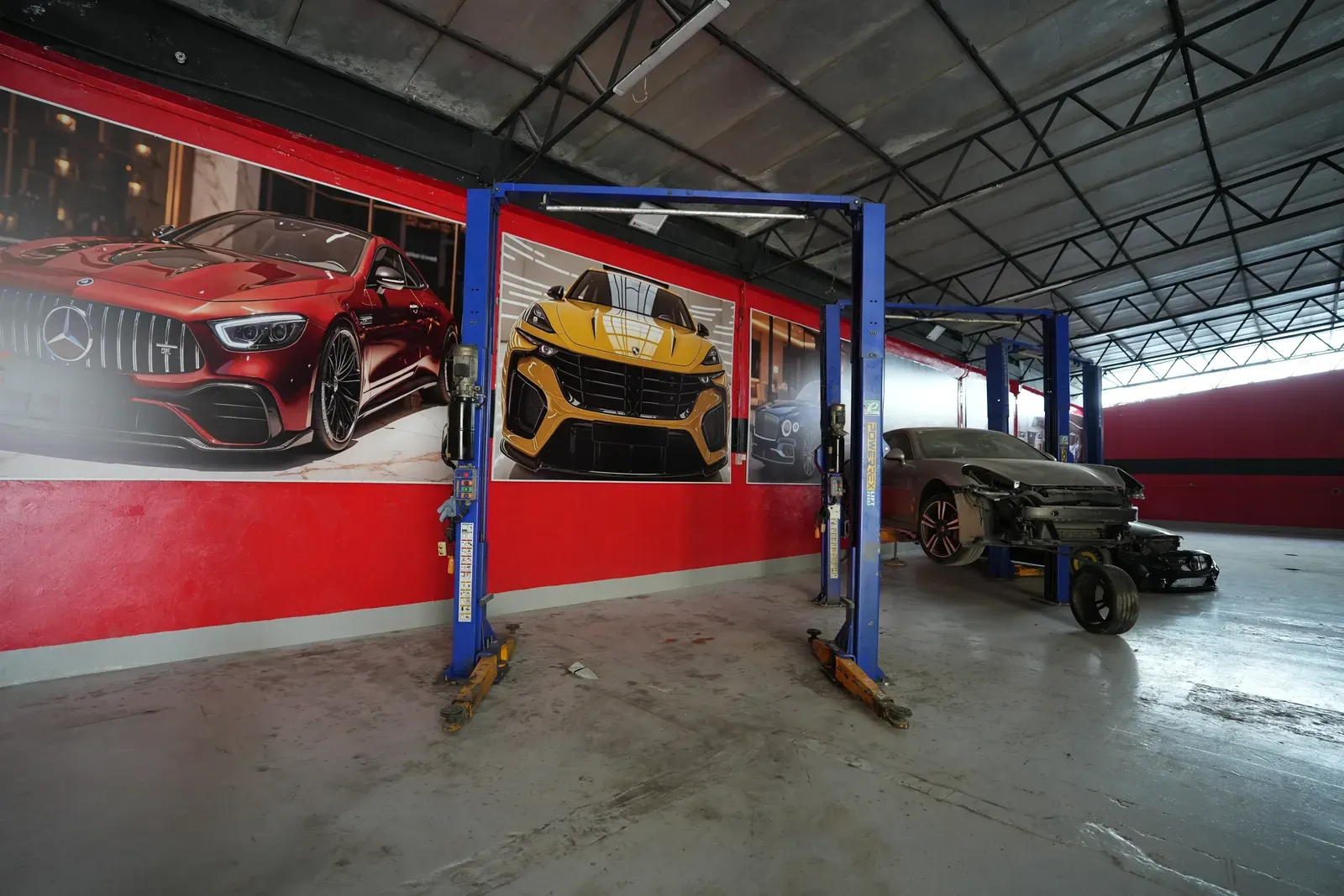
Major service
A major service is a minor service plus the items your car only needs occasionally. Some parts in a car are replaced every time the oil is — the oil filter — and others are designed to last several times longer: the air filter, the spark plugs, the fuel filter, the brake fluid, the coolant, the gearbox oil. A major service is the appointment at which those longer-interval items come due together, which is why it takes longer and costs more. That is the entire difference, and it is a list rather than a price: everything below is in a major service and is not in a minor one.
Start here
- 1Describe what the car is doing, in your words
- 2We investigate it and send you the findings and the price
- 3You approve each line before anything is done
1
Sounds like your car?
Find the line closest to what your car is doing. You do not need the name of the job — the symptom is carried into the booking form with it, and every line below starts at the same place: what we check, and how the work is done.
- 1 The car is due its big service
- 2 The engine feels flat and the fuel consumption has gone up
- 3 It hesitates or shudders when I accelerate
- 4 The air from the vents smells
- 5 I have owned it a while and never had the plugs or brake fluid done
- 6 The agency quoted me for a major service and I want a second price
- 7 I do not know whether I need the minor or the major one
- 8 I am about to sell the car and want it fully up to date
- 9 It is going on a long trip and I want everything done at once
2
What is included
- 2.1Everything in the minor service: engine oil and oil filter to specification, every fluid checked, tyres, lights, battery and charging, belts and hoses, and a leak check on the lift
- 2.2Air filter replaced as a matter of course rather than inspected, because in this climate it is the filter that fills first
- 2.3Cabin filter replaced, which is what an air conditioning system smelling of damp is usually asking for
- 2.4Spark plugs replaced on a petrol engine at the interval your manufacturer sets for the type fitted to your car
- 2.5Fuel filter replaced where your manufacturer lists it as a serviceable item — on many modern cars it is inside the tank and is not, and we will tell you which yours is
- 2.6Brake fluid tested for moisture content and boiling point, and renewed where the test or the schedule calls for it
- 2.7Coolant condition and freeze/boil protection tested, and renewed where it is due
- 2.8Automatic transmission fluid checked, and serviced where your maker schedules it rather than because it is on an upsell list
- 2.9All four wheels taken off for a proper brake inspection — inner and outer pad separately, disc condition, and caliper slide pins cleaned and greased
- 2.10Suspension and steering joints, bushes, boots and driveshaft gaiters checked by hand with the weight off the wheels
- 2.11Underbody, exhaust mountings and heat shields inspected while the car is fully up
- 2.12A longer road test afterwards, and every finding written down and marked needs doing now, watch it, or fine
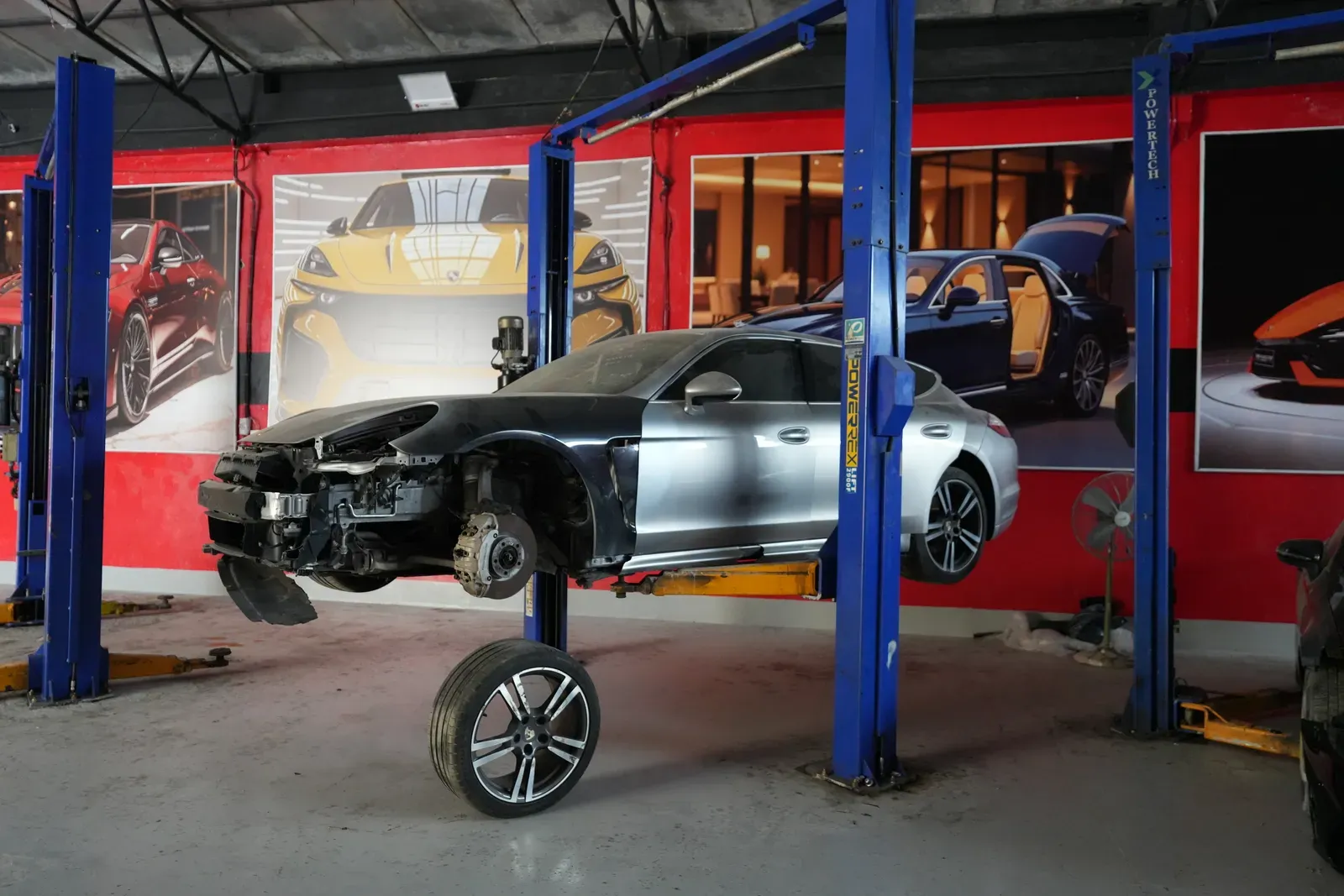
This work is done in this workshop, and nothing on your car is touched until you know what we found and what it costs.
3
What happens
-
3.1
We confirm you are actually due one
Tell us the model, year and odometer, and what was done at the last service if you know. A major is defined by your manufacturer’s schedule for your exact engine, so we read it. If your car is not due one, we will say so and book you a minor instead. A workshop that sells everybody the larger service is not reading anything.
-
3.2
Longer-interval items are tested where they can be
Not everything on the list is replaced blind. Brake fluid is tested for moisture content and boiling point, and coolant is tested for its protection, because both can be measured and there is no reason to change a fluid that tests good — or to leave one that tests bad simply because the mileage says it is early. Where the manufacturer schedule sets a fixed interval regardless, we follow the schedule and tell you that is why.
-
3.3
Wheels off, which is what makes it a real inspection
On a major service all four wheels come off. Brakes cannot be judged through a wheel gap — the inner pad is usually the one that wears first and is the one nobody can see — and with the wheels off the suspension joints, the boots and the driveshaft gaiters can be checked by hand with the weight off them. This is where problems get found a year before they become a breakdown, and it is the part of a major service that is hardest to see on an invoice and easiest to skip.
-
3.4
Repairs are still yours to approve, line by line
A major service is a service, not permission to repair the car. Everything on the list above is the service. Anything the inspection finds beyond it — a worn pad, a leaking shock absorber, a perished bush — comes back to you as a finding, a reason and a price, and you approve or decline each one on its own. We will also tell you what is safe to leave until next time, because most of it is.
4
Common questions
What exactly is in a major service that is not in a minor?
Air filter and cabin filter replaced instead of inspected; spark plugs on a petrol engine; the fuel filter where your maker lists it as serviceable; brake fluid tested and renewed where it is due; coolant tested and renewed where it is due; automatic transmission fluid checked and serviced where the schedule calls for it; all four wheels off for a proper brake inspection with the caliper slide pins cleaned and greased; suspension and steering joints, bushes and gaiters checked by hand with the weight off the wheels; the underbody and exhaust mountings inspected; and a longer road test. Everything in the minor service is in the major service as well — the oil, the filter, the fluid checks, the tyres, the battery, the lights and the leak check.
How do I know if I am due a major or a minor?
Your car’s own schedule decides it, and it is set by engine and by model rather than by a general rule, so we read it for your car instead of quoting one number at everybody. In practice the minor is the interval that repeats, and the major falls on the longer cycle where the plugs, filters and fluids come due together. Give us the model, year and odometer when you book and we will tell you which one you are actually due — including when the answer is the cheaper one.
Do I have to change the brake fluid and coolant if the car seems fine?
Both are tested rather than guessed at, and the results are shown to you. Brake fluid matters because it absorbs water from the air, and water boils long before brake fluid does — a DOT 4 fluid leaves the factory boiling around 230 °C and is considered wet at 155 °C. That is why a pedal can feel perfect in traffic and go soft after a long descent. Coolant matters because it stops corroding the inside of your engine long before it stops being a liquid. Neither one gives you a warning in the way a worn brake pad does, which is exactly why they are on a schedule.
Is a major service here the same as at the agency?
We work from the same manufacturer schedule, and the list of items above is what we do. Where workshops differ is in which brand of part goes on and in whether the inspection is genuinely done with the wheels off — so ask any workshop those two questions, including us. Our invoice names every part and fluid fitted, with its specification, and the findings come back to you in writing whether or not you have any repair done. Whether servicing outside the agency affects a manufacturer warranty is a matter of your contract with them, not something we will interpret for you.
Related services
Work that is often quoted alongside this, each with its own page.
- Minor service The short-interval service: oil, filter, fluids and a full check. The one you have most often.
- Car servicing Oil, filters and fluids, plus an inspection that tells you what is coming.
- Brake repair Pads, discs, calipers and fluid — what is actually worn, priced before it is replaced.
- Suspension and steering Shock absorbers, arms, bushes, joints and steering — found by hand on a lift, not by guesswork.