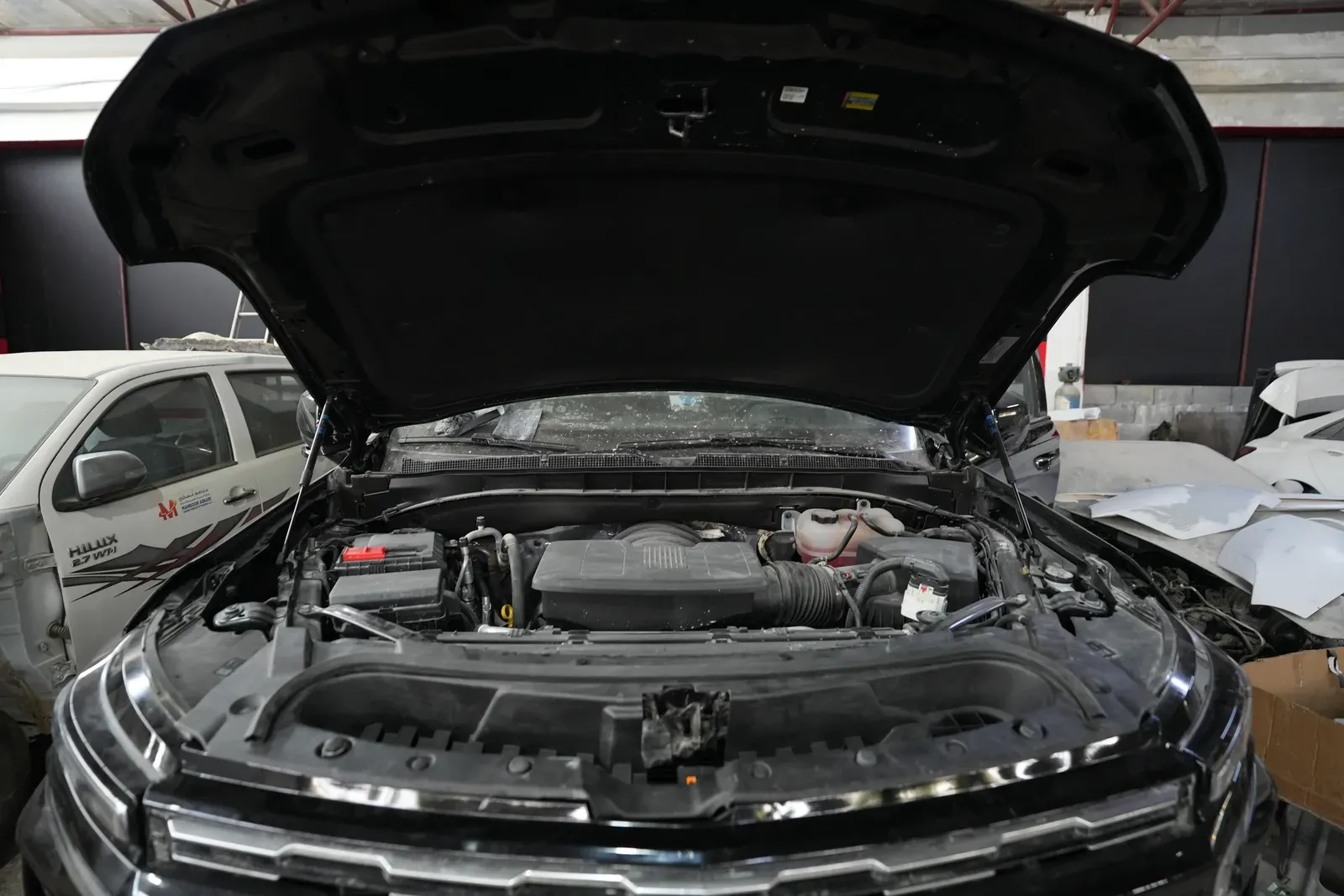
An engine bay open on the workshop floor, photographed close.

BMW repair and servicing in Sharjah

A BMW tells you less than it knows. The service interval is computed, the battery is monitored, and half the faults that reach us arrive as a message on the dash rather than as a noise. We start by establishing which engine is in the car — an N47 diesel and an N20 petrol do not fail in the same place, or even at the same end of the block — and work from there.

Why we see these

BMW is one of the most common German cars on a Sharjah forecourt, and most of the ones that reach us are past the dealer warranty and with their second or third owner. That changes the work. A car inside warranty goes back to the dealer with a message on the screen; a car outside it arrives here with the message, a noise, and a previous repair somebody else did without telling the car about it. The diesels are the other half of the picture. GCC-specification BMWs sold new here are overwhelmingly petrol, so an N47 or N57 in Sharjah has usually come in as a used import, often with a timing chain history nobody wrote down.

What this make asks of a workshop

  • Diagnostic access that does more than read fault memory. After a part changes, these cars expect an adaptation, a reset or a registration written back into the module that owns it, and a scanner that only lists codes leaves the job half done.
  • Battery registration, every time. The car charges to a profile it holds in memory and that profile ages with the battery, so a new one has to be registered, and coded if the type changed between lead-acid and AGM.
  • Servicing to the CBS counters rather than to a sticker. Condition Based Servicing keeps separate counters for engine oil, front and rear brake pads, brake fluid, the micro-filter, the spark plugs and the annual vehicle check, and each is reset on its own. Reset the wrong one and the record carried by the car is wrong from that day on.
  • Oil to the approval the engine was built around — BMW Longlife-04, Longlife-01 or one of the later Longlife specifications depending on the engine and its exhaust after-treatment — not a viscosity taken off a shelf.
  • A bay and a gearbox jack for the jobs BMW hid at the back of the engine. The N47 chain is not a morning’s work, the car occupies a ramp while it is done, and that belongs in the estimate rather than in a phone call on day three.
  • The correct gasket set and the single-use bolts that go with it. Several of these engines use stretch bolts that are not reused, and a cam cover or an oil filter housing put back on old bolts and an old seal is leaking again inside the year.

What actually comes in

Named at component level, with what the driver notices first and what we do to establish it is that and not something else that feels identical from the driving seat.

Timing chain and guides at the gearbox end — N47 and N57 diesel

A rattle from the back of the engine on a cold start that settles after a few seconds, sometimes with a whine from behind the flywheel and a warning that the engine is running rough.

How we establish it

We listen at the bulkhead end of the block rather than the front, because BMW put the chain on these engines between the engine and the gearbox. Camshaft position plausibility codes and the timing values in live data tell us how far the chain has already moved. We also say plainly, before you agree to anything, that reaching it means the engine or the gearbox comes out — that is not a thing to discover halfway through a job.

Timing chain guides and tensioner at the front — N20 and N26 four-cylinder petrol

A short rattle from the front of the engine on start-up, later a rough idle, a misfire warning or a chain-related message, on the 2.0 turbo petrol four.

How we establish it

Different engine, different end of the block: on the N20 and N26 the chain is at the front, and the plastic guides and the tensioner are the parts that go rather than the chain itself first. We read the camshaft correlation values against crank position, check whether the revised guide and tensioner parts were ever fitted, and look at the oil and its service history, because these guides are not kind to an engine that has been run long on tired oil.

Electric water pump, plastic thermostat housing and expansion tank — N52, N54, N55 and N20

Temperature climbing in traffic, the cooling fan running hard after the engine is switched off, a sweet coolant smell, or the car dropping into reduced power on the way home.

How we establish it

The pump on these engines is electric and driven by a module, so it can stop while the belt turns perfectly normally and nothing looks wrong under the bonnet. We command it from the diagnostic side and watch its current draw and the coolant temperature respond, and we pressure-test the system cold to find which plastic seam is weeping. These are heat-cycle parts, and a car that sits in Sharjah traffic in August cycles them a great deal harder than the interval assumes.

Valve cover gasket and oil filter housing gasket, including the seal between the housing and its oil cooler

A burning smell after parking, oil drops on the floor of the garage, and in the worst version a brown emulsion under the expansion tank cap or on the dipstick.

How we establish it

We clean the area, run the engine and find where the oil is actually coming from rather than replacing the nearest gasket to the stain, because oil leaving a cam cover runs down and lands somewhere that blames another part. Where there is any sign of oil in the coolant we go straight to the seal between the oil filter housing and its cooler: on these engines that gasket is the one boundary where pressurised oil sits against coolant, and when it fails it contaminates both sides. That is not automatically a head gasket, which is what it usually gets called.

VANOS solenoids and seals, and the Valvetronic eccentric shaft sensor

Rough idle, a flat spot just off idle, a stall pulling away from a junction, or the car limiting itself to reduced power with a warning triangle.

How we establish it

A camshaft position or Valvetronic plausibility code names a circuit and a failed check, not a part. We test the solenoid circuit for supply, ground and signal, and compare commanded cam position with actual in live data while the engine is hot. On the eccentric shaft sensor we check the connector and the loom behind it for oil, which tracks up from a leaking sensor gasket and corrupts the signal — that fault is routinely sold as a failed sensor when what is failing is a contaminated plug.

High pressure fuel pump and direct injectors — N54 and N55

Long cranking before it catches, a shudder for the first minute, a misfire warning that comes and goes, or a sudden loss of power on a hot afternoon.

How we establish it

We watch rail pressure — requested against actual — while the fault is happening rather than after it has cleared, and we read the injector correction values cylinder by cylinder. That is what separates a tired high pressure pump from one injector, and it is what stops a set of six being sold on the strength of a single misfire code.

Charge pipe, wastegate linkage and turbo oil feed and return lines — N54 and N55

A sudden loss of boost with a bang or a hiss and no power at all afterwards, a rattle at idle and just off idle, or blue smoke behind the car.

How we establish it

The plastic charge pipe on these engines splits at the coupler and the car goes into reduced power immediately; that one is found by eye and confirmed with a boost leak test. The rattle at idle on an N54 is usually wear in the wastegate arms, so we listen with the engine hot and compare actual boost against requested. Oil feed and return lines coke up in heat and get checked whenever a turbo has failed, because bolting a new turbo to a restricted feed line kills the new one too.

Battery, the IBS sensor on the negative terminal, and registration after replacement

Slow cranking after the car has stood a day or two, comfort functions switching themselves off, warnings appearing in groups, or a battery fitted a few months ago that is already flat.

How we establish it

We test the battery and the charging strategy, and we check the IBS on the negative post, because that sensor is what reports the battery’s state to the car and a corroded or disturbed one makes a healthy battery read as dead. A new battery has to be registered, and coded if the type changed between lead-acid and AGM, or the car keeps charging to the old battery’s worn profile and the new one is finished early. That single omission is the most common reason a cheaply fitted BMW battery lasts one summer.

Front control arm and thrust arm bushes, and rear subframe bushes

The steering wheel shaking under braking from speed, a knock from the front over joints in the road, or the back of the car feeling loose and late as you turn in.

How we establish it

A shake under braking sends most cars straight to the brake discs. On these it is very often the front arm bushes instead, and replacing discs first is how an owner pays twice. The car goes on a lift and each arm is levered under load, front bush and rear bush separately, before anything is quoted. If it does turn out to be the discs we say that rather than selling arms.

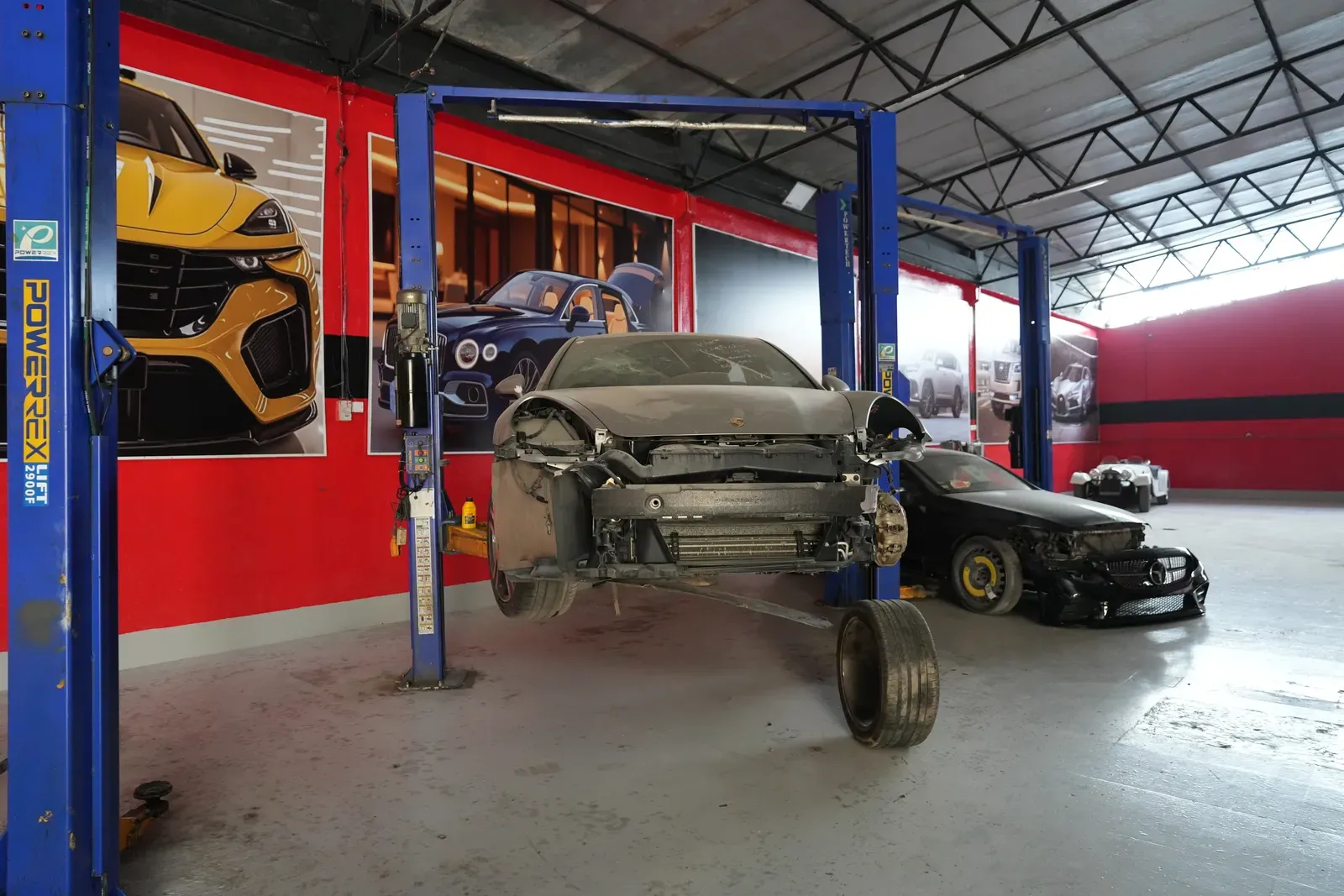
A car on a two-post lift with its front end stripped.

Every one of these is found on a lift in this building, and priced before it is touched.

The work this usually turns into

And everything else, on the same car

The list above is what this make usually arrives needing. This is the rest of what the workshop does, and it applies to your car as much as to any other — worth knowing while it is already here.

Questions we get asked about these

Why does a new battery have to be registered?

Because the car charges the battery to a profile it holds in memory, and that profile ages deliberately as the battery ages. Fit a new one without telling the car and it carries on charging as though the old, tired battery were still there, which is hard on a new battery and shortens its life. If the type changed, from lead-acid to AGM or the other way, that has to be coded as well. It takes minutes, and it is most of the difference between a battery that lasts and one that is flat next summer.

The car says the service is not due, but it has been a year. Which is right?

Condition Based Servicing works each interval out from how the car has actually been driven, and it counts engine oil, front pads, rear pads, brake fluid, the cabin micro-filter, the spark plugs and the annual vehicle check on separate counters. Some of those are time-based whatever the distance, so a car doing short trips can genuinely be due on the calendar while the oil counter still shows plenty left. We read the counters and tell you what each one says, rather than arguing with the car or ignoring it.

There is a rattle for a few seconds on a cold start. Is that the timing chain?

It might be, and which engine you have decides how worried to be. On the N47 and N57 diesels the chain runs at the gearbox end of the engine and a rattle there is taken seriously, because the failure is expensive and the access is not casual. On the N20 and N26 petrol fours the guides and the tensioner are the known wear items, at the front. On several other BMW engines that same few seconds is oil draining back overnight or a VANOS unit, and nothing to do with a chain. We establish the engine, listen at the correct end of it, and read the camshaft correlation values before anybody uses the word.

Do you have BMW’s own dealer software?

We are careful with this question, because it is where workshops say things they cannot stand behind. We will not describe ourselves as a BMW centre: nobody appointed us, and the line at the bottom of this page says so. What matters to your car is whether the work includes the adaptations, resets and registrations it expects after a part changes, and whether a circuit gets tested rather than a code read off it. Ask us about the specific job on your car and you will get a straight answer, including “that one has to go to the franchise” where it does — a module that must be programmed against a locked system is a real limit, and we would rather name it in advance than run into it with your car in pieces.

There is brown sludge under the coolant cap. Is the head gasket gone?

Not necessarily, and on a BMW that is the assumption that costs people money. The first thing to check on these engines is the gasket between the oil filter housing and its oil cooler, because that is the boundary where pressurised oil sits against coolant, and when it fails it emulsifies both. A head gasket and a filter housing gasket produce a similar-looking mess and are told apart by a cooling system pressure test, by where the contamination shows up, and by what the combustion gases in the coolant say. We establish which before anything is stripped.

Bring it in and we will find out

Nothing happens to the car until the fault has a name and you have approved the work against it.

Book WhatsApp us Call