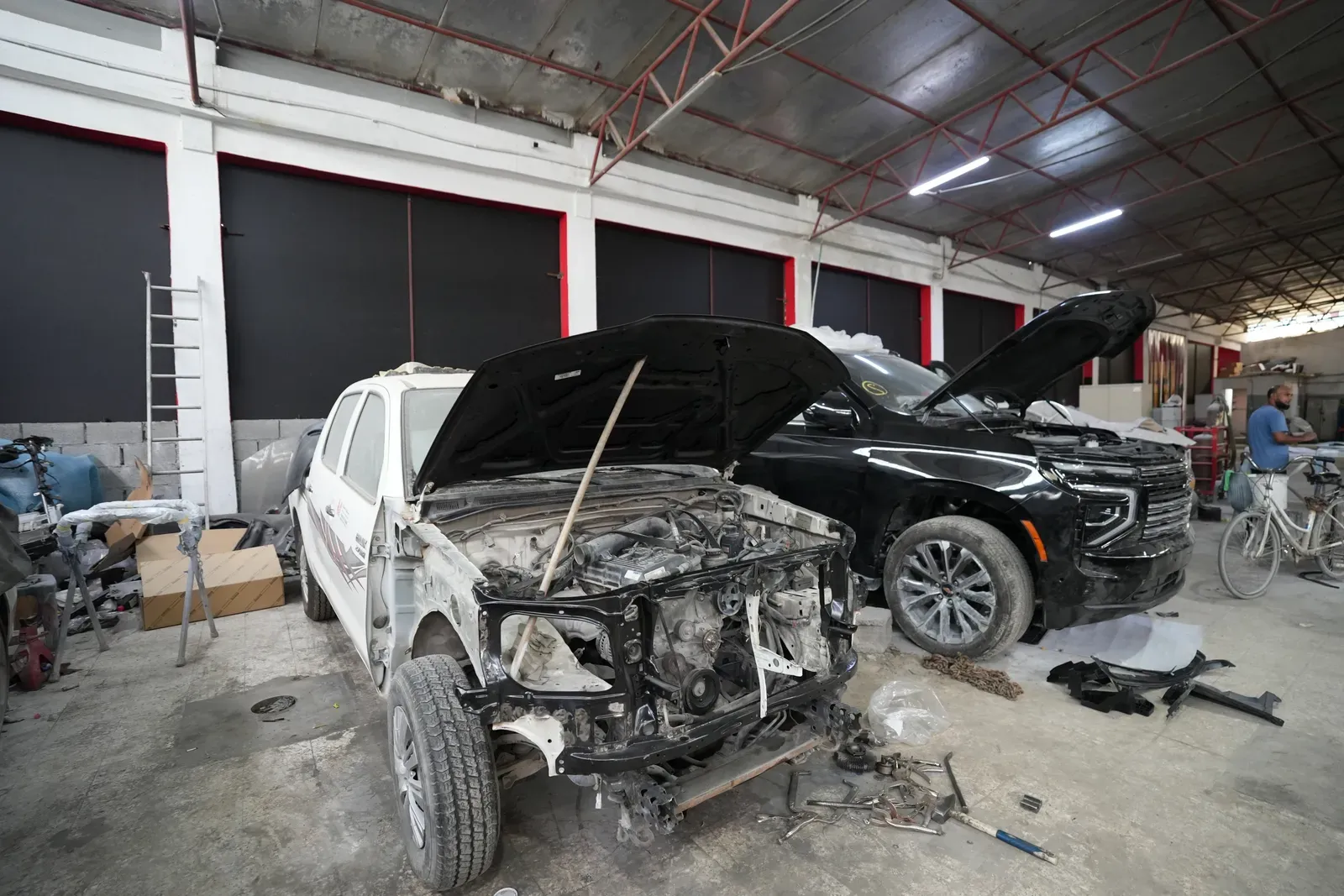
A coupe shell on axle stands with a technician working inside it.

Land Rover and Range Rover repair in Sharjah

Most of what brings these cars in is one of three things: air suspension that will not hold the car up, a supercharged V8 losing coolant where nobody can see it, and a tired battery setting off warnings that have nothing to do with a battery. Each of those has a test that settles it, and the test comes before the part.

Why we see these

A Range Rover is not a rare car here. It is a school run, a weekend up Jebel Jais, and a car that spends most of the year standing in the sun — and that last part is what separates a Sharjah car from the same model in England. Air springs are rubber, and rubber that sits at surface temperatures a European car never reaches goes hard and then splits at the fold it has been rolling on. A battery that would see out five winters somewhere cooler does a fraction of that here, and on this make a weak battery does not fail quietly: it produces a screenful of faults across systems that are all perfectly healthy. So a five-year-old Range Rover in Sharjah is a different car from a five-year-old one in England, and the list of what to look at first is different too.

What this make asks of a workshop

  • A diagnostic tool that reaches the suspension module, not only the engine. Reading the four corner heights live, commanding a corner up and down, and recalibrating the heights after a sensor or an arm is changed is most of the work on this car, and a generic code reader sees none of it.
  • A safe way to hold the car up with the air out of it. These are lifted from the chassis points with the suspension put into the right mode first — a car raised while the system is still trying to level itself fights the lift and damages its own linkage.
  • Mains voltage support on the car through any long session with the modules awake. Land Rover electronics log faults when the supply sags, and a fault stored because the battery went flat on the ramp is a fault somebody pays to chase later.
  • A parts channel that will name what is in the box. Air springs, compressors and valve blocks are sold here at every quality level, and a cheap air spring on a car that stands outside in July is a second visit rather than a repair.
  • Time set aside before anything is undone. A dashboard showing suspension, stability, hill descent and park brake warnings together is usually one fault with four names, and working out which one is the parent takes an hour of reading before a spanner is any use.

What actually comes in

Named at component level, with what the driver notices first and what we do to establish it is that and not something else that feels identical from the driving seat.

Air springs — the rubber bags at each corner

The car was sitting on the floor on one side in the morning, then lifted itself again once it was started.

How we establish it

The car is raised and held while the bag, its top and bottom seals and the pipe union are wetted with a soap solution to find where the air is escaping. The four corner heights are read live from the suspension module and watched over a period with the car shut down, so a leak that only shows after an hour is not missed. A bag that has split at the rolling fold usually gives itself up when the rubber is rolled back by hand.

Air suspension compressor and its dryer (Hitachi or AMK, depending on the model)

Suspension Fault on the screen, the car is slow to rise, and the compressor can be heard running for a long time.

How we establish it

Before a compressor is condemned the system is checked for the leak that made it run in the first place, because a compressor on this car mostly dies of overwork. We watch the rate at which reservoir pressure climbs, read the compressor run time and any thermal cut-out entries held in the module, and only then decide whether it is the pump, the piston seal or a saturated dryer. Fitting a compressor to a car with a leaking bag buys another failed compressor.

Valve block and the ride-height sensors

It sat down evenly on all four corners overnight, or one corner stays high and the car says it cannot reach access height.

How we establish it

A corner that leaks and a valve that passes look identical from the driveway; they are separated by isolating the corner and watching whether pressure holds on that side of the valve. The four height sensors are read live and compared against how the car is actually standing, because a sensor whose link arm has broken or whose value has drifted makes the car level itself to a number that is wrong rather than to the ground it is on.

Supercharger drive isolator and nose drive on the 5.0 V8 (AJ133)

A metallic chatter or rattle from the top of the engine at idle, sometimes loudest as the engine is switched off.

How we establish it

The belt comes off so the supercharger can be turned and listened to on its own, which separates it from the tensioner, the idlers and the accessories that make a very similar noise. The rubber isolator coupler between the drive and the rotor pack is checked by hand for rotational free play, since that free play is what grows before the drive itself is damaged.

Coolant crossover pipe and the charge-cooler circuit on the supercharged V8

The coolant level keeps dropping, there is a sweet smell after a drive, and there is never anything on the floor under the car.

How we establish it

This engine runs two separate coolant circuits, and a leak on the charge-cooler side does not show on a pressure test of the main one, so both are pressurised separately. The pipework in the valley under the supercharger and the thermostat housing are where it usually comes from, and both are hidden, which is why the level falls with nothing to see. Where the car also loses power on a hot afternoon, charge-air temperature is watched in live data and the charge-cooler pump is checked for whether it is actually running.

Timing chain tensioners and guides on the earlier V8s

A rattle for a second or two from cold, then nothing for the rest of the day.

How we establish it

The noise is listened for on a genuinely cold engine, before the car has been started for any other reason, because the second start of the day hides it. Camshaft to crankshaft correlation is read in live data and any correlation faults stored are pulled. Oil condition and level are part of this test rather than a separate item: a chain tensioner is a hydraulic part and it is fed by whatever oil the last workshop put in.

Battery, charging and parasitic drain

Half the dashboard lit up at once — suspension, stability, hill descent, park brake — and all of it went away after a jump start.

How we establish it

The battery is load-tested and the charging output checked before anything else, because on this make a supply that sags sets off warnings in every module that was mid-conversation. Then the car is left to go properly to sleep, which takes time and cannot be hurried, and the standing drain is measured and traced circuit by circuit. If a battery was fitted recently we check whether it was registered to the energy management, since an unregistered one is charged on the old profile and wears out early.

Sequential turbocharger actuator and the bottom end on the 3.0 diesel

Restricted Performance on the screen and no power above light throttle, or a knock from low down in the engine.

How we establish it

Commanded against actual actuator position is read in live data before any turbo is touched, since a seized actuator and a failed turbocharger put the same message on the screen. Where there is a knock, oil pressure and the condition of the oil and its pickup come first — a bottom-end failure on this engine is often an oil-supply failure wearing a crankshaft label. Diesel versions are a small part of what we see in this country, and we would rather say that than recite a European fault list at your car.

Transfer box range-change actuator

Transfer Box Fault on the screen, or it will not go into low range and there is a clunk when pulling away.

How we establish it

The actuator motor is commanded through its range while its position feedback is watched, which shows whether the motor is not moving or the box is not letting it. Tyres are looked at in the same visit: four tyres the same size on paper but different in wear or in brand make a permanent four-wheel-drive system fight itself, and that puts the same message on the screen with nothing broken.

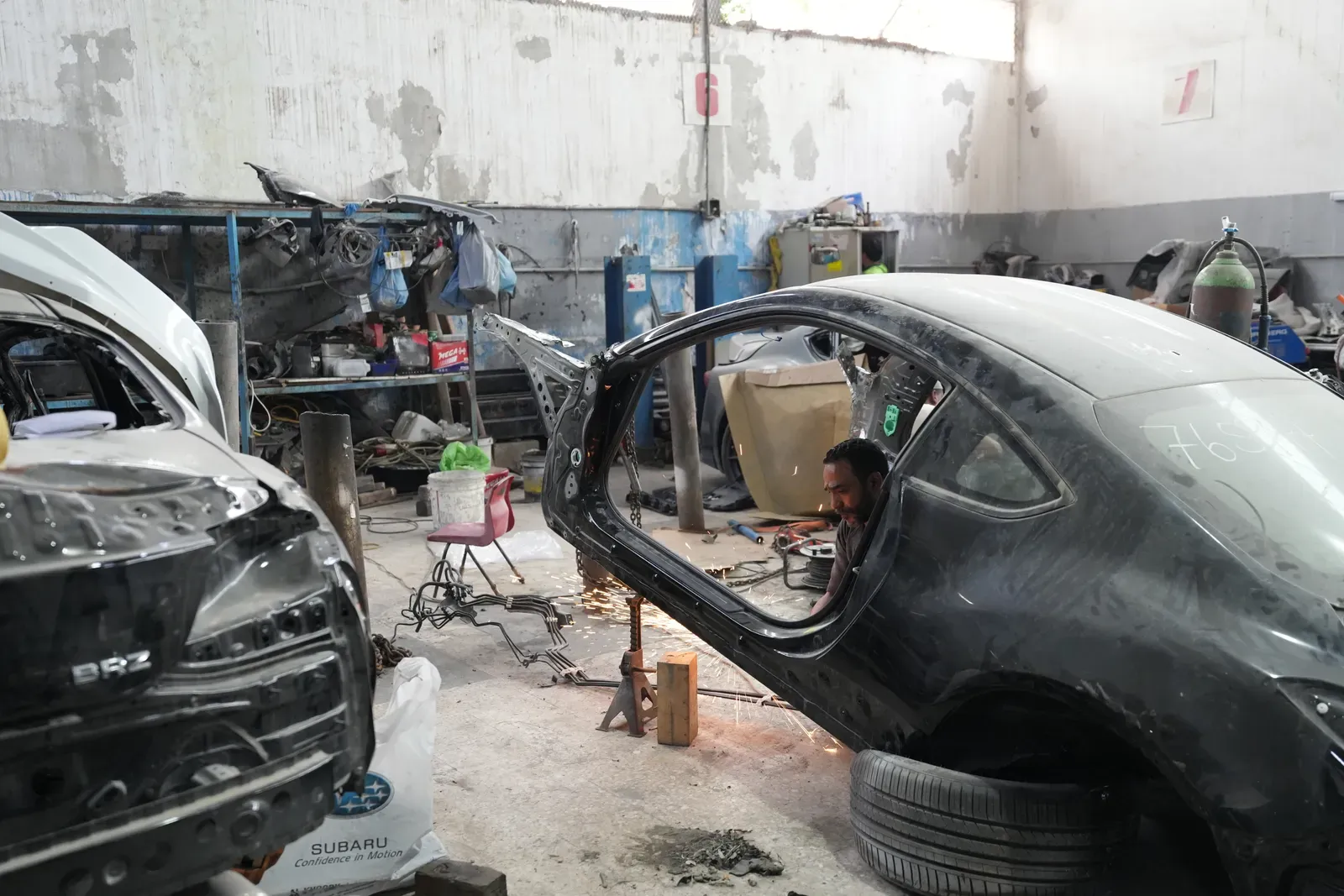
A row of cars with bonnets open in the workshop bay.

Every one of these is found on a lift in this building, and priced before it is touched.

The work this usually turns into

And everything else, on the same car

The list above is what this make usually arrives needing. This is the rest of what the workshop does, and it applies to your car as much as to any other — worth knowing while it is already here.

Questions we get asked about these

The car sat down overnight. Is that the air springs or the compressor?

Usually the springs, and the pattern narrows it before anything is tested. One corner on the floor points at that corner. All four down evenly points more often at the valve block or the pipework than at a bag. A car that reaches the right height but takes a long time getting there, with the compressor audible for most of it, has been leaking for months and has worn its compressor out doing the work. We still test rather than guess, but that is the order we test in.

Should I convert it to coil springs?

It can be done and some owners here do it. It is a different car afterwards: load levelling goes, access height goes, the raised off-road heights go, and the modules still have to be dealt with so the car stops asking for a system that is no longer fitted. We will price both sides honestly, including what putting the air system right would actually cost, and we will not present the conversion as a repair of the original.

Does low mileage mean much if the car has been parked outside?

On this make, less than people expect. Air springs, coolant hoses, the plastic in the cooling system and the battery age by heat and time rather than by distance. A car that has done a short school run through five Sharjah summers and one that has done long motorway kilometres in a cooler country can read the same on the odometer and be in very different condition at every piece of rubber on them.

Can you just clear the Suspension Fault message?

The message can be cleared in a minute and it will come back, often before you are home, because the module logged it for a reason that is still there. We do clear codes as part of testing, to see what returns and how quickly, which is useful information. We will not hand the car back with a cleared message and call that the repair.

Is the DPF and EGR advice I read online relevant to my car?

Probably not. Most of what is written about Land Rover diesels comes from Europe, where the diesel versions are the ordinary ones. Here the cars in front of us are overwhelmingly petrol, and importing a European fault list onto a UAE car is how a petrol V8 ends up quoted for parts it does not have. Tell us what the car is doing and we will work from that.

Bring it in and we will find out

Nothing happens to the car until the fault has a name and you have approved the work against it.

Book WhatsApp us Call