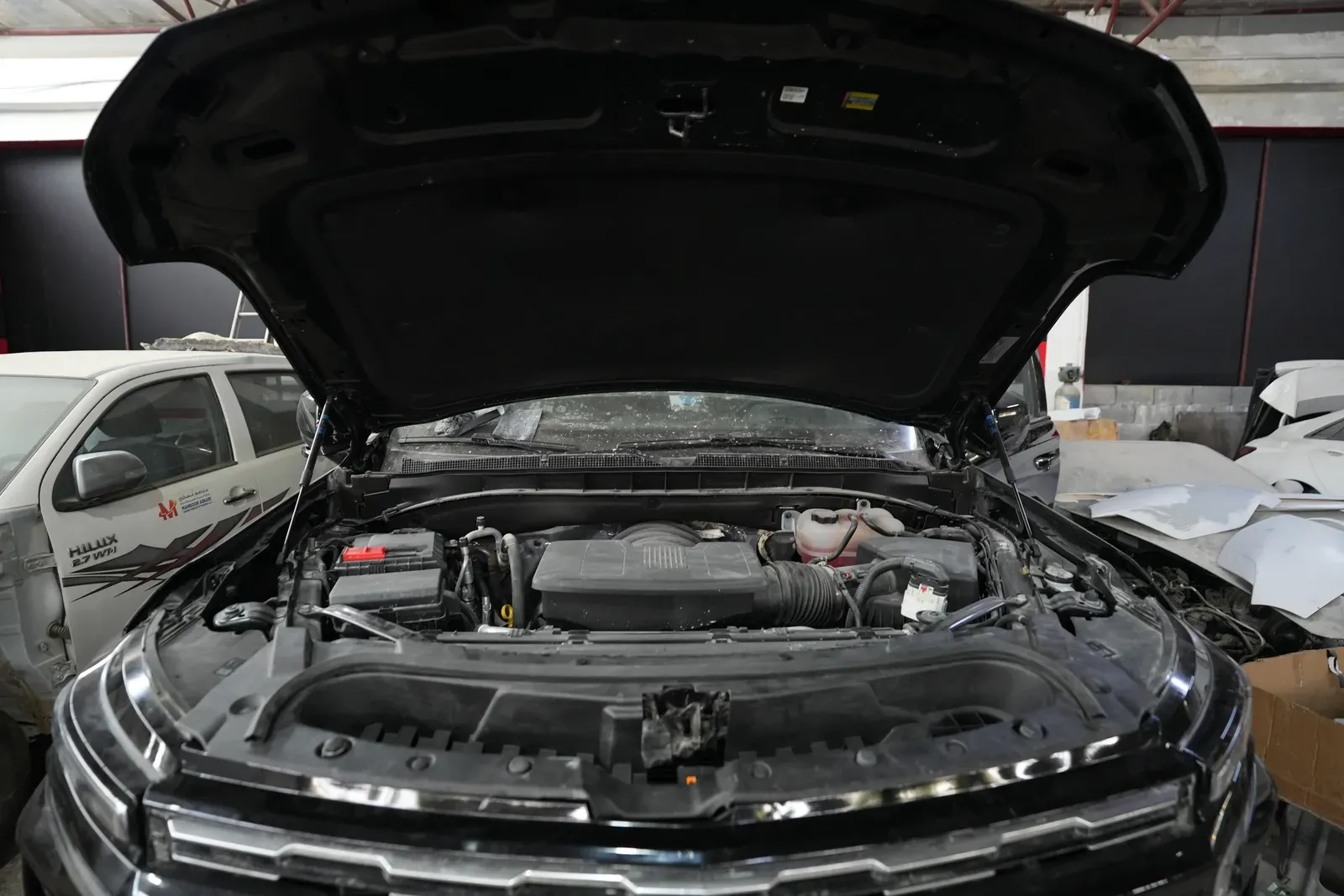
An engine bay open on the workshop floor, photographed close.

Haval servicing and repair in Sharjah

Two different vehicles wear this name. A Jolion or an H6 is a front-drive family crossover driving through GWM’s own seven-speed wet dual clutch, the 7DCT450. An H9 is a ladder-frame four-wheel drive with a solid rear axle, a transfer case and a ZF eight-speed automatic — a desert vehicle with a desert vehicle’s failures. Nothing useful can be said about one from the other, and the first thing we do is stop talking about “a Haval”.

Why we see these

These sell here on equipment for the money, which means the cars that arrive are loaded with screens, cameras, driver-assistance sensors and powered everything at a price where a European car would have none of it. That shapes the work: a good share of what comes in is electronic rather than mechanical, and a good share of the mechanical work involves getting past the electronics to reach the part. The other thing that shapes it is that GWM builds its own gearbox rather than buying one, so the seven-speed dual clutch under a Jolion and under an H6 is the same unit and behaves the same way — useful, because knowledge of one car genuinely transfers to the other, which is not true across most of this hub. And the honest limit: these cars are new here. Long-term wear on them is not yet knowable, and a fault list for them should be short and evidenced rather than long and imagined.

What this make asks of a workshop

  • The model decided before anything else, because a Jolion, an H6 and an H9 share a name and not a driveline. One is transverse and front-driven through a dual clutch, one is longitudinal with a transfer case and a solid rear axle, and a ramp booking made for the wrong one wastes the customer’s day.
  • The 7DCT450 understood as a wet dual clutch with its own oil circuit and a torque rating it was designed around. The clutches run in oil that both lubricates and cools them, which means the advice written about dry dual clutches — including most of what an owner will find searching in English — describes a different machine.
  • Adaptation and calibration treated as the first move on a gearbox complaint rather than the last. On this unit a shunt at low speed is frequently a control question, and the manufacturer route for that is a transmission control unit update at the agency, which we will point at rather than pretend we can substitute for.
  • A lift and an underbody approach that suits a body-on-frame vehicle for the H9, because the transfer case, the propshafts, the rear axle and its links are all worked from beneath with the wheels hanging, and that is not the same job as a crossover on a two-post lift.
  • A parts answer with a lead time attached. Service and wear items for the Jolion and H6 are largely obtainable through the specialist Chinese-parts trade in the industrial areas here; gearbox internals, modules, cameras and body parts are an order, and how long that order takes should be said before the car is taken apart.
  • Driver-assistance calibration named as a requirement where the car asks for it. A windscreen, a front bumper or a suspension geometry change on a car with a forward camera and radar leaves those needing to be re-aimed, and an owner should be told that at the counter rather than discovering it when the lane warning misbehaves.

What actually comes in

Named at component level, with what the driver notices first and what we do to establish it is that and not something else that feels identical from the driving seat.

Clutch touch-point adaptation and the control unit calibration on the 7DCT450 (Jolion, H6)

A shunt or a shudder pulling away from rest, a pause before the car takes up drive at a junction, and a gearbox that is worse in the first ten minutes of the day than later.

How we establish it

A dual clutch is a manual gearbox that operates its own clutches, so this complaint is very often about where the actuator believes the clutch bites rather than about a clutch that is worn out. The adaptation and touch-point values are read and compared against the ends of their range, the learning routine is run, and the car is driven again — and where the values hold, the car is fixed without a part. Where they will not hold, or sit at the limit of travel, that is what we show you before anything is quoted. This is also the fault where the honest answer is sometimes not ours: the manufacturer route for early cases on this gearbox is a control unit software version at the agency, and if the car has not had that we will send you there first rather than sell a clutch pack.

Wet clutch oil temperature in crawling traffic, and the gearbox warning that follows it

A transmission message after twenty minutes of stop-start on the Sharjah–Dubai run, a car that will not take up drive smoothly while it is hot, and everything normal again the following morning.

How we establish it

In this gearbox the oil is the cooling system, so a heat warning is a question about oil flow, oil condition and the gearbox cooler before it is a question about clutch wear. We read gearbox oil temperature as live data through a deliberate crawl and afterwards, look at how long the car is being held on the clutch rather than the brake in that crawl, and inspect the cooler and its lines for restriction. Heat and wear get charged as the same thing by workshops that cannot separate them, and they are not the same bill. Where the answer turns out to be about how the car is driven in this traffic, we would rather say so than fit a clutch that August will cook again.

Wastegate actuator and boost control on the 1.5 turbo petrol (GW4B15)

It drops into a low-power state on a hill or a long overtake and recovers after it is switched off and started again, sometimes with the engine light on and sometimes with no light at all.

How we establish it

A limp-home event on a small turbocharged engine is almost always a boost deviation — the engine asked for a pressure and did not get it, or got more than it asked for — and there are several cheap causes and one expensive one. We compare requested and actual boost on live data on the road under real load, then pressure test the charge pipework as a circuit, then look at the wastegate actuator and its linkage for the sticking and the play that heat and dust produce on a car that is parked hot every day. The turbocharger itself is the last thing on that list, not the first, and it should never be the first thing quoted.

Transfer case and the rear differential lock on the H9’s four-wheel drive

A drive-mode selection that will not take, a four-wheel-drive or differential-lock warning that stays on, or a binding felt through the car on a tight turn on tarmac.

How we establish it

These systems refuse for a reason and the module normally knows the reason, so this begins with the stored codes and with watching the selection being made on live data rather than with the selector switch being condemned. From there the actuator on the transfer case and on the rear differential is tested, along with its wiring, because on a vehicle that goes into sand and gets washed afterwards the harness and the connector low on the axle are at least as likely as the mechanism. The oil in the transfer case and the rear axle is drained and looked at while the car is on the ramp for it, since water or sand in either tells you more about what is coming than any distance figure does.

Panhard rod and the link bushes on the H9’s solid rear axle

The back of the car steps sideways over a joint in the road or a bump taken at an angle, and there is a heavy clunk from behind at low speed over rough ground.

How we establish it

A live axle is located by its links and by one lateral rod, and when a bush in that rod goes the axle is free to move across the car — which is exactly what the driver feels as the back stepping out over a bump. The bushes are levered under load at both ends of the rod and at each trailing link with the axle supported, because a bush that looks intact standing still opens up when it is loaded. This is worth finding early on a heavy four-wheel drive: a loose axle chews tyres and loads everything else that locates it, and the rod on its own is a far smaller job than the set of links that follows if it is left.

Fluid and heat in the H9’s ZF eight-speed automatic under towing and sand load

It shudders on a light throttle, holds a gear longer than it used to, or changes harshly after a weekend towing or in the dunes.

How we establish it

This is a bought-in gearbox rather than one GWM builds, which has one practical consequence worth an owner knowing: it is a widely used unit, so the fluid specification and a good deal of the service side are obtainable outside the agency in a way that the dual-clutch gearboxes on the other models are not. The work is the same as on any torque-converter automatic worked hard in heat — scan for stored codes, drive it with line pressure and fluid temperature on the screen, and look at the fluid itself, because towing and sand are the two duties that cook it and neither appears on the odometer. Where a box is past the point where fresh fluid helps, we will say so instead of selling a service that buys a month.

Forward camera and radar aim after a windscreen, a front bumper or a geometry change

Lane keeping tugs at the wheel when it should not, the cruise control brakes for nothing, or a driver-assistance warning appears for the first time after a repair.

How we establish it

These cars carry the assistance package that made them good value, and that package looks at the road through a camera behind the glass and a radar behind the front bumper. Move either of those, or change the attitude the car sits at, and they are pointing somewhere slightly different from where the software believes. That is a calibration requirement that belongs to the car, and it is not optional because the warning has not appeared yet. We read the systems for stored faults and tell you plainly when a job needs a calibration afterwards, including when that calibration is one the car has to go elsewhere for. Better said before the glass is fitted than after.

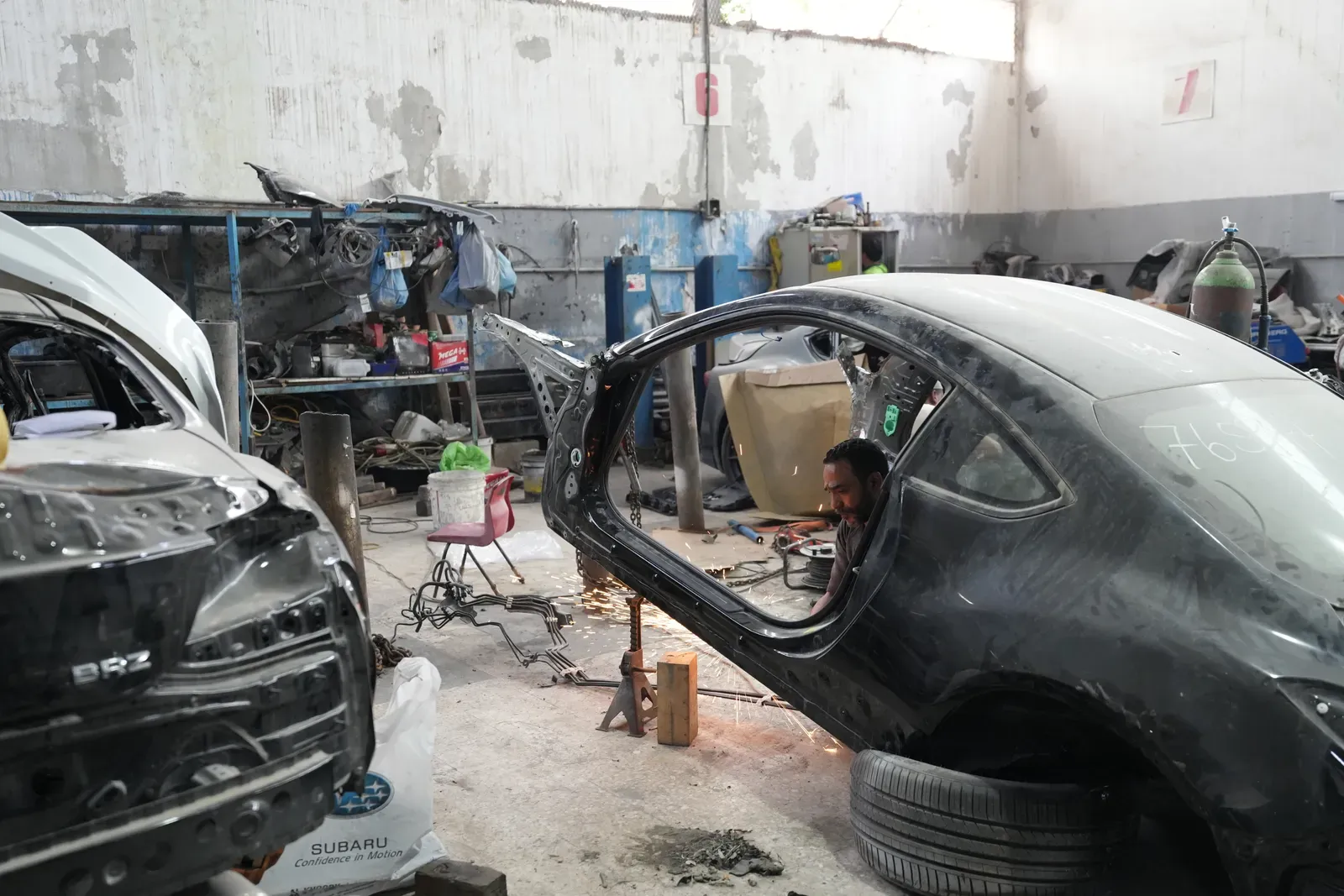
A body shell on axle stands with a technician working inside it.

Every one of these is found on a lift in this building, and priced before it is touched.

The work this usually turns into

And everything else, on the same car

The list above is what this make usually arrives needing. This is the rest of what the workshop does, and it applies to your car as much as to any other — worth knowing while it is already here.

Questions we get asked about these

My Jolion shunts when it pulls away. Does the dual clutch have to come out?

Not on the strength of the symptom, no. On this gearbox the first move is to read the clutch adaptation and touch-point values and run the learning routine, because a fair number of these cars are behaving badly because of where the actuator thinks the clutch bites rather than because the clutch is finished. The second move is to establish whether the car has had the control unit software the manufacturer issued for this, which is an agency item and not something we can substitute. Only when both of those are done and the values will not hold does a clutch pack become the honest answer, and then you will be shown the values it is being said from.

Is the H9 serviced the same way as an H6?

No, and treating them as one car is where a lot of money gets wasted. The H9 is a body-on-frame four-wheel drive: it has a transfer case, propshafts, a solid rear axle and a differential at each end, all of which carry oil that has to be drained, looked at and replaced on their own schedule — and none of which exists on an H6. It also drives through a bought-in eight-speed automatic rather than the dual clutch. A service plan written for a crossover simply does not cover the underneath of an H9, and a workshop that hands you the same list for both has not looked under either.

How long do parts take for these?

It depends entirely on which part, and you are entitled to that answer before the car is opened rather than after. Service and wear items — filters, brakes, bushes, common sensors, belts — are largely available through the agency and through the specialist Chinese-parts trade in the industrial areas of this emirate, and for those you should be given a price and a day. Gearbox internals, modules, cameras, lamps, glass and body panels are an order, and an order has a lead time that nobody should be vague about. We will tell you which of the two your job is before you commit to it, and if the answer is a long wait you can decide what to do with your car meanwhile.

These cars are new. Do you actually know how they wear?

Not at high distance, and we are going to say that rather than pretend otherwise. Nobody in this country has a Jolion or an H6 with two decades behind it, so anybody quoting you a figure for how long a component lasts on one is making it up. What can be said honestly is what these cars are made of and what they ask for — a wet dual clutch with an oil service, a small turbocharged engine that wants the severe-use interval in this heat, a set of driver-assistance sensors that need aiming after body work. That is a shorter page than the one a competitor will show you, and it is the true one.

The windscreen was changed elsewhere and now the lane assist misbehaves. Can you fix it?

We can read the systems, confirm whether the camera is reporting a calibration fault or a mounting problem, and tell you exactly what the car is asking for. Whether the calibration itself happens here or the car has to go somewhere equipped for it is a question we will answer straight rather than leave you guessing, because the wrong answer to it is a driver-assistance system that looks like it is working and is not aimed where the software believes. That is the one place on this page where being vague could actually matter on the road.

Bring it in and we will find out

Nothing happens to the car until the fault has a name and you have approved the work against it.

Book WhatsApp us Call