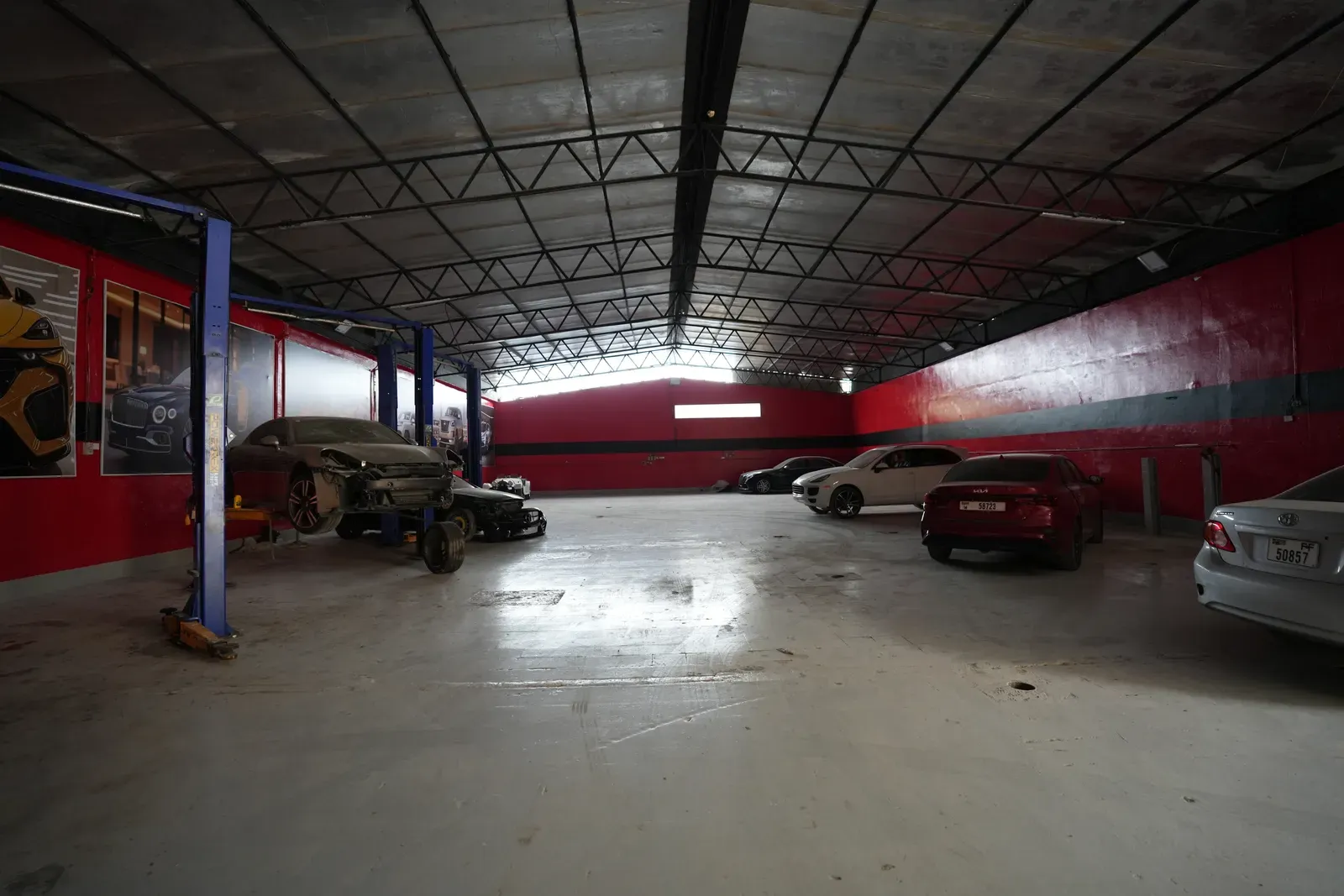
The workshop floor seen wide, with lifts and cars waiting.

Nissan Patrol repair and service in Sharjah

Two different vehicles answer to this name. The Y61 — the one nearly everybody here still calls the Safari — is a live-axle truck with the TB48 petrol six or a ZD30 turbo diesel. The Y62 is an independent-suspension SUV with the VK56VD V8, a seven-speed automatic and, on the higher trims, a hydraulic suspension system that is not four shock absorbers. What fails on one is not what fails on the other, and the first thing we establish is which of them is on the ramp.

Why we see these

The Patrol is not a car that happens to be in the Emirates; it is one of the cars the Emirates runs on. It carries families of seven, it does school runs and airport runs on the same tank, it sits in company fleets, and at the weekend a large share of them go into the sand for real rather than for the look of it. The Y61 stayed on sale new in this region long after it had disappeared from other markets, so both generations are on the road here at the same time, and both are old enough to need work. That combination decides how a workshop has to be set up: enough lift capacity and height for a truck of this size and weight, two completely separate parts channels under one model name, and the assumption that any given Patrol has been in deep sand, has been towing, or has had a winch, a second battery and a set of lights added to it by somebody else.

What this make asks of a workshop

  • The chassis code decided before anything else. A Y61 and a Y62 share the name and almost nothing underneath — axles, engine family, gearbox, suspension and electronics are all different, so the parts are ordered against the VIN rather than against the word Patrol.
  • Lift capacity and headroom for a tall, heavy SUV, plus a jack and stands rated for a live rear axle on the Y61 rather than for a saloon subframe.
  • The hydraulic body-motion-control circuit on the higher Y62 trims treated as a pressurised hydraulic system with its own fluid specification and bleed sequence — not as four shock absorbers that happen to have pipes on them.
  • A cooling stack that can be separated. On a Patrol the radiator, condenser and oil coolers sit in layers and the sand collects between them, where it cannot be seen or blown out from the front.
  • Somewhere to wash the underside before assessment, because dried sand and mud hide a weeping seal and also imitate one.
  • Accepting the modifications as part of the car: lift kits, aftermarket bumpers, winch wiring, dual batteries, long-range tanks and roof loads change the geometry and the electrical load, and the fault is as often in the addition as in the vehicle.

What actually comes in

Named at component level, with what the driver notices first and what we do to establish it is that and not something else that feels identical from the driving seat.

Timing chain, guides and tensioner — VK56VD, earlier Y62 builds

A rattle from the front of the engine for the first seconds after a cold start, sometimes with a light squeal, and the car feels flatter on acceleration than it used to.

How we establish it

We listen to it genuinely cold, at the front cover rather than from the driving seat, then read the stored codes and watch camshaft-to-crankshaft correlation on live data while the engine warms. A stretched chain and a noisy accessory belt sound similar through a closed bonnet and are not the same bill.

Oil consumption on a higher-mileage VK56VD — valve stem seals or rings

The level is down before the next service is due, and there is a puff of blue smoke on the first start of the day or after the car has idled in traffic.

How we establish it

Short urban trips in this heat thin the oil with fuel, so we look at the oil itself and at the crankcase ventilation first, and only then separate seals from rings with a compression and leak-down test. Consumption is also worth confirming over a known distance rather than accepting it from one dipstick reading.

Hydraulic body-motion-control accumulators, hoses and pump — higher Y62 trims

The body leans and rolls more than it used to, or the ride has gone hard and uneven, and there is oil on a chassis rail or around a strut that is not engine oil.

How we establish it

This is a sealed, pressurised circuit with cross-linked cylinders and its own fluid, and it is the thing on a Patrol most often misread as worn shock absorbers. We trace the wet line back to its source, check the reservoir level and the condition of the fluid, and say plainly whether the fault is in the hydraulic circuit or in ordinary suspension wear before any part is ordered.

ZD30 diesel cooling system and pistons — Y61

The needle climbs when towing or working in soft sand, the engine loses power and holds back, or there is smoke that was not there last season.

How we establish it

This engine has a well-documented history of piston damage after it has been allowed to run hot, so the cooling system is pressure-tested and the intake, the EGR passages and the intercooler pipework are opened and looked at for soot and for a boost leak. Where the heat has already happened, compression and leak-down tell us whether we are looking at a cooling repair or at an engine, and we say which before the work is quoted.

Variable cam timing solenoids and valve train noise — TB48 petrol, Y61

A tick from the top of the engine on a cold start, a rough or hunting idle, and a check engine light that comes and goes.

How we establish it

The TB48 is a strong engine and it is usually the oil around it that has failed rather than the engine itself, so we look at the oil condition and the service history, read the codes and check the cam timing solenoid and its feed screen before anything is dismantled. A tick that disappears as the oil warms is a different conversation from one that stays.

Radiator, condenser and oil-cooler stack packed with sand, and the cooling fan

The air conditioning is cold while the car is moving and goes warm when it stops in traffic, and the temperature gauge sits higher than it used to.

How we establish it

On a car that goes into the desert the blockage is between the layers, not on the face of the radiator, so the stack has to be separated to be seen at all. With it clean we check the fan — clutch or electric depending on the car — read coolant and refrigerant pressures on both sides and take a vent temperature, so the cause is one named component rather than a general recommendation to flush everything.

Rear air-conditioning circuit — second evaporator, long lines and expansion valve

The front vents are cold but the second and third rows never cool properly, or the rear blows cold then warm.

How we establish it

A three-row Patrol has a second evaporator at the back and refrigerant lines running the length of the body, which is more joints to leak and a longer path for a restriction to sit in. We check front and rear vent temperatures separately, look at the rear blower and its filter, and find the leak with dye or a detector before the system is charged — a system that is topped up without the leak being found is the same gas sold twice.

Suspension wear — Y62 dampers, bushes and ball joints; Y61 radius arm, panhard and steering damper

A knock from the front over speed bumps, a body that keeps moving after the bump has passed, or on a Y61 a shimmy through the steering after hitting a joint in the road.

How we establish it

The two generations are checked differently because they are built differently: the Y62 is independent at the front with arms, bushes and ball joints to load individually, while the Y61 hangs a live axle on radius arms and a panhard rod whose bushes produce the wander and the shimmy people describe as a steering fault. Either way the car goes in the air and every joint is levered under load until the knock belongs to one component.

Battery, alternator and added-accessory load

It would not start this morning and it was fine yesterday, or the lights dim at idle and the battery keeps going flat when the car stands for a few days.

How we establish it

Heat is what ends a battery here, and it ends it without warning. We load-test the battery and measure charging output at the alternator, then check for a parasitic draw — on a Patrol that draw is frequently in something added after the car left the showroom: a winch relay, a second battery isolator, a fridge socket or a set of lights wired straight to the terminal.

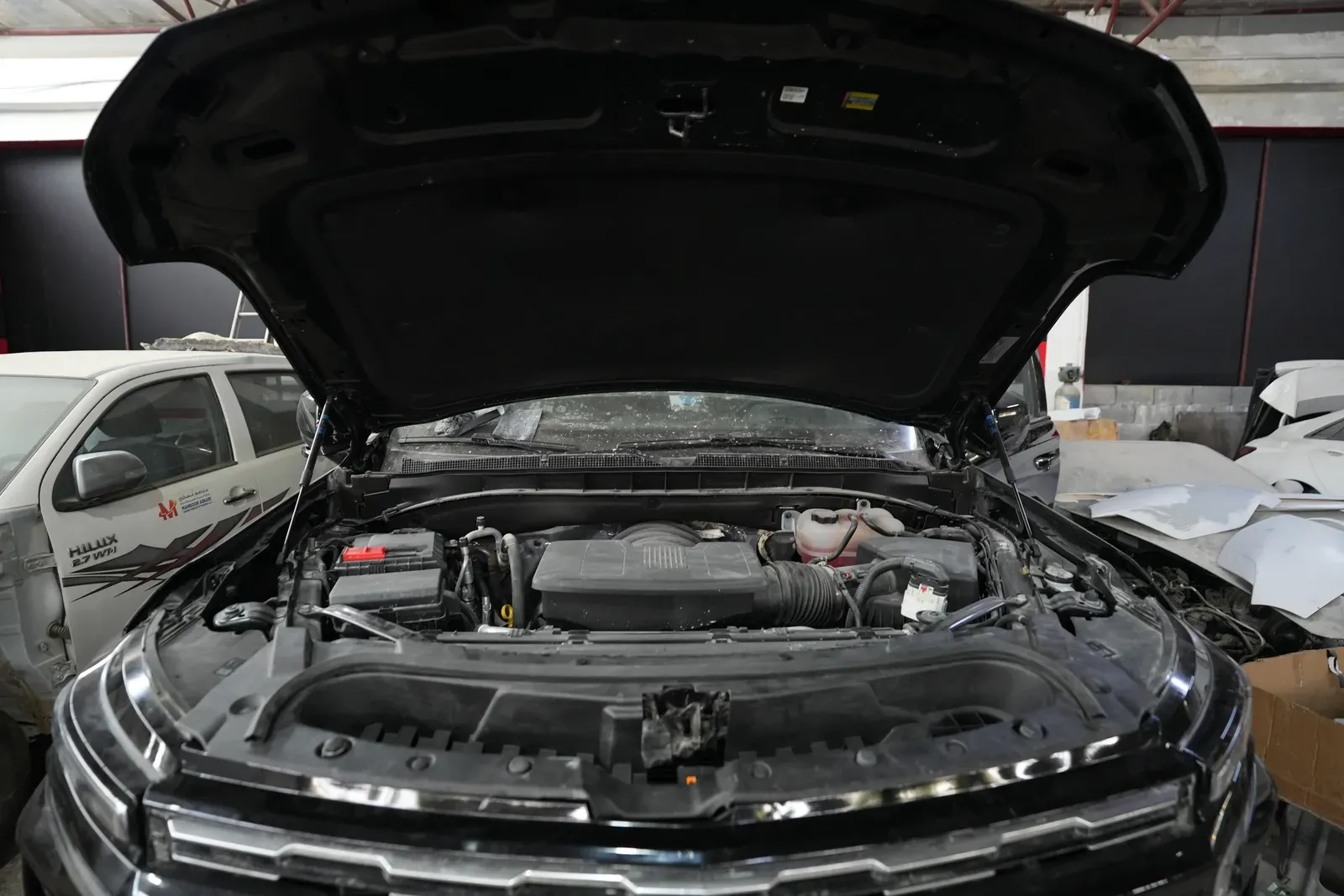
An engine bay open under the bonnet, photographed close.

Every one of these is found on a lift in this building, and priced before it is touched.

The work this usually turns into

And everything else, on the same car

The list above is what this make usually arrives needing. This is the rest of what the workshop does, and it applies to your car as much as to any other — worth knowing while it is already here.

Questions we get asked about these

Is mine a Y61 or a Y62, and does it change anything?

It changes almost everything. The Y61 is the older shape, with solid axles front and rear and either the TB48 petrol six or a ZD30 diesel; most people here call it the Safari. The Y62 is the later shape with independent front suspension and the VK56VD V8. They do not share axles, engine family, gearbox or electronics, so the diagnosis, the tooling and the parts are all chosen by the chassis code. If you are not sure which you have, the VIN tells us.

The temperature went up once in the dunes and came back down. Does that matter?

On a ZD30 diesel, yes, it matters, and it is worth looking at rather than forgetting. That engine is known for damaging pistons after it has been run hot, and the damage does not always announce itself on the same day. On a petrol Patrol a single climb is more often a blocked cooling stack or a lazy fan, which is a much smaller job if it is dealt with while it is still that.

The car has been in deep sand and through water. What actually needs checking?

The differentials and the transfer case first, because their breathers sit low enough on these cars that water gets drawn in as they cool, and oil with water in it is milky and obvious once a sample is drawn. After that the air filter and the intake ducting, the cooling stack, and the underside washed down so a fresh leak can be told apart from old sand. If the car has been towing or working in soft sand, the gearbox fluid and its cooler are worth including — heat is what shortens an automatic here, not distance.

The ride has gone hard and it leans. Is that the hydraulic suspension or just shock absorbers?

That is exactly the question worth asking before anyone orders parts, because on a higher-trim Y62 the two feel similar from the driving seat and cost very different amounts. The hydraulic circuit is pressurised, cross-linked side to side and has its own fluid, so a leak in it changes body control in a way a tired damper does not. We find the source of the wet before we name the component, and if it turns out to be ordinary suspension wear we will tell you that instead.

It has a lift kit, a bumper and a winch. Will you still take it?

Yes, and we will treat the modifications as part of the car rather than as a reason to refuse it. A lift changes suspension and steering angles and loads the joints differently, extra weight on the front changes what the springs and dampers are doing, and added wiring is the first place we look for a battery that keeps going flat. What we will not do is quote a suspension repair without saying which part of the behaviour is wear and which part is the way the car has been set up.

Bring it in and we will find out

Nothing happens to the car until the fault has a name and you have approved the work against it.

Book WhatsApp us Call