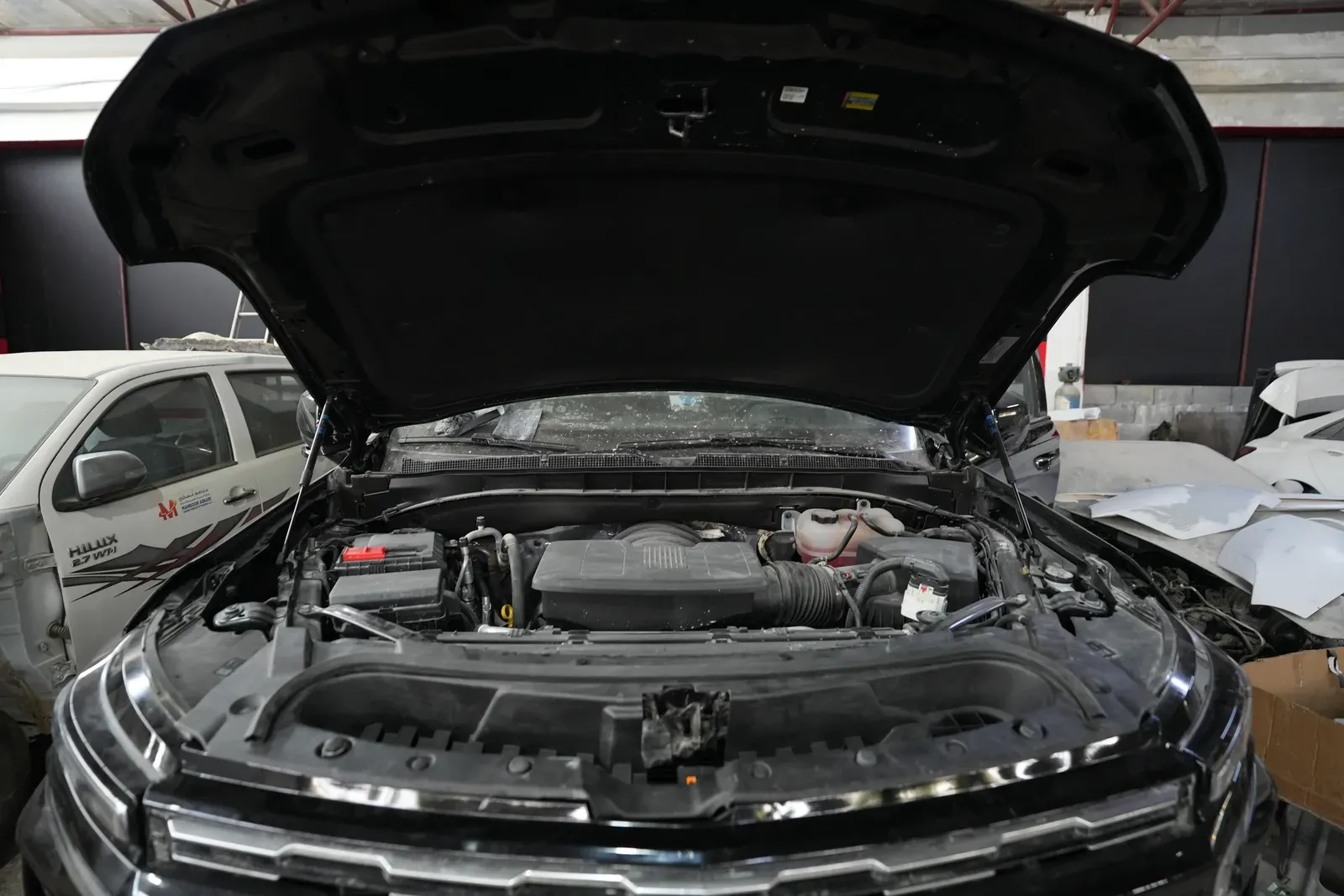
An engine bay open on the workshop floor, photographed close.

Genesis servicing and repair in Sharjah

A Genesis is two cars in one parts book. The rear-drive platform, the Lambda and Tau engines and the eight-speed automatic are shared hardware with long histories behind them. The dampers, the modules, the trim and most of the body are Genesis alone. Knowing which half a job falls in is the difference between a part on a shelf this afternoon and a part that has to be ordered, and it is the first thing we establish, before the fault is even named.

Why we see these

Almost none of these were bought new by the person who now drives one. They arrive on a second or third owner, out of manufacturer cover, often imported, and usually with a complaint that somebody has already looked at once. The duty they do here is the hard one for this kind of car: a heavy rear-drive saloon with adaptive damping and a bus full of modules, doing short journeys in standing traffic at 45°C, rarely getting the long run that a big petrol engine actually wants. Owners arrive expecting the complexity of a luxury car and then discover that the parts question splits down the middle of the vehicle, which is the conversation this page exists to have honestly rather than after the car is in pieces.

What this make asks of a workshop

  • The engine established before anything else is said. The 3.3 twin-turbo (Lambda II T-GDi), the naturally aspirated 3.8 and the 5.0 Tau V8 do not share a fault list, an oil quantity or a cooling load, and advice given for one of them is wrong for the other two.
  • The parts question answered honestly and in two halves: engine internals, gearbox and running gear that carry a long shared history and can usually be obtained, against dampers, modules, lamps, glass and trim that are Genesis-only and are an order rather than a shelf item.
  • The rear-drive eight-speed automatic treated on its own terms — its own fluid specification, and a level set by fluid temperature at a fill plug rather than judged on a dipstick, because on this box a level set cold or hot is not the same level.
  • A scan that reaches every module on the bus rather than the engine alone. On a car with adaptive damping, an air-purifier, around-view cameras and a driver-assistance set, a complaint that presents as mechanical is as often a module reporting than a part failing.
  • Four-wheel alignment after any arm or link is touched, because this is a multi-link car at both ends and a front-only toe adjustment on a rear-drive chassis moves the problem rather than fixing it.
  • A cooling system judged under load rather than at idle. A 3.3 twin-turbo or a 5.0 V8 sitting in traffic in August is working the fans and the charge cooling far harder than the engine bay of a small car, and a system that looks healthy at a standstill can still be marginal at a crawl.

What actually comes in

Named at component level, with what the driver notices first and what we do to establish it is that and not something else that feels identical from the driving seat.

Turbocharger oil feed pipe on the 3.3 twin-turbo (Lambda II T-GDi)

A burning smell after a drive, a wisp of smoke from the engine bay at a standstill, oil on the underside of the engine, or an oil level that drops without a puddle on the floor.

How we establish it

The feed line to a turbocharger lives in the hottest part of the car and it is a known item on this engine — enough so that it has been the subject of a manufacturer campaign in some markets. That is the first thing to establish, and it is not established here: take the chassis number to the agency and ask whether anything is open against your car before you pay anybody, including us, to do this job. If nothing is open, we trace the leak with the engine hot and the underside clean, because oil on a turbocharger can come from the feed, the drain, or a cam cover above it running down, and those are three different jobs at three different prices.

Hydraulic lash adjusters and the valve clatter on a cold start — 3.3 twin-turbo

A hard clattering from the top of the engine for the first seconds or the first minute of the day, which clears once oil pressure is up and does not come back until the next morning.

How we establish it

This engine is known for it and the argument about whether it matters has been running for years, which is precisely why it needs to be identified rather than argued about. We start the car genuinely cold — it stays overnight and we start it in the morning, not warm after lunch — and listen at the cam covers rather than low at the sump, because a clatter from the top and a knock from the bottom are two completely different conversations. The oil level, the grade actually in the engine and how long it has been there are read at the same time, since this noise is worse on a long interval and on the wrong viscosity. Where the noise is at the adjusters we tell you what the work involves and what it does not; we will not sell an engine strip on the strength of a noise that thousands of these make and go on running with.

Timing chain tensioner and the chain guides on the 5.0 V8 (Tau GDi)

A short rattle on start-up that is gone in a second or two, worse after the car has stood for a few days, and sometimes a rough first few seconds before it settles.

How we establish it

The tensioner on this V8 is fed by oil pressure, so a rattle at start-up is a question about oil before it is a question about a chain. We read the service history and the oil in the engine first, then listen at the front covers on a cold start, then look at what the variable valve timing is actually doing on live data at idle and just off idle, because a timing deviation and a loose chain read differently there. A chain job on a V8 is a serious bill and nobody should be quoted one from a two-second noise. Where the evidence is thin we say it is thin and tell you what to watch for.

Oil consumption on the early direct-injection 5.0 V8

The oil level is down well before the next service is due, with nothing on the floor and no smoke that anybody has seen.

How we establish it

Consumption is settled by a consumption test and not by opinion. The level is set with the engine at a known temperature, the car is driven a stated distance under the duty it normally does, and the level is set again, so what you are told at the end is a rate rather than an impression. Alongside that we pressure test the cooling system and look for an external leak first, because the cheap answers deserve to be ruled out before the expensive one is discussed. Early direct-injection versions of this V8 have a history here and we will say so, but a history is a reason to test, not a diagnosis.

Electronically controlled dampers and the height and body-movement sensors that feed them

The ride has gone hard and stayed hard, a suspension message is on the dash, or the comfort and sport settings no longer feel any different from each other.

How we establish it

One corner takes the whole system down on these cars. When a damper solenoid, a height sensor or the wiring at one wheel stops reporting, the module has no safe choice but to put all four into a fixed default, and the driver feels a car that has gone hard everywhere rather than a fault at one wheel. So this is read as a system: stored codes, then each corner live while the car is moved on the lift, then the connector and the loom at the wheel, which on a car this age is as likely as the damper itself. Naming the corner before ordering matters here more than on almost any other job, because these dampers are a Genesis-only part and an order, not a shelf.

Fluid level and condition in the rear-drive eight-speed automatic

A thump going into drive or reverse, a long pause before the car moves at a junction, or a downshift in slow traffic that arrives harder than it used to.

How we establish it

This box is filled to a level that is only correct inside a window of fluid temperature, at a plug, with the car level — not to a mark on a stick. That is why a gearbox that has been topped up by somebody working quickly can be overfilled or starved and drive badly while every part inside it is sound, and why we read fluid temperature as live data during the fill rather than working by feel. Before any of that, the gearbox is scanned for stored codes and driven with line pressure and temperature on the screen. Where the fluid comes out burnt we will tell you plainly that fresh fluid may not rescue it, instead of selling a service that buys three weeks.

Standing drain from the modules that stay awake after the car is locked

It starts every day if it is driven every day, and it is flat after a week at the airport or a fortnight away.

How we establish it

A car carrying this many modules has a real standing current even when everything is healthy, and the question is never whether there is a drain but whether it is larger than it should be and which module is not going to sleep. We load test the battery first, because a tired battery in this heat looks exactly like a drain and is the cheaper answer. Then current is measured with the car locked and left long enough for the network to shed, and the circuits are dropped one at a time to find the one that will not settle. An aftermarket tracker, alarm or camera fitted at some point in the car’s past is a frequent answer and worth saying out loud before a module is blamed.

Upper control arms and their ball joints on the multi-link front axle

A knock from the front over a speed bump, a car that wanders and needs small corrections on a straight road, and often a front tyre wearing on its inner edge.

How we establish it

A multi-link front axle has several short arms where a strut car has one long one, and each of them can produce the same knock, so they are loaded individually with the wheel hanging and again with the suspension under load. The reason this matters commercially is that these arms are quoted individually and a workshop that cannot tell them apart quotes the whole corner. We name the arm and the side. Alignment is reset afterwards on all four wheels, and we say so before the booking rather than after the invoice.

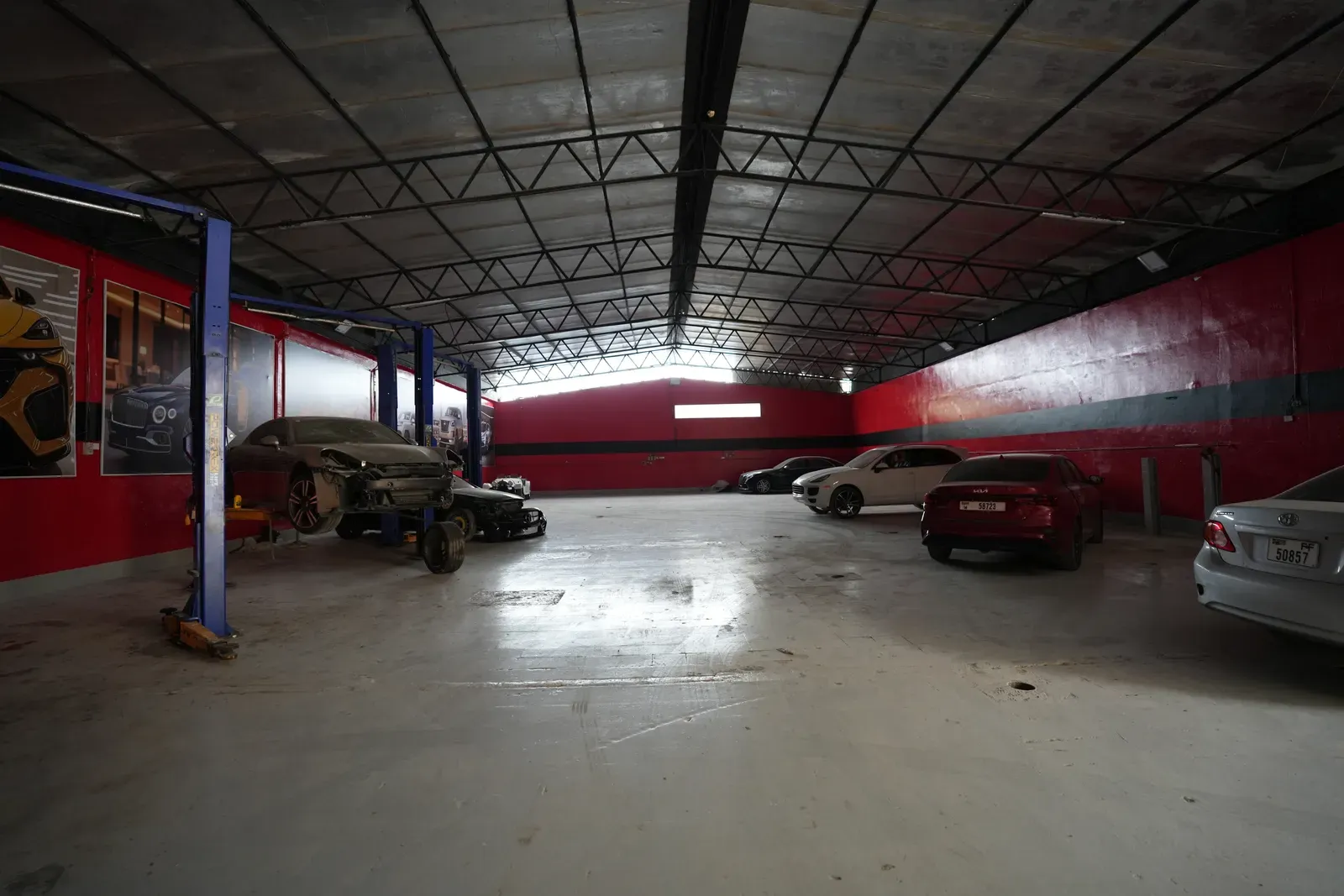
The workshop floor in Sharjah, cars waiting between the lifts.

Every one of these is found on a lift in this building, and priced before it is touched.

The work this usually turns into

And everything else, on the same car

The list above is what this make usually arrives needing. This is the rest of what the workshop does, and it applies to your car as much as to any other — worth knowing while it is already here.

Questions we get asked about these

Is a Genesis just a Hyundai underneath?

In part, and the part that is shared is the part that helps you. The Lambda and Tau engines, the rear-drive eight-speed and a good deal of the running gear have a long history behind them and a parts channel that reflects it. What is not shared is most of what makes the car a Genesis: the adaptive dampers, the modules, the lamps, the glass and the trim. So the honest answer is that a bearing, a bush, a water pump or a gearbox service is usually a straightforward conversation, and a damper, a camera or a piece of interior is usually an order with a wait. We would rather you heard that at the counter than after the car is apart.

My 3.3 makes a loud clatter for the first few seconds every morning. Is the engine finished?

Probably not, and that noise is well enough known on this engine that the first thing to do is identify it rather than panic about it. The lash adjusters at the top of the engine depend on oil pressure that is not there yet in the first seconds after a night standing, and a great many of these cars make that noise and go on running for years. What has to be separated out is a clatter from the top and a knock from the bottom, because those are two entirely different futures. That separation is a listening job on a car we have started ourselves from genuinely cold, and it costs the time it takes, not a strip.

The ride went hard overnight and there is a warning light. Do all four dampers need replacing?

Almost certainly not. The system is built so that if one corner stops reporting, the module puts all four into a fixed setting, because a car with one soft corner and three firm ones would be dangerous. That is why a single failed damper, sensor or connector feels like the whole car has changed. The work is to find which corner and whether it is the damper, the sensor or the wiring to it — and given what these dampers cost and the fact that they come to order, that is worth doing properly before anything is bought.

Can the eight-speed gearbox fluid be changed here, or does it have to go to the agency?

It can be done properly outside an agency, but only if it is done the way the box is designed to be filled: the specified fluid, the level set at a plug inside a temperature window with the car level, and fluid temperature watched as live data while it is filled. A workshop that treats it like a dipstick gearbox will hand it back overfilled or short and it will drive worse than when it arrived. Ask whoever quotes you how they set the level. If the answer is not about temperature, go somewhere else — that is true of us as much as of anybody.

My car was imported. Does that change anything?

It changes two practical things and it is worth knowing both before you spend. The first is that the specification of an imported car is not always the specification sold here, and that reaches the parts list, the fluid list and sometimes the software in the modules, so the car is identified from its own chassis number rather than from its badge. The second is that anything the manufacturer may have opened against a car — and there have been such campaigns on these engines — is a question for the agency against your chassis number, not for us. Ask them first. If the answer is that nothing is open, come back and we will do the work.

Bring it in and we will find out

Nothing happens to the car until the fault has a name and you have approved the work against it.

Book WhatsApp us Call