
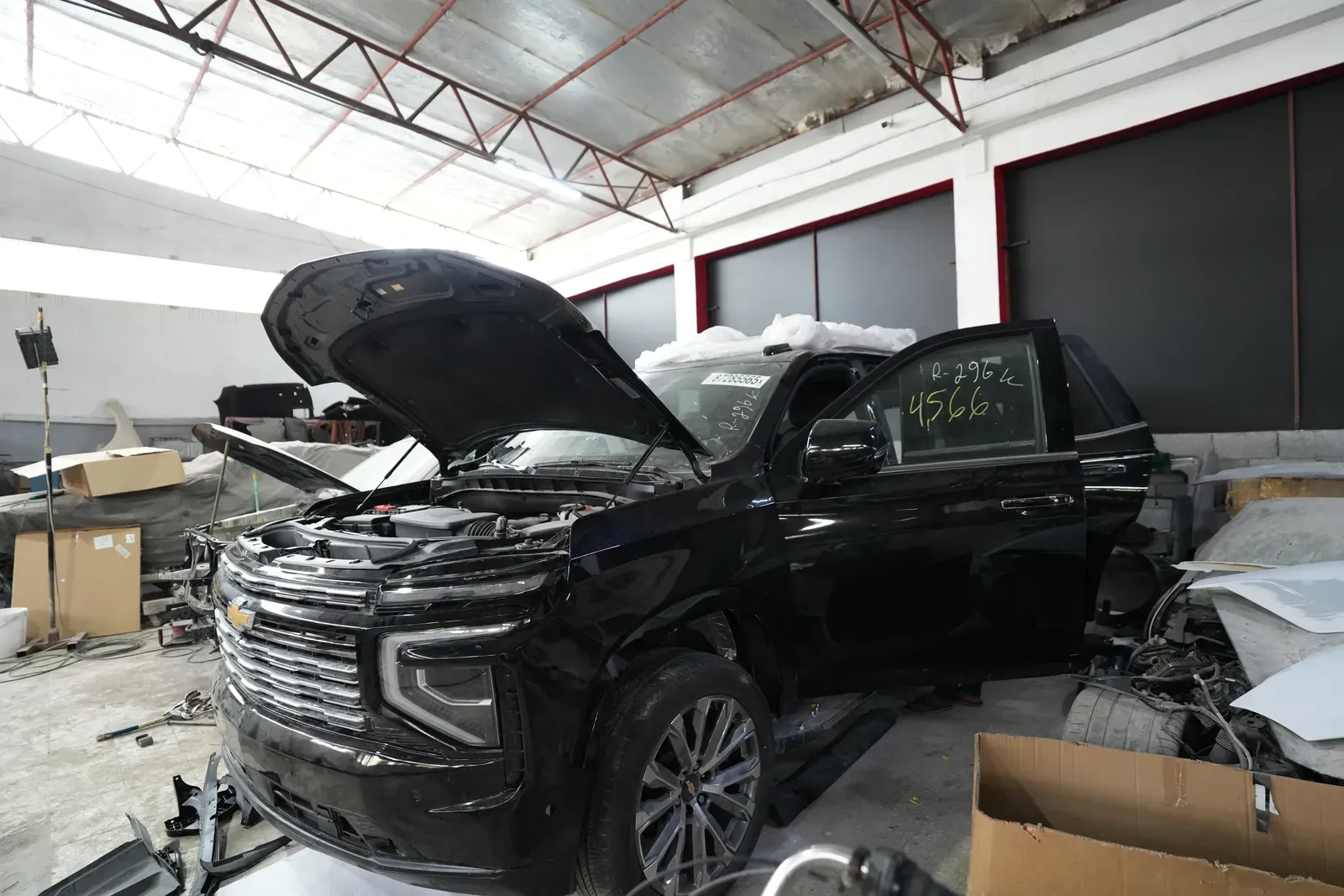
Accident and body repair
After an accident most people are not confused about the car. They are confused about the process, and about who is allowed to decide what. So this page explains the sequence first and the metalwork second. The short version: the police report comes before everything, your insurer authorises the repair, and no panel here is touched before you have seen the estimate and agreed to it.
Start here
- 1Describe what the car is doing, in your words
- 2We investigate it and send you the findings and the price
- 3You approve each line before anything is done
1
Sounds like your car?
Find the line closest to what your car is doing. You do not need the name of the job — the symptom is carried into the booking form with it, and every line below starts at the same place: what we check, and how the work is done.
- 1 I had an accident and I do not know what to do first
- 2 Someone hit my car and drove off
- 3 There is a dent but the paint is not broken
- 4 The bumper is cracked and hanging
- 5 The door does not close properly since the accident
- 6 My insurance told me to get an estimate
- 7 I do not want to claim, how much to just fix it
- 8 The car pulls to one side since the accident
2
What is included
- 2.1Damage assessed panel by panel and written up line by line, including the parts that turn out not to be damaged
- 2.2A check across the car for previous repairs and filler, so the estimate is built on the car you actually have
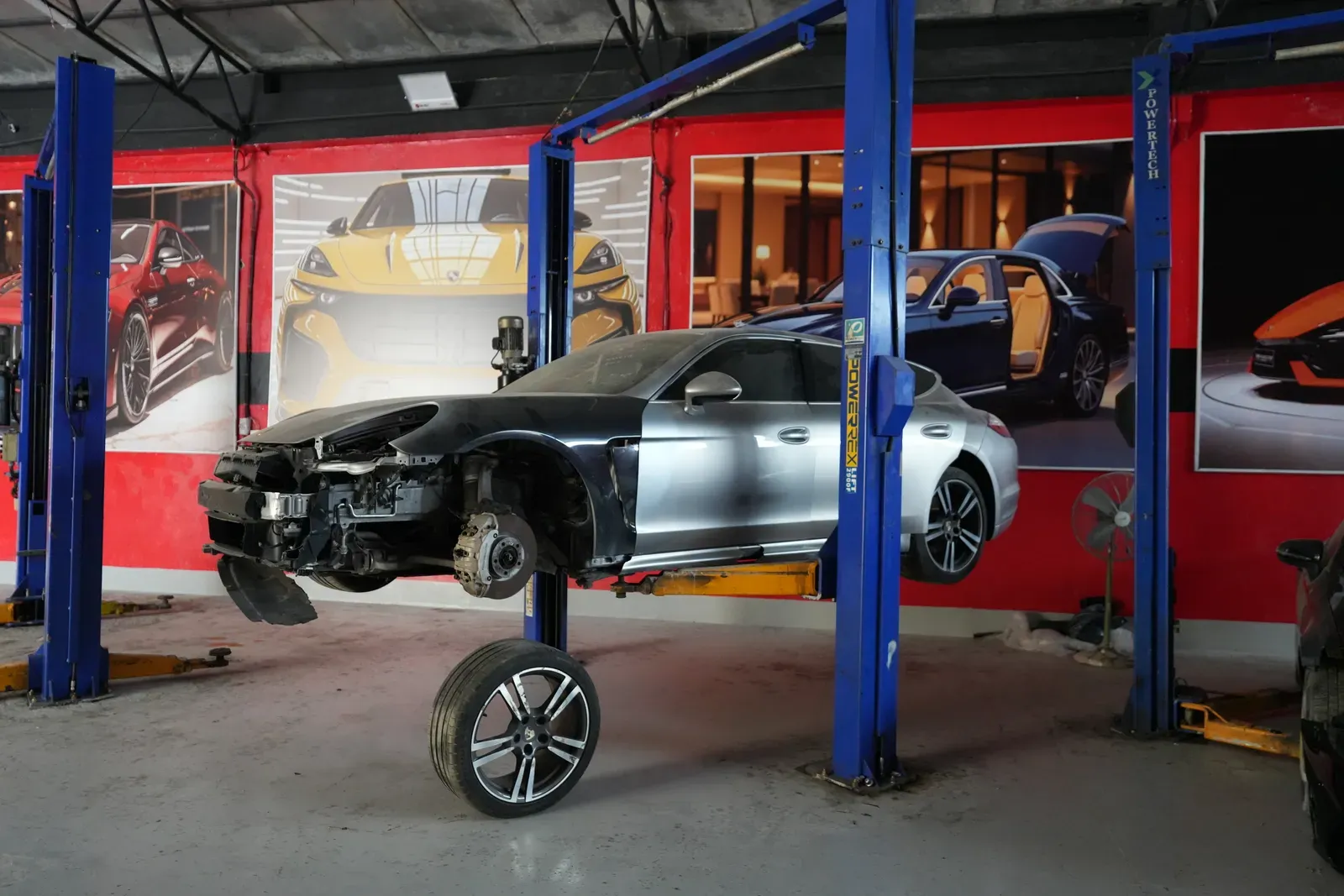
- 2.3Panel beating, dent removal and paintless dent repair where the paint is unbroken
- 2.4Panel replacement, welding and sectioning where the damage is beyond straightening
- 2.5Plastic bumper repair where it is sound, and replacement where the mounting points have failed
- 2.6Alignment of panel gaps checked against the opposite side of the car, not judged by eye
- 2.7Structural measurement where the impact reached anything beyond the outer panels
- 2.8Assistance assembling the documents your insurer asks for, and a copy of everything kept for you
- 2.9Refinishing handed to the paint side of the workshop, with the colour checked against your own panel in daylight before the car comes back to you
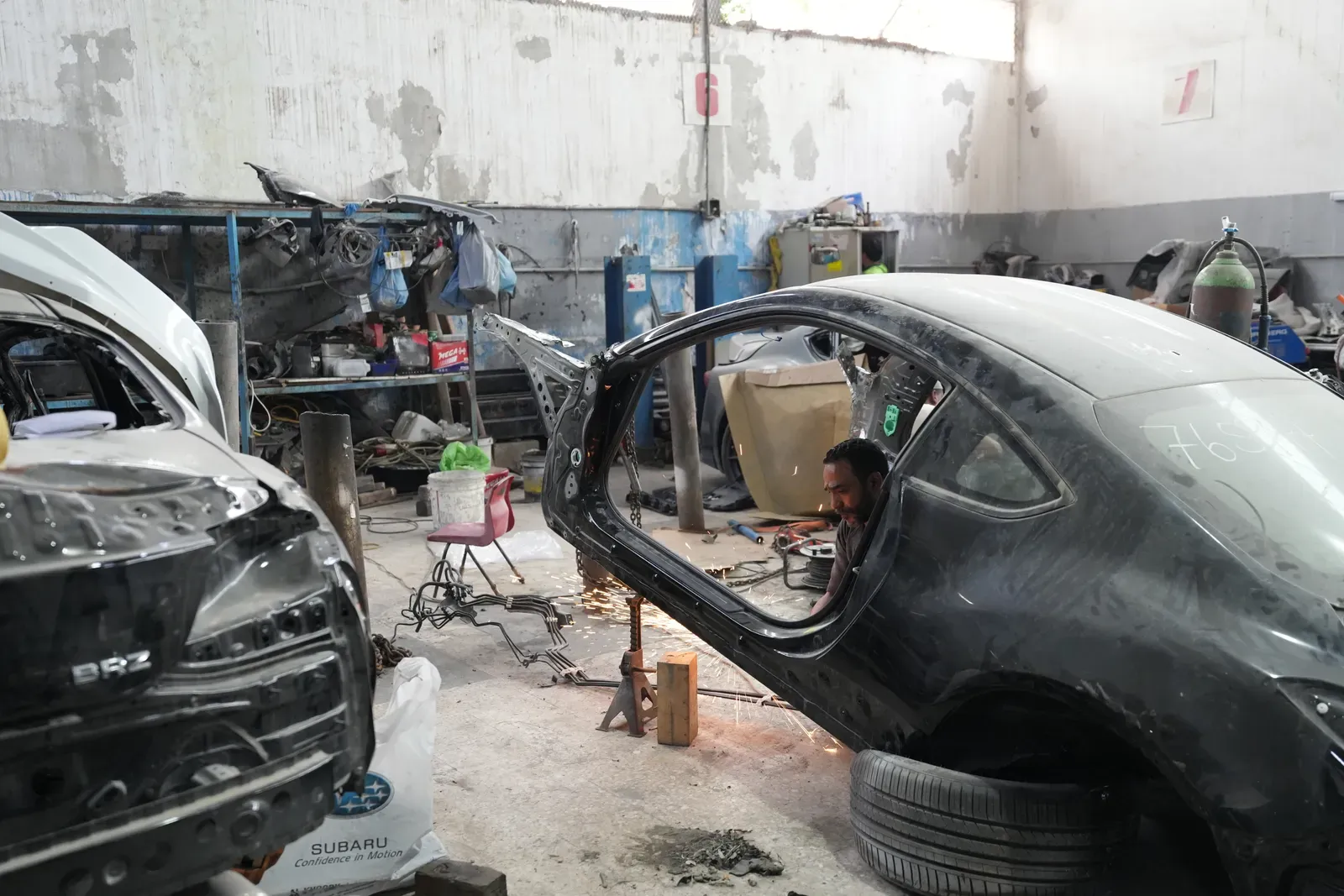
This work is done in this workshop, and nothing on your car is touched until you know what we found and what it costs.
3
What happens
-
3.1
The police report comes before the workshop
An accident needs to be reported and a report obtained, and that report number is what your insurer works from. Do that first. We cannot start an insured repair without it, and nor can anyone else who is working properly. If you are unsure what your insurer needs, phone us and we will talk you through what to collect.
-
3.2
The estimate is built panel by panel
Every damaged area is listed as its own line, with parts and labour priced separately, so you can see what each panel is costing you instead of one figure for the car. Hidden damage behind a bumper is common and is quoted as a possibility rather than buried in a round number, so that if it is found the extra cost is not a surprise.
-
3.3
Your insurer authorises, then we start
On a claim, the insurer reviews the estimate and issues an authorisation before work begins, and that step is theirs and outside our control. We will tell you the day it was submitted and the day it was approved, so the wait is visible to you rather than silent. Ask your insurer whether they will authorise repair at this workshop before you leave the car.
-
3.4
Panel gaps are set against the good side
A repaired wing is checked against the undamaged one on the other side of the car, because a gap that looks right on its own is the commonest sign of a repair done in a hurry. The same applies to door closing effort and to boot and bonnet alignment.
4
Common questions
Will a future buyer be able to tell the car was repaired?
Yes. Any competent pre-purchase inspection uses a paint thickness gauge, and repainted panels read differently from factory paint. Anyone telling you a repair will be invisible to an inspection is telling you what you want to hear. What a good repair does is make the car correct, safe and honestly documented, and the invoice we give you names every panel that was repaired and every part that was fitted, so you can show a buyer exactly what was done.
Do I have to use the garage my insurer names?
That is a question about your policy, and your policy is a contract between you and the insurer, not something we will interpret for you. Read it, or ask them in writing. What we can tell you is that the answer differs between agency-repair cover and standard cover, and that the difference is usually stated in the policy schedule you were sent when you bought it.
How long will the repair take?
The metalwork and paint we control. The two things we do not are the insurer authorisation and the arrival of parts, and those are usually what the wait is made of. We will give you a working estimate once the authorisation is in and the parts position is known, and we will tell you when it changes rather than waiting for you to ask.
Do you repair a cracked bumper or replace it?
Repair where the plastic is sound and only the surface is damaged, replace where the mounting tabs or the absorber behind it have broken, because a bumper that is not mounted properly will not sit level and will not protect anything. Which of the two it is depends on the back of the bumper rather than the front, and we will tell you which yours is before we quote it, and quote both where both are genuinely possible.
Related services
Work that is often quoted alongside this, each with its own page.
- Car painting and respray Panel paint and full respray, mixed to your paint code and baked, not air-dried in the sun.
- Suspension and steering Shock absorbers, arms, bushes, joints and steering — found by hand on a lift, not by guesswork.
- Pre-purchase inspection Before you hand over the money, have the car put on a lift and looked at properly by someone who is not selling it to you.
- Pick up and drop off We collect your car, record its condition with you there, and bring it back.