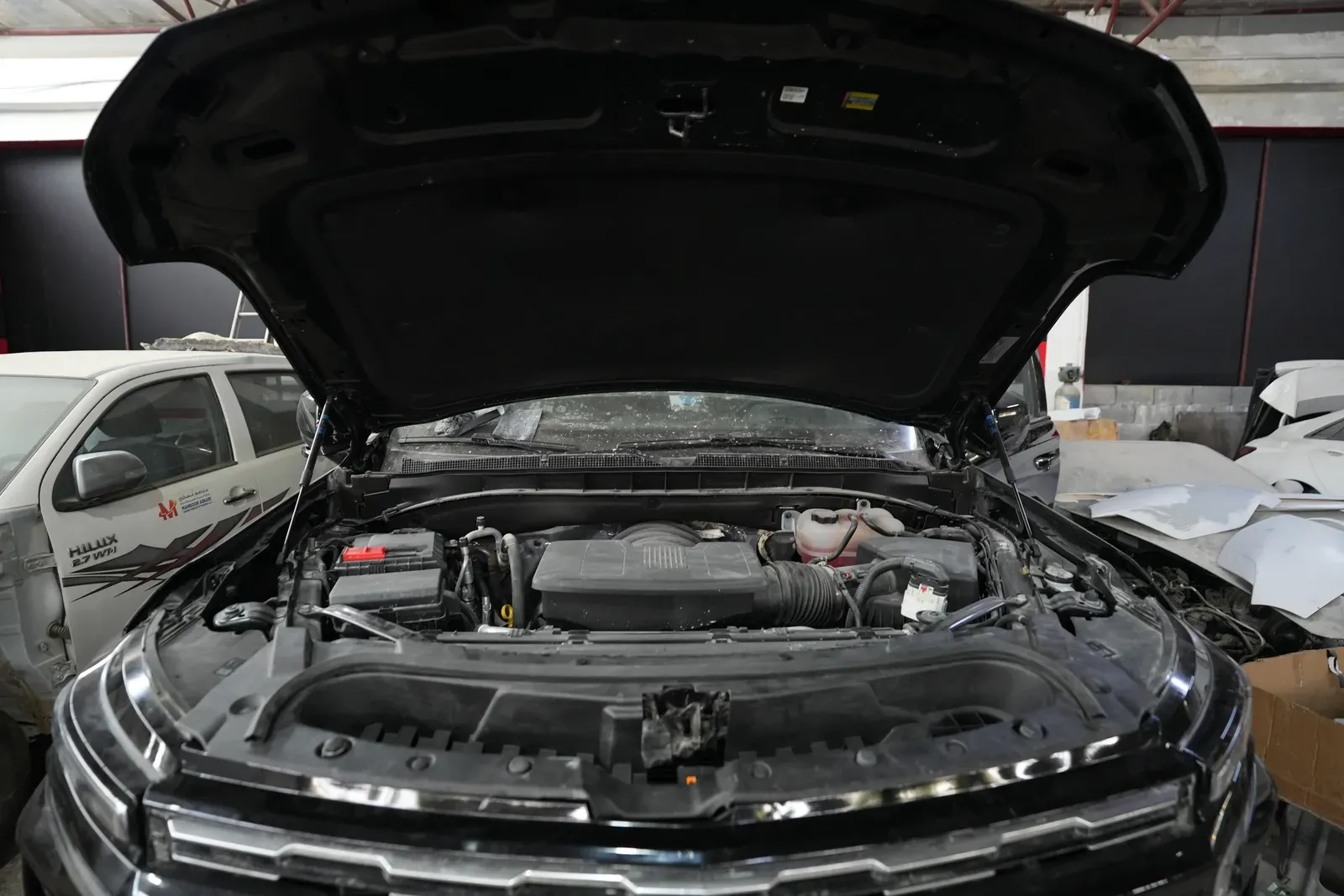
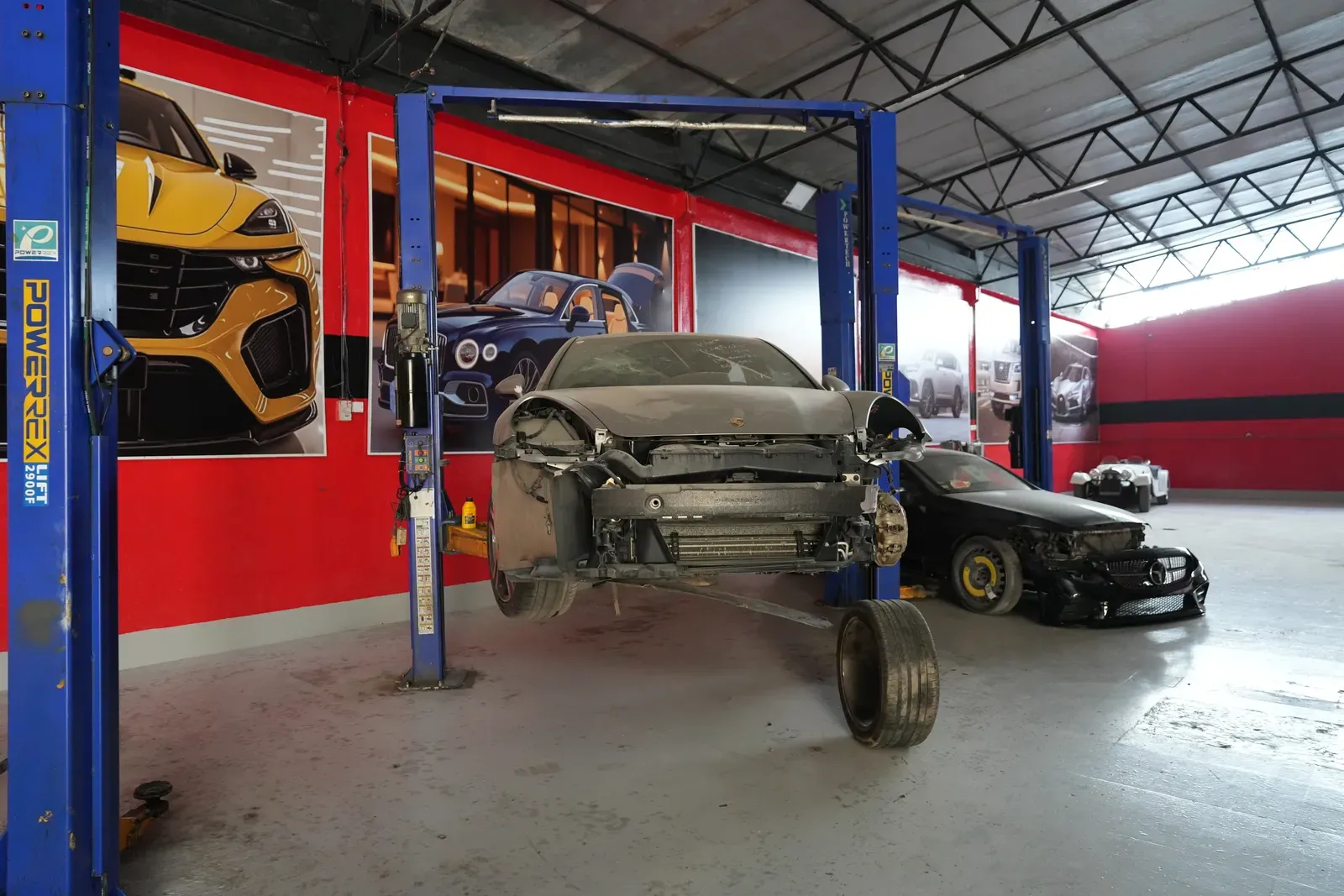
My Sierra is a US import rather than a Gulf car. Does that change anything?
It changes what we order and what we expect to find, so it is worth telling us at the start rather than after a part arrives. Build, trim and options are read from the VIN, and on these trucks the options are not cosmetic: whether the rear suspension self-levels, whether a tow package and a brake controller were fitted at the factory or spliced in later, and which modules are on the bus all follow from it. A US build also arrives having spent its life in a different climate, so the cooling stack, the air conditioning and the battery deserve a look on their own terms rather than on the assumption that a Gulf-specification car is what we are looking at.
The rear sits low and I can hear the compressor running for ages. Is it the shocks or the springs?
That is the right question and there are actually three answers, which is why it is worth measuring before buying. A compressor that runs on and on is usually filling something that is leaking, and that points at an air shock or a line. A height sensor reporting a figure the truck is not at will make a perfectly good system work itself to death chasing a target. And a leaf pack that has settled over years of carrying weight will sit low and say nothing electrically at all. We measure both rear corners on a level floor, read what the sensor is telling the module, and command the system up and down before a single part is ordered.
There is a clunk when I turn the wheel. Is that ball joints?
Not necessarily, and on these trucks it very often is not. The question we ask first is where you feel it. A clunk you feel in the rim of the steering wheel under your hands, at the moment you begin to turn and not over bumps, points at the intermediate shaft between the column and the steering gear rather than at anything holding the wheel up. A clunk you feel through the floor or the seat over a bump is a different shortlist. We check the shaft with one person moving the wheel and another hand on the joint before anybody quotes front end components, because those are two very different invoices.
I was told the eight-speed is filled for life and never needs a fluid change. Is that right?
We will not tell you an interval that is not in your own service book, and we will not invent one to sell a service. What we will say is what we can measure: this gearbox runs hot in stop-start traffic in this climate, hotter again behind a trailer, and we read its fluid temperature live rather than guessing at it. Fluid is then judged on colour, smell and what comes out on the magnet, not on a number. If it is in good condition we say so and you keep your money. If it is dark and smells cooked, we tell you that and let you decide, and we will also tell you honestly that on a box with a shudder already present a fluid change is not guaranteed to cure it.
I use the truck for towing. What is actually worth checking before a long trip?
Four things, in this order. The transmission fluid and its cooler circuit, because heat is what shortens an automatic behind a trailer and distance is not. The rear axle oil, for the same reason and because a sample tells us more in two minutes than any mileage figure. The rear suspension and the levelling system, so the truck is sitting level with the load on rather than nose-up. And the tow electrics as a system: the socket pins, the earths behind the bumper and the brake controller actually seeing the trailer. None of that is dramatic and all of it is cheaper to look at in a bay than on the hard shoulder.