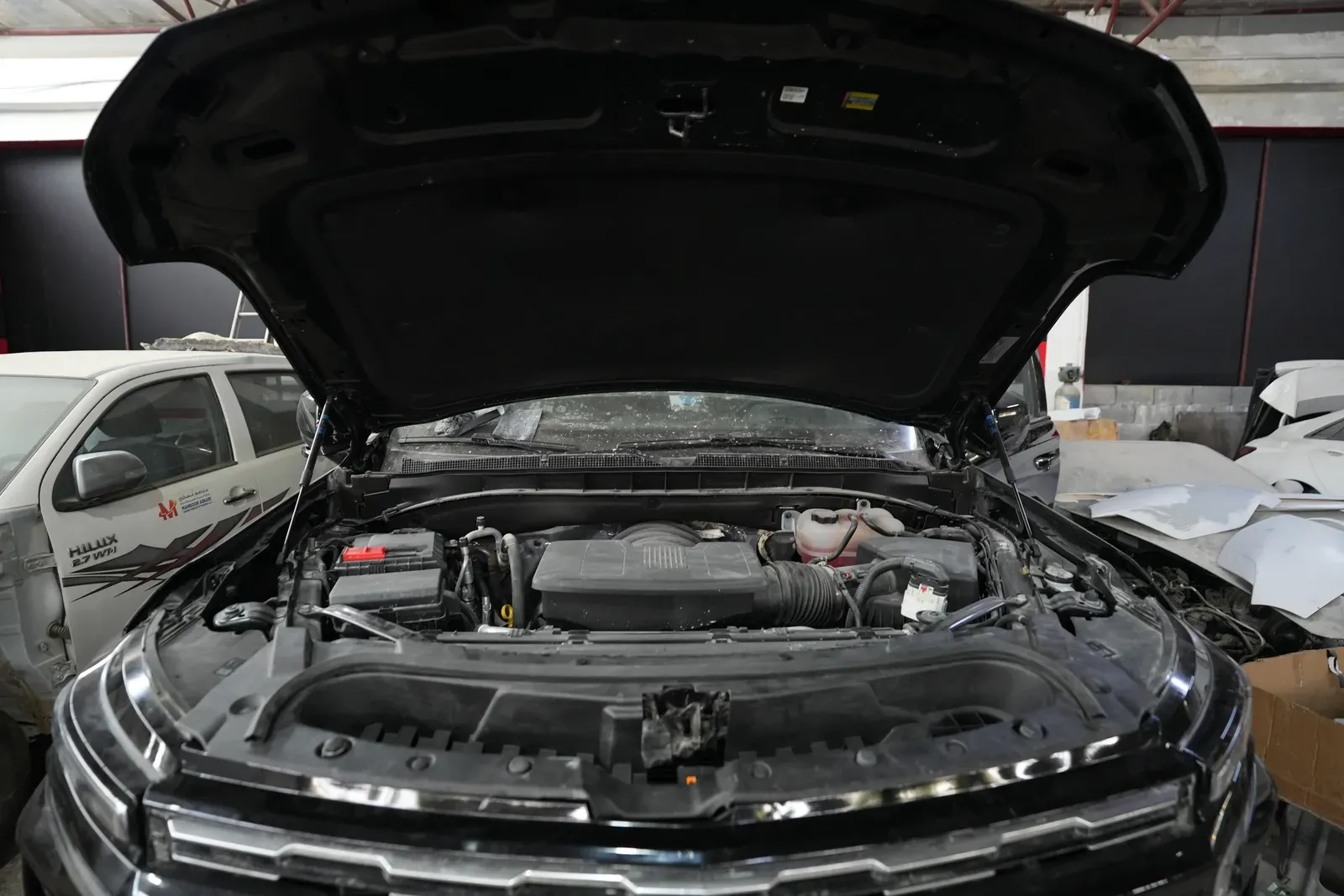
An engine bay open on the workshop floor, photographed close.

Aston Martin repair and servicing in Sharjah

The gearbox on most of these cars is at the back, not behind the engine. That single piece of layout decides where a clutch job happens, where a fluid leak lands, and why a driveline vibration is diagnosed differently here than on anything else with twelve cylinders in the nose. The other governing fact is the body: bonded and riveted aluminium rather than welded steel, which changes what a repair after a knock actually involves and who is equipped to do it.

Why we see these

The Astons in the northern Emirates are a small population used in a particular way, and that use is what we end up treating. These are second cars. They live in a covered bay, come out at the weekend or in the cooler months, and cover very little distance for the age they carry. A car used like that does not wear out — it goes stale. Batteries flatten while the car is parked and the modules lose settings they then have to be given back. Rubber in a bypass valve line and in a bush hardens by date rather than by kilometres. Fuel sits. The second local factor is bodywork. A low, wide, aluminium-skinned car meeting a Sharjah kerb or a car park pillar produces damage that is not a panel-beating job, because the panel is aluminium over a bonded structure and the structure behind it has rules of its own. Owners here are usually told that late, by somebody who has already started.

What this make asks of a workshop

  • A workshop that knows the gearbox is at the back before the car arrives. A rear transaxle changes the lift, the supports and the fluid route, and it means a clutch or a gearbox fault is not a job you start at the front of the car and discover halfway through.
  • Clutch condition read out of the transmission module on the automated-manual cars, not guessed at from the pedal — because there is no pedal. The module holds adaptation and a wear figure it has learned, and that is the only way to have a sensible conversation about whether the clutch has life left in it.
  • A decision about bodywork made before anything is cut, sanded or pulled. The structure under the skin is extruded aluminium bonded with structural adhesive and set with self-piercing rivets. That is not a steel shell, the repair method is specified by the way the car was built, and where the job belongs with a body shop equipped for bonded aluminium we say so rather than improvise.
  • A charging and standing plan for a car that is used a few times a month. These cars are not driven enough to keep themselves alive electrically, and most of the electrical complaints we see trace back to a battery that has been flat repeatedly rather than to a failed module.
  • Ramp clearance and approach for a car with very little of it. Getting an Aston onto a lift without touching the splitter or the sills is planned, not attempted, and the lifting points are specific because there is no chassis rail to sit on.

What actually comes in

Named at component level, with what the driver notices first and what we do to establish it is that and not something else that feels identical from the driving seat.

Ignition coils, plugs and the coil-on-plug loom on the AM11 V12, and the access to the rear cylinders on each bank

A hesitation on part throttle, a vibration at idle that comes and goes with no pattern the owner can name, a warning lamp after a cold start that clears by the next drive, or a rough note under load.

How we establish it

A misfire on a twelve-cylinder engine is a counting job, not a guessing one: we read the per-cylinder misfire counts and find which cylinders are actually dropping, then move the suspect coil to a neighbouring cylinder and see whether the fault moves with it. What is specific to this engine is the labour, and it should be in the quote from the start. The rearmost cylinders on each bank are the awkward ones, and on the cars where getting at them means removing more than a cover, replacing a single coil there is not the same job as replacing one at the front. We say which cylinder it is and what reaching it costs before you decide whether to do the set.

Touchtronic ZF automatic mounted at the rear as a transaxle — its fluid, its oil cooler lines and the pipe run along the underside of the car

A drip that appears behind the middle of the car rather than under the engine, a shift that has become slurred or late, a thump into reverse, or a gearbox temperature warning after a spirited drive.

How we establish it

The first thing we do is stop the conversation about where the leak is. The gearbox is at the back of this car, but its oil cooler is at the front, so the lines that join them run the length of the underside, and a stain under the middle of the car has three or four honest candidates. The car goes up and each section is cleaned and checked at the unions and along its run. On the shift complaints we road-test with fluid temperature and commanded against actual gear on screen, because these cars are very often driven cold and briefly, and a gearbox that is never allowed to reach temperature behaves like one that is failing.

Sportshift automated-manual clutch, its hydraulic actuator pack and the wear figure the transmission module has learned

A shudder pulling away from rest, a long pause between selecting drive and the car moving, a smell after manoeuvring in a car park, or the car refusing to engage a gear at all and sitting in neutral.

How we establish it

This is not a torque converter and it should never be diagnosed as one. It is a real single clutch, worked by hydraulics and a control module, and it is slipped on purpose every time the car pulls away — which is why crawling in traffic and manoeuvring uphill use it up so much faster than distance does. We read what the module has learned: the clutch wear figure it holds, and the engagement points it has adapted to. Those two numbers separate a clutch that is genuinely finished from one that has drifted out of adaptation and can be re-learned, and from a hydraulic pack that is slow to build pressure. Being told a clutch is finished, when the module simply needs its points reset after a battery went flat, is the expensive version of this fault.

Propshaft running inside the torque tube, its support bearings and the rear final drive unit

A vibration felt through the seat and the floor that arrives at one speed and leaves at another, a droning that changes on and off the throttle, or a whine from behind that rises with road speed rather than with revs.

How we establish it

On this layout the shaft between the engine and the rear gearbox lives inside a rigid tube, which is what makes the car feel the way it does and also what makes this fault hard to chase from outside. A noise that tracks road speed and changes between drive and overrun points at the final drive; a vibration confined to a narrow band of speed points at shaft balance or a support bearing. We separate them on the road first, then in the air, and we check the gearbox and final drive fluid for the metal that tells us which. Nothing is quoted on the basis of a noise heard once.

Bonded aluminium VH structure — the extruded underframe, its structural adhesive and self-piercing rivets, and the aluminium outer panels over it

A panel that will not sit flush again after a knock, a door or bonnet gap that has changed, a crease that has pulled a shut line with it, or paint that has lifted along an edge after a previous repair.

How we establish it

We start by establishing what is actually damaged, because on this car the skin and the structure are two different conversations. The outer panels are aluminium and do not behave like steel under a hammer or a filler — they stretch, they work-harden, and they will not simply be pulled back. The structure under them is extruded aluminium bonded with adhesive and set with self-piercing rivets, and how it is repaired is specified by how it was built rather than by what a body shop is used to. So the honest output here is an assessment: what is panel, what is structure, what is paint, and where the job belongs with a shop equipped for bonded aluminium. We would rather tell you that at the start than after somebody has already begun.

Battery drain on a car used a few times a month — the standing draw, and the settings the modules lose when the car goes flat

The car will not wake up after two or three weeks, a group of unrelated warnings appear together, the gearbox behaves badly for the first few minutes after a jump start, or a battery bought last year is already finished.

How we establish it

We measure the current the car draws once it has properly gone to sleep, which takes patience rather than equipment, and then pull fuses one at a time to find the circuit that is holding it awake. Half the cars that come in for this do not have a drain at all: they have a healthy battery that has been taken to nothing four or five times by simply standing, which permanently costs it capacity. That is why we test the battery under load and look at its history rather than replacing it a second time. The part owners rarely hear is the tail: after a car has gone flat, modules come back without what they had learned, and the gearbox and the throttle need their adaptations again before the car drives like itself.

Exhaust bypass valves in the rear silencers and the vacuum lines and reservoir that open them — 4.7 V8 Vantage

The car is loud from the moment it starts and stays loud, or the opposite — it never opens up at all and sounds flat, and in some cases one side is open and the other is not.

How we establish it

This is a fault owners often assume is an exhaust and it is usually a vacuum one. The valves are held in one state by vacuum, so a perished line, a leaking reservoir or a failed solenoid leaves them sitting wherever they default to, and a car that is loud from cold is usually a car that has lost vacuum rather than a car with a broken silencer. We test the circuit rather than the noise: hold vacuum on the line, check each valve moves and holds, and command the solenoid to see whether both sides respond. The give-away is asymmetry, which is why we listen to each side separately before anything is unbolted.

Adaptive dampers and their control module on the cars fitted with them, and the front suspension bushes on a car that stands more than it runs

A knock from the front over a joint in the road, the ride feeling the same in every mode when it used to change, a suspension message on the screen, or the car tramlining and following ruts it did not used to follow.

How we establish it

Two separate things get reported as the same complaint here. If the modes no longer change the car, that is electrical and we test it as electrical — codes, then the damper circuits, then whether the module is commanding a change at all. If there is a knock, that is mechanical and it is found the only honest way, with the car in the air and every joint levered under load one at a time. Age matters more than distance on this car: bushes on a vehicle that has done very little but has sat through many summers here can be harder and more split than bushes on a car with three times the distance and a cooler life.

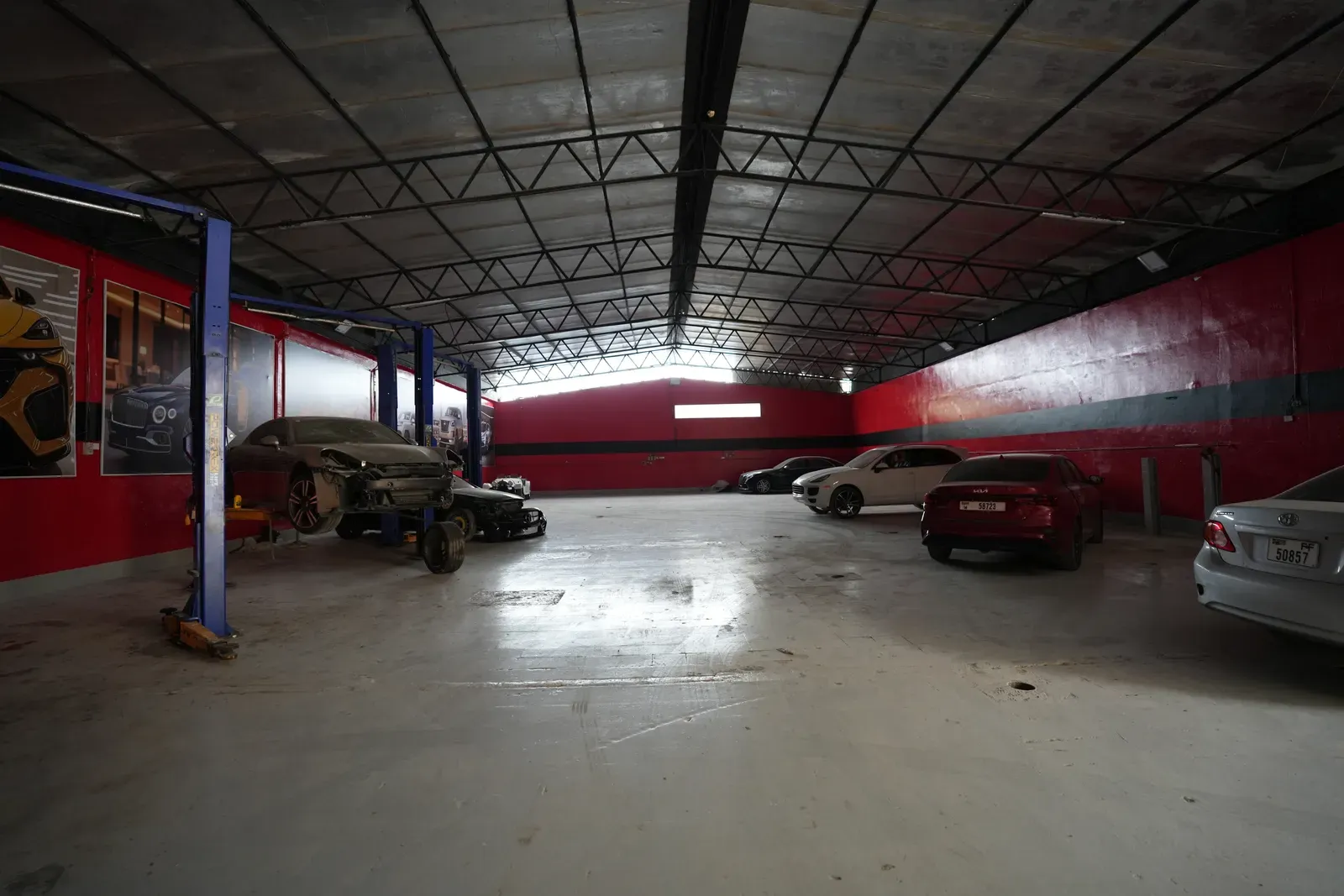
The workshop floor in Sharjah, cars waiting between the lifts.

Every one of these is found on a lift in this building, and priced before it is touched.

The work this usually turns into

And everything else, on the same car

The list above is what this make usually arrives needing. This is the rest of what the workshop does, and it applies to your car as much as to any other — worth knowing while it is already here.

Questions we get asked about these

The car shudders every time it pulls away. Is the clutch finished?

Maybe, and there is a way to find out that does not involve opinions. On the automated-manual cars there is a real clutch being slipped by a computer, and the transmission module keeps both a wear figure and the engagement points it has learned. We read them. A clutch with life left in it that has drifted out of adaptation — which happens after a flat battery, a module replacement or simply a lot of crawling in traffic — feels exactly like a worn one from the seat, and re-learning the points fixes it. A clutch that is genuinely at the end of its travel shows in the same data. We also look at how the car is used, because reversing up a car park ramp repeatedly is far harder on this component than distance is.

Why does a gearbox job on this car cost more than on my other car?

Because of where it is. On most of these cars the gearbox is not behind the engine — it is at the back of the car, bolted to the final drive, with a rigid torque tube joining the two ends. That layout is part of why the car balances and steers the way it does, and it is also why fluid runs the length of the car to a cooler at the front, why a clutch is at the rear axle, and why the car has to be supported in more than one place to drop anything. None of that is a surcharge. It is simply a longer job, and it should be described that way in the estimate rather than discovered later.

Somebody reversed into the rear wing. Can it just be beaten out and painted?

Not the way a steel car can. The outer panels are aluminium: they stretch rather than spring back, they harden where they are worked, and filler over a stretched aluminium panel lifts along the edges within a year or two in this climate. Underneath, the structure is extruded aluminium bonded with structural adhesive and set with self-piercing rivets, so what can and cannot be repaired is decided by how the car was assembled, not by what looks fixable. Our first output is an assessment that separates skin from structure and tells you honestly which part of it should go to a body shop set up for bonded aluminium. That is a better answer than a cheap repair that shows in the shut lines.

The car is flat every time I come back to it. What should I do?

First we find out whether the car is drawing more than it should while it sleeps, or whether it is simply not being driven enough to replace what it uses. Those are opposite problems with opposite answers. We measure the draw after the car has properly shut down, then trace it circuit by circuit if it is high. If the draw is normal, the fix is a conditioner left on it between drives rather than another battery, because a battery taken to zero repeatedly loses capacity permanently and the third one will die as well. Either way, expect to hand the modules back what they lost: after a car has been flat, the gearbox and throttle adaptations are worth resetting before you judge how the car drives.

Do you have the factory diagnostic system for these?

We will not claim to hold any manufacturer tool, and the line at the bottom of this page says why: nobody appointed us and we will not imply otherwise. What we will tell you is what the job on your car actually needs. Some of it is diagnostic work any competent workshop should be doing properly — reading per-cylinder misfire counts, testing a circuit instead of reading a code off it, measuring a standing current draw, pressure-testing a system. Some of it is module work that has to be written back after a repair. And some of it, on these cars, is genuinely behind a closed system, and when your job is one of those we will say so before it starts rather than after your car is apart.

Bring it in and we will find out

Nothing happens to the car until the fault has a name and you have approved the work against it.

Book WhatsApp us Call