

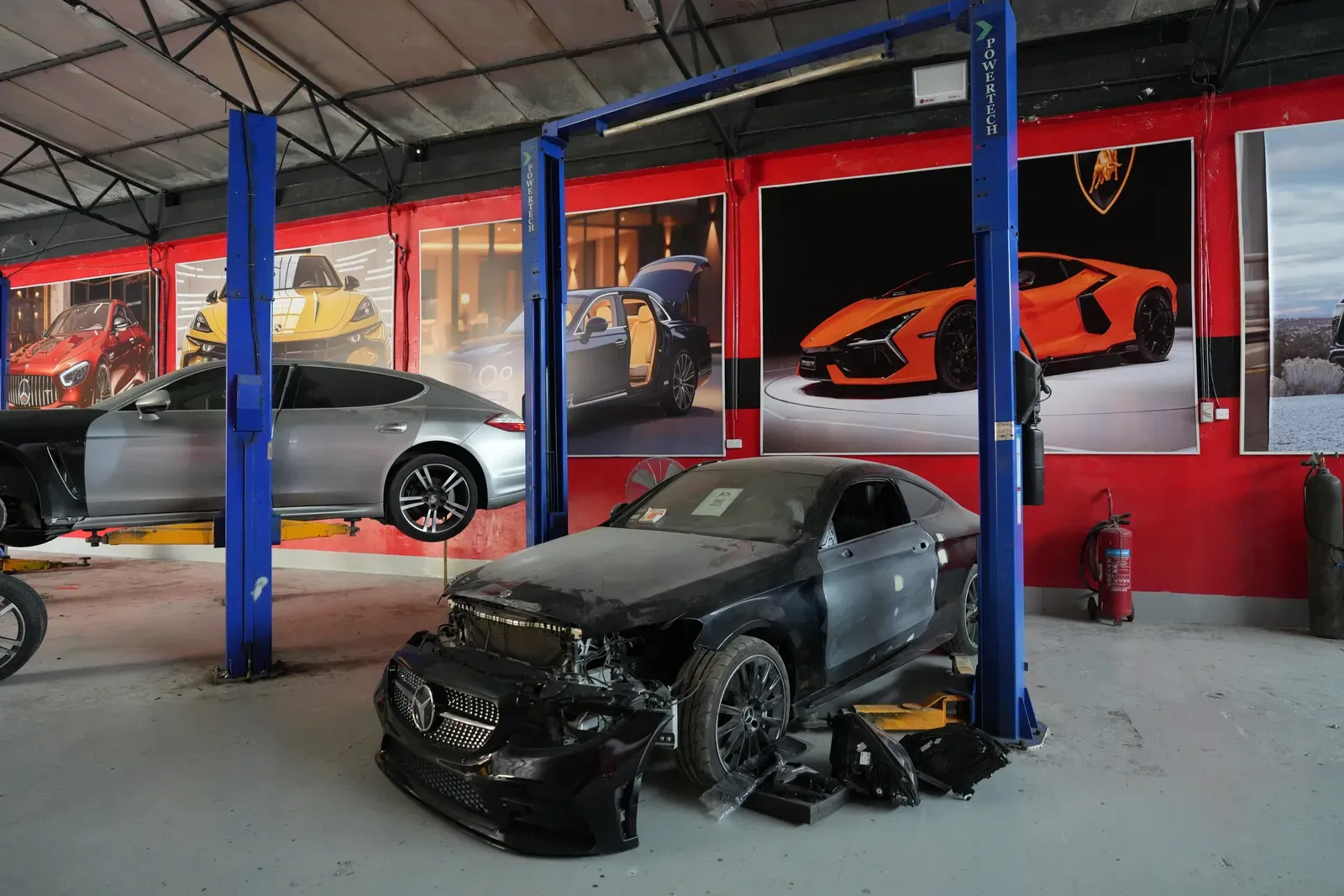
A used-car inspection is sold by its point count. Fifty, a hundred and twenty-five, two hundred and forty-eight, six hundred. The number is set larger than anything else in the offer, and it is the only part of the offer a buyer cannot check before he pays for it. It is worth ten minutes to understand where it comes from.
What is a point?
Nothing, in the sense that matters. There is no standard that defines one, no body that audits one, and no reason two workshops counting the same car would arrive at the same figure. A point is one line on somebody’s checklist, and the person who writes the checklist decides where the lines fall.
Take the four tyres. “Tyres” is one point. “Tyres, each corner” is four. Tread measured at the inner, middle and outer of each tyre is twelve — and that is the better inspection of the three, because the difference between those readings is how an alignment fault shows itself. Add pressure at each corner, the date code on each sidewall, and the spare, and the same wheels-and-tyres section is twenty-one points. Every one of those counts describes honest work. Only one of them is a large number.
Do the same to a brake. One point: “brakes”. Five: pad, disc, calliper, flexible hose, fluid — the brake inspection, in other words. Twenty: those five at each of the four corners. Twenty-four, if the inner and outer pad are counted separately at each corner. Twenty-six, once the handbrake mechanism and its cable are given lines of their own. Nobody has invented anything, nothing has been added to the car, and no claim in any of those checklists is false. The list has been written at a different resolution, and the price has been written to match it.
How many points do UAE car inspections have?
Below is what six inspection providers in this country print on their own pages, read on 22 September 2026. These are quotations from their published offers, not a judgement about the work behind them, and every one can be checked against the sources at the foot of this article.
| Provider | Points published | Price published | Where, and how long |
|---|---|---|---|
| MySyara | 50, and 100 | AED 299 and AED 499 | Their own workshops, on lifts. Duration not stated. |
| Fasttrack Emarat | 125 | AED 199 plus VAT | A service centre or the seller’s location. “2-4 hours normally”. |
| ARMotors | 200 (in the page title) | AED 500-1000 | “Around 1 day to complete inspection” for most modern cars. |
| AutoHub | 248 | AED 399 | The seller’s location. “45 to 75 minutes”. |
| InspectMotors | 120, 480 and “625+” | AED 299, 399 and 599 | The car’s location. Duration not stated. |
| CheckMyCar | 600 | From AED 299 to AED 399 | The seller’s location. “Between 45 minutes to 1 hour”. |
Two of those lines are worth putting beside each other. A 125-point inspection is published as taking two to four hours. A 600-point inspection is published as taking forty-five minutes to an hour. Whatever a point is, it is not a unit of time and it is not a unit of work. And one provider publishes three inspections of the same car — 120 points, 480 points and “625+ point” — at three prices. The count there is not a description of what happens to the car. It is the name of a tier.
A point count is the one specification in this trade that the seller gets to define, count and grade himself. Nothing else on a quotation works that way.
What a list looks like when somebody has to defend it
There is one inspection list in wide use that was drafted in public, argued over, and then imposed on an entire continent’s fleet: Annex I of Directive 2014/45/EU, the European periodic roadworthiness test. It is worth looking at, not because it governs anything here, but because of its shape. The annex is a table, and it has four columns: Item, Method, Reasons for failure, and Assessment of deficiencies — that last one graded Minor, Major or Dangerous. A count is not one of the four. The instruction above the table reads: “The test shall cover at least the items, and use the minimum standards and the recommended methods, listed in the following table.”
The scope is ten areas: identification of the vehicle, braking equipment, steering, visibility, lighting equipment and parts of the electrical system, axles, wheels, tyres and suspension, chassis and chassis attachments, other equipment, nuisance, and supplementary tests for passenger-carrying vehicles. Counted generously, sub-items and buses included, the whole annex runs to fewer than two hundred numbered lines. That is the legally mandated inspection for every car in the European Union, and it is a smaller number than three of the offers in the table above.
What the drafters spent their effort on is the Method column. They even define the weakest method so it cannot be stretched: “Where a method of testing is indicated as visual, it means that, in addition to looking at the items concerned, the inspector shall also, if appropriate, handle them, evaluate their noise or use any other appropriate means of inspection not involving the use of equipment.” Looking is the floor, not the job.
Was the car on a lift, or on a driveway?
This is the question the point count is standing in front of, and the European annex answers it without meaning to. Its Method entry for the humble tyre reads: “Visual inspection of the entire tyre by either rotating the road wheel with it off the ground and the vehicle over a pit or on a hoist, or by rolling the vehicle backwards and forwards over a pit.” To inspect one tyre properly, the regulation says, you need a pit or a hoist. Not for the brakes. Not for the chassis. For the tyre.
The same annex puts a machine under the brakes: “During a test on a brake tester or, if impossible, during a road test, apply the brakes progressively up to maximum effort”, and it fails a car when “braking effort from any wheel is less than 70 % of the maximum effort recorded from the other wheel on the same axle”. Fifty per cent on a steered axle is graded dangerous. Those are numbers that came off an instrument. No quantity of ticks produces one.
Four questions worth more than the number
These four are questions about the car; the documents are a separate question, and there is a separate article on what the paperwork shows.
- Where will the car be, and will it be off the ground? An inspection carried out with the wheels on the floor is a different piece of work from one carried out on a lift, whatever either of them is called.
- Which findings will carry a measurement and a limit, and which are an opinion? Pad thickness, disc thickness, tread depth, paint depth, battery current and vent temperature all have a reading and a figure they are judged against. “Good condition” has neither.
- Will there be photographs of the things I am being told about? A finding you cannot see is a finding you have to take on trust, and the whole point of an independent inspection is that you are not taking anybody on trust.
- What will the report say about the things you could not reach? Undertrays, seized fixings, a seller who will not release the car for a road test. A report that contains no such line is not a report that found nothing. It is a report that does not have that column.
- A point
- One line on a checklist. Defined by whoever wrote the checklist, counted by whoever is selling it, and comparable to nothing.
- A method
- How that line was established: looked at, handled, listened to, measured with an instrument, or tested with the car in motion. This is the part that decides what the inspection was worth.
- A measurement and a limit
- A reading and the figure it is judged against, both printed. 2.1 mm against a 3.0 mm minimum says something. “Worn” does not.
- Not inspected
- A status, not a failure and not a pass. It means a part could not be assessed and says why — and it is the line that tells you the report is honest about its own edges.
How many points is the PetrolHeads inspection?
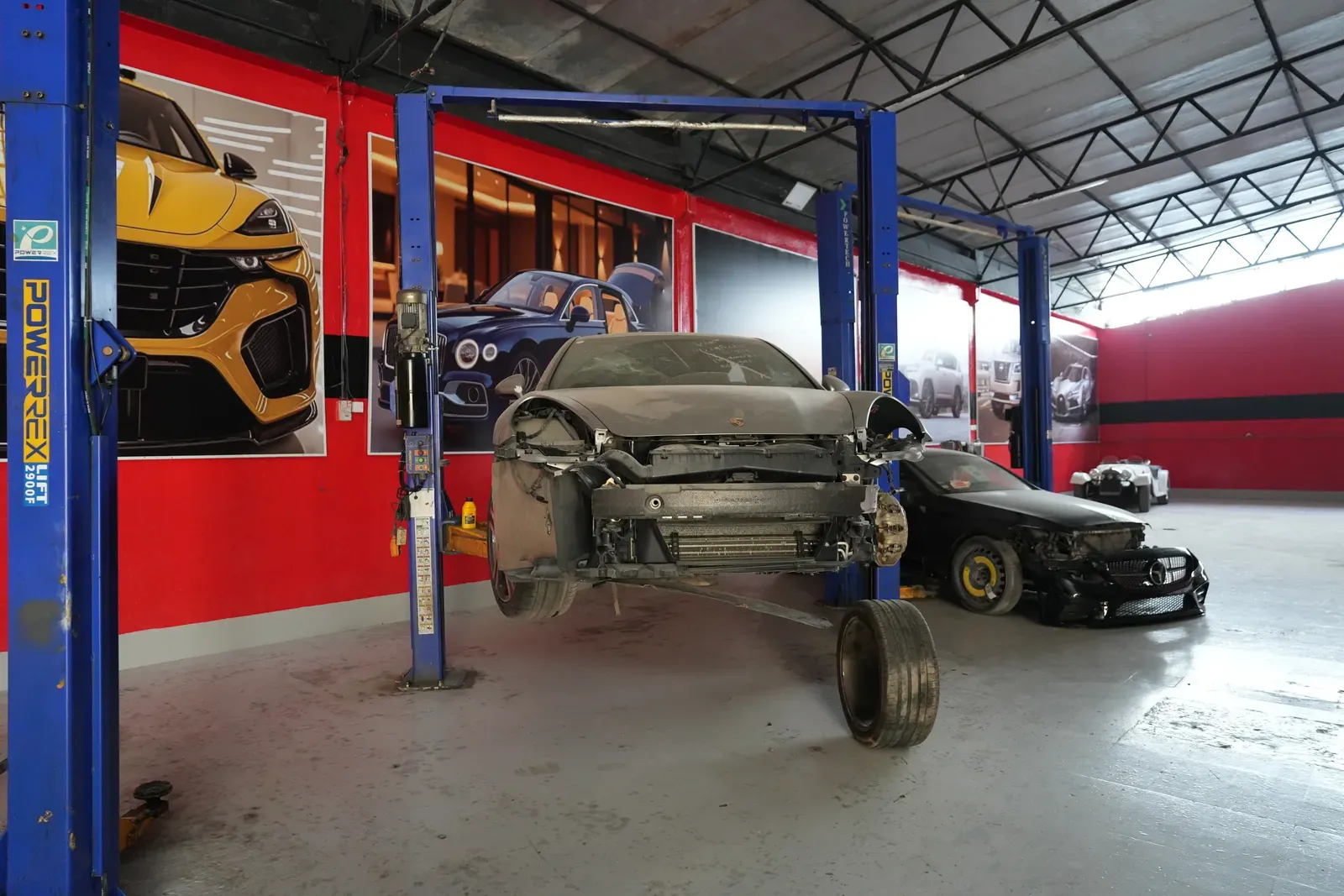
We could write our own checklist at a finer resolution and arrive at a number that beats anything above, and it would tell you nothing you did not know before you read it. So the inspection on this site is described by what it produces instead: a status on every item, a measurement and the limit beside it wherever a number exists, the evidence that proved each finding, and a line marked “Not inspected”, with a reason, for anything that could not be assessed.
That last item is the one to hold any inspection to, ours included. A report that admits nothing admits nothing because it has been written not to.