

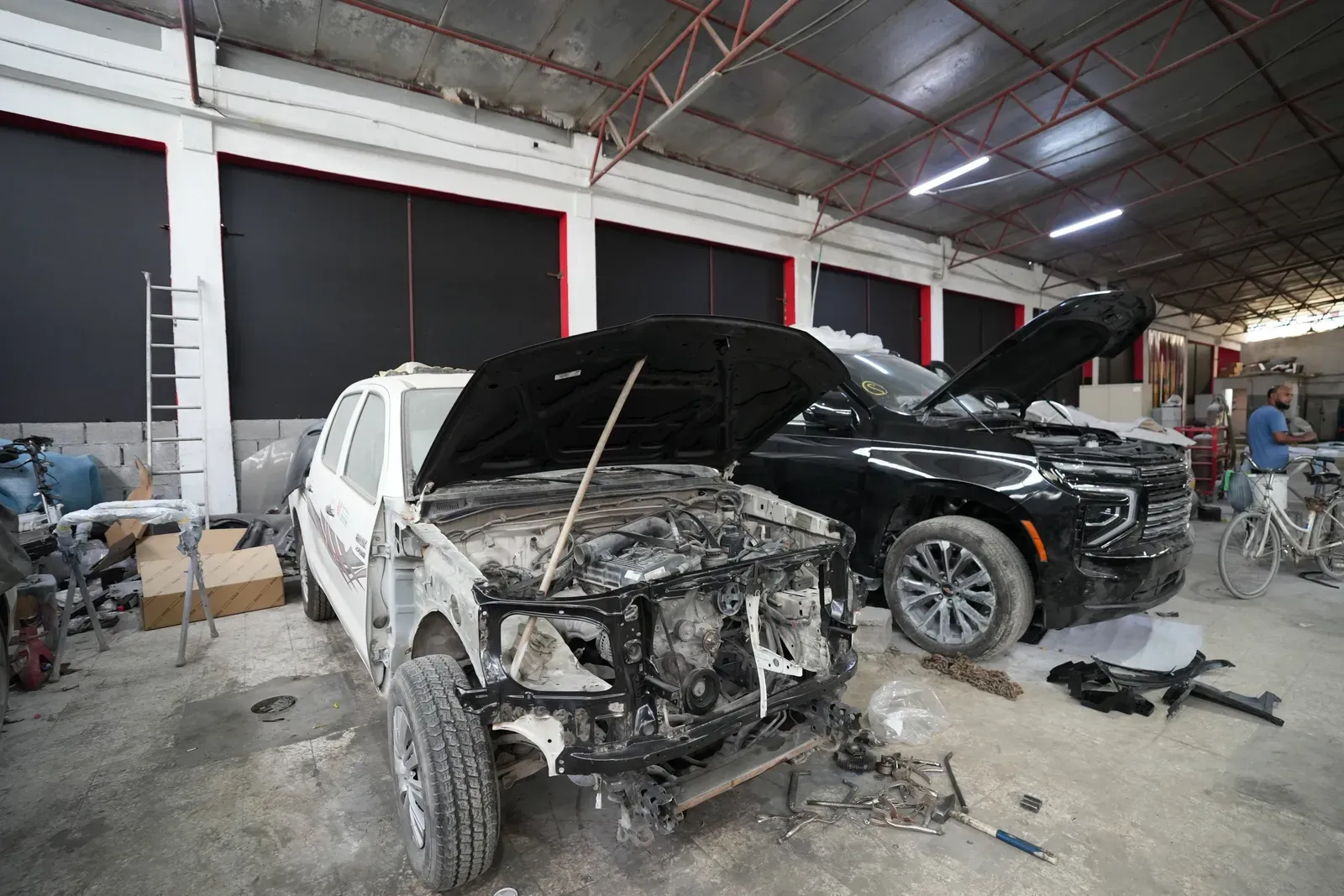
Paint is judged from two metres away in daylight, by somebody who is not looking for a fault and finds one anyway. That is a harder test than it sounds, because the eye is very poor at naming a colour and very good at spotting a difference between two colours sitting next to each other. A door can be the correct colour by every objective measure and still be the wrong colour for the car it is bolted to.
Can’t the paint code just be matched?
It is the question, properly asked. The code identifies the colour the factory intended; it does not identify a single formula, because one code routinely has several. PPG’s published procedure for finding a colour formula tells the technician to search a code with a wildcard character to bring up the alternatives — “use the percent sign (%) … as a wild card character for searches” — and then says how the right one is chosen, and it is not chosen on a screen: “Check variant colors using PPG Chromatic Color Deck or spray out card from a personal library nearest to the area to be painted on the vehicle”, and “Polish the adjacent panel(s) to choose a prime or variant color …”. Read that last instruction slowly. The reference against which the formula is selected is your car, polished, in front of the person selecting it.
And by the time a car needs a panel painted, it is no longer the colour its code describes. Weathering is not a cosmetic afterthought in the coatings industry; it is a design constraint with test protocols attached. David Bauer of Ford Motor Company, writing in the Journal of Coatings Technology, records how slowly a modern finish gives way — basecoat and clearcoat systems “tend to lose gloss very slowly”, and are “less sensitive to color change due to the protection of the color pigments by UV absorbers in the clearcoat”. Slowly is not never. He also gives what the industry treats as a fair service life and what it costs to verify: “a typical customer expects automotive coatings to retain reasonable appearance for about 10 years in service”, against performance standards “requiring up to five years of exposure in Florida”. Nobody has published a benchmark of that kind for a car parked outdoors in Sharjah.
The paint code describes the car that left the factory. The match has to be made to the car that is standing in the workshop.
What is a spray-out card for?
To be wrong on a piece of card instead of on your bonnet. The mix is sprayed on a card with the same gun and the same technique as the car would get, and then it is judged — and the judging has rules, because workshop lighting flatters everything. PPG’s procedure asks for the card to be “evaluated in natural sunlight, preferably between 10 AM and 2 PM”, notes that colour-corrected lamps are “an accepted method, yet not preferred over natural sunlight”, and adds the instruction most people would never think of: “Checking color in shaded areas is as important as lighted areas.” It asks for patience — “2 to 4 hours of dry time before a final decision” for solid colours, “8 plus hours” for tri-coats — and for the card to be looked at from “three viewing angles of Face, Flash, and Flop”. A metallic that matches head-on and goes silver at an angle has failed, and that is a test which can only be failed on a card or on a car.
- Paint code
- The manufacturer’s identifier for the colour the car was built in, read from a plate on the vehicle. It names a family of formulas, and it describes the car when it was new.
- Variant
- One of the alternative formulas published under that same code, because factory paint itself varied between plants, batches and years. Choosing between them is a comparison against the car, not a lookup.
- Spray-out card
- The mixed colour sprayed on a card with the equipment that will spray the car, dried, and held against the panel in daylight before anything touches the vehicle.
- Blend
- Carrying the new colour out into the neighbouring panel and fading it, so the eye never gets a hard edge to compare across.
Why does the next panel get painted too?
Because a difference the eye cannot see across a fading edge becomes obvious across a sharp one. Blending is not a way of hiding a bad match; it is the standard method, and the refinish manufacturers specify how much of the neighbouring panel it takes. PPG’s procedure for blending solvent basecoats requires the technician to “allow a blend area of a minimum of 12 inches and a minimum of 24 inches for tri-coat and quad-coat colors”, measured out from the adjacent panel edges, and treats carrying the blend “up to a panel edge” before clearcoat as recommended practice. Two consequences follow for a customer. The first is that a bumper scuff can legitimately mean paint on the wing beside it, and an estimate that says so is describing the job rather than inflating it. The second is that a pearl or a three-stage colour asks for twice the blend area of a solid, which is one of the honest reasons two cars with the same size of damage are not the same job.
What are primer and preparation actually doing?
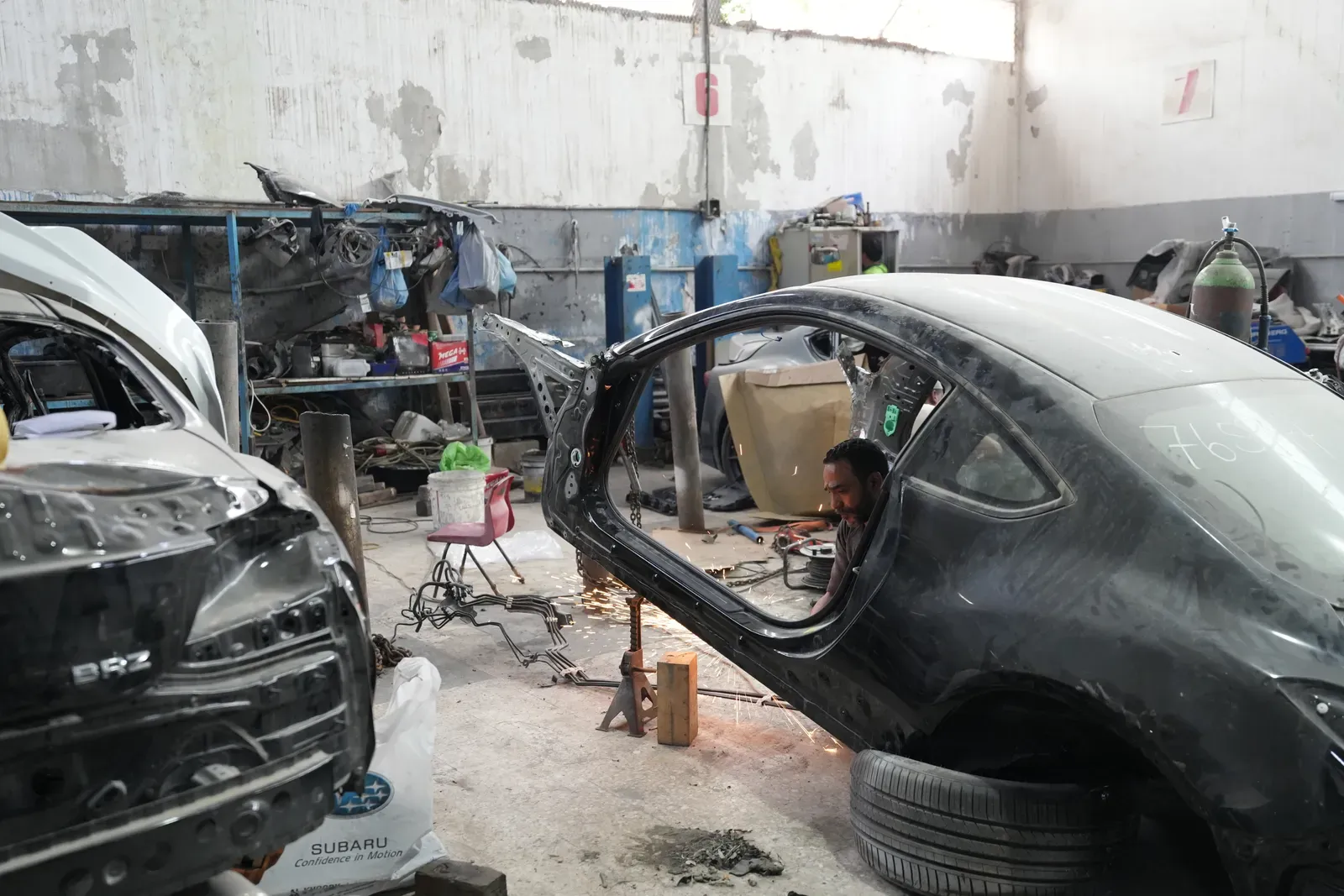
Two separate jobs, and one of them is a colour job, which surprises people. PPG’s primer sealer procedure states both in a single line: the application of a primer sealer “ensures maximum adhesion capabilities for the topcoat while helping to ensure a uniform color match”. Adhesion is the durability half — the reason a panel does not lift at the edge in two summers — and it is bought entirely in the hours before any colour is mixed: cleaning, stripping back, filling where it is genuinely needed, sanding through the grades, and sealing. The colour half is less obvious. Modern basecoats are not fully opaque, so what sits underneath changes what you see through them, which is why a sealer shade is chosen to suit the topcoat rather than whatever is to hand. It is also why one formula sprayed over a patchy, half-sanded repair and over a uniform sealed surface gives two different colours from one can. The paint page on this site puts it flatly: preparation is most of the job, and because it is the part a customer never sees, it is the first thing cut in a cheap respray.
Can the repair be seen afterwards?
Not by the eye, if it was done properly. By an instrument, yes, and we would rather you heard that from us than from a buyer. Refinished paint is not the same thickness as factory paint, and thickness is measurable in seconds. DeFelsko, who manufacture the gauges, give the working range — “typically however a vehicle from the factory will have between 4–7 mils (100–180 microns)”, of which the clear coat alone is “1.5–2.0 mils (35–50 microns)” (what polishing removes from that layer) — and describe the reading at the other end: “if the instrument does not give a measurement it means that the thickness is over the gage’s limit and could mean the presence of filler and a likely repair.” Their caveat matters as much as their numbers, and it is why a single reading proves nothing: “Consistency is what is important. Measurements taken across a panel should show only small variations in thickness … Areas of much greater thickness may indicate rework.” The gauge is a comparison tool, panel against opposite panel. That is why a pre-purchase inspection includes a paint depth survey (what an inspection catches), and why an accident and body repair hands you an invoice naming every panel that was touched. A document you can show a buyer is worth more than a denial he can disprove in ten seconds with a device that fits in a pocket.