
The brakes squeal in the morning and then stop
A squeal for the first few stops of the day that disappears once the brakes have been used is usually the least alarming noise brakes make. Overnight humidity leaves a fine film on the disc faces; the first applications scrub it off and the noise goes with it. Near the coast and through the humid months here it is close to routine. The reason it is still worth knowing about is that one other noise sounds similar and means the opposite: a wear indicator is a small metal tab designed to touch the disc when the pad is nearly finished, and it squeals too. The difference is the pattern rather than the pitch — a wear indicator does not clear after a few stops, gets worse rather than better, and is usually there whenever you brake rather than only first thing.
Can I keep driving it?
Safe to drive
If it genuinely clears within the first few stops and does not come back during the day, drive it and mention it at the next service rather than making a special trip. Come in sooner if the pattern changes: a squeal that stays all day, one that returns under heavy braking, any grinding, or a pedal that has started travelling further than it used to. Those are different noises with a different meaning, and brakes are the one system where guessing wrong is not recoverable.
How we find out which one it is
Pads, discs, calipers and fluid — what is actually worn, priced before it is replaced.
-
01
Wheels off, every corner checked
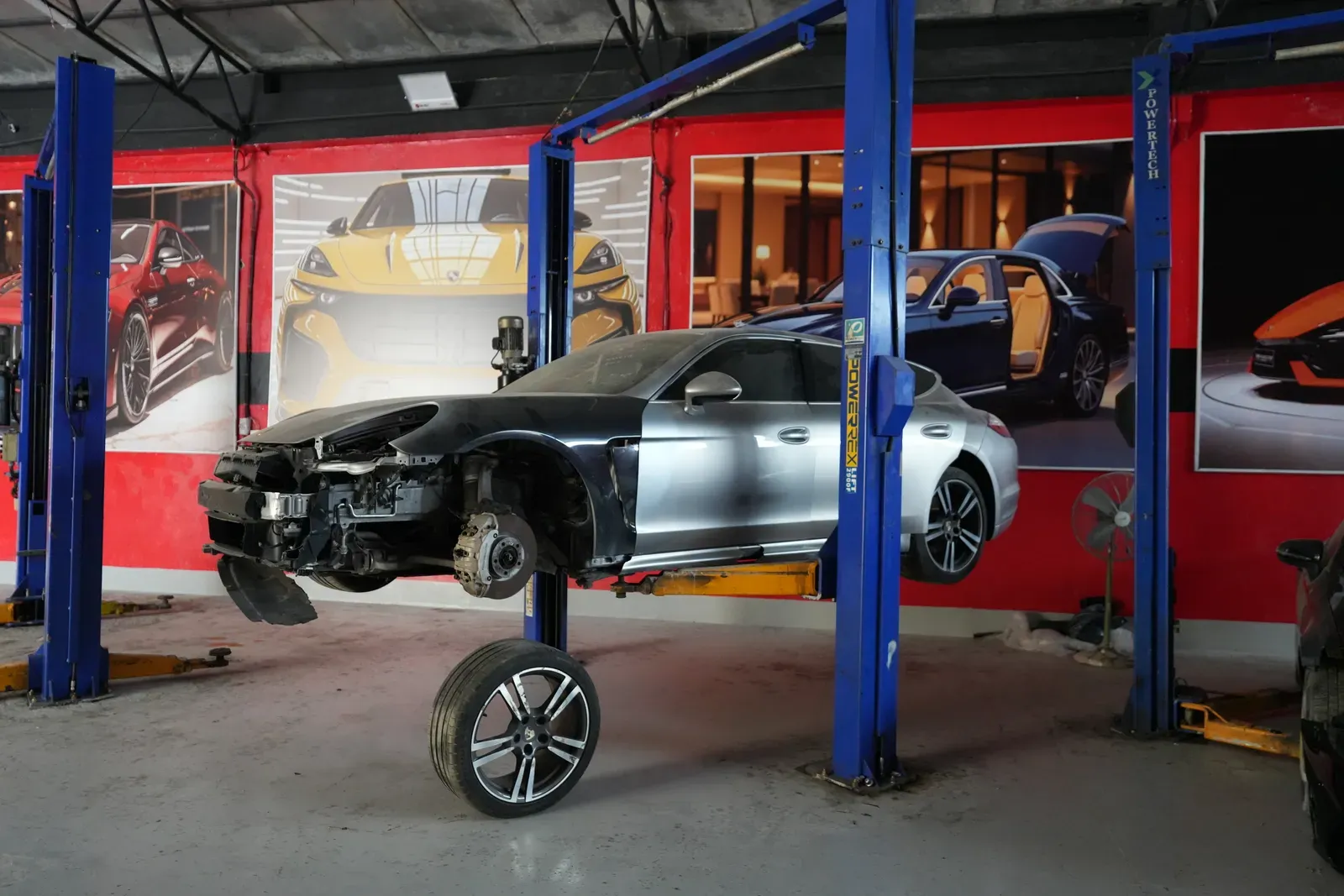
Brakes cannot be judged through a wheel gap. All four wheels come off, and the inner pad — which is the one that usually wears first and the one nobody can see — is checked separately from the outer.
-
02
Discs are not replaced by default
Plenty of workshops fit new discs with every set of pads, because selling the pair is easier than explaining the difference. A disc that is cracked, deeply scored or running out of true is replaced. A disc that is still doing its job stays on the car. You will be told which of the two yours is, and why, before that line goes on the estimate.
-
03
Fluid is tested, not eyeballed
Brake fluid absorbs water from the air, and water boils long before brake fluid does. A DOT 4 fluid leaves the factory boiling around 230 °C and is considered wet at 155 °C. That is why a pedal can feel fine in traffic and go soft after a long descent, and it is why the test matters more than the colour.
-
04
You approve corner by corner
Front and rear are separate lines on the estimate, and so are pads and discs. A car that needs front pads only leaves having had front pads only. We will also tell you how much life is left on the parts we are not replacing, so you know when to come back.
Other things this system does
Other complaints with a page
- The revs rise but the car does not speed up Slipping is self-worsening: the slip makes heat, heat cooks the fluid, and cooked fluid cannot hold the pressure that stops the slip. Why the distance driven decides the bill.
- The steering wheel shakes when I brake A shake felt only under braking points at the front brakes, not the tyres. What separates disc wear from heat distortion from a bearing, and how it is checked in Sharjah.
- The car pulls to one side when I brake Pulling only under braking is a difference between the two front brakes — caliper, hose, pad or slide pin. Pulling all the time is usually alignment. How the two are told apart.
- There is a knocking noise over speed bumps A knock over a bump is free play in the suspension or steering. Drop links, bushes, top mounts and shocks all sound identical from the seat — how they are separated on a lift.