
The car pulls to one side when I brake
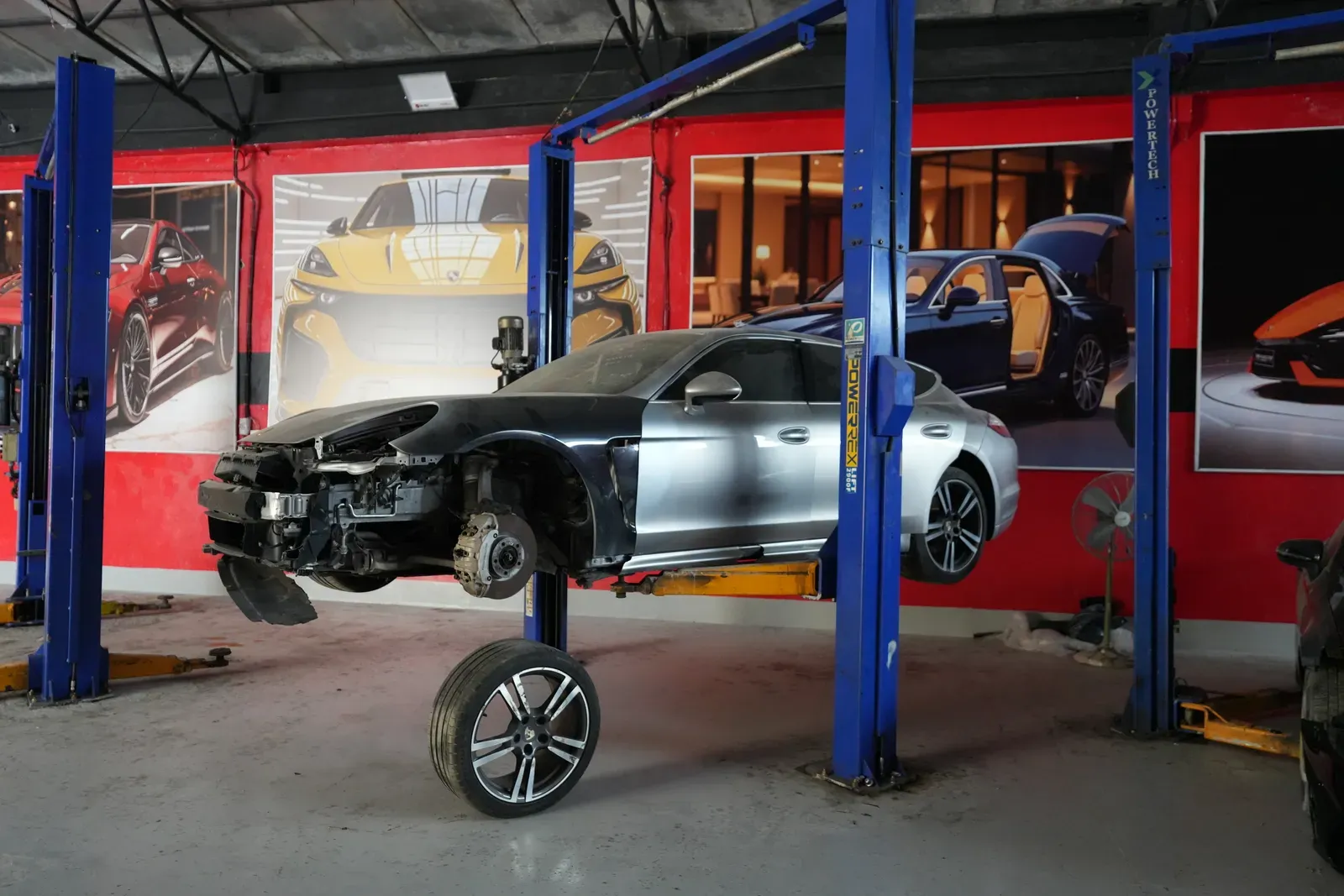
A pull that happens only when you brake means one front brake is doing more work than the other, and a pull that is there all the time — hands off on a flat, straight road — is usually alignment or tyres instead. Which one it is decides the whole job, so it is worth noticing before you arrive. A braking pull is a difference between the two sides: one caliper not releasing, a collapsed flexible hose acting as a one-way valve, contaminated pad material, or a seized slide pin. None of those can be told apart by driving the car; they are told apart with both front wheels off.
Can I keep driving it?
Drivable, but do not leave it
Treat this as more urgent than a judder. A car that changes direction under braking is unpredictable in exactly the moment you need it not to be, and a caliper that is not releasing also builds heat — which is what turns a cheap repair into discs, pads and a hose. If the pull is strong, or you can smell hot brake after a normal drive, have it looked at before driving it further.
How we find out which one it is
Pads, discs, calipers and fluid — what is actually worn, priced before it is replaced.
-
01
Wheels off, every corner checked
Brakes cannot be judged through a wheel gap. All four wheels come off, and the inner pad — which is the one that usually wears first and the one nobody can see — is checked separately from the outer.
-
02
Discs are not replaced by default
Plenty of workshops fit new discs with every set of pads, because selling the pair is easier than explaining the difference. A disc that is cracked, deeply scored or running out of true is replaced. A disc that is still doing its job stays on the car. You will be told which of the two yours is, and why, before that line goes on the estimate.
-
03
Fluid is tested, not eyeballed
Brake fluid absorbs water from the air, and water boils long before brake fluid does. A DOT 4 fluid leaves the factory boiling around 230 °C and is considered wet at 155 °C. That is why a pedal can feel fine in traffic and go soft after a long descent, and it is why the test matters more than the colour.
-
04
You approve corner by corner
Front and rear are separate lines on the estimate, and so are pads and discs. A car that needs front pads only leaves having had front pads only. We will also tell you how much life is left on the parts we are not replacing, so you know when to come back.
Other things this system does
Other complaints with a page
- There is a knocking noise over speed bumps A knock over a bump is free play in the suspension or steering. Drop links, bushes, top mounts and shocks all sound identical from the seat — how they are separated on a lift.
- The AC is cold when moving but warm in traffic Cooling at speed but not at a standstill points at heat rejection at the front — fans, a blocked condenser, or the wrong charge — not at the refrigerant circuit. Checked in Sharjah.
- The automatic gearbox jerks when it changes gear A jerky shift is as often fluid, a solenoid or adapted software as it is a worn clutch pack — and the cost gap is enormous. Why codes and live pressures are read first.
- The battery goes flat if I leave the car for a few days Fine daily, flat after a weekend, is either a battery that no longer holds charge or a parasitic drain — and a new battery only fixes one of them. Both are measured in Sharjah.